I explained calmly that two individuals who had abandoned an elderly woman in extreme weather were now attempting to intimidate us late at night. The officers arrived quickly, and by then my parents had shifted into performance mode.
My mother cried while my father claimed they were only trying to bring her home, insisting I had manipulated the situation and exaggerated everything. They framed it as a misunderstanding, something minor that had been blown out of proportion.
What protected us was the truth already documented.
I showed the officers the photos, the suitcases, the messages, and the paperwork Valerie helped organize. My grandmother, her voice shaking but clear, said she did not want to leave with them and explained how she had been left outside in dangerous conditions.
One officer’s expression changed immediately when he heard that.
My parents were instructed to leave the property at once, and when my father argued, he was warned that returning could result in trespassing charges.
That moment should have ended everything, but it only began the process.
Over the next month, every hidden detail came to light.
Valerie helped my grandmother secure full legal protection over her finances and documents, and the senior advocate connected us with support services. A bank investigation revealed transfers my parents could not justify, and under pressure from legal complaints, they agreed to return a significant portion of the money and permanently lost access to her accounts.
The quiet that followed felt strange but peaceful.
There were no more excuses, no more forced guilt, and no more pretending that family automatically meant kindness.
My grandmother lives with me now in a sunny room facing the backyard, surrounded by her cardigans and her opinions about every meal I cook. She talks about planting tomatoes in the spring and spends Sundays watching old movies with me while critiquing modern acting.
Sometimes she still says, “I hate being trouble,” and I always answer, “You are family, and that is different.”
As for my parents, I stopped waiting for an apology a long time ago.
What I learned is simple and permanent.
When someone shows up at your door in the cold, unwanted and humiliated, you discover exactly who you are. I discovered I could be a safe place, and she reminded me that protecting the right person is never the wrong choice.
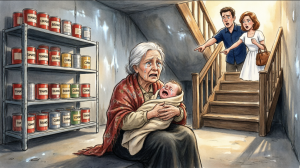
My son and his wife locked me and my 3-month-old granddaughter in the basement, shouting, “Stay here, you noisy brat and old hag!” before flying off to Hawaii. When they came back, the smell hit them first—and they were horrified, asking
Part 2 of 2