
I decided to sell the cabin twelve years after I bought it.
Nothing terrible happened.
That was important.
No illness forced me.
No financial disaster.
No lawsuit.
No family pressure.
I simply woke one October morning, carried coffee onto the porch, looked across the meadow, and knew.
Not dramatically.
Not with revelation.
The place had become more work than pleasure.
The roof would need attention again within a few years.
The long driveway irritated me in winter.
Town felt farther away than it once had.
I wanted something smaller.
Closer.
Easier.
For several days I told nobody.
Not because I feared interference.
Because I wanted to hear the decision in my own head before hearing anyone else respond.
Then I called Dara.
“I’m selling the cabin.”
Silence.
Long enough that I checked the screen.
“You there?”
“Yes.”
“Well?”
“I’m trying very hard to say the correct thing.”
I laughed.
“There isn’t one.”
“That feels like a trap.”
“It isn’t.”
Another pause.
Then she said, “Are you happy about it?”
“Yes.”
“Scared?”
“A little.”
“Do you want help?”
“Yes.”
“What kind?”
That question.
Perfect.
“Practical.”
“I can do practical.”
“I know.”
“No opinions?”
“You can have opinions.”
“Dangerous.”
“Just remember they’re opinions.”
She laughed.
“I hate personal growth.”
“I know.”
She helped me find a realtor.
Not the realtor.
Three names.
I chose one.
She did not object.
The property listing made me emotional.
Forty acres.
Creek.
Meadow.
Stone chimney.
Old wall.
Cabin.
All reduced to photographs and measurements.
I understood suddenly why families turn real estate into identity.
A listing makes a home sound brutally simple.
Square footage.
Bedrooms.
Acreage.
Taxes.
But simplicity on paper does not erase complexity in experience.
The realtor asked about the chimney.
“Historic?”
“Unknown.”
“Should we market it as historic?”
“No.”
Dara, sitting beside me, smiled.
The realtor looked confused.
“It could help.”
“Say old stone chimney.”
“Any known history?”
“No verified history.”
Dara leaned toward me.
“Beautiful.”
I kicked her ankle.
The property drew interest quickly.
Mountain acreage had become expensive.
That bothered me slightly.
Not because I opposed profit.
Because numbers threatened to turn the sale into another family event.
So I did something I would once have done anyway for different reasons.
I told relatives almost nothing.
The difference was motive.
Before, secrecy protected me from expected intrusion.
Now privacy simply felt appropriate.
I was not hiding.
I was deciding.
Mom was gone.
Dad gone.
Raymond still alive but frailer.
Alicia supportive.
Chloe curious.
Dara helpful.
Nobody needed to vote.
The first offer came below asking.
I rejected it.
Dara asked why.
“Too low.”
“Fair.”
Second offer was higher.
Complicated contingencies.
Rejected.
Third came from a couple named Noah and Lena Mercer.
That surname made me laugh so hard the realtor thought something was wrong.
“No relation,” she said quickly.
“To which Mercers?”
She stared.
“Never mind.”
Noah and Lena were both teachers.
Two children.
Wanted land.
Garden.
Privacy.
Lena loved the creek.
Noah wanted the old shed for woodworking.
They asked about the chimney.
I told them exactly what I knew.
Old.
Unknown family.
No verified connection to any documented Whitmore tract.
They looked confused by the specificity.
“Was there some dispute?”
“Yes.”
“Resolved?”
“Yes.”
“Anything affecting title?”
“No.”
That was enough.
They made a clean offer.
Good price.
Reasonable closing.
I accepted.
Then told Dara.
She went silent again.
“What?”
“Mercer?”
“Apparently unrelated.”
“You cannot make this up.”
“I know.”
“Did you check?”
“No.”
“Why not?”
She stopped herself.
We both burst out laughing.
“Fine.”
“No genealogical investigation.”
“Agreed.”
The title search came back clean.
Of course.
My property alert reported the transaction preparation.
Useful.
No suspicious filings.
No ancestral claims.
No ghosts in the recorder’s office.
At closing, I signed the deed.
My hand did not shake.
That surprised me.
For years ownership had become loaded with meaning.
Now I signed it away because I wanted to.
Not forced.
Not cheated.
Not pressured.
Choice changes the emotional shape of leaving.
Afterward I returned to the cabin one final time.
Empty rooms echo differently.
The furniture was gone.
Walls showed pale rectangles where pictures had hung.
The squeaky pantry board remained.
I stepped on it deliberately.
One last complaint.
On the shelf beside the fireplace sat the replica horse.
I had forgotten it.
I picked it up.
Plastic.
Light.
Crooked scan of a wooden object that once carried too much meaning.
I considered leaving it for the Mercers.
Absolutely not.
That joke was too dangerous.
I put it in my bag.
Outside, Dara’s car appeared below.
She called.
“I’m at the gate.”
“You can come up.”
“Last time.”
“For me.”
She drove slowly.
When she got out, she looked at the cabin for a long time.
“You okay?”
“Yes.”
“You?”
She shrugged.
“Strange.”
We walked through the empty rooms.
She touched the kitchen counter.
“I hated this place.”
“I know.”
“Then I loved it.”
“That feels intrusive.”
She laughed.
“I mean because you loved it.”
I understood.
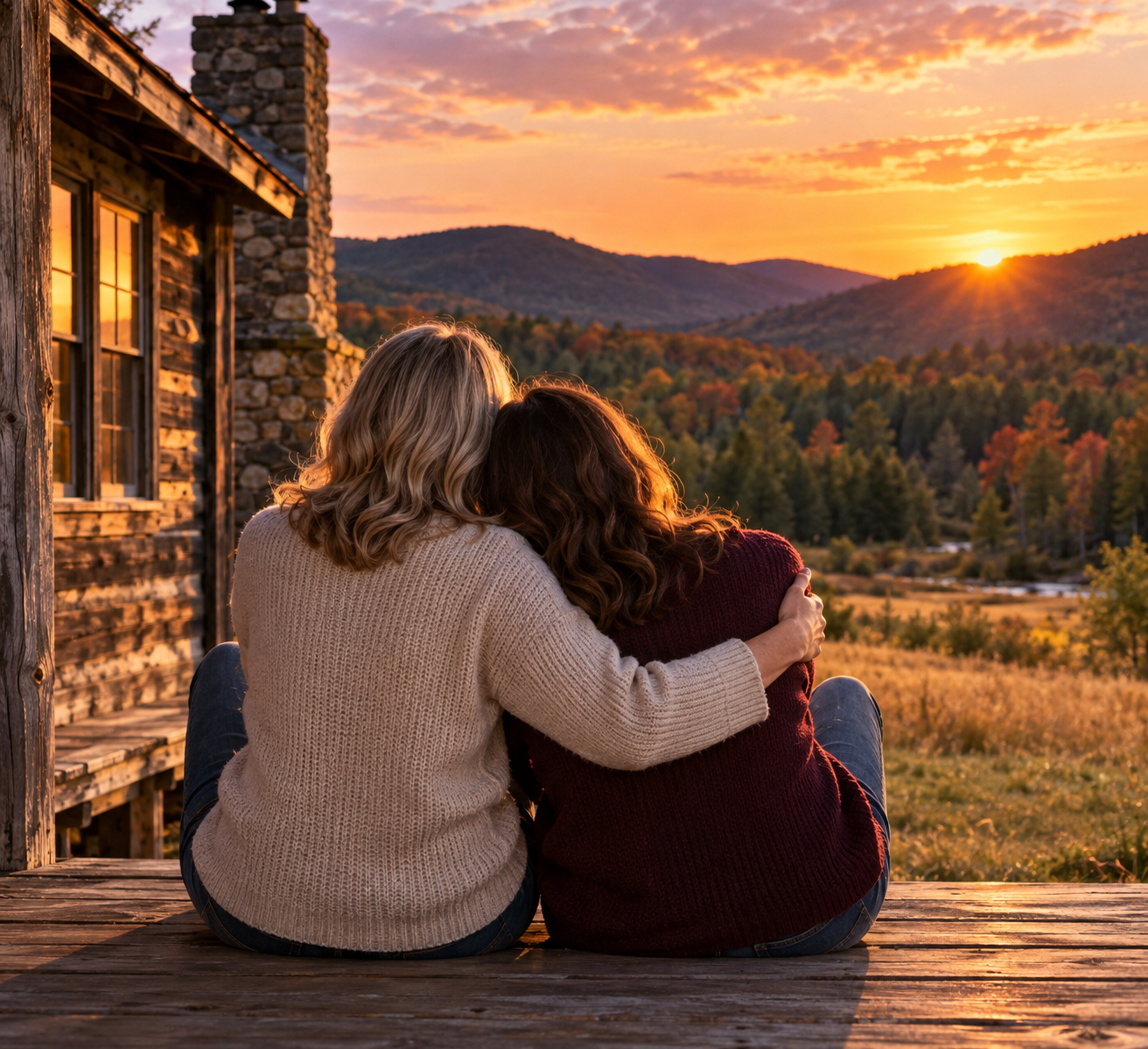
On the porch we sat on the floor because the chairs were gone.
For a while neither spoke.
Then Dara said, “I owe you something.”
“No.”
“What?”
“Please don’t produce paperwork.”
She laughed.
“No paperwork.”
“Good.”
“I owe you the truth about why I was so angry when you bought this.”
I looked at her.
“I thought we covered that.”
“Most.”
She stared across the meadow.
“I was jealous.”
That was new.
“Of the cabin?”
“Of you.”
I waited.
“You made a decision nobody approved.”
“Yes.”
“And survived.”
I laughed softly.
“That sounds ridiculous now.”
“Not to me then.”
She continued.
“I had spent my whole life making decisions around everyone else. Where I lived. How big a house. Holidays. Mom and Dad. Everything.”
“You chose some of that.”
“I know.”
Important.
“But I also told myself choosing family meant I was better than people who chose themselves.”
There it was.
Not just control.
Moral superiority.
The most dangerous kind.
“Then you bought this.”
She gestured toward the empty house.
“And you didn’t ask.”
“No.”
“I told myself that meant you didn’t care.”
I looked at her.
“But really?”
“It proved you were willing to disappoint us.”
Wind moved across the meadow.
“That scared me.”
“Why?”
“Because I wasn’t.”
The confession was quiet.
For years Dara had interpreted my independence as rejection because it exposed a freedom she did not believe she had.
I had interpreted her involvement as pure control because I did not see how much of it came from fear of becoming unnecessary.
Both interpretations contained truth.
Neither contained all of it.
“I’m sorry,” she said.
Not for the first time.
Maybe the last time we needed that version.
“I know.”
She looked at me.
“Do you forgive me now?”
I laughed.
“You waited twelve years to ask again?”
“Timing.”
I thought.
The forged claim.
The reunion exclusion.
The gate.
The apology.
Mom.
Dad.
Ordinary afternoons.
Years of changed behavior.
“Yes.”
Dara went completely still.
I continued.
“That does not mean I think it was okay.”
“I know.”
“It does not mean I forgot.”
“I know.”
“It does not mean I’d trust you with my title documents.”
She laughed through tears.
“Fair.”
“But yes.”
She wiped her face.
“Thank you.”
No hug immediately.
Then she leaned against me.
I let her.
We sat until the sun dropped behind the ridge.
Before leaving, I walked to the old chimney.
Dara came with me.
The repaired wall remained.
The moss had nearly covered the stones again.
I touched nothing.
No need.
At the gate, I stopped.
The new owners would change the access code tomorrow.
I pressed the control.
The gate opened.
We drove out separately.
I closed it behind me for the last time.
No branch blocked the sensor.
No symbolism malfunction.
The gate closed cleanly.
My new place was a small house near town.
One acre.
No mountain road.
No historical structure.
No creek.
Excellent grocery-store access.
Dara disapproved of the kitchen cabinets.
I reminded her she had no jurisdiction.
She helped me paint them anyway because I asked.
The replica horse went on a shelf.
Still crooked.
Years passed.
Raymond died at eighty-one.
His papers went to the archive as planned.
Eric kept the fishing rods.
Melissa kept his watch.
The coin collection caused a minor disagreement that resolved without attorneys, which I consider one of our family’s great achievements.
At Raymond’s memorial, Chloe read from his oral history.
Not the land argument.
A story about Grandpa imitating the pastor.
People laughed.
That was the right choice.
Thomas died two years later.
Laurel Bottom remained protected.
The adjoining farm changed hands once.
The goats disappeared.
I missed them more than expected.
Helen lived long enough to see her granddaughter graduate.
Dara kept the photograph of the yellow door until Helen died.
Then mailed it to Michelle.
Asked first.
Of course.
The documentary remained online.
Sometimes strangers contacted Chloe about family-property conflicts.
She referred them to lawyers, archivists, fraud resources, and—when appropriate—therapists.
She refused to become a rescuer.
I admired that.
Dara organized reunions every few years.
Not annually.
Only when she wanted.
Attendance varied.
No guilt.
Mostly.
She still had moments.
One year I declined because I had already planned a trip.
She said, “But everyone will be there.”
I waited.
She sighed.
“Have a good trip.”
Progress is not permanent enlightenment.
It is repetition.
Choosing differently again.
At one reunion, Chloe brought her daughter.
A little girl named Margaret, after Mom.
She ran around Pine Lake collecting rocks.
Near sunset she handed me one.
“For you.”
I took it.
“Why?”
“It’s pretty.”
That was all.
No ancestral meaning.
No provenance.
No legal description.
A rock.
I kept it.
Not because it belonged to the family.
Because a child gave it to me.
Later, Dara found me beside the water.
She was slower now too.
We both were.
She sat.
“What’s that?”
“Rock.”
“Historic?”
“Extremely.”
She laughed.
We watched Margaret throw sticks into the lake.
After a while Dara said, “Do you ever miss the cabin?”
“Yes.”
“Regret selling?”
“Sometimes.”
She looked at me.
“Both things.”
“Both things.”
No explanation needed.
The final time I visited Laurel Bottom, I went with Chloe and her daughter.
Thomas was gone.
Raymond gone.
Mom and Dad gone.
Dara stayed home because her knee hurt and she refused to admit it.
The interpretive panel had been replaced.
Same words.
New material.
The archive collection had expanded.
A QR code led to digitized records.
I hated the QR code on principle.
Chloe said I was old.
Correct.
Margaret ran toward the creek.
“Stay where I can see you,” Chloe called.
The child obeyed for approximately fourteen seconds.
We reached the foundation.
Smaller again.
Everything from childhood becomes smaller.
Even inherited childhood.
Margaret asked, “Who lived here?”
Chloe looked at me.
I shook my head.
Her child.
Her answer.
“Some of our family,” Chloe said.
“Grandma?”
“No.”
“Grandpa?”
“Way before them.”
“Did they own it?”
Chloe hesitated.
Then smiled.
“They lived here.”
That was enough.
The child jumped onto a flat stone.
“Is it ours?”
“No.”
No hesitation.
“Whose?”
“Someone else’s.”
“Oh.”
She ran toward the creek.
The question vanished for her immediately.
I watched her go.
Generations of adults had needed deeds, letters, lawsuits, apologies, archives, funerals, and years of practice to reach the same answer.
It mattered.
It was not ours.
And that did not make it meaningless.
On the drive home, Chloe asked whether she could stop by my house.
“Why?”
“Dara gave me something for you.”
Dangerous.
“What?”
“Envelope.”
I groaned.
“Sealed?”
“Yes.”
“Unlabeled?”
“No.”
Progress.
At home she handed it over.
Dara’s handwriting.
EVELYN — OPEN NOW, NOT AFTER I DIE.
I laughed.
Inside was a single sheet.
No land records.
No confession.
No instructions.
A copy of Mom’s peach cobbler recipe.
At the bottom Dara had written:
You were right. Original sugar amount is better.
I called her immediately.
“You finally admit it.”
“I’m old. I can be honest.”
“You have always been capable of honesty.”
“Selective honesty.”
“True.”
Silence.
Then she said, “I put something else on the back.”
I turned the page.
One sentence.
Thank you for letting me come through the gate again.
My throat tightened.
I sat down.
“You had to ruin the joke.”
“I know.”
“You’re sentimental.”
“Don’t tell anyone.”
“Family archive?”
“I’ll sue you.”
We laughed.
Then neither of us spoke for a while.
There was nothing left to prove.
No property to recover.
No grievance requiring an heir.
No dead relative waiting for us to finish their unfinished life.
The Whitmore farm had been lost.
Grandpa had returned.
Grandpa had chosen to leave it.
Raymond had spent decades resisting that choice and eventually made peace with it.
Dara had mistaken responsibility for authority and learned the difference.
I had mistaken distance for the only safe form of independence and learned that boundaries could include doors as well as walls.
Mom had tried to hold everyone together until she learned that space did not always mean danger.
Dad had tried to avoid conflict until he learned that silence could also shape people.
None of us became perfect.
That was never the true ending.
The true ending was smaller.
My sister once erased my name from a family reunion because she believed my mountain cabin belonged inside a story she had inherited.
Years later, I sold that cabin by choice.
She did not object.
She did not ask what I was getting for it.
She did not ask whether the family should have first refusal.
She did not ask who would own the creek, the chimney, or the wall.
She asked whether I was happy.
And when I said yes, she believed that my answer belonged to me.
That was how I knew the conflict was finally over.
Not when the forged filing disappeared.
Not when Martin went to prison.
Not when Laurel Bottom was found.
Not when Raymond withdrew his claims.
Not even when I forgave Dara.
It ended when love stopped demanding ownership.
Everything after that was simply family.
Messy.
Incomplete.
Sometimes annoying.
Still ours in the only sense that mattered.
Chosen again whenever we were free to walk away.
The End
Read more original stories on Feel Every Story.
The Reunion Invitation Reached Everyone Except Me, and My Sister Had a Reason She Refused to Explain
Part 35 of 35

One Comment on “PART 35 – When I Finally Chose What Would Happen to the Cabin, Dara’s Response Proved the Family Had Learned the Difference Between Love and Ownership”