
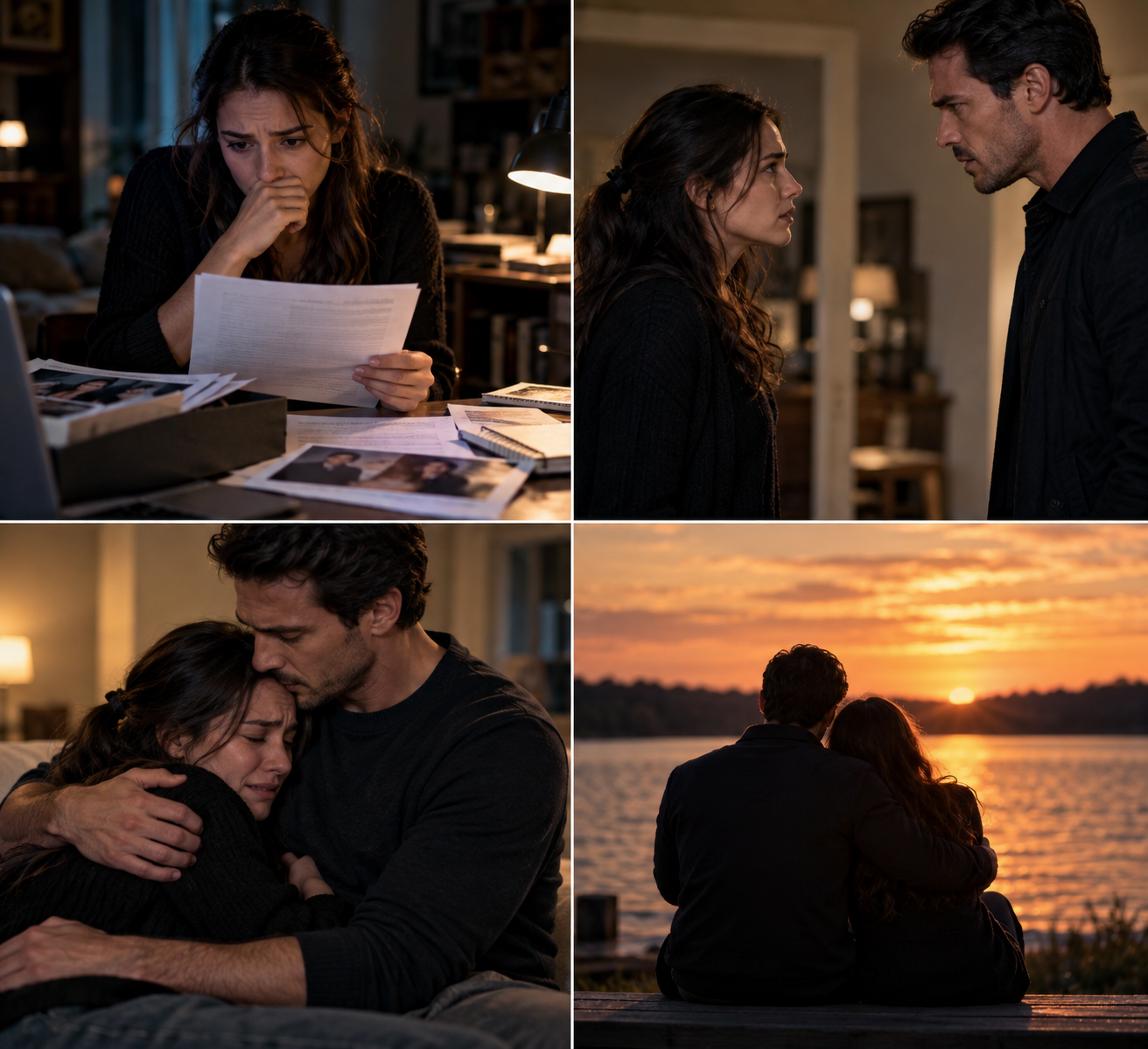
Detective Ortiz did not give me every detail on the sidewalk.
She asked whether I was somewhere private.
I told her I could return to the garden office.
Margaret came with me but waited outside the room.
Thomas joined by phone.
Ortiz began.
The prosecutors had approved charges related to the forged authorization, attempted fraudulent financing, identity misuse, and certain computer-access conduct.
My stomach tightened despite months of preparation.
“Against Brandon?”
“Yes.”
I closed my eyes.
I had known this was possible.
Possibility still differs from hearing your son’s name attached to formal criminal charges.
“What exactly?”
Ortiz used legal terms carefully.
I listened.
Asked questions.
Did not pretend to understand everything immediately.
The core was clear.
The forged authorization.
Use of my stolen signature image.
False representations connected to the loan against my property.
Unauthorized access to protected accounts.
Other counts would depend on jurisdiction and proof.
“What about the deed?”
“Related conduct is included in the broader case, but I can’t characterize every count.”
“Melissa?”
“Separate charging decisions are proceeding concerning unauthorized medical access and falsification-related conduct.”
“Darren?”
“Charges are being pursued for his role in identity-related and fraudulent planning activities, including documents associated with the attempted transaction.”
“Jessica?”
Ortiz paused.
My chest tightened.
“Her situation is different.”
“How?”
“Her cooperation, role, and evidence support a different charging assessment.”
“Is she being charged?”
“Yes, but more narrowly.”
I closed my eyes.
Jessica too.
Not surprising.
Still painful.
“For what?”
Ortiz summarized conduct related to false communications and facilitation of documents, subject to the prosecutor’s formal filing.
“What about Chloe?”
“No charges are planned based on evidence currently available.”
Relief came sharply.
Not because she had behaved well.
Because legal culpability and moral failure were different.
“David?”
“Professional and regulatory matters are proceeding separately. I can’t speak for every agency.”
“Criminal charges?”
“Not in the primary filing we’re discussing.”
“Martin?”
“No.”
“Daniel?”
“No.”
The circle narrowed exactly as the evidence had.
Brandon.
Darren.
Melissa.
Jessica to a lesser extent.
The law separating acts from weakness.
I appreciated that more than I expected.
“What happens now?”
“Counsel for each defendant will receive formal notice. There will be court proceedings.”
“Do I have to testify?”
“Possibly.”
I looked at Thomas on the phone.
He said, “We’ll prepare if needed.”
Ortiz continued.
“You may be contacted by victim services.”
“I already spoke with someone.”
“Yes.”
“Does Brandon know?”
“His attorney is being notified.”
My chest tightened.
The botanical garden meeting had ended less than an hour earlier.
Brandon had asked about dinner.
Now he would learn he had been charged.
Two truths could exist in the same day.
That was becoming the theme of my life.
“What about restitution?”
“May be addressed through agreements or sentencing depending on how matters resolve.”
“Do I control whether prosecution continues?”
“No.”
Good.
I had known.
Still, hearing it mattered.
This was no longer a burden I could take back to protect him.
Robert’s letter echoed.
Let him fail honestly.
I thanked Ortiz.
After the call, I sat alone.
Margaret entered quietly.
“What happened?”
“Charges.”
She sat beside me.
“Brandon?”
“Yes.”
“Jessica?”
“Some.”
“Others?”
I told her generally.
She did not ask what I wanted.
That helped.
Instead, she said, “Do you want to go home?”
“Yes.”
The drive was quiet.
At the gate, Margaret entered her code.
Green.
I almost laughed at the ordinary comfort of it.
Inside, I found a voicemail waiting.
Brandon.
He already knew.
I listened.
Mom, my lawyer called. I’m not asking you to do anything. I just wanted you to know I meant what I said this morning. Whatever happens legally, I’m going to cooperate.
No accusation.
No panic.
No request.
Then:
I still hope we can have dinner someday.
I sat down.
That sentence hurt more than if he had begged me to stop the case.
Because it sounded like a son rather than a defendant.
I called Thomas.
“Do I answer?”
“If you want.”
“I don’t know what to say.”
“Then don’t answer today.”
Permission not to know.
I left the voicemail unanswered.
Jessica called too.
Her message was different.
She was crying.
Mom, I found out. I’m scared. I’m not asking you to fix it. I’m just scared.
That was honest.
I did respond.
One text.
I know.
Nothing more.
I would not become her legal adviser.
I would not promise outcomes.
I would not soothe consequences away.
But fear acknowledged does not equal rescue.
The next few weeks moved strangely.
Legal proceedings advanced.
Not dramatically.
Paperwork.
Hearings.
Negotiations.
Counsel.
Deadlines.
The opposite of family chaos.
Courts turn emotion into procedure.
I found that comforting.
Brandon entered not-guilty pleas initially on advice of counsel while negotiations continued.
Jessica did the same.
I did not interpret those pleas emotionally.
Thomas explained they were procedural.
I listened.
Learned.
Stopped making every legal step a moral statement.
That discipline helped.
Meanwhile, restitution continued voluntarily.
Brandon sold his house.
The family moved into a modest rental.
He surrendered control of the business restructuring.
His company’s remaining divisions were transferred to new management.
He lost the thing he had tried to save.
And the world did not end.
That mattered.
Emily called me one evening.
“The kids are okay.”
“Good.”
“They miss the pool.”
“I’m sure.”
“The younger one says the rental has better stairs for sliding.”
I laughed.
Robert would have approved.
“How is Brandon?”
“Quieter.”
“Good quiet?”
“I don’t know yet.”
Fair.
“He goes to counseling.”
“That’s good.”
“He hates it.”
“Then perhaps it’s excellent.”
Emily laughed.
Normal moments were returning carefully.
Not restoring the past.
Growing around damage.
Jessica sold the vacation property.
Her repayment account began reducing the debt.
She also entered counseling and financial planning.
Her marriage remained strained but intact.
She did not ask me for money.
That was perhaps the most meaningful fact.
Chloe continued visiting.
Sometimes with children.
Sometimes alone.
She became annoyingly direct.
“Mom, you’re overwatering that plant.”
“I did not ask.”
“You told me to practice disagreeing.”
“I regret everything.”
We laughed.
One afternoon she refused a request from Jessica while sitting in my kitchen.
Jessica called asking Chloe to tell me something about a legal deadline.
Chloe said:
“No. Tell Mom yourself through the proper channel.”
Then hung up.
She looked at me.
“My hands are sweating.”
“Good.”
“Good?”
“Courage is rarely comfortable.”
She rolled her eyes.
That too felt normal.
Martin eventually came to see me.
Not at the house initially.
We met at a café.
He apologized once.
Then stopped.
I appreciated that.
“I miss Robert,” he said.
“So do I.”
“He would hate all this.”
“Yes.”
“He would also be taking notes.”
I laughed.
“That too.”
We spoke about their friendship.
Not only the final months.
Fishing trips.
Bad investments.
Arguments.
The time Martin and Robert got stranded in a snowstorm and claimed they survived on peanuts, though I later learned there was a motel ten miles away.
Memories returned Robert to human scale.
He had become almost mythic during the investigation.
The warning husband.
The planner.
The man who foresaw danger.
But he was also the man who forgot anniversaries unless he wrote them down.
Who burned toast.
Who kept secrets he should have shared.
Who loved imperfectly.
I needed that Robert too.
Before leaving, Martin said, “I should have listened to him.”
“Yes.”
“He should have listened to you.”
“Yes.”
“And you?”
I smiled.
“I should have listened to myself sooner.”
Martin nodded.
That may have been the most important lesson.
David’s professional consequences moved separately.
His firm terminated his role.
Regulatory proceedings began.
He retired from active practice before they concluded.
He sent one final letter.
Not an apology.
A factual accounting of every matter involving me that remained in his possession, where it had been transferred, and who now had responsibility.
Useful.
Specific.
No emotion.
Exactly what I needed from him.
At the bottom he wrote:
You were entitled to this clarity from the beginning.
I filed the letter.
No response.
Some relationships end not with anger but administrative completeness.
The hospital corrected my records thoroughly.
Melissa’s access was documented.
Additional safeguards were implemented.
Denise called personally to explain them.
I appreciated that the institution did not pretend one bad employee meant the entire hospital was corrupt.
Systems fail through people.
Systems improve through response.
I kept seeing that everywhere.
The lender strengthened verification on transactions involving powers of attorney and family intermediaries.
The security company eliminated old installer credentials.
Thomas strengthened my trust.
The hospital corrected access rules.
Even damage could produce better boundaries.
One rainy afternoon, I sat with Thomas reviewing my final estate structure.
“Do you want to discuss beneficiary amounts?”
“Yes.”
For months I had delayed that question.
Not because I wanted to punish anyone.
Because anger is a poor accountant.
Now the anger had cooled enough to think.
“I don't want equal treatment to mean identical treatment.”
Thomas nodded.
“That is reasonable.”
“Chloe did wrong.”
“Yes.”
“But differently.”
“Yes.”
“Jessica caused financial harm and deception.”
“Yes.”
“Brandon more.”
“Yes.”
“I don’t want one number to become a moral score.”
“Good.”
Inheritance was not sentencing.
Courts handled crimes.
Relationships handled trust.
Estate planning handled stewardship.
I refused to confuse them.
We designed distributions accordingly.
The grandchildren’s education remained protected equally.
Certain family support structures remained available under independent oversight.
Adult inheritances differed in control and conditions, not as revenge but according to demonstrated financial judgment and risks.
Brandon’s share, if any remained after future decisions, would never be under his unilateral control.
Jessica’s would also remain protected.
Chloe’s had greater flexibility but still safeguards.
I retained the right to change everything.
Because I was alive.
That point mattered most.
“What about charitable giving?”
Thomas asked.
“Complete Robert’s reserve plan.”
“All three million?”
“Yes.”
“And additional giving?”
“Yes.”
He smiled slightly.
“Brandon once feared you would give too much.”
“I know.”
“Does that influence you?”
“No.”
Good.
I did not want revenge philanthropy.
Giving money away merely to spite heirs would still let heirs control my choices.
I would give because Robert and I had chosen causes we believed mattered.
Scholarships.
Cancer care.
Food programs.
The botanical garden.
A fund supporting older adults facing financial exploitation.
That last one was mine.
Thomas looked up.
“You’re sure?”
“Yes.”
“Anonymous?”
“Mostly.”
I did not want a building with my name.
I wanted lawyers, advocates, and counselors available to someone sitting at a kitchen table wondering whether a child’s concern was really control.
That felt useful.
Then came the personal letter.
I finalized it.
Copies placed with estate documents.
Copies already given to the children.
No secret surprises after death.
I refused to continue the family tradition of delayed truth.
“If I change something significant,” I told Thomas, “I want them informed if appropriate.”
“Even if they dislike it?”
“Especially then.”
He smiled.
“Robert would find that uncomfortable.”
“I know.”
Months passed.
The criminal cases moved toward negotiated resolutions.
Brandon eventually entered guilty pleas to several charges involving unauthorized computer access, document fraud, and the attempted financing scheme.
Other allegations were dismissed or consolidated as part of the agreement.
I attended the hearing.
Not because anyone required me to.
Because I wanted to hear him say it.
The judge asked whether he understood the charges.
“Yes.”
Whether he understood rights he was waiving.
“Yes.”
Whether anyone forced him.
“No.”
Then came the factual basis.
My son admitted accessing accounts without authorization.
Using my signature image.
Participating in submission of false financial documents.
Trying to obtain financing using my property without informed consent.
Each statement landed quietly.
No gate.
No shouting.
No excuses.
Just yes.
When the judge asked whether he agreed those facts were true, Brandon looked toward me once.
Then back.
“Yes, Your Honor.”
I cried.
Not because I wanted him punished.
Because truth had finally stopped moving.
Jessica entered a separate plea agreement on narrower offenses connected to impersonation and facilitating false communications.
Her cooperation and restitution mattered.
She stood before the court shaking.
But she answered clearly.
Yes.
Yes.
Yes.
No one else made her.
She chose.
That mattered too.
Darren’s case was more complicated and continued longer.
Melissa resolved hers separately.
I followed only what affected me.
I had no desire to build a new life around tracking everyone’s punishment.
That would be another form of captivity.
Sentencing came later.
Brandon received a combination of custodial consequences, supervised release, restitution requirements, and restrictions involving financial conduct.
The exact structure was less important to me than one condition:
He could not act as my financial representative or access my accounts.
The law had formalized a boundary I already established.
Jessica received less severe consequences reflecting her narrower role, cooperation, and repayment.
Again, I did not celebrate.
I also did not intervene to stop them.
Robert’s letter.
Let them fail honestly.
The day after Brandon’s sentencing, I received a letter from him.
Not asking for sympathy.
He wrote:
I spent months thinking consequences meant Dad and you had stopped loving me. I understand now consequences are sometimes the only place where love stops lying.
I cried after that sentence.
Perhaps because I wished Robert could read it.
Perhaps because I wished we had all learned it twenty years earlier.
I wrote back.
One paragraph.
I love you. Keep doing the work.
Nothing about inheritance.
Nothing about forgiveness.
Enough.
Months became nearly a year since the Christmas gate confrontation.
The anniversary approached.
I noticed before anyone mentioned it.
December twenty-fifth.
Three cars.
Red keypad.
Folder.
My children outside.
For several days I wondered whether I wanted to be alone.
Then Chloe called.
“Mom, what are you doing for Christmas?”
There was fear in her voice.
Not entitlement.
“I haven't decided.”
“Okay.”
No pressure.
Jessica sent a message later.
I won’t make plans involving you unless you ask. Just wanted to say I love you.
Brandon could not attend freely because of legal restrictions and scheduling related to his sentence and supervision.
His message came through the approved channel.
Whatever you decide for Christmas, I hope it’s peaceful.
No invitation request.
No guilt.
No question about whether the gate code worked.
Robert’s measure again.
They had stopped asking what belonged to them.
They were learning to ask what they owed.
Then I made a decision.
Not from guilt.
Not from fear.
Because I wanted to.
I called Chloe.
“Would you and the children like Christmas lunch here?”
She was silent.
“Really?”
“Yes.”
“What about Jessica?”
“I’m calling her next.”
“Brandon?”
“Different arrangements.”
“Okay.”
No lobbying.
Good.
Jessica cried when I invited her.
“Are you sure?”
“Yes.”
“If you change your mind—”
“I’ll tell you.”
“Okay.”
Again.
Good.
For Brandon, I arranged a permitted visit on another day under appropriate conditions.
Not Christmas.
Not yet.
That too was my choice.
The house would contain family again.
Not the old version.
A changed one.
I called the security company.
“Do not restore any old codes.”
The technician laughed.
“No problem.”
“I’m serious.”
“So am I.”
For Christmas, Chloe and Jessica would receive temporary guest access tied to that day only.
Not permanent codes.
Not because I hated them.
Because healthy access no longer needed to pretend boundaries were insulting.
On Christmas morning, I woke before dawn.
The house was quiet.
I made coffee.
Then walked to the study.
Robert’s photograph sat beside his final letter.
“One year,” I whispered.
Not exactly.
Close enough.
I thought about everything that had happened.
The hospital.
The silence.
The gate.
The documents.
The investigation.
Charges.
Repayment.
Therapy.
Letters.
Loss.
Change.
I had once believed the worst outcome was losing my children.
Then I learned keeping them at the cost of myself was worse.
Now something more hopeful existed.
I had not lost them entirely.
I had lost the version of family built on unlimited access.
What remained had a chance to become real.
At eleven thirty, the gate alert sounded.
I looked at the monitor.
Chloe’s car.
She stopped at the keypad.
The temporary code worked.
Green.
She drove through.
Ten minutes later, Jessica arrived.
She did not try any old code.
She used the one I had sent.
Green.
Small details.
Enormous meaning.
They entered carrying food, not folders.
The grandchildren ran ahead.
“Grandma!”
I opened my arms.
The house filled with noise.
Different noise.
Safer because I had chosen it.
Still, one chair remained empty.
Brandon’s.
I noticed.
So did everyone.
No one commented.
After lunch, the children went outside.
Jessica helped clear plates.
Chloe wrapped leftovers.
No one asked about the trust.
No one asked about the house.
No one asked what would happen when I died.
We discussed terrible potatoes and school plays.
Ordinary life.
Then the gate alert sounded again.
Unexpected.
I looked at the monitor.
A delivery vehicle.
The driver left a small package with security.
Inside was a box from Brandon.
I hesitated.
Jessica said, “You don’t have to open it.”
That alone showed change.
I did.
Inside was Robert’s old black password notebook.
The one Brandon had once used.
The one that had opened doors he should never have entered.
A note sat on top.
I found this among my stored boxes. It belongs to you. I copied nothing. My lawyer has documented the return.
I turned the notebook over.
No sentimental message.
No plea.
Just restitution of access.
I smiled through tears.
“What is it?” Chloe asked.
“Something that came home.”
And for the first time, I understood that the final stage of this story would not be about what my children inherited.
It would be about what, if anything, we could rebuild before inheritance ever mattered again.
Click here to continue reading: PART 35: One Year After the Locked Gate, My Children Returned Under New Rules, and I Finally Understood What Family Could Survive
Three Months After My Children Asked for Space, Their Silence Taught Me Something Their Words Never Could
Part 34 of 35

One Comment on “PART 34 – The Legal Decisions Finally Separated Criminal Acts From Family Failures, Leaving Me to Decide Which Consequences Belonged to Courts and Which Belonged to Me”