The year after the lottery ticket changed my life passed more quickly than I expected.
There were no more secret envelopes.
No midnight phone calls.
No investigators waiting on the porch.
No new names appearing in Thomas's old files.
For the first time in years, ordinary life became ordinary again.
I discovered that I liked ordinary.
I liked waking without wondering what had happened while I slept.
I liked drinking coffee in the yellow kitchen while the morning light moved across the floor.
I liked knowing that if my phone rang, it was probably Ruth asking whether I wanted lunch.
Sometimes peace felt almost suspicious.
I had become so accustomed to danger that calm initially seemed like another disguise.
Daniel noticed.
“You keep looking over your shoulder,” he told me one afternoon.
“I do not.”
“You do.”
“I think you're imagining things.”
He smiled.
“You've spent a year expecting the next secret.”
“Maybe.”
“There isn't one.”
“How do you know?”
“Because I checked.”
I laughed.
“That's comforting.”
He handed me a folder.
“Then you can stop checking too.”
Inside were the final financial reports for the foundation.
Everything was clean.
Every account reconciled.
Every recovered asset documented.
Every legal obligation satisfied.
I closed the folder.
“I don't want this anymore.”
Daniel looked at me.
“What do you mean?”
“I don't want to run everything.”
“You don't have to.”
“I know.”
“I thought you wanted to.”
“I did.”
“And now?”
I looked out the window.
“Now I want to live.”
He smiled.
“That may be the smartest thing you've said.”
The foundation had grown beyond what I could personally manage.
There were attorneys.
Accountants.
Program directors.
Teachers.
Social workers.
People who knew more than I did about housing, education, and small-business support.
For months, I had worried that stepping away meant abandoning something Thomas had built.
Then I understood.
If everything depended on me, it wasn't a foundation.
It was another burden.
So I called a board meeting.
Anna sat beside me.
Graham sat across the table.
Ruth joined by video because she was traveling.
Daniel sat at the end.
I told them what I wanted.
“I am stepping down as chair.”
Nobody spoke.
Then Graham asked, “Are you sure?”
“Yes.”
Anna smiled.
“I think she's serious.”
“I am.”
Daniel leaned forward.
“Who takes over?”
I looked at Anna.
She immediately shook her head.
“No.”
Everyone laughed.
“Why not?” Graham asked.
“Because I'm still trying to figure out how to be a daughter.”
I smiled.
“That is a perfectly good reason.”
We appointed an independent executive director.
Anna joined the education committee.
Graham joined the housing advisory group.
Ruth remained involved in community outreach.
Daniel continued overseeing financial investigations and compliance.
The foundation no longer belonged to one family member.
That was exactly what I wanted.
I had spent too much of my life watching money turn into control.
I would not allow our money to do the same.
A few weeks later, Graham came to the cottage.
He looked tired.
“What happened?”
“Nothing.”
“That means something happened.”
He laughed.
“You know me too well.”
“Occupational hazard.”
He sat at the kitchen table.
“My business is growing.”
“That sounds good.”
“It is.”
“But?”
“But I'm scared.”
I poured him coffee.
“Good.”
He stared at me.
“You said that to Paige.”
“I probably said it to myself too.”
He smiled.
“The company is bigger than I expected.”
“Then hire people.”
“I have.”
“Delegate.”
“I am.”
“Trust them.”
He sighed.
“That one's harder.”
I sat across from him.
“Your father spent his life believing control was protection.”
Graham looked down.
“I know.”
“Don't make the same mistake.”
He nodded.
“I don't want to.”
“Then don't.”
He looked at me.
“What if I fail?”
“You will.”
He laughed.
“Thanks, Mom.”
“You will fail at something.”
“That is not reassuring.”
“It should be.”
I leaned closer.
“Failure isn't the opposite of responsibility. Refusing to learn from it is.”
He thought about that.
Then he smiled.
“You really have changed.”
“So have you.”
He left with a lighter expression.
That evening, Anna called from Oregon.
“I have news.”
“What kind?”
“The good kind.”
I waited.
“I accepted a permanent position with the foundation.”
I smiled.
“You said you didn't want to.”
“I didn't want to be controlled by it.”
“That isn't the same thing.”
“No.”
“What changed?”
She laughed.
“I realized I can choose how much of my life I give to something.”
I felt proud.
Not because she was working for the family.
Because she had chosen for herself.
“That sounds familiar.”
“Where do you think I got it?”
“Definitely not from your father.”
She laughed.
We talked for almost an hour.
Before hanging up, she said, “Mom?”
“Yes?”
“Thank you for letting me leave whenever I want.”
I closed my eyes.
“Why wouldn't I?”
“Because sometimes parents hold on.”
I smiled.
“I spent forty-eight years not knowing you.”
“I know.”
“I won't waste another minute trying to own you.”
There was silence.
Then she said:
“I love you.”
The words still surprised me.
Not because I doubted them.
Because I never imagined hearing them.
“I love you too.”
After the call ended, I sat in the dark.
The old version of me would have been terrified that Anna might leave.
The new version understood something different.
Love that requires captivity is not love.
Love that survives freedom is.
That became the quiet principle of my life.
I would no longer measure love by how tightly I could hold someone.
I would measure it by whether they could leave and still choose to return.
A few months later, Ruth came home from another trip.
She brought me a postcard from Italy.
“You're getting spoiled,” I told her.
“I'm getting old.”
“So am I.”
“Speak for yourself.”
I laughed.
She sat beside me.
“You look happy.”
“I am.”
“Really?”
“Yes.”
She nodded.
“Then I can stop worrying.”
“You were worried?”
“Always.”
“That must be exhausting.”
“It is.”
We laughed together.
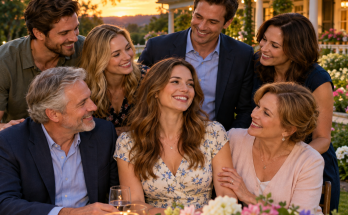
That night, the four of us had dinner.
Me.
Ruth.
Graham.
Anna.
Four people who had once been separated by secrets, distance, fear, and time.
Now we sat around the same table.
No one talked about money.
No one mentioned the trust.
No one discussed Thomas's business.
We talked about food.
Travel.
Work.
The grandchildren.
A broken dishwasher.
A ridiculous television show.
Ordinary things.
The best things.
I looked around the table.
I realized then that I had spent years believing the greatest reward would be discovering the truth.
It wasn't.
The reward was no longer needing the truth to hurt anyone.
We knew what had happened.
We had accepted what couldn't be changed.
And we were finally free to talk about something else.