The final hearings lasted months.
By the time they ended, the story had become larger than anything I had ever imagined.
Mark received a prison sentence.
Diane received a reduced sentence after cooperating.
Jonathan spent the rest of his life in federal custody.
The bank manager testified.
Several old property transfers were reversed.
Others could not be reversed because too much time had passed.
Some businesses were sold.
Some properties returned to legitimate owners.
The preservation trust was finally dissolved.
Except for the house.
Dad had made one request clear.
The house was mine.
Not because it represented his wealth.
Because it represented the place where he had failed, loved, lied, protected, and finally tried to make things right.
I kept it.
My mother came home permanently.
That was the part I had wanted most.
Not the money.
Not the property.
Her.
We learned how to live in the same house without pretending the past had never happened.
Some days were difficult.
Some memories were worse than others.
But eventually, the house became a home instead of an archive.
One afternoon, Nora came by with the final court documents.
She placed them on the kitchen table.
“It's finished.”
I looked at her.
“Completely?”
“As completely as anything involving lawyers can be.”
I laughed.
“That sounds reassuring.”
She smiled.
“You're free to decide what you want to do with the remaining property.”
I shook my head.
“I don't want it.”
“None of it?”
“Not all of it.”
I had already decided.
The commercial properties would be sold.
The money would go into a foundation.
The foundation would help people who had lost savings through financial fraud, forged documents, and family-controlled schemes.
Nora agreed to help establish it.
Samuel offered legal assistance.
My mother volunteered to work with survivors.
I kept the house.
And the maple tree.
That was enough.
A few weeks later, Edward came to say goodbye.
He had decided to disappear from public life again.
He said he had spent too many years being a ghost.
“I want to disappear for the right reason this time.”
Before leaving, he handed me one final envelope.
Inside was the photograph of Dad and Edward as boys.
On the back Dad had written:
If we ever disagree, remember that neither of us is always right.
I smiled despite myself.
Edward watched me.
“You understand now?”
“What?”
“Your father wasn't trying to leave you a perfect legacy.”
I looked at the photograph.
“No.”
“He was trying to give you the chance to build one.”
I nodded.
“That makes more sense.”
He walked toward the driveway.
I called after him.
“Edward.”
He stopped.
“Thank you.”
He turned.
“For what?”
“For coming back.”
He smiled.
“I came back because you were already doing what your father couldn't.”
“What?”
“Choosing what the truth was worth.”
Then he left.
I never saw him again.
Sometimes a photograph arrived.
A mountain.
A lake.
A small town.
No return address.
Just a picture.
I understood.
He was alive.
He was safe.
That was enough.
Years passed.
The foundation grew.
People began sending letters.
Some told me how they had discovered relatives stealing from them.
Others had lost businesses because someone they trusted forged documents.
A few simply wanted to tell me that they had finally learned to question people who demanded blind trust.
I always answered when I could.
Not because I was an expert.
I wasn't.
I had simply learned what secrecy could cost.
My mother changed too.
She became less afraid of the past.
Sometimes she talked about Dad.
Sometimes she didn't.
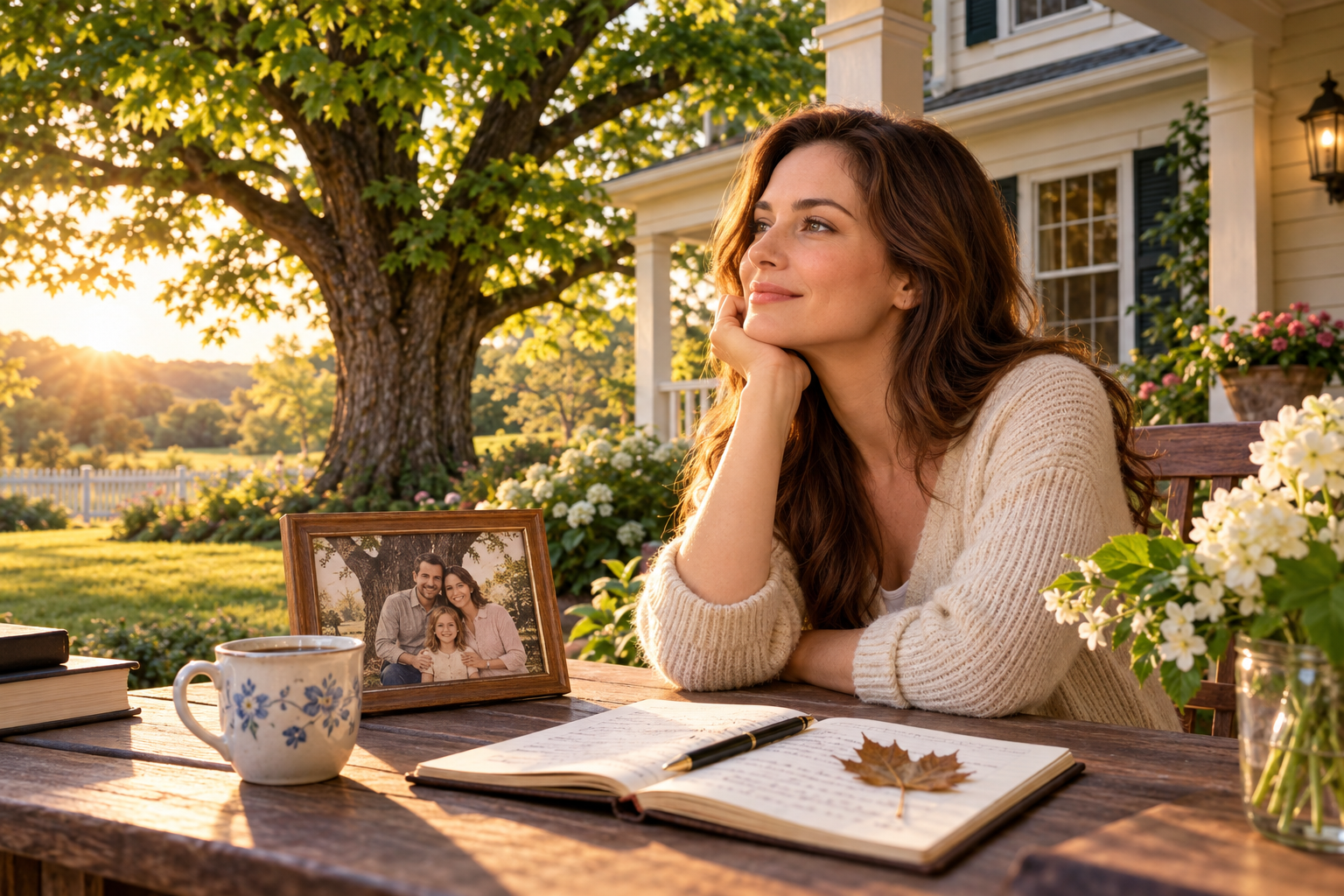
One spring morning, we stood beneath the maple tree.
The branches were full of new leaves.
She touched the trunk.
“Your father loved this tree.”
“I know.”
“He used to say it was the one thing he planted that outlived every mistake.”
I smiled.
“That sounds like him.”
She looked at me.
“Do you forgive him?”
I thought about the question.
“Yes.”
Then I shook my head.
“Not because he deserved forgiveness for everything.”
She nodded.
“Because I don't want his mistakes deciding what I feel anymore.”
That afternoon, I opened Dad's wooden box.
Inside were the photographs.
The letters.
The old ledger.
The brass seal.
And the final note.
I had read it dozens of times.
But one sentence felt different now.
Choose peace when truth has finished doing its work.
I closed the box.
Outside, the maple tree moved in the wind.
For years, I had thought my father left me an inheritance.
He had.
But the money had never been the most valuable part.
He left me the truth.
It was late.
It was damaged.
It came wrapped in lies.
But it was finally mine.
And I had one last decision to make.
I could preserve the family archive exactly as it was, allowing future generations to inherit the same secrets.
Or I could destroy the secrets without destroying the evidence.
I chose the second.
The records went to the investigators.
The legal documents went into public archives.
The personal letters stayed with me.
The black ledger was preserved as evidence.
The brass seal was placed in a museum collection dedicated to financial crime and historical fraud.
The house remained mine.
And the maple tree remained where Dad had planted it.
I kept only what belonged to me.
The memories.
The photographs.
The letters that explained the people behind the evidence.
I did not keep the secrets.
Those belonged to the past.
Years later, when people asked me what I had inherited from my father, I stopped saying eight million dollars.
I told them I inherited a house, a tree, a collection of terrible secrets, and the responsibility to decide what should survive.
Then I would tell them something else.
My husband once believed my father's death meant his life was about to become easier.
He was wrong.
My father's death began the hardest chapter of my life.
But it also ended the part of my life in which other people decided what I was allowed to know.
Mark had wanted my inheritance.
Bell had wanted my father's empire.
Diane had wanted security.
Edward had wanted justice.
My mother had wanted survival.
My father had wanted protection.
And I had spent years believing I had to choose between them.
I didn't.
I chose myself.
That was the inheritance no one had been able to steal.