The first spring after I stopped looking for secrets felt different.
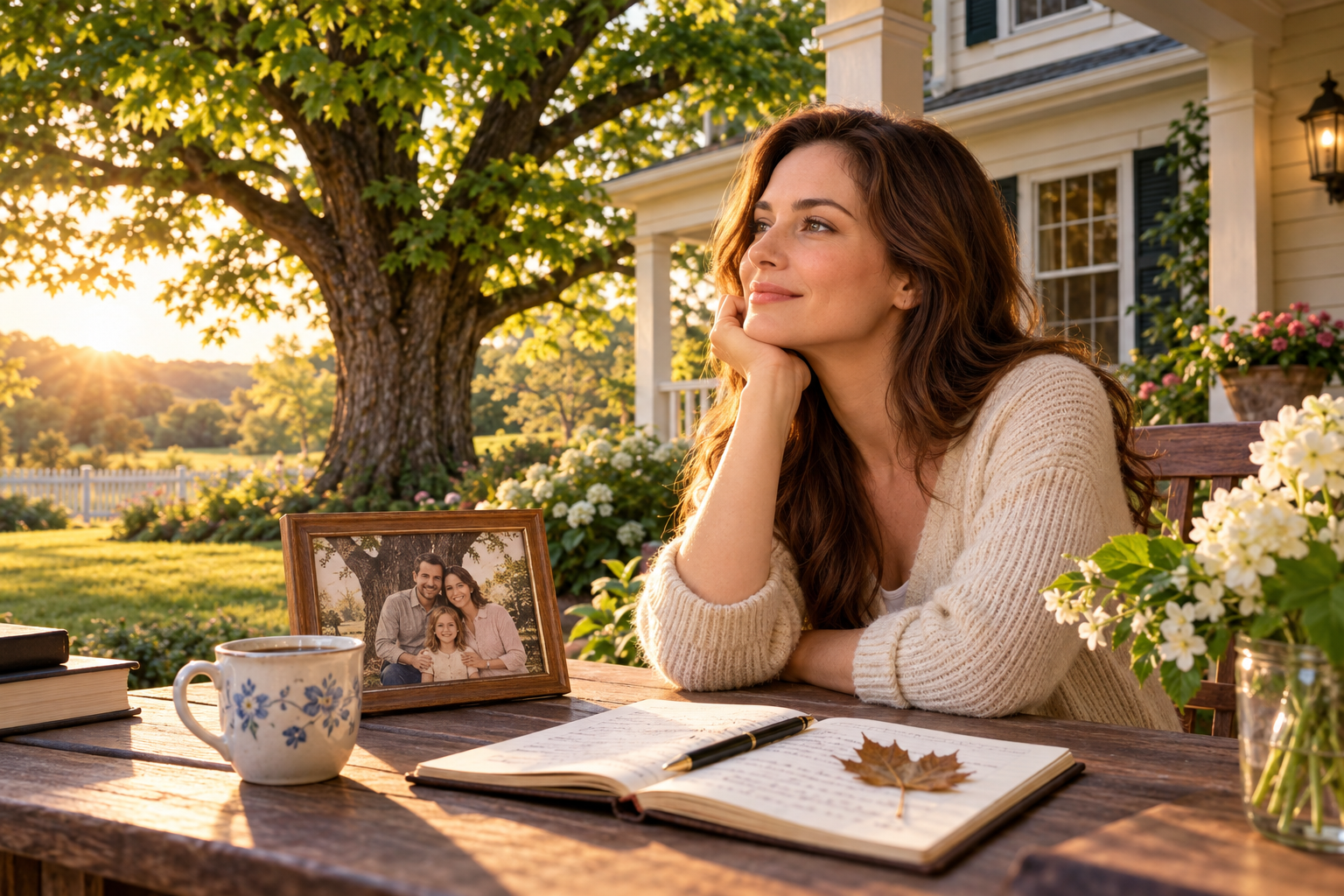
The maple tree had survived another winter, and the new leaves appeared almost overnight. One morning they were barely visible. A few days later, the branches were covered in green.
Mom stood at the kitchen window with her coffee.
“It looks healthier this year.”
“It probably is.”
“So are you.”
I smiled.
“I suppose.”
She turned toward me.
“You suppose?”
“I've gotten used to being healthy.”
“That sounds like something a lawyer would say.”
“Nora has influenced me.”
Mom laughed.
The foundation had become larger than any of us had imagined. There were now offices in three cities, a permanent legal team, scholarship programs, financial-literacy workshops, and a growing network of attorneys willing to help people who could not afford representation.
Yet I still thought of it as the place where twelve people had once gathered around a folding table.
That was important.
Growth could become another kind of empire if you weren't careful.
I had seen that happen before.
So every year, the board reviewed the foundation's structure.
No single person could control it.
No family could inherit it.
No donor could dictate its work.
No private account could exist outside the audited system.
The rules were deliberately boring.
I loved that.
Boring was safe.
One afternoon, Nora called me into a meeting.
“We've received a proposal.”
“What kind?”
“A university wants to establish a research center around the archive.”
I frowned.
“Would they be using the Hail name?”
“No.”
“Good.”
“They want to call it the Center for Financial Accountability.”
“That sounds better.”
“They also want you to join the advisory board.”
I hesitated.
“Why me?”
“Because you lived through the case.”
“That doesn't make me an expert.”
“It makes you a witness.”
I thought about it.
For years, I had believed expertise meant knowing every answer.
Now I understood that sometimes the most valuable person in the room was the one willing to say, “I don't know. Let's find out.”
I agreed.
The center opened the following year.
Students studied the old Bell network.
They examined how companies had been structured to obscure ownership.
They studied the mistakes investigators had made decades earlier.
They analyzed how family relationships had been exploited.
They also studied the people who resisted.
Thomas Reed's records.
Helen Carter's testimony.
Edward's preserved evidence.
My mother's statement.
Samuel's legal files.
Nora's investigation.
The story was no longer a family secret.
It was a case study.
That mattered.
Secrets become powerful when they belong to one person.
Knowledge becomes useful when it belongs to everyone.
One morning, I received a letter from a student at the center.
She wrote that she had chosen forensic accounting because of the archive.
She said her grandmother had lost her home through a fraudulent property transfer.
Her family had never known how to challenge it.
Now she did.
She ended the letter with a sentence that stayed with me.
“I want to become the person my grandmother needed.”
I folded the letter carefully.
That was the future I wanted.
Not people becoming like me.
People becoming themselves with more tools than I had.
I showed the letter to Mom.
She read it twice.
“She'll be good at it.”
“I think so.”
Mom handed it back.
“Your father would have liked her.”
I looked at her.
“Probably.”
She smiled.
“But you would have liked her first.”
That was the difference.
My father would have looked for potential.
I wanted to see the person.
That evening, I went into the study.
The room had changed again.
There were fewer photographs now.
The walls were almost bare.
On one shelf sat the framed note I had written when I was nine.
I want to be happy.
Beside it was the photograph of my parents.
I had kept both because they represented two different beginnings.
One belonged to the child I had been.
The other belonged to the adults who had become my parents.
Neither image needed to be perfect.
I sat at the desk.
For the first time, I opened a blank notebook.
Not one filled with evidence.
Not one filled with names.
Not one belonging to Walter.
Mine.
I wrote one sentence.
What do I want the rest of my life to look like?
I stared at it.
The question seemed almost impossible.
For years, my future had been defined by reacting.
What should I do about Mark?
What should I do about the trust?
What should I do about my mother?
What should I do about the archive?
What should I do about the properties?
What should I do about the people who wanted what belonged to me?
Now there was no emergency.
No one was waiting for an answer.
I could simply ask what I wanted.
The first thing I wrote was simple.
More ordinary mornings.
Then:
Travel.
Read more.
Spend time with Mom.
Keep working with the foundation.
Learn something unrelated to money.
Maybe write.
I smiled at that last one.
Write.
The word felt strange.
My family had spent years writing documents.
I wanted to write something that wasn't a contract.
That night, I began.
Not the whole story.
Not yet.
Just memories.
The smell of my mother's kitchen.
My father's hands on the steering wheel.
The maple tree.
Mark's first lie.
The letter beneath the sugar jar.
The key marked seventeen.
The first time I understood that fear could live inside a house.
I wrote until midnight.
Then I closed the notebook.
I didn't know whether anyone would ever read it.
That didn't matter.
For once, I wasn't preserving something for the future.
I was creating something for myself.
Months passed.
The notebook grew.
I wrote about Edward.
About Thomas Reed.
About the old river property.
About the photograph of my mother in the hospital.
About William.
About the silver key.
About the final archive.
I wrote about Mark too.
Not with hatred.
Not with sympathy.
Just honestly.
He had made choices.
So had I.
The difference was that mine eventually led me away from control.
His had led him deeper into it.
One day, Nora saw the notebook.
“You're writing the book.”
“Maybe.”
“Are you going to publish it?”
“I don't know.”
“Good.”
I laughed.
“Why good?”
“Because if you decide you have to publish it, you'll start writing for other people.”
She was right.
So I kept writing without deciding.
One afternoon, Edward called.
It was the first time he had called me directly in years.
I answered immediately.
“Hello?”
There was silence.
Then his voice.
“Hi, Clare.”
I sat down.
“Where are you?”
“Somewhere quiet.”
“That doesn't narrow it down.”
He laughed.
It was good to hear.
“How are you?”
“Older.”
“So am I.”
“Are you coming home?”
He was quiet.
“I don't know.”
“You don't have to.”
“I know.”
“I mean it.”
“I know.”
For a while, we talked about ordinary things.
Weather.
Food.
The foundation.
Mom.
He asked about the maple tree.
“Still standing.”
“Good.”
He told me he had planted one when he was young.
“Did you?”
“I tried.”
“What happened?”
“Goats.”
I laughed.
“Goats?”
“Long story.”
“I want to hear it.”
“Someday.”
There was that word again.
Someday.
But this time it didn't sound like a promise.
It sounded like possibility.
Before hanging up, Edward said, “Your father would be proud.”
I didn't answer immediately.
Then I said, “I hope so.”
“You don't need his approval.”
“I know.”
“I wanted to remind you.”
“Thank you.”
After we ended the call, I sat quietly.
I realized I didn't feel the need to know where he was.
That was love without possession.
It had taken me years to understand.
Mom came into the room.
“Edward?”
“Yes.”
“What did he say?”
“That he planted a tree once.”
She laughed.
“Did it survive?”
“No.”
“Then he should have learned from your father.”
I smiled.
“He probably did.”
That evening, I added another sentence to my notebook.
Love can remain even when control disappears.
I underlined it.
Then I closed the book.
The next morning, I opened the front door.
The maple tree was bright with new leaves.
The house was quiet.
The future was uncertain.
And for the first time, uncertainty didn't frighten me.
It felt like freedom.