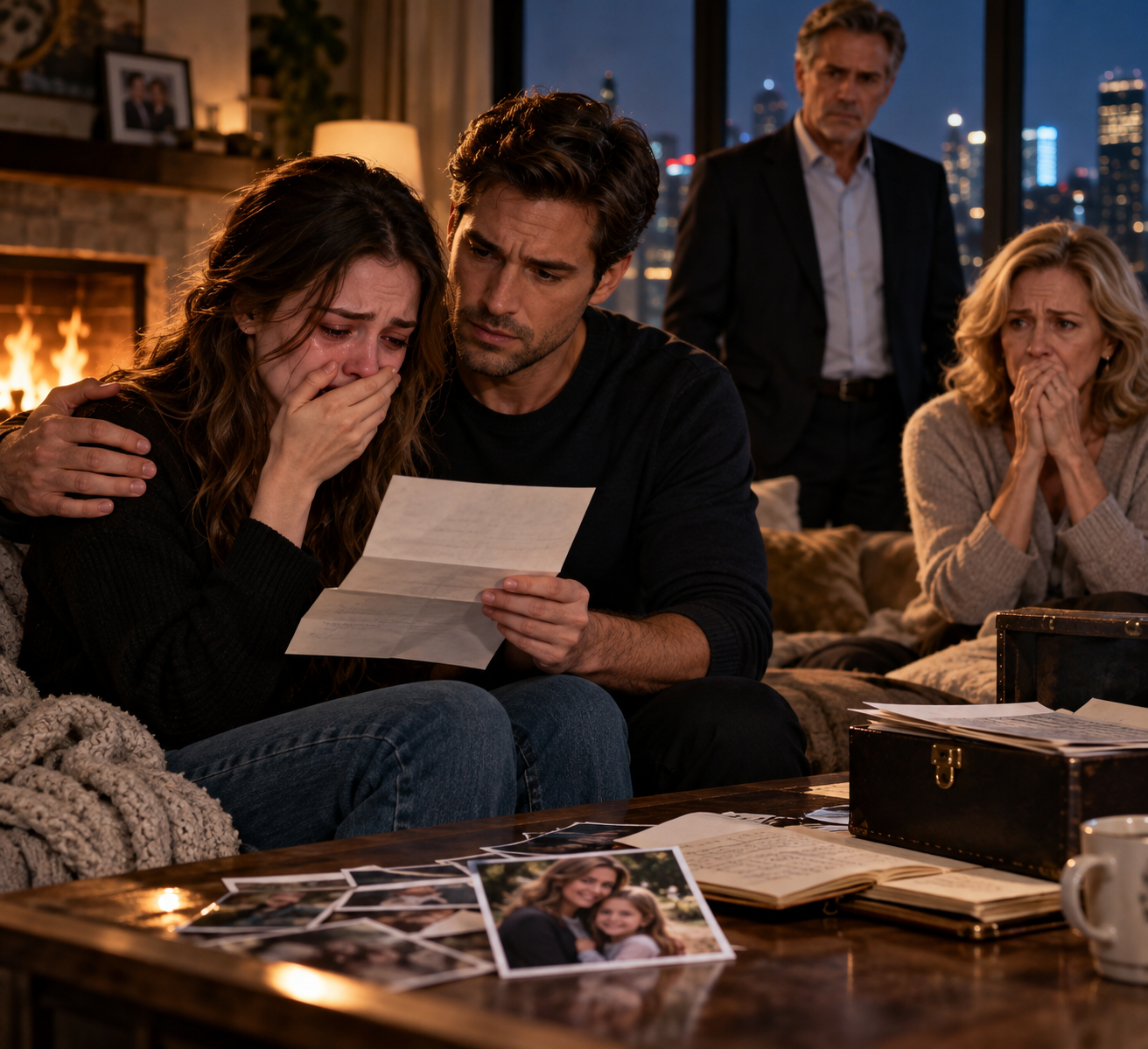
The legal adviser called the following morning after reviewing the photographs from the household records. She wanted to clarify two dates and asked whether I had any mortgage statements from before I left the house. I told her I had brought several documents with me, but I wasn't certain whether they showed the full history.
She explained that we needed to establish which obligations belonged to me, which belonged to Daniel, and which were shared. The disputed application was one concern, but the mortgage and household accounts had to be examined separately. She reminded me that an unfamiliar document did not automatically mean I was responsible for a debt, just as a familiar signature did not prove I had knowingly agreed to every term.
I appreciated the distinction. I had begun to see how easily fear could make every unknown detail seem like proof of the worst possible outcome.
Dad helped me gather the mortgage statements from the folder I had brought home. We arranged them by date on the kitchen table, matching the account numbers and payment amounts. Most of the records were ordinary. The monthly payments were consistent, and the statements showed that the mortgage remained active.
Then I noticed a separate line on a statement from the previous year. It referred to a request for information about a secondary financial facility associated with the property. The statement did not show that the facility had been finalized, but it indicated that a request had been made.
I read the line again.
“Dad, do you know what this means?”
He leaned over to look. “Not exactly. Your adviser should explain it.”
I photographed the page and sent it to her.
Later that day, she confirmed that the statement referred to an inquiry, not proof that a new debt had been completed. She recommended requesting the complete mortgage file and asking the lender whether any additional facility had been approved or remained pending. She also advised me not to contact Daniel about the matter until we understood what the records showed.
I made the request through the lender's official contact channel. The representative verified my identity and explained that the review would take several business days. I asked for confirmation in writing and saved the reference number.
It was the first time I had dealt directly with the mortgage company without Daniel sitting beside me, telling me which questions were necessary and which details I didn't need to understand. The representative spoke plainly, and when I asked her to repeat something, she did so without making me feel foolish.
After the call, I sat quietly for a while.
I had not realized how much of my confidence had eroded until I began handling these matters independently. Simple tasks now required courage because I had grown accustomed to Daniel's impatience whenever I wanted to know more than he thought I needed to know.
That evening, he sent a message asking whether I intended to keep pursuing the financial records.
I replied that I was reviewing my own financial obligations and would continue through the appropriate channels.
His response came quickly.
You are turning ordinary paperwork into an accusation.
I saved it and put the phone away.
Two days later, the mortgage company responded. Its letter confirmed that an inquiry had been made about a possible additional financial facility associated with the property, but the record did not show that the facility had been completed. The company needed further documentation to determine whether any later steps had been taken.
I forwarded the letter to my adviser.
She explained that we should not assume I had incurred a new obligation based on the inquiry alone. She would request the relevant file and review any application or authorization associated with it. Until then, I should preserve the documents and avoid signing anything presented by Daniel.
I felt relief, but it was mixed with anger. Daniel had repeatedly told me that the financial arrangements were routine and that I didn't need to concern myself with the details. Now I was discovering a series of inquiries and applications that I had never knowingly approved.
The question was no longer whether he had been hiding information. He had.
The unanswered question was why.
Rachel visited that weekend and helped me sort the last of my belongings. We separated the items I wanted to keep from those I might eventually need to collect from the house. She didn't ask me to make decisions about the marriage. Instead, she helped me label boxes and make a list of practical tasks.
While we worked, she asked whether I had considered speaking with someone about the emotional effects of what I had experienced.
“I've thought about it,” I said. “I just don't know where to begin.”
“You don't have to tell the whole story perfectly. You can start with what today feels like.”
The suggestion stayed with me. I had been treating recovery as another problem I needed to solve efficiently, with a clear timeline and a correct sequence of steps. Rachel reminded me that I could ask for help without already knowing how to explain everything.
I contacted a counselor whose information the support service had provided. We arranged an initial appointment for the following week.
That evening, I found myself rereading the messages Daniel had sent before I left. One was about the money, another about the bruises, and another about how I had embarrassed him in front of Dad. I noticed how often he had shifted the subject away from what he had done and toward what my response supposedly said about me.
I had once accepted those shifts as evidence that I was poor at communicating. Now I could see how they had prevented us from addressing the actual problem.
When the first counseling appointment arrived, I was nervous enough to consider canceling. I worried that I would be asked why I had stayed, why I had hidden the bruises, or why I had not recognized the financial problems sooner. I imagined having to defend every decision I had made.
The counselor, Dr. Ellis, began by asking what had brought me in.
I told her about leaving the house, the physical harm, and the documents I had found. My account was disjointed. I jumped between the bank statements and the argument at the kitchen table, then returned to the night Dad had seen the bruise on my face.
Dr. Ellis listened without interrupting. When I finally stopped, she asked what I felt when I imagined going back.
“Fear,” I said. “And guilt. And sometimes I miss him.”
She nodded. “Those feelings can exist together. Missing someone doesn't mean the relationship is safe, and feeling guilty doesn't mean you've done something wrong.”
I sat back in the chair. I had been waiting for someone to tell me which emotion was the correct one. Instead, she allowed them to coexist without turning them into instructions.
We discussed how I had learned to monitor Daniel's moods, how I had begun avoiding conversations that might make him angry, and how the financial dependence had grown gradually rather than through one dramatic decision. She didn't tell me what to do about the marriage. She helped me identify the ways my choices had narrowed and the steps that might restore my sense of control.
When the session ended, I felt tired but lighter.
I told Dad about the appointment while we prepared dinner. He listened, then asked whether I wanted to continue.
“Yes,” I said. “I think I do.”
He nodded and returned to chopping vegetables.
That night, I slept for nearly seven hours without waking. When I opened my eyes the next morning, the room was bright with sunlight. For a few seconds, I forgot where I was. Then I remembered the spare bedroom, the financial documents, and the decision I had made not to return to Daniel's house.
The fear hadn't disappeared.
But it no longer occupied every corner of my mind.
Click here to continue reading: PART 12: When Daniel Asked for One Last Private Conversation, Claire Agreed to Hear Him Out Only After Setting Conditions He Had Never Expected
My Father Arrived for Sunday Dinner and Realized I Had Been Hiding More Than a Painful Marriage
Part 11 of 23