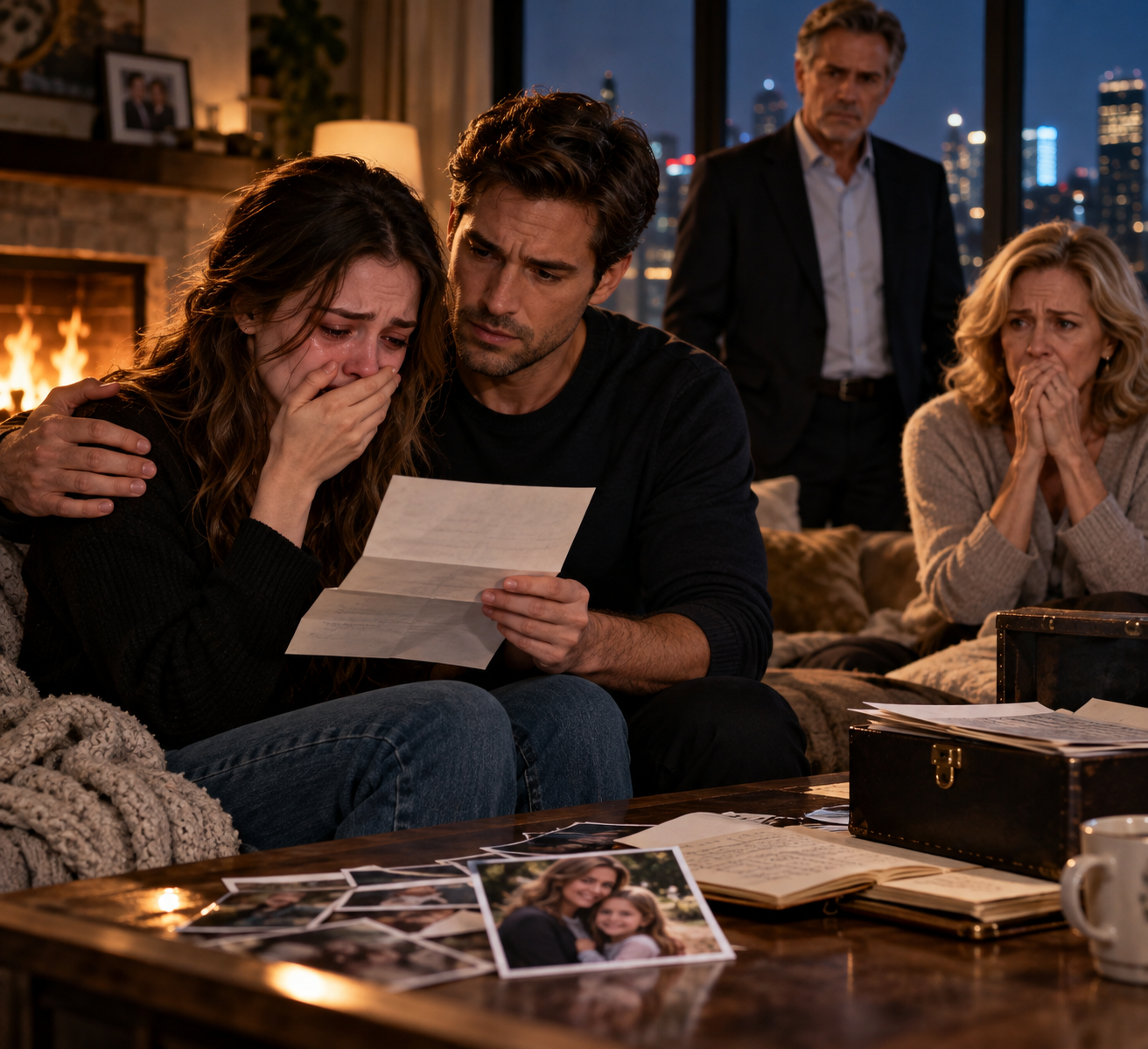
The first letter from Daniel's lawyer arrived on a Tuesday morning, three days after I told my husband I would not return home simply because he asked. It came in a plain white envelope addressed to me at Dad's house. I recognized Daniel's handwriting on the forwarding label, and my stomach tightened before I even opened it.
The letter requested that I arrange a time to collect my remaining belongings and discuss temporary household expenses. It also stated that Daniel wished to resolve our disagreements privately, without unnecessary interference from relatives. The wording was polite, but the implication was unmistakable: he wanted the situation contained, preferably before anyone else learned how serious it had become.
I read the letter at the kitchen table while Dad made coffee. He didn't ask to see it until I offered it to him. After reading the first page, he placed it back in front of me and waited.
“What do you think?” I asked.
“I think you should let your adviser explain it before you respond.”
That answer frustrated me at first. I wanted someone to tell me whether the letter was a threat, whether Daniel was preparing to fight me over the house, and whether I had made a terrible mistake by leaving. But Dad had learned not to turn his concern into instructions. He knew I needed to make decisions without feeling that I was exchanging one person's control for another's.
I scanned the letter and sent it to my legal adviser. She replied that afternoon, explaining that the request did not require me to meet Daniel alone or immediately return to the property. She recommended arranging any collection of essential belongings through an agreed process and keeping communication about finances and property in writing. If I felt unsafe, she said, I should not attend the house without appropriate support.
I read her message twice, then added the letter to my folder.
For the first time, I understood that protecting myself would involve more than leaving a frightening room. It would require resisting the subtle pressure to resume ordinary life before the underlying problems had been addressed.
Daniel called that evening.
“I assume you received the letter,” he said.
“I did.”
“Then you know I'm trying to handle this reasonably.”
“I've asked my adviser to review it.”
He exhaled. “You really are going to make everything formal.”
“I need to understand what I'm agreeing to.”
“We're married, Claire. We shouldn't need lawyers to tell us how to talk to each other.”
I looked at the bank records on the table. “We couldn't talk honestly when I was living with you.”
“That isn't fair.”
“Neither was being hurt and then told I was exaggerating.”
The silence that followed was long enough for me to hear a car pass outside Dad's house. Daniel eventually said that he regretted the argument, but he did not explain why he had threatened me after I left or why the disputed financial paperwork carried a signature I denied making.
Instead, he asked when I planned to come home.
“I don't have a date.”
“So you're just going to leave me waiting?”
“I am not responsible for making this comfortable for you.”
The sentence came out more firmly than I expected. I felt a tremor in my hand, but I didn't take the words back.
Daniel lowered his voice. “You weren't like this before.”
I almost laughed. I had spent years trying to become easier to live with, less sensitive, less questioning, less likely to notice when his explanations changed. If I was different now, it was because I had finally begun listening to the part of myself that had never believed the excuses.
“I'll communicate through the channels my adviser recommends,” I said.
He ended the call without saying goodbye.
The next day, Rachel came over with a folder of her own. She had written down the dates of the messages Daniel had sent her and saved the original copies. She explained that he had contacted her twice more, asking whether she thought I was making a mistake and whether she could persuade me to return.
“What did you tell him?” I asked.
“That I wasn't going to mediate your marriage. I told him to speak to you through the appropriate channels and not to use me to pressure you.”
I felt grateful, but I also felt ashamed that Rachel had been drawn into the conflict. She had once been the friend who brought me coffee during long shifts and complained about the office printer. Now she was keeping records of my husband's attempts to influence people around me.
“You shouldn't have to deal with this,” I said.
“I don't mind supporting you,” she replied. “But you don't need to apologize for his choices.”
We spent the afternoon making a list of belongings still in the house. Some were practical: winter clothes, my work records, a box of books, and the sewing machine my mother had left me. Others carried memories I wasn't ready to abandon, including photographs, letters, and the small wooden jewelry box that had belonged to my grandmother.
I noticed that I had listed almost nothing Daniel and I had bought together.
That surprised me. I had spent years treating the house as a collection of shared possessions, yet the things I most wanted to retrieve were the objects that had belonged to me before the marriage or reminded me of people who had loved me without conditions.
When I told Dad, he said, “Maybe you're beginning to see which things you want to carry into your next chapter.”
I wasn't ready for language that sounded so certain about a future I could barely imagine. Still, I understood what he meant.
On Friday, my legal adviser contacted me about the disputed application. The financial services company had provided additional records showing that Daniel had initiated the process and supplied the information used to prepare the paperwork. The records did not establish who had written the signature, but they confirmed that the company had not independently verified my consent before the application reached its current stage.
The application remained on hold. No final arrangement had been completed through that process, and the company had agreed to preserve the records while the dispute was reviewed.
I felt both relieved and furious. The arrangement had not been finalized, but the attempt itself was serious enough. Daniel had treated my name as something he could use without asking me.
My adviser reminded me that the documents were evidence of what had been submitted, not proof of every suspicion I had about his intentions. We would need to follow the proper process before drawing conclusions about responsibility or any legal consequences.
I appreciated that caution. I had lived too long with Daniel telling me what things meant. I wanted the facts, even if they arrived slowly.
That evening, he sent a message asking whether I had contacted the financial services company.
I didn't respond.
A second message arrived.
You need to understand that I was trying to protect our future. If you keep making this public, you're going to destroy everything we worked for.
I saved the message and forwarded it to my adviser.
Then I went outside and sat on Dad's porch. The evening air smelled of damp leaves and woodsmoke from a neighbor's fireplace. For months, I had believed that leaving would bring immediate relief, as though distance alone could separate me from the fear. Instead, I had discovered that fear could travel with me in a phone, an envelope, or the sound of a car slowing near the house.
But something else had traveled with me, too.
The ability to say no.
It was a small thing, almost invisible from the outside. Yet each time I refused to answer a demand, each time I asked for a document rather than accepting an explanation, I felt a little less trapped inside the version of myself Daniel expected.
I didn't know whether our marriage would end in divorce or whether some complicated process would follow. I knew the financial questions remained unresolved, and I knew I would need time to rebuild a life that had gradually narrowed around one person's moods.
What I no longer believed was that returning home would make the problems disappear.
Click here to continue reading: PART 10: When Claire Returned for Her Mother’s Belongings, She Discovered That Daniel Had Been Preparing for Her Departure Long Before She Understood Why
My Father Arrived for Sunday Dinner and Realized I Had Been Hiding More Than a Painful Marriage
Part 9 of 35