The hospital was quieter when the nurse told us Rachel could rest for a longer stretch without interruption.
The doctor had reviewed her condition and explained the next steps.
Rachel would remain under observation while they completed the necessary checks.
She was exhausted, but she was no longer struggling to stay awake through every conversation.
I moved my chair beside the bed.
She watched me settle in.
"You can sleep, too," she said.
"I might."
"You've been awake for hours."
"So have you."
She gave me a faint smile.
For a while, we said nothing.
Then she asked whether I had eaten.
I admitted that I had only had water.
She frowned.
"Mom."
"I know."
"You can't take care of me if you collapse."
It was the sort of thing I had said to her when she was younger.
Hearing it from her made me smile despite everything.
"I'll get something to eat."
"Promise?"
"Promise."
I waited until she had settled, then found something simple in the hospital cafeteria.
The food was bland and the coffee was too hot, but I ate it anyway.
When I returned, Rachel was still awake.
I sat down and showed her the empty container.
"There. I did what I was told."
She smiled.
"Good."
It was a small exchange.
No accusations.
No difficult questions.
No attempt to solve the entire day before we could rest.
I realized how much I had missed that kind of ordinary conversation.
I had been so focused on understanding what happened that I had almost forgotten Rachel was still here, still herself, still capable of teasing me about something as simple as dinner.
The phone in my pocket remained silent.
I did not check it.
I had already told Nolan that Rachel did not want a visit.
He had not called again while I was in the cafeteria.
I did not know whether he was waiting for news or trying to decide what to say next.
I could not manage his feelings for him.
I could only be clear about the boundary Rachel had set.
A little later, she asked me to close the curtain near the window.
I did.
Then she looked at me.
"Can I tell you something without you asking a lot of questions?"
I pulled my chair closer.
"Yes."
She took a breath.
"I'm scared that if I tell you everything, you'll think I made all the wrong decisions."
I listened.
She continued before I could respond.
"I know I made mistakes. I know I should have told someone where I was going. I know I should have asked for help sooner."
Her voice shook.
"But I don't want everything I did wrong to become the only thing people see."
I felt my throat tighten.
"I understand."
She looked at me carefully.
"Do you?"
I did not answer too quickly.
"I think I understand what you're afraid of. But I don't want to pretend I know every part of it. Tell me if I'm missing something."
She looked down at her hands.
"I want people to know what happened to me without deciding that I brought it on myself."
The words were quiet.
They were also clear.
I moved closer.
"Your choices may be part of the story. They don't mean you deserve to be hurt or frightened."
She stared at me.
"And if I made a bad decision?"
"Then we can talk about that honestly. A bad decision doesn't mean every other person involved gets to do whatever they want."
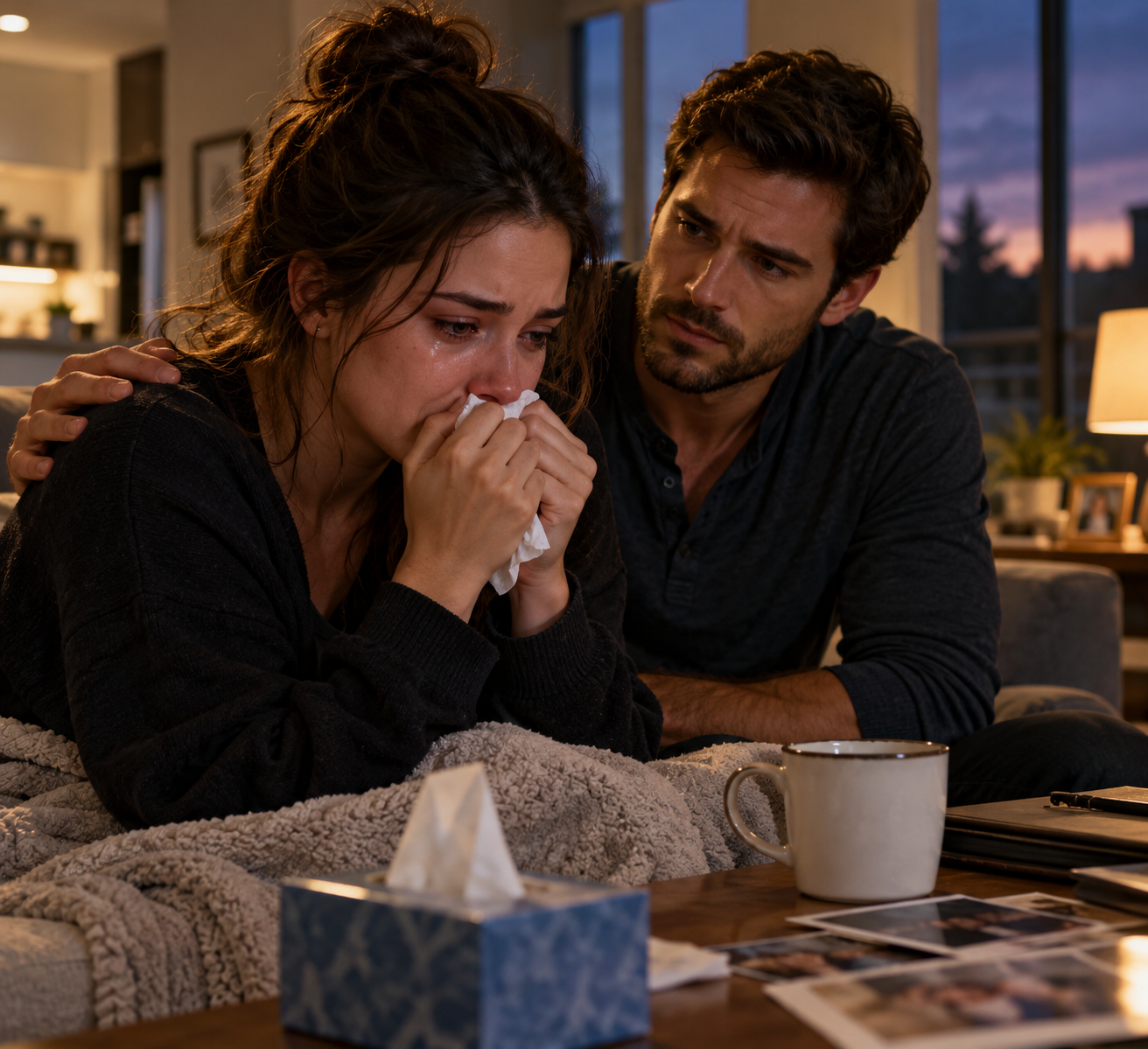
She began to cry.
I held her hand.
"I don't need you to be perfect before I'll help you," I said.
She leaned toward me.
For several moments, she cried without trying to speak.
I let her.
I had spent years believing that understanding a problem required breaking it into parts.
There were facts.
There were decisions.
There were consequences.
There were questions about responsibility.
Those distinctions were useful, but they could become a way of avoiding the person standing in front of me.
Rachel was afraid of being reduced to her mistakes.
I knew what that felt like in a different form.
During my career, I had watched people become known by the worst thing they had done, the worst thing someone believed they had done, or the worst thing that had happened to them.
I had tried to remind myself that a person was always more than the narrowest description of their life.
I needed to offer my daughter the same understanding.
After a while, Rachel wiped her face.
"I didn't know how to tell you."
"You can start wherever you can."
"I don't know if I can tell you all of it tonight."
"You don't have to."
She looked toward the window.
"I thought if I could get the thing I went back for, I could finally stop worrying about it."
I remained still.
She had returned to the subject of the garage.
I wanted to ask what the thing was.
I wanted to know why it mattered so much that she had gone there alone.
I waited for her to continue.
"I thought I could take care of it myself," she said. "I didn't want anybody else involved."
"Did you get it?"
She shook her head.
"No."
I nodded.
She seemed relieved that I had not asked for more.
"I was going to leave," she continued. "I wasn't planning to stay there. I didn't know the door was going to be locked."
I felt a cold weight settle in my stomach.
"Do you know who locked it?"
"No."
"Did you see anyone?"
She shook her head again.
"I didn't see who did it."
I kept my voice steady.
"All right."
She watched my face.
"You believe me?"
"I believe that you're telling me what you remember. If you remember something else later, you can tell me then."
She seemed to consider the distinction.
Then she nodded.
"I don't want to make things worse by guessing."
"That's a good reason not to guess."
She looked at me.
"I learned that from you."
I almost smiled.
"I hope I taught you that part well."
"You did."
She paused.
"Maybe I learned the other part, too."
"What other part?"
"That if you can't explain something clearly, you should keep working on it until you can."
I looked at her.
She continued.
"You always wanted things to make sense before you talked about them. I thought I had to do that, too."
I felt the truth of it more sharply than I expected.
I had taught her to be careful with words.
I had taught her to think before she spoke.
I had taught her that evidence mattered.
Those were valuable lessons.
But I might also have made her believe that she needed a complete explanation before she could ask for help.
I could not know how much of her silence came from me and how much came from other parts of her life.
I did not need to decide that immediately.
"I'm sorry if I made you feel that way," I said.
She shook her head.
"I don't want you apologizing for everything."
"I'm not apologizing for everything. I'm sorry for the part I may have played."
She was quiet.
Then she reached for my hand again.
"I want us to be able to talk before everything becomes a crisis."
"So do I."
"I don't know how to do that yet."
"Neither do I, not as well as I should. We can learn."
She looked at me for a long time.
Then she nodded.
It was not a grand reconciliation.
We did not promise never to misunderstand each other again.
We did not agree on every part of the past.
We did not suddenly know who had locked the garage or why Rachel had been unable to leave.
We had simply made room for an honest conversation without demanding that it settle every question.
I knew that would have to continue beyond the hospital.
There would be practical decisions to make.
There would be more conversations with the police.
There might be difficult discussions with Nolan, depending on what the investigation established and what Rachel chose to share.
I could not promise that every answer would be easy to hear.
I could promise not to decide the answers before they were known.
Rachel yawned.
I adjusted the blanket and moved the chair back slightly.
"You should sleep."
She caught my hand.
"Will you be here when I wake up?"
"Yes."
"You won't leave without telling me?"
"No."
She released my hand.
I watched her close her eyes.
Her breathing became slower.
The room settled around us.
I took out my phone once more, not to check for messages but to turn the sound off so it would not disturb her.
There were no new calls from Nolan.
I placed the phone on the table.
Then I looked at the folded receipt in my bag, where I had written down the answers he had given me.
I thought about the officer's questions.
I thought about Rachel's account.
I thought about the three knocks, the wet concrete, the ordinary padlock, and the sound of her voice from inside the garage.
Those details would matter as the facts became clearer.
But none of them could tell me, by themselves, what Rachel needed from me now.
That answer had come from her own words.
She needed me to listen without making her prove that she deserved help.
She needed me to accept that she might not remember every detail at once.
She needed me to respect her choices while being honest about the questions that remained.
And she needed me to stay when I said I would.
I had spent much of my life believing that a difficult situation reached its ending when the facts were finally assembled and the correct decision could be made.
I knew better now.
Some situations ended with a clear answer.
Others left people with questions that took time to resolve.
Some required formal decisions and careful records.
Others required a mother to sit beside her daughter in a hospital room and admit that she could not repair everything in one night.
The investigation would continue.
Rachel would have to decide what she wanted to do next.
I would have to keep listening, even when the truth was uncomfortable or incomplete.
There would be moments when I wanted to take control.
There would be moments when she wanted to withdraw.
We would have to learn how to recognize those moments before they became another locked door between us.
I looked at Rachel.
She was asleep, her hand resting near mine.
I placed my hand beside hers without waking her.
I did not know what the final explanation would be.
I did not know what Nolan would say when the questions became more specific.
I did not know whether Rachel would remember something that changed our understanding of the garage.
But I knew I would not make her carry the uncertainty alone.
For that night, I stayed beside her.
I listened to the steady monitor.
I watched the light move slowly across the floor as a nurse passed in the hallway.
And when Rachel shifted in her sleep, I was there when she opened her eyes.
"I'm still here," I whispered.
She looked at me, then let her eyes close again.
This time, she did not ask whether I would stay.
She believed me.
The End
Read more original stories on Feel Every Story.
The Sound Behind the Locked Door Forced Me to Choose Between Acting Like a Mother and Thinking Like a Prosecutor
Part 20 of 20