The next morning, I took the winning ticket out of the drawer.
I placed it on the kitchen table beside the notebook.
For a long time, I looked at the two things without touching either one.
The ticket represented a future I had not expected.
The notebook represented questions I could no longer avoid.
I had once believed that if I won enough money, the fear surrounding Spencer's illness would finally end.
I could pay the bills.
I could repay the loans.
I could stop worrying about whether another expense would force me to sell something else.
I could give him help without wondering how I would survive afterward.
Those things were still true.
The money could change my circumstances.
It could not tell me whether Spencer had been honest with me.
It could not make him explain his words.
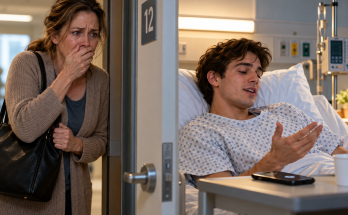
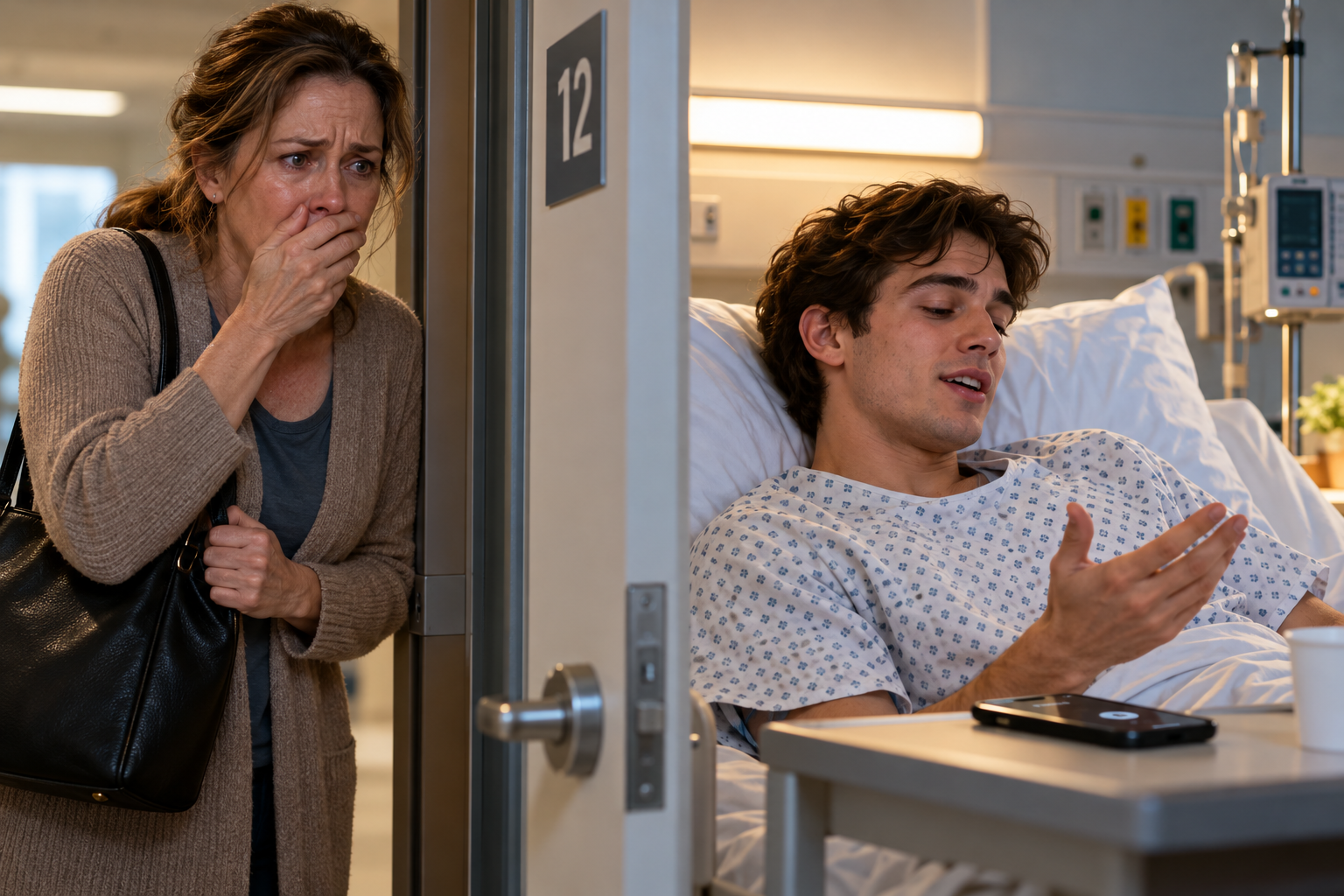
It could not guarantee that our relationship would return to the way it had been before I stood outside room 12.
I put the ticket back into its envelope.
Then I made another cup of coffee.
I had begun to notice how often I reached for ordinary tasks when I did not know what else to do.
Washing a cup was easier than answering a difficult question.
Folding a towel was easier than admitting I was afraid.
Sorting papers was easier than thinking about what Spencer might say next.
There was nothing wrong with doing those things.
I simply did not want to mistake being busy for making progress.
I sat down with the notebook.
I wrote three headings.
What I know.*
What I don't know.*
What I need to do.*
Under the first heading, I wrote that I had won the lottery.
I wrote that I had been struggling with bills for months.
I wrote that I had heard Spencer speaking to someone on speakerphone.
I wrote the words I remembered.
I did not add anything I had not heard.
Under the second heading, I wrote that I did not know the full conversation.
I did not know exactly what Spencer had intended.
I did not know whether his comments reflected a plan, a moment of frustration, or something more complicated.
I did not know what he would tell me if I asked again.
Seeing those sentences on paper was uncomfortable.
It was also useful.
I had been filling the gaps in my knowledge with fear.
Sometimes I imagined the worst.
Other times, I tried to excuse everything.
Neither approach gave me the truth.
Under the final heading, I wrote that I needed to handle the money carefully.
I needed to understand my debts.
I needed to stop borrowing to cover expenses before I understood them.
And I needed to speak honestly with Spencer.
I looked at the page.
There was no instruction to stop loving him.
There was no instruction to give him everything.
There was no instruction to decide that the past months had meant nothing.
For once, I had written down things I could do without pretending I could control the outcome.
I called the hospital later that day.
I did not call to make a payment.
I wanted to understand the process for reviewing the bills and knowing which amounts needed attention.
I asked my questions slowly.
I wrote down the answers.
When I finished the call, I put the notes in the folder.
It was not a dramatic moment.
No one congratulated me for being careful.
No problem vanished because I had asked a few questions.
But I felt different.
I had taken responsibility for understanding the situation rather than assuming that the only responsible thing to do was pay as quickly as possible.
That mattered.
I looked at the receipt for my mother's sewing machine.
The paper was old and slightly faded.
I had kept it because I had always imagined a day when I would return to the pawnshop and bring the machine home.
I still wanted to do that.
I did not know when I would.
But the thought no longer felt like a desperate promise I had to fulfill before I could forgive myself.
I could make plans at my own pace.
I could rebuild what I had lost without treating every decision as an emergency.
I could help Spencer without giving away the security I had just gained.
The lottery had given me that possibility.
It had not made me selfish to recognize it.
My phone rang in the afternoon.
Spencer's name appeared on the screen.
I answered.
“Hi, Mom.”
“Hi, sweetheart.”
“How are you?”
“I'm all right. How are you feeling today?”
“About the same.”
I listened to his answer.
I did not try to make it sound better than it was.
I did not assume that his words were designed to make me worry.
I simply heard what he said.
“Have you been thinking about our conversation?” he asked.
“Yes.”
“Me too.”
I waited.
He did not continue immediately.
“I don't know what else to say about it,” he finally told me.
I looked at the notebook on the table.
“You don't have to have every answer right now.”
“Are you still upset?”
“Yes,” I said.
The honesty surprised me with how simple it felt.
“I am still hurt.”
He was quiet.
“But I'm not calling to fight with you,” I added. “I want us to be able to talk about difficult things without either of us pretending they aren't happening.”
“I don't want to fight either.”
“Then we can keep trying.”
He did not make another promise.
Neither did I.
We talked briefly about how he was feeling and whether he had been able to rest.
Then we said goodbye.
When the call ended, I sat quietly for a moment.
I could not tell whether our conversation had brought us closer.
But I had not hidden my feelings to protect him from them.
I had not promised money to make him comfortable.
I had not treated his uncertainty as proof that I should abandon my own questions.
I was learning that a relationship could remain unfinished without being over.
That evening, I placed the ticket envelope in the drawer again.
I closed the drawer and turned off the kitchen light.
The money would still be there in the morning.
So would the questions.
But I no longer believed that I had to answer them all at once.
Click here to continue reading: PART 20: I Had Won Enough to Change My Life, but What I Needed Most Was to Stop Believing That Love Required Me to Give Until Nothing Was Left
I Thought Twenty Million Dollars Would Finally Give My Son His Life Back, Until I Heard the Conversation Behind His Hospital Door
Part 19 of 20