The first grant recommendation came on a Wednesday morning.
Daniel sent the documents just after nine.
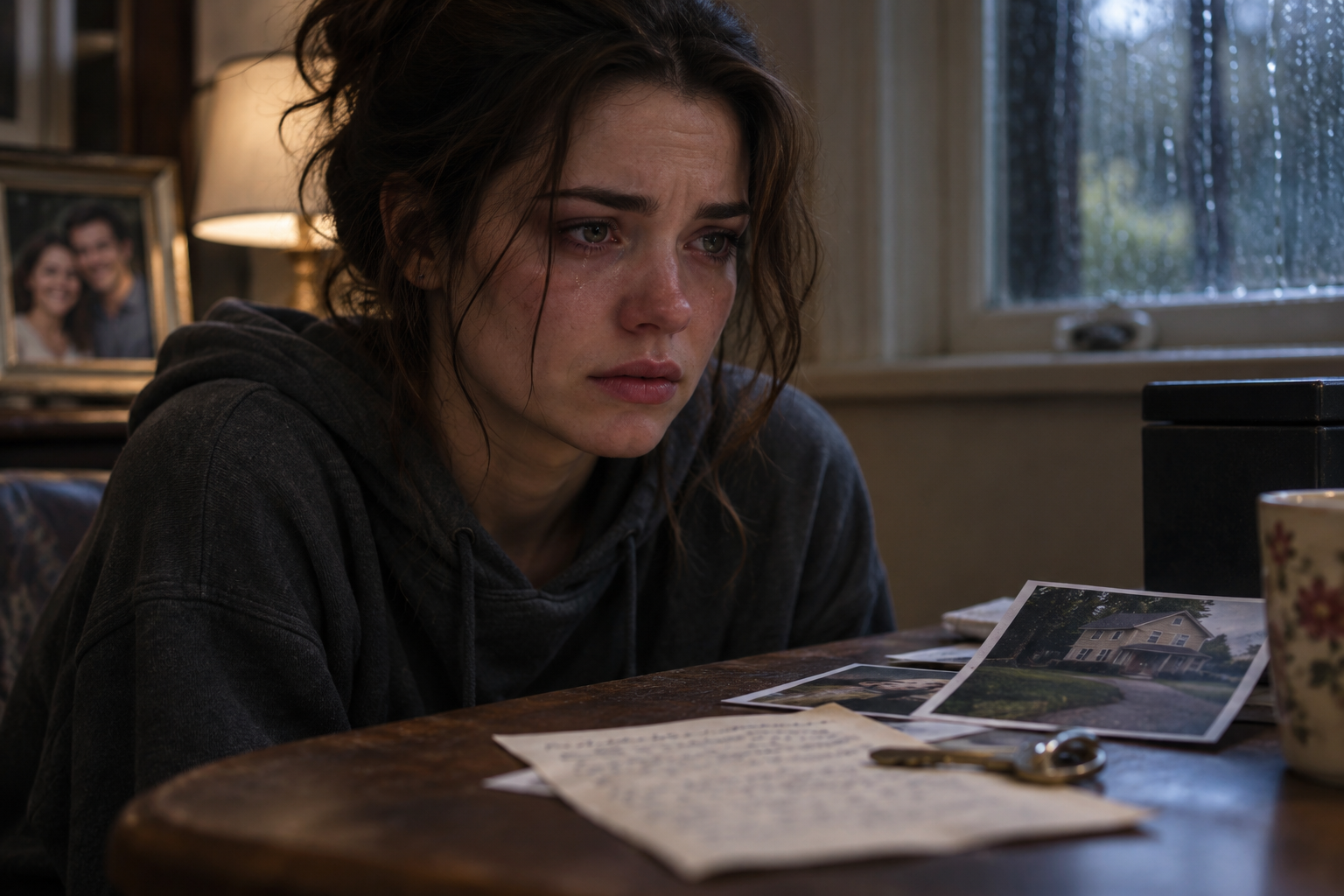
I was sitting at the kitchen table with a cup of tea.
The house was quiet.
Outside, a delivery truck moved slowly along the street.
I watched it pass.
My hands tightened around the cup.
Even after all those months, large trucks still made me nervous.
I noticed the sound of the engine.
The distance between the truck and the parked cars.
The way it moved through the intersection.
Then it disappeared.
I took a breath.
Opened Daniel's email.
And began reading.
The foundation team had completed its first detailed review of a potential safety education program.
The proposal focused on driver fatigue awareness.
It included educational materials for transportation companies.
Community outreach.
And information about the risks of driving without adequate rest.
I read the first page.
Then the second.
By the third, my eyes were filling with tears.
Not because the language was emotional.
It wasn't.
The proposal was practical.
It contained budgets.
Timelines.
Methods for evaluating results.
But every page reminded me why I had created the foundation.
A driver had fallen asleep.
A truck had crossed the median.
Ethan had been driving our children along Interstate 95.
And three people I loved had never come home.
I placed my hand over the documents.
For a moment, I couldn't continue.
Then I looked toward the hallway.
Lily's jacket.
Noah's shoes.
The things that remained.
I wiped my eyes.
And kept reading.
The proposal did not promise that accidents could be eliminated.
Nobody could honestly promise that.
But it offered a way to reduce risks.
To help people recognize dangerous conditions.
To encourage safer decisions.
To make one more driver understand that exhaustion behind the wheel could destroy an entire family.
I read the final page.
Then I called Daniel.
"Good morning, Claire."
"Good morning."
"Did you receive the materials?"
"Yes."
"What do you think?"
I looked at the proposal.
"I think it's important."
He waited.
"I want to understand the numbers before we approve anything."
"Of course."
I felt a little proud of myself for saying that.
Six months earlier, I might have agreed immediately because I liked the purpose.
Now I understood that good intentions weren't enough.
The foundation needed to be careful.
Every dollar had to be used responsibly.
Not because I wanted to hold tightly to the money.
Because I wanted it to accomplish something.
Daniel agreed.
"We'll review the budget and the organization's capacity before any final approval."
I nodded.
"Good."
He asked whether I could attend a meeting the following afternoon.
I said yes.
Then he hesitated.
"There's another matter."
My stomach tightened.
"What?"
"Your father's attorney contacted us again."
I closed my eyes.
Of course.
"What does he want?"
"He's asking whether you'd reconsider the financial proposal."
"No."
I answered before Daniel finished.
He paused.
"All right."
I looked at the foundation documents.
"Please tell him my answer hasn't changed."
"I will."
I took a breath.
"Daniel, can I ask you something?"
"Of course."
"Does he understand that the foundation isn't money I'm hiding from him?"
Daniel was quiet.
"I can't speak to what he understands."
I looked at the page in front of me.
"But we've explained the structure."
"Yes."
"And we've explained that the charitable commitments were made before he started demanding money."
"Yes."
I swallowed.
"Then I don't know what else to say."
"You don't need to say anything else."
I sat with that answer.
For so long, I had believed every conflict could be resolved if I found the right words.
If I explained carefully enough.
If I stayed calm.
If I showed enough kindness.
But my father had heard the explanation.
He simply didn't like the answer.
And no amount of explaining would change that.
After the call, I went upstairs.
I opened Lily's bedroom door.
The room smelled faintly of the lavender detergent I used for her bedding.
Her drawings were still on the bulletin board.
The paper butterflies still hung above the desk.
I sat on the bed.
Then I looked toward the small bookshelf.
Lily had loved books about animals.
She used to ask me questions I couldn't answer.
How did birds know where to fly?
Why did turtles live so long?
Did fish ever get thirsty?
Ethan would pretend he knew everything.
Then Lily would catch him making something up.
"Daddy, that's not true."
He would laugh.
"Then we'd better look it up."
I smiled.
That was what I missed.
Not just their faces.
Their questions.
Their voices.
The small arguments about bedtime.
The way Noah always wanted one more story.
I looked at the purple pencil on Lily's desk.
Then I remembered I had moved one of her pencils downstairs.
It was beside the foundation folder.
I had begun using it as a reminder.
Not to rush.
Not to forget.
Not to let the legal dispute become more important than the children.
I stayed in the room for a while.
Then I went downstairs.
I opened the grant proposal again.
This time, I made notes.
Questions about the budget.
Questions about how many people the program could reach.
Questions about how the organization would measure whether its materials actually changed behavior.
When I finished, I emailed them to Daniel.
He replied within an hour.
Excellent questions. We'll address them at tomorrow's meeting.
I read the message twice.
Then I smiled.
For most of my life, I had been afraid of asking too many questions.
My father used to say I complicated simple things.
Now I was learning that questions could protect something important.
The following afternoon, I arrived at Daniel's office fifteen minutes early.
Rebecca greeted me.
She offered coffee.
I smiled.
"Tea, if you have it."
She laughed softly.
"We do."
I sat in the conference room.
The foundation documents were arranged neatly in front of each chair.
A small pitcher of water stood in the center.
I opened my notebook.
Across the top of the first page, I had written Lily and Noah.
Below their names were my questions.
When the others arrived, we began.
The foundation's financial adviser explained the proposed grant amount.
The nonprofit administration specialist reviewed the organization's history.
We discussed its experience.
Its staffing.
Its ability to manage the proposed program.
I listened carefully.
Then I asked my questions.
Nobody seemed annoyed.
Nobody told me I was worrying too much.
Instead, they answered.
When one answer wasn't clear, I asked again.
At one point, the adviser smiled.
"That's exactly the kind of question a foundation board should ask."
I looked down at my notebook.
I felt something unfamiliar.
Confidence.
Not the loud kind.
Not the kind my father always seemed to have.
Just the quiet belief that I was allowed to understand a decision before making it.
The team recommended moving forward with the grant, subject to final documentation and the foundation's approval procedures.
I looked at the papers.
Then I looked around the table.
"Can I ask one more thing?"
Daniel nodded.
"Of course."
I took a breath.
"How will we know whether this actually helps?"
The adviser explained the proposed reporting requirements.
Participation numbers.
Educational outcomes.
Follow-up evaluations.
The organization would need to show how the funds were used.
I nodded.
"Good."
Then I said something I hadn't planned.
"I don't want Lily and Noah's names attached to work that only looks good in a report."
The room became quiet.
I looked at the people around me.
"I want the work to matter."
The adviser nodded.
"That's a reasonable expectation."
Daniel looked at me.
"And it's why we're putting these review procedures in place."
I sat back.
For the first time, the foundation felt real in a new way.
Not just a name.
Not just documents.
Not just fifteen million dollars committed to a charitable purpose.
It was becoming a place where decisions could lead to action.
And I was part of that.
When the meeting ended, Daniel walked me to the elevator.
"You handled yourself well."
I smiled faintly.
"I asked a lot of questions."
"You did."
"I hope I didn't slow everything down."
He shook his head.
"Claire, good oversight isn't an inconvenience."
I looked at him.
He continued.
"It's part of making sure the foundation does what you created it to do."
I nodded.
I carried those words home with me.
That evening, Margaret and Robert came for dinner.
I had invited them.
That was another small change.
For months, I had waited for people to offer help.
Now I was beginning to ask for company when I wanted it.
I made roast chicken.
Margaret brought vegetables.
Robert brought bread.
We sat around the kitchen table.
The same table where Ethan used to make terrible jokes.
For a few minutes, the empty chair beside me felt unbearable.
Then Margaret asked about the meeting.
I told them everything.
The proposal.
The questions.
The reporting requirements.
Robert listened carefully.
When I described the driver fatigue program, he nodded.
"That's important work."
I looked at him.
"You really think so?"
He put down his fork.
"Claire, I spent years around vehicles and maintenance crews. People get tired. People take shortcuts. Sometimes they don't understand how serious the consequences can be."
I swallowed.
He looked toward Ethan's photograph.
"Education won't fix everything."
"I know."
"But it can help."
I nodded.
"That's what I'm hoping."
Margaret reached across the table.
"Lily and Noah would be proud of you."
I looked down.
My eyes filled.
"I hope so."
Robert's voice became quiet.
"Ethan would be proud too."
I couldn't answer.
I simply nodded.
After dinner, Margaret helped me wash the dishes.
Robert went into the living room to look at a photograph album.
I heard him turn the pages slowly.
Then the room went quiet.
Margaret noticed.
She dried her hands.
"Stay here."
I shook my head.
"No. I'll come."
We walked into the living room.
Robert was sitting on the sofa.
The album lay open in his lap.
He was looking at a photograph of Ethan as a teenager.
Ethan stood beside an old bicycle.
His hair was too long.
His smile was enormous.
Robert touched the photograph.
"He worked all summer to buy that bike."
I sat beside him.
Margaret took the chair across from us.
Robert smiled faintly.
"Then he decided the brakes weren't good enough."
I laughed.
"That sounds like Ethan."
"He spent two weekends taking them apart."
Margaret shook her head.
"Nearly drove us crazy."
Robert laughed softly.
Then his expression changed.
"He always wanted to make things safer."
The room became quiet.
I looked at Ethan's teenage face.
Then at the foundation folder on the coffee table.
I hadn't thought about that connection.
Ethan had always been careful with the children.
Seat belts.
Car seats.
Bicycle helmets.
He checked everything.
He never wanted to take chances with their safety.
And still, the accident had happened.
That was the terrible truth.
You could be careful.
You could do everything right.
And someone else's mistake could still destroy your life.
I looked at Robert.
"Do you think he'd understand what I'm doing?"
Robert stared at the photograph.
Then he nodded.
"Yes."
He swallowed.
"I think he'd understand completely."
I began crying.
Robert put the album aside.
Then he reached for my hand.
For a while, we sat together.
Three people who loved the same three people.
Three people who had lost them.
And nobody asked the others to stop grieving.
When Margaret and Robert left, I returned the album to the shelf.
I looked through a few pages first.
Ethan as a baby.
Ethan at school.
Ethan on his graduation day.
Then Ethan holding Lily for the first time.
His face in that photograph was unforgettable.
He looked terrified.
And proud.
And completely in love.
I touched the picture.
Then I closed the album.
The following morning, I received a call from a number I didn't recognize.
I almost ignored it.
But I had been expecting a call about the foundation.
So I answered.
"Hello?"
A woman's voice spoke.
"Is this Claire Miller?"
"Yes."
"My name is Susan. I'm calling from your parents' neighborhood."
I frowned.
I didn't know anyone named Susan.
"How can I help you?"
She hesitated.
"I hope I'm not bothering you."
I looked at the clock.
It was just after ten.
"What's this about?"
She took a breath.
"I saw your television interview."
I closed my eyes.
"All right."
"And I heard what happened at the funeral."
I didn't answer.
She continued.
"I just wanted to say I'm sorry."
I sat down.
I hadn't expected that.
"Thank you."
She sounded nervous.
"I knew your parents socially. I was at Melissa's birthday dinner."
My hand tightened around the phone.
For a moment, I couldn't speak.
She continued carefully.
"I didn't know about the accident until afterward."
I stared at the wall.
"The dinner was already happening when they told you?"
"No."
She paused.
"That's why I'm calling."
I felt my stomach tighten.
Susan took another breath.
"Your parents knew about the deaths before the dinner began."
I sat completely still.
The room seemed to tilt.
"What?"
"They received the news that morning."
I closed my eyes.
That matched what I knew.
I had called from the hospital chapel.
They had known before the funeral.
But Susan continued.
"They told us you had suffered a family tragedy, but that you were being looked after."
I stared at the phone.
"Looked after?"
"Yes."
She sounded ashamed.
"Your mother said Ethan's parents were handling everything."
I couldn't speak.
Susan continued.
"She said it would be better not to interrupt Melissa's celebration."
I pressed my hand against my chest.
I had always known they chose the birthday dinner.
But hearing a stranger describe how they had explained that choice made the memory feel different.
They hadn't simply failed to come.
They had made my grief sound manageable.
Something happening somewhere else.
Something that didn't need to interfere with their plans.
Susan was quiet.
Then she said, "I wish I'd known what had really happened."
I swallowed.
"Why are you telling me this now?"
"Because your father has been saying you lied about the family's support."
I stared at the table.
"And?"
"And that's not fair."
Her voice trembled.
"I was there. I remember what they said."
For several seconds, I couldn't speak.
Then I asked whether she would be willing to tell Daniel what she remembered.
She hesitated.
"I don't want trouble."
"I understand."
I took a breath.
"I'm not asking you to fight with my family. I just want the truth documented."
She was quiet.
Then she said, "I can speak to your attorney."
I thanked her.
After we ended the call, I sat at the kitchen table.
My tea was untouched.
The foundation folder lay open.
Lily's purple pencil rested beside it.
I stared at those ordinary things.
Then I called Daniel.
He listened while I repeated the conversation.
When I finished, he was quiet.
"Do you have her contact information?"
"Yes."
"Send it to me."
I nodded.
"All right."
"And Claire?"
"Yes?"
"Don't contact your parents about this."
I closed my eyes.
"I wasn't going to."
"Good."
He paused.
"We'll speak with her and determine whether her account is relevant to the legal dispute."
I looked toward the hallway.
Lily's jacket.
Noah's shoes.
The familiar things that still made the house feel like ours.
"Daniel?"
"Yes?"
"I think I've finally stopped expecting them to tell the truth voluntarily."
He was quiet.
Then he said, "That's why keeping records matters."
After the call, I opened the blue folder.
I placed a note inside with Susan's name and the date of her call.
Then I closed it.
For a long time, I sat without moving.
I had spent months imagining my parents at that birthday dinner.
I had pictured them laughing.
Eating cake.
Taking photographs.
I had wondered whether they had felt guilty.
Whether my father had looked at his phone.
Whether my mother had thought about Lily.
Whether Melissa had noticed the empty place where I should have been.
Now I knew something I hadn't known before.
They had told their guests that I was being cared for.
They had made the decision sound reasonable.
And while I was sitting in a hospital chapel trying to understand that my entire family was dead, they had continued with the celebration.
I looked at Ethan's photograph.
Then I whispered, "I wish you were here."
I said it often.
But that afternoon, I meant something different.
I wished he were there to help me understand how people could behave that way.
I wished he could tell me I wasn't imagining it.
That I wasn't cruel.
That I wasn't selfish.
That I had the right to be hurt.
Then I remembered what Margaret had said.
I didn't need to earn permission to be angry.
I already had the right.
The following morning, Daniel confirmed that Susan had agreed to speak with him.
He didn't promise her account would change anything.
He didn't exaggerate its importance.
He simply said they would document what she remembered.
I thanked him.
Then I asked about the foundation.
He gave me the update I had been waiting for.
The first grant recommendation had completed its initial review.
The remaining documentation was being prepared.
The team was satisfied that the proposal matched the foundation's mission, subject to the final required approvals.
I looked at Lily and Noah's names.
For a moment, I felt something almost like hope.
"That's good news."
"Yes," Daniel said. "It is."
I smiled.
"Please thank everyone for their work."
"I will."
After we hung up, I took the photograph Ruth had sent.
Lily eating watermelon.
Noah laughing beside her.
I placed it next to the foundation documents.
Then I picked up the purple pencil.
I wrote a short note at the bottom of the meeting page.
Keep the focus on the children.
I read the words.
Then I underlined them.
My father could argue about money.
My mother could complain about embarrassment.
Melissa could demand help with her wedding.
But none of them would decide what Lily and Noah's lives meant.
That belonged to the people who had loved them.
And to the work that would carry their names forward.
I closed the foundation folder.
Put the blue folder back in its drawer.
Then I went outside.
The afternoon air was cold.
The grass was damp.
I walked slowly through the backyard.
Ethan had once promised to build Noah a small wooden playhouse near the fence.
He never got around to it.
There was still an empty patch of grass where he had planned to put it.
I stood there for a while.
Then I looked back at the house.
The windows.
The kitchen.
The hallway beyond the front door.
Everything looked the same.
But I wasn't the same person who had stood in that hospital chapel six months earlier.
I still missed my family every day.
I still cried.
I still woke sometimes expecting to hear Noah running down the hallway.
But I had stopped asking my parents to give me the love they had withheld.
And I had started using my strength for something else.
I went back inside.
Made another cup of tea.
Opened the foundation folder.
And continued working.
Click here to continue reading: PART 9: My Father Tried One Last Time to Claim My Children’s Settlement, but a Woman From Melissa’s Birthday Dinner Finally Told the Truth
My Husband Bought Professional Hair Clippers for Our Garden, but the Way He Looked at My Family Home Made Me Uneasy
Part 8 of 10