Leah saw Elaine before anyone could prepare her.
She stepped out of Rachel’s room carrying an empty water cup.
Stopped.
The cup bent slightly in her hand.
Elaine stood twenty feet away.
Neither moved.
Grace looked between them.
I stayed silent.
This belonged to Leah first.
Elaine’s face changed.
“Hi.”
Leah laughed once.
Not kindly.
“That’s what you have?”
Elaine looked down.
“I had other sentences.”
“Lose them?”
“Yes.”
Leah walked toward her.
Not fast.
Not slow.
Measured.
The officers shifted.
Ortiz raised one hand.
Let them.
Leah stopped several feet away.
“You saved me.”
Elaine’s eyes filled.
“Yes.”
“You stole me.”
“Yes.”
“You loved me.”
“Yes.”
“You lied to me.”
“Yes.”
“You made me hate Rachel.”
Elaine’s mouth trembled.
“Yes.”
“Did you ever plan to tell me?”
Silence.
Leah nodded.
“There.”
Elaine whispered, “I told myself I would.”
“When?”
“I don’t know.”
“When I was five?”
“No.”
“Ten?”
“No.”
“Eighteen?”
“I tried.”
Leah stared.
“No, you didn’t.”
“I wrote a letter.”
“Writing isn’t telling.”
Elaine flinched.
“No.”
“Did you give it to me?”
“No.”
“Then don’t count it.”
Elaine lowered her eyes.
“You’re right.”
Leah’s breathing changed.
Anger had prepared itself for defense.
Agreement left nowhere to strike.
She looked almost disappointed.
“What do you want?”
“To give Rachel something.”
“Of course.”
Leah stepped aside.
“Everyone comes back when they have one more secret.”
Elaine looked at her.
“This one may help.”
Leah’s face hardened.
“Then it better.”
Rachel was awake when Elaine entered.
I sat on one side of the bed.
Grace on the other.
Emily stood near the window.
Leah remained by the door.
Not beside Elaine.
Not far enough to pretend she did not care.
Rachel stared at her sister.
Neither smiled.
“Elaine.”
“Rachel.”
“You tried to flush my IV.”
Elaine swallowed.
“Yes.”
“You blocked Daniel.”
“Yes.”
“You sent the message.”
“Yes.”
“You lied to Leah about me.”
“Yes.”
Rachel looked tired.
“Do you know how exhausting it is to hear you admit things this calmly?”
Elaine started crying.
“I don’t feel calm.”
“Good.”
Silence.
Then Rachel said, “Grace says you know about sixteen weeks.”
Elaine nodded.
She carried a thin plastic folder.
Ortiz took it first.
Photographed.
Logged.
Then handed it to Grace.
“Where did you get this?”
Elaine looked at me.
“Samuel.”
My chest tightened.
“When?”
“Six years ago.”
“Before he died.”
“Yes.”
“What did he give you?”
“A protocol.”
“Why?”
“He knew Harlan had preserved an edited embryo.”
I stared.
“Samuel told no one according to his notebook.”
Elaine looked confused.
“He told me.”
“About embryo three?”
“He did not call it that.”
“What did he call it?”
“The insurance child.”
Rachel closed her eyes.
I hated the phrase.
Elaine did too.
“He regretted it.”
“Still said it.”
“Yes.”
Grace opened the folder.
Inside were handwritten laboratory notes.
Not Samuel’s.
Harlan’s.
Michael entered quietly.
Grace showed him.
His face changed.
“This is early vector design.”
Elaine nodded.
“Samuel stole it.”
“When?”
“Years before he died.”
“Why give it to you?”
“He believed if Harlan ever implanted the embryo, someone would need to know what had been done.”
Rachel stared.
“Why not destroy the embryo?”
“He tried.”
“That is not what his notebook says.”
Elaine looked at me.
“What does it say?”
“That he kept it as leverage.”
Elaine closed her eyes.
“He did.”
“So?”
“He tried later.”
“When?”
“After Margaret died.”
I frowned.
“Why didn’t he?”
“He could not find it.”
The embryo had moved into storage networks beyond his reach.
David found it years later.
Grace read the notes.
“Here.”
Michael leaned over.
A graph.
Weeks of gestational development.
Synthetic expression rising.
Peak around week twelve.
Declining after sixteen.
Rachel stared.
“What happens at sixteen?”
Michael read silently.
His face tightened.
“Shutdown.”
“We know that.”
“No.”
He pointed lower.
“There’s a programmed immune clearance phase.”
Grace stared.
“What does that mean?”
“The synthetic gene carrier is designed to provoke elimination of cells expressing it.”
Rachel’s hand moved instinctively to her abdomen.
“Fetal cells.”
Michael nodded slowly.
“And potentially fetal-maternal circulating cells.”
Grace went pale.
“Could it trigger miscarriage?”
“Yes.”
Rachel stopped breathing for a moment.
“Was it designed to?”
Michael read further.
“No.”
“Then why?”
“Harlan wanted temporary expression.”
“For research.”
“Yes.”
“He needed the synthetic system gone afterward so long-term tissue wouldn’t reveal manipulation.”
Grace whispered, “Self-erasing evidence.”
“Yes.”
Leah looked disgusted.
“He built the experiment to clean itself.”
Michael nodded.
Rachel asked, “How dangerous?”
“We need modeling.”
“How dangerous, Michael?”
He looked at her.
“Potentially severe.”
“Can it be stopped?”
“I don’t know.”
Elaine said, “Samuel thought so.”
Everyone turned.
“How?”
She opened the back of the folder.
A separate page.
Margaret’s handwriting.
My mother.
She had written a note beside a formula.
Counter-vector may suppress clearance trigger.
Grace stared.
“Did Margaret understand gene therapy?”
“No,” Elaine said.
“Then who gave her this?”
“Anna.”
Michael’s face changed.
“Anna knew.”
“Yes.”
“When?”
“Before Samuel died.”
Of course.
The network of partial truths never ended.
Michael read.
“This counter-vector is primitive.”
“Could it work?”
“In theory.”
“Risk?”
“High.”
Rachel laughed weakly.
“Everything in this room is high risk.”
Grace looked at her.
“Mom.”
“What?”
“Don’t turn exhaustion into consent.”
Rachel stared.
Then nodded.
“Good catch.”
Michael continued.
“The counter-vector could suppress the immune-clearance sequence.”
“Could?”
“Yes.”
“And harm the fetus?”
“Yes.”
“Me?”
“Yes.”
“Cancer?”
“Yes.”
“How?”
“By altering the same repair signaling possibly helping your tumor.”
Rachel closed her eyes.
So another choice.
But this time no one forced her to answer immediately.
Grace took the protocol.
“We send it to independent gene-therapy experts.”
Rachel nodded.
“Multiple.”
“Yes.”
“No Harlan network.”
“Yes.”
Elaine whispered, “There may not be anyone untouched.”
Grace looked at her.
“Then we disclose conflicts.”
That was the difference.
Not purity.
Transparency.
I looked at Elaine.
“Why wait until now?”
She stared at Leah.
“Because I was afraid she would never speak to me again.”
Leah’s face hardened.
“And that was more important than Rachel knowing?”
Elaine began crying.
“No.”
“Apparently it was.”
“I was wrong.”
“You keep saying that.”
“I know.”
Leah moved closer.
“I spent my life believing you were the one person who chose me.”
Elaine looked at her.
“I did choose you.”
Leah shook her head.
“No.”
The word broke.
“You chose yourself after a while.”
Elaine flinched.
Leah continued.
“You saved me because he was going to let me die.”
“Yes.”
“That was brave.”
Elaine cried harder.
“You kept me when I could have gone back to my mother.”
“Yes.”
“That was selfish.”
“Yes.”
“You loved me.”
“Yes.”
“That was real.”
“Yes.”
“You lied because you were afraid I would leave.”
Elaine nodded.
“Yes.”
Leah’s eyes filled.
“All of those are true.”
“Yes.”
“Stop making me choose one.”
Elaine stared.
Then nodded.
“I will.”
Silence.
Leah stepped backward.
Not forgiveness.
But something had been named accurately.
That mattered.
Rachel watched them.
Then asked Elaine, “Do you want to know what I think?”
Elaine nodded.
“I think you saved my daughter.”
Elaine’s face broke.
“And then I think you stole twenty-six years from both of us.”
“Yes.”
“I don’t know how to forgive the second because of the first.”
“You don’t have to.”
Rachel stared.
Elaine continued.
“You don’t owe me forgiveness for loving Leah.”
Leah looked away.
The room felt different.
Not healed.
Less distorted.
Grace’s phone buzzed.
She checked it.
“Independent lab preliminary review.”
Everyone focused.
“What?”
“The sixteen-week clearance trigger is real.”
Rachel’s hand tightened around mine.
“Confirmed?”
“Highly likely.”
“Treatment?”
“They think there may be safer methods than the counter-vector.”
Michael leaned closer.
“What?”
“Targeted immune modulation.”
His face changed.
“That could work.”
“Risks?”
“Still significant.”
Rachel nodded.
“Of course.”
Grace continued reading.
“There’s another recommendation.”
“What?”
“Early removal of the synthetic vector through fetal intervention is theoretically possible.”
Rachel stared.
“Fetal surgery?”
“Not exactly. Intravascular treatment.”
“At what week?”
“Usually later than now for standard procedures, but this is not standard.”
“Success?”
“Unknown.”
Rachel laughed softly.
“Family motto.”
Leah almost smiled.
Grace looked at her mother.
“They want consultation with a specialized fetal therapy center.”
“Where?”
“Philadelphia.”
“Can I travel?”
Dr. Brooks entered.
“Possibly, if stabilized.”
Rachel looked at me.
I waited.
She said, “I want the consultation.”
“Okay.”
“Not treatment yet.”
“Okay.”
“I want to hear options.”
“Yes.”
No drama.
No sudden decision.
Information first.
Rachel exhaled.
Then looked at Elaine.
“Anything else?”
Elaine hesitated.
Every person groaned.
Even Rachel.
Elaine almost smiled through tears.
“One thing.”
Leah rolled her eyes.
“Go.”
Elaine looked at me.
“Samuel gave me another instruction.”
“What?”
“If the embryo was ever implanted, he wanted Daniel told something about Harlan.”
I frowned.
“What?”
Elaine reached into the folder.
A small sealed envelope.
My name.
Samuel’s handwriting.
Ortiz opened it after documenting.
I read.
Danny,
If Harlan ever brings the insurance embryo into the world, then he has lost control of the one thing he fears most.
I stopped.
“What does he fear?”
Leah leaned closer.
I continued.
Not prison.
Not exposure.
Not death.
He fears the child because the synthetic sequence was not entirely his design.
My stomach tightened.
The next lines:
Margaret changed it.
I stared.
“My mother?”
Michael took the page.
“How?”
Samuel wrote that Margaret had secretly altered the embryo with Anna’s help.
Not to strengthen Harlan’s intended suppressor combination.
To sabotage it.
My hands began shaking.
Rachel whispered, “Sabotage how?”
I kept reading.
They inserted a molecular tag.
A genetic watermark.
Something designed to reveal every laboratory, sample, and descendant created from Harlan’s unauthorized work.
Michael went pale.
“A traceable sequence.”
Grace understood.
“If the fetus carries it—”
“Then every dataset using related engineered material can be identified.”
Mara’s archive.
Harlan’s hidden samples.
Voss data.
David’s research.
All of it.
Michael looked at me.
“The fetus is not just evidence.”
Rachel’s face tightened.
“Don’t.”
He stopped.
She looked at him.
“My child is not evidence.”
Michael nodded immediately.
“You’re right.”
Then corrected himself.
“The watermark in the fetus may provide evidence.”
Better.
Precise.
Human first.
I finished Samuel’s letter.
Margaret did not tell Harlan.
Anna did not tell Harlan.
Samuel learned later.
That was why Harlan eventually wanted embryo three destroyed.
Not because it failed.
Because it could expose every derivative experiment.
Rachel stared.
“So he would rather erase the pregnancy.”
“Yes.”
Grace looked at the sequencing report.
“We need to search for the watermark.”
Michael nodded.
“Now.”
The independent laboratory reran the fetal sequence against the code in Samuel’s letter.
It took an hour.
Nobody left.
Rachel slept part of it.
Elaine sat across from Leah but did not approach.
Emily called Matthew.
Julian remained at Lake Travis with G3-07.
Ortiz coordinated Harlan’s detention.
Then Grace’s phone rang.
She listened.
Her eyes widened.
“What?”
She hung up.
“The watermark is there.”
Rachel opened her eyes.
“Meaning?”
Grace looked at her carefully.
“The fetus carries Margaret’s tag.”
My mother.
A woman without formal scientific training who had worked with Anna to insert something designed to expose Harlan’s crimes.
Rachel whispered, “Can it hurt the baby?”
“We don’t know yet.”
“First question.”
“I know.”
Grace nodded.
“They are checking.”
“Second?”
Grace looked toward me.
“The watermark matches sequences in forty-three archived research files.”
Forty-three.
A strange number.
Enough to reveal a network.
Not enough to explain everything.
Michael asked, “Living subjects?”
“Some.”
“Embryos?”
“Some.”
“Commercial patents?”
Grace looked at him.
“Yes.”
Julian’s company.
Others.
Mara’s fear of public exposure.
Now we understood another reason Harlan had spent decades maintaining control.
If Margaret’s watermark became known, companies could trace stolen biological research directly back to his crimes.
Money.
Patents.
Reputations.
Entire institutions.
Rachel looked at me.
“So what happens now?”
Ortiz answered from the doorway.
“Now everyone who profited from Harlan has a reason to know whether that pregnancy continues.”
The room went cold.
Rachel’s hand moved to her abdomen.
Grace looked toward the hallway guards.
Leah stood.
Elaine stood too.
For once, they moved at the same time.
I understood what Ortiz meant.
Harlan was no longer the only danger.
The fetus carried a biological key capable of exposing people who had never appeared in our family story.
Companies.
Researchers.
Investors.
Institutions.
Some would want the evidence preserved.
Others might want it gone.
Rachel looked at me.
“Danny.”
“I’m here.”
“I want out of this building.”
“Where?”
“Somewhere nobody connected to Vale controls the doors.”
Ortiz nodded.
“We can arrange secure transfer.”
Rachel looked at Grace.
“Philadelphia.”
“For consultation?”
“Yes.”
“And security.”
“Yes.”
Rachel took a breath.
Then looked at Elaine.
“You stay away unless Leah asks.”
Elaine nodded.
“Okay.”
Leah stared at her.
Then said, “For now.”
Elaine’s eyes filled.
“For now.”
Rachel looked at me.
“You coming?”
I almost laughed.
“Yes.”
“Good.”
She leaned back.
Grace began arranging transfer.
Ortiz began arranging protection.
For once, the next move was not dictated by Harlan.
Then my phone rang.
Unknown number.
I nearly ignored it.
Ortiz told me to answer on speaker.
A man’s voice.
Professional.
Calm.
“Mr. Whitmore, my name is Dr. Adrian Cole.”
No one reacted.
“I’m calling from the National Center for Genetic Therapeutics.”
Grace went still.
She knew the institution.
Dr. Cole continued.
“We received data indicating Rachel Whitmore’s pregnancy carries a proprietary sequence under dispute.”
Rachel’s face hardened.
“Proprietary?”
I stared at the phone.
“What are you saying?”
His answer came carefully.
“That genetic sequence is claimed by a biotechnology consortium as protected intellectual property.”
Silence.
Rachel laughed once.
Not because it was funny.
“They think they own part of my child.”
Dr. Cole said, “Mrs. Whitmore—”
“No.”
She leaned toward the speaker.
“No one calls me anything until you answer one question.”
A pause.
“Of course.”
“Did Harlan Vale sell my family’s stolen genetics to your consortium?”
Silence.
Too long.
Rachel looked at me.
There was the answer.
And suddenly the next threat was no longer hidden in basements.
It had lawyers.
Click here to continue reading: PART 37: The Consortium Claimed Rights to the Watermark, Forcing Rachel to Defend Her Pregnancy Against People Who Called a Child Proprietary
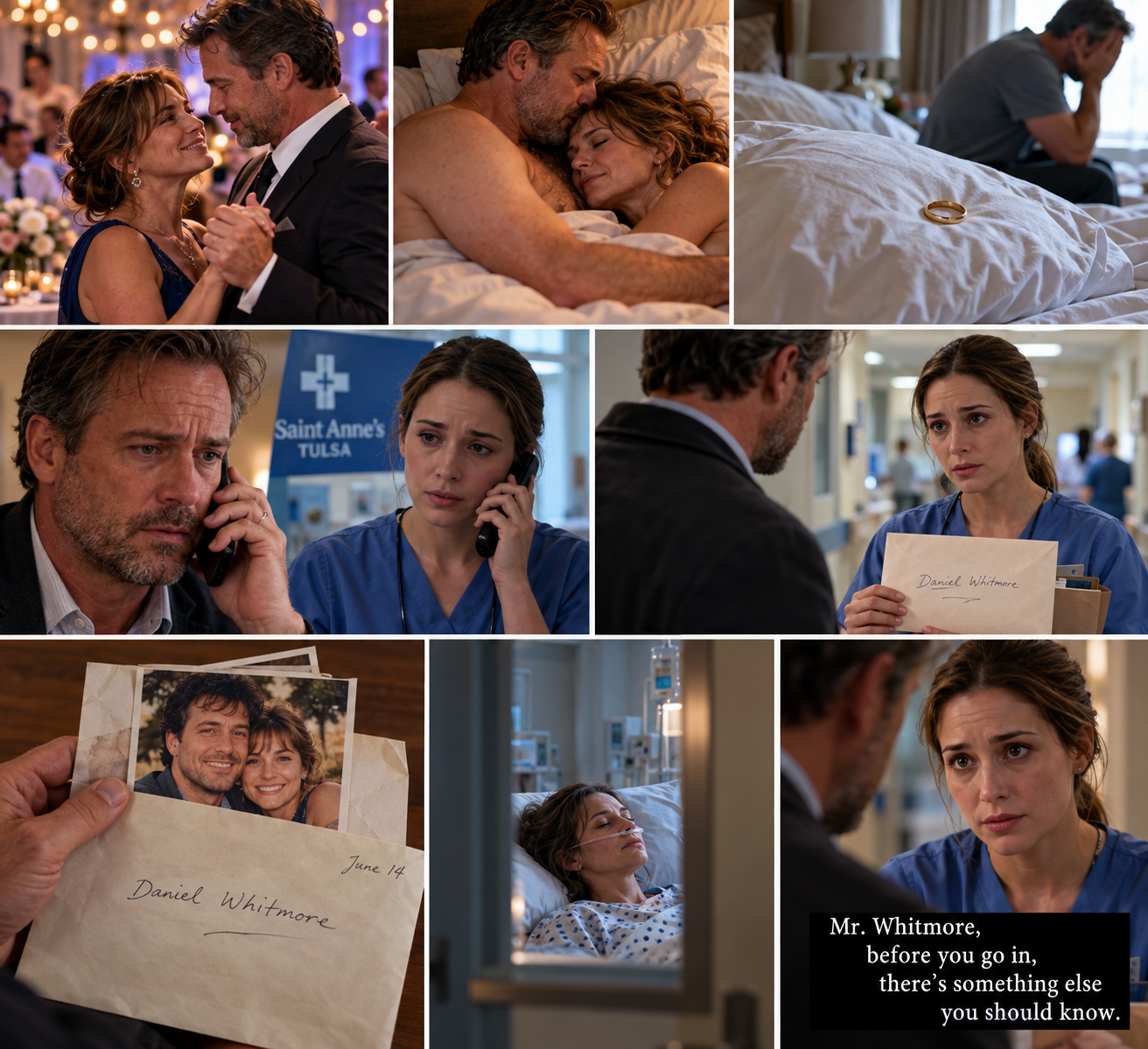
Three Years After Our Divorce, Rachel Left Her Wedding Ring on My Pillow and Vanished Before I Woke
Part 36 of 43