At twenty-two weeks, Rachel’s cancer markers rose.
At twenty-four, they stabilized.
At twenty-seven, she developed high blood pressure.
At twenty-eight, Rowan kicked hard enough for me to see Rachel’s shirt move.
Rachel stared at the spot.
Then at me.
“Did you see that?”
“Yes.”
Rowan kicked again.
Leah, standing across the room, said, “Clearly inherited my personality.”
Grace replied, “You are not genetically contributing anything different from me.”
“Personality transcends sequencing.”
Matthew groaned.
Emily laughed.
Normal family nonsense.
I had become greedy for it.
The months after Philadelphia were not peaceful.
Peace would have been too simple.
There were hearings.
Investigations.
Medical appointments.
Lawyers.
DNA confirmations.
Corporate disclosures.
Victim notifications.
Therapy.
A remarkable amount of therapy.
Grace insisted.
Leah complained.
Then attended every session.
Rachel and I went separately before we went together.
That mattered too.
We learned that explaining why you hurt someone was not the same as repairing the hurt.
We learned that forgiveness could not be scheduled.
We learned that love was not proof of safety.
We learned that people could change without being restored to the role they once held.
Elaine remained in Leah’s life.
Carefully.
They met for coffee.
Then lunch.
Then nothing for three weeks after an argument.
Then coffee again.
Rachel met Elaine twice.
The first meeting lasted seventeen minutes.
The second lasted an hour.
They did not hug.
Nobody demanded they should.
Margaret returned from Vermont under federal protection after investigators determined the immediate threat had decreased.
I met her three more times.
The first ended with me leaving angry.
The second ended with both of us angry.
The third ended with her showing me photographs of Margaret Vale as a child.
My sister.
A girl with missing front teeth.
A teenager holding a microscope kit.
A medical student asleep over textbooks.
A woman I never met who had known my name.
I cried in my mother’s kitchen.
Margaret sat across from me.
She did not say she was sorry again.
She had learned apologies could become a way to ask the injured person to comfort you.
So she simply stayed.
That helped more.
Harlan’s archive eventually opened.
Not publicly.
Under court supervision.
Victims received access to records concerning themselves.
Researchers received de-identified material only after independent ethical review.
No one dumped thousands of lives onto the internet again.
Mara testified about what she had done.
She admitted releasing the index without adequate protection.
She admitted using exposure as a weapon because she believed secrecy was the greater evil.
The court would decide consequences.
Not us.
David pleaded guilty to several charges connected to Rachel’s unauthorized embryo transfer and medical-record manipulation.
He also admitted supplying Samuel the digoxin.
Samuel’s death was legally reclassified after the evidence was reviewed.
Not murder.
Not cleanly innocent either.
The law had words for what happened.
None captured the room where David watched the father who failed him swallow pills and die.
David asked to speak with me once.
I agreed.
Through glass.
No dramatic reconciliation.
He looked older.
“I hated you.”
“I know.”
“You had everything.”
“No.”
“I know that now.”
He looked down.
“That almost made it worse.”
I understood.
He had built his identity around the belief that I was the chosen son.
Learning I had also been manipulated did not return his childhood.
“I’m sorry,” I said.
He looked up.
“For what?”
“For benefiting from things I didn’t understand.”
“You didn’t choose them.”
“No.”
I paused.
“But I can still be sorry you suffered.”
David stared at me.
Then nodded.
That was all.
We did not become brothers that day.
But we stopped pretending the only choices were brotherhood or hatred.
Julian’s audit uncovered fourteen research programs containing data derived from Harlan’s unauthorized work.
Nine were shut down.
Three were rebuilt under ethical approval with affected families participating in oversight.
Two were transferred to independent institutions.
Julian resigned permanently as chief executive.
He said he wanted to teach.
Leah asked, “What?”
He said, “Bioethics.”
She laughed for nearly a minute.
He took it well.
Michael helped establish a registry allowing people affected by Harlan’s studies to decide whether they wanted contact with biological relatives.
Not automatic matching.
Not surprise phone calls.
Choice.
Some people opted in.
Some did not.
Both decisions were respected.
Claire lived long enough to see Michael begin that work.
She died quietly seven months after we found her.
Anna held one hand.
Michael held the other.
He called me afterward.
Neither of us knew exactly what we were to each other.
Brother.
Half-brother.
Relative.
Fellow survivor of a family diagram nobody consented to join.
We stopped trying to label it immediately.
“I wanted you to know,” he said.
“I’m glad you called.”
That was enough.
G3-07 continued developing in the artificial gestational system.
The ethics court prohibited experimental sampling beyond what was medically necessary.
No patents.
No ownership claims.
No project designation in public records.
A guardian eventually chose a temporary name.
June.
Julian cried when he heard it.
He never explained why.
By Rachel’s thirty-first week of pregnancy, her cancer began progressing again.
Dr. Brooks and Dr. Chen recommended delivery as soon as fetal development made it medically reasonable.
Rachel listened.
Asked questions.
Got second opinions.
Then decided.
Thirty-four weeks.
Scheduled cesarean followed by cancer surgery once she stabilized.
The night before delivery, neither of us slept.
Rachel lay in the hospital bed.
I sat beside her.
The ring remained in my pocket.
Not on her finger.
We had been dating for four months.
Our first official date had been hospital cafeteria soup.
Our second was better.
We went to a small Italian restaurant where Rachel ordered pasta and then cried because she could taste garlic properly after weeks of medication changes.
Our third date ended in an argument about the divorce.
That was probably when I knew the relationship had a chance.
We were finally arguing about real things.
Not performing distance.
Not hiding diagnoses.
Not deciding for each other.
Rachel looked at the ceiling.
“You scared?”
“Yes.”
“Me too.”
“Good.”
She turned her head.
“You really need another response.”
“I’m consistent.”
“Annoying.”
“Also consistent.”
She smiled.
Then her expression changed.
“If I die tomorrow—”
“No.”
Her eyebrows rose.
I caught myself.
There.
Old habit.
Refusing reality because fear made me want control.
I tried again.
“Okay.”
Rachel waited.
“If you die tomorrow?”
“Tell Rowan I wanted them.”
My throat tightened.
“I will.”
“Not that Rowan saved me.”
“No.”
“Not that I risked everything for Rowan.”
“No.”
“Not that Rowan owes me a meaningful life because I chose the pregnancy.”
I shook my head.
“No.”
“Just that I wanted them.”
“Yes.”
She reached for my hand.
“And tell Grace I’m sorry about Linda.”
“Yes.”
“Tell Leah—”
“You can tell them tonight.”
Rachel stopped.
Then smiled.
“Right.”
She called them.
Grace and Leah came in wearing pajamas under coats.
Emily and Matthew arrived twenty minutes later.
Nobody complained.
Rachel said what she needed to say directly.
To Grace, she said she was sorry she had watched from a parking lot instead of trusting Grace with the truth.
Grace cried.
Then told Rachel Linda would have been furious with her.
Rachel laughed.
“I think I would have liked her.”
“You would have.”
To Leah, Rachel said she was sorry for every year Leah had interpreted absence as rejection.
Leah stared at her for a long time.
Then said, “I believe you.”
Not forgiveness.
But belief mattered.
To Emily, Rachel said, “I’m glad you found us.”
Emily answered, “I found Grace first.”
“Smart.”
To Matthew, Rachel said, “I wish I knew how to be your mother.”
Matthew looked uncomfortable.
Then said, “Maybe don’t start there.”
Rachel nodded.
“What then?”
“Rachel.”
She smiled.
“Okay.”
He smiled too.
At six the next morning, nurses prepared Rachel for surgery.
Rowan was delivered at 9:42.
A girl.
Four pounds, eleven ounces.
She cried before the neonatal team carried her to the warmer.
The sound broke me.
Rachel could not see her immediately.
“Danny?”
“She’s crying.”
“Good?”
“Very.”
“Does she have hair?”
“Yes.”
“How much?”
“Enough to look offended.”
Rachel laughed and cried.
Grace stood outside the operating room.
Leah beside her.
Rowan needed respiratory support but stabilized quickly.
The synthetic vector had shut down months earlier.
Testing showed the watermark.
It also showed something more important.
No active pathological effect from the edit.
Doctors could not promise there would never be one.
Rowan would receive long-term monitoring.
But she was not born as a treatment.
Not as evidence.
Not as an experiment.
She was born premature, furious, and alive.
Rachel’s surgery came four weeks later.
Cancer had spread farther than we hoped.
Less than we feared.
Surgeons removed visible disease.
Chemotherapy followed.
There were bad weeks.
Weeks when Rachel could not hold Rowan because she was too weak.
Weeks when Grace came after shifts and slept in a chair.
Weeks when Leah cooked food nobody wanted.
Weeks when I wondered whether all our talk about choice had merely brought us to another form of helplessness.
Then Rachel improved.
Slowly.
Her scans at six months showed no measurable progression.
At nine months, stable.
At twelve, still stable.
Nobody used the word cured.
We had learned to respect accurate words.
On Rowan’s first birthday, the family gathered at my house.
The old house.
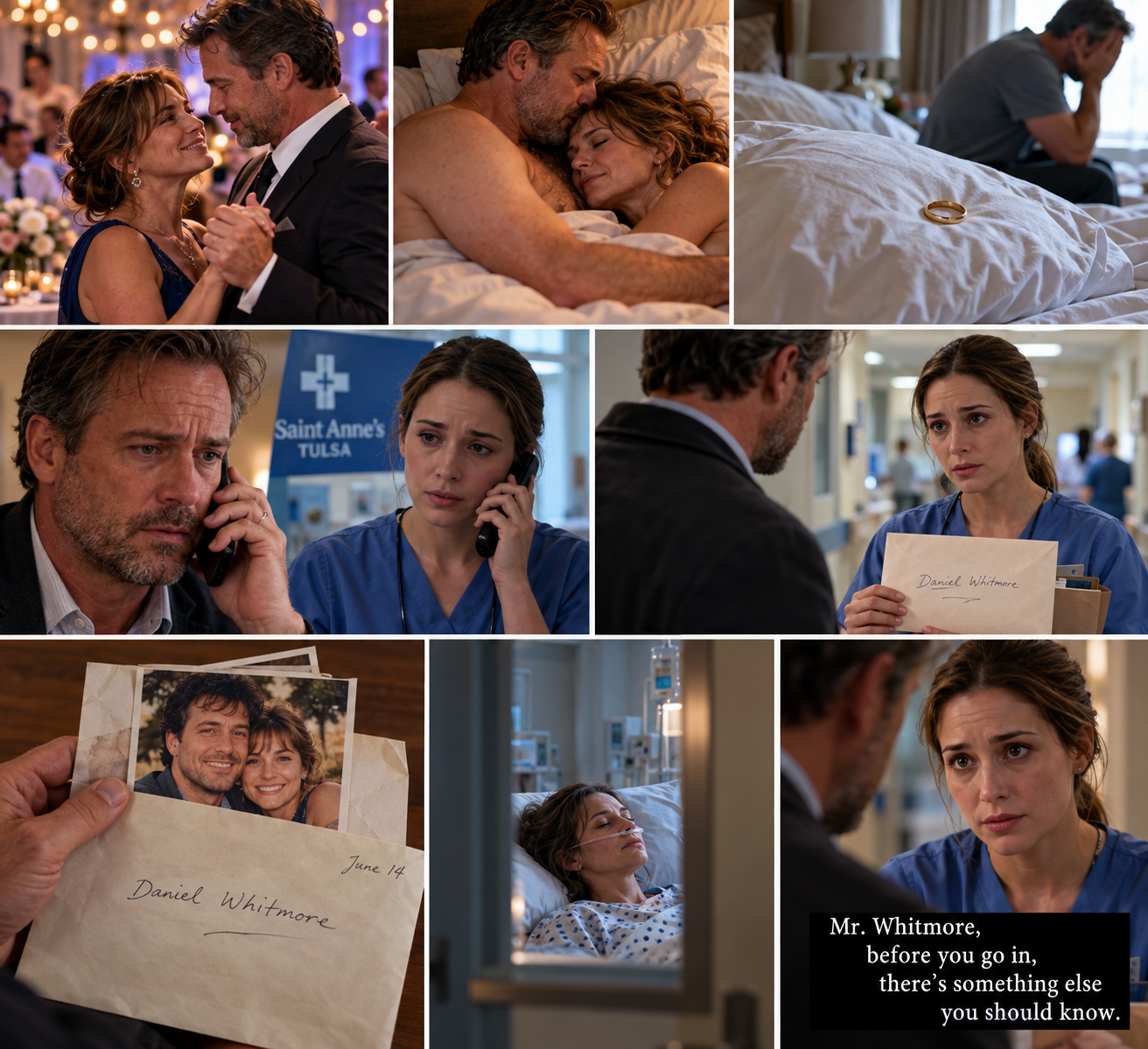
The one Rachel had left before dawn with her ring on my pillow.
Jessica came.
She took credit for seating us together at her wedding.
Rachel told her not to get arrogant.
Grace brought photographs of Linda.
Leah brought Elaine.
They arrived separately.
Left separately.
Progress had boundaries.
Emily came with Matthew.
Michael arrived late.
Julian brought a children’s book about dinosaurs.
Anna brought nothing except herself.
Margaret stood at the end of the driveway for almost five minutes before coming inside.
I watched from the porch.
I did not rescue her from the discomfort.
She eventually walked up.
“Hi, Danny.”
“Hi, Mom.”
That was progress too.
Rachel saw her.
They stared at each other.
Then Rachel said, “There’s coffee.”
Margaret nodded.
“Thank you.”
No hug.
No dramatic reconciliation.
Coffee.
Sometimes healing looked embarrassingly ordinary.
Rowan destroyed her birthday cake.
Leah encouraged her.
Grace objected to the amount of frosting.
Matthew filmed everything.
Rachel sat beside me on the porch after sunset.
Her hair had grown back differently.
Shorter.
Curlier.
She complained about it.
I loved that she complained.
Complaints belonged to people expecting tomorrow.
She looked toward the living room where our impossible family argued over cleanup.
“Do you ever think about that morning?”
“Yes.”
“The ring?”
“Yes.”
“I really thought you’d follow me.”
“I know.”
“I was an idiot.”
“Yes.”
She elbowed me.
I laughed.
Then reached into my pocket.
The ring.
She stared.
“You still carry it?”
“Sometimes.”
“Why tonight?”
“Because I want to ask something.”
Her expression changed.
“Danny.”
“No panic.”
“That usually means panic.”
I held the ring between us.
“I don’t want our old marriage back.”
“Good.”
“I don’t want to pretend the divorce didn’t happen.”
“Good.”
“I don’t want you to promise never to be afraid.”
Rachel’s eyes filled.
“I can promise that easily because it would be a lie.”
“Exactly.”
I took a breath.
“I want the woman you are now.”
She stared.
“Complicated offer.”
“I’m complicated inventory.”
She laughed through tears.
I continued.
“I want arguments where you tell me what you’re actually angry about.”
“Demanding.”
“I want medical appointments where you don’t hide the diagnosis.”
“Very demanding.”
“I want you to stop deciding what pain I’m allowed to survive.”
Her smile disappeared.
“I’m trying.”
“I know.”
“And?”
“And I want to stop treating love like permission to rescue you from choices that belong to you.”
She looked down at the ring.
“So what are you asking?”
I smiled.
“A question.”
“Danny.”
“Will you marry me again?”
She cried.
Then laughed.
Then cried harder.
I waited.
That was important.
No assumption.
No interpreting tears.
No finishing her answer.
Finally Rachel wiped her face.
“Yes.”
I exhaled.
She held up one finger.
“But.”
“Of course.”
“Small wedding.”
“Yes.”
“No geneticists.”
“Strong yes.”
“No researchers.”
“Yes.”
“No family revelations during dessert.”
“I cannot guarantee that.”
She laughed.
“And I keep my own medical passwords.”
“Absolutely.”
“And if I leave a ring somewhere—”
“I ask what it means.”
Rachel nodded.
“Then yes.”
I slid the same plain gold ring onto her finger.
It fit more loosely now.
Her hands had changed.
So had everything else.
Rachel looked at it.
“Funny.”
“What?”
“For years I thought this ring meant I failed at marriage.”
“And now?”
She looked toward Rowan sleeping against Grace’s shoulder.
Toward Leah arguing with Elaine.
Toward Margaret washing plates beside Emily.
Toward Matthew and Michael moving chairs.
“It means we get to decide again.”
I kissed her.
Inside, Rowan woke and started screaming.
Rachel laughed against my mouth.
“Your daughter.”
“Our daughter.”
“Convenient.”
We went inside together.
Click here to continue reading: PART 43: Years After a Nurse’s Phone Call Changed Everything, Daniel Finally Understood What Rachel’s Ring Had Been Asking Him to Choose
Three Years After Our Divorce, Rachel Left Her Wedding Ring on My Pillow and Vanished Before I Woke
Part 42 of 43