The letter arrived on a Thursday morning, six days after Graham warned me that Paige had been seeking legal advice. It came in a white envelope bearing the name of a law firm I didn't recognize. The return address was in the same city where Graham and Paige lived. I carried it into the kitchen and placed it beside my breakfast plate, unwilling to open it until I had finished pouring my coffee.
I already suspected what it contained. Still, I felt a tightening in my stomach when I saw Paige's name in the opening paragraph. Her attorney was requesting information about the lottery ticket she had purchased for my birthday, including the circumstances under which it had been given to me and the date the prize was claimed.
The letter did not establish that Paige owned any portion of the winnings. It asserted that questions had arisen about the intended nature of the gift and asked that relevant documents be preserved while the matter was reviewed. The language was formal and cautious, but its meaning was unmistakable. Paige was exploring whether she could claim some financial interest in the prize.
I read the letter twice before telephoning Martin.
He asked me to scan it and send him a copy. Ruth had helped me set up a small printer in the cottage, and I was still learning how to use its scanning function. After several attempts, I managed to transmit the pages. Martin confirmed their arrival and said he would review them before advising me.
While I waited, I opened the wooden box and removed the birthday card. The paper had begun to curl slightly at the edges. I remembered Paige sliding it across the table, Graham laughing, and the children waiting for me to scratch the ticket. I could still hear the quarter scraping against the silver coating.
It had been an ordinary birthday gift, however thoughtless the joke surrounding it might have been. Nobody had suggested that I was purchasing the ticket from Paige or sharing a gambling arrangement with her. She had given it to me, and I had accepted it. The prize had been discovered after the transfer.
Yet I knew that legal questions could become complicated, particularly when large sums of money were involved. I didn't want to assume that common sense alone would resolve everything.
Martin called that afternoon.
He sounded calm, which helped me feel calmer.
"Mrs. Mercer, the letter raises questions, but it doesn't prove that anyone else owns the prize. We'll respond appropriately and preserve the relevant records."
I asked whether Paige could actually take the money.
"That depends on the applicable law and the evidence," he explained. "But based on what you've told me, this was presented as a birthday gift. We have documentation of the claim process, and there may be other evidence supporting that account."
I looked at the card on the table.
"Would the card help?"
"It may. Keep it safe."
I told him that Graham and the children had been present when Paige gave me the ticket. He made a note of that. He also asked whether anyone had taken photographs or recorded the birthday gathering.
I remembered that Chloe had used Paige's telephone to take several pictures of the cake. I wasn't certain whether any photographs showed the ticket.
Martin advised me not to contact Paige directly about the legal claim. He would communicate with her attorney and determine whether the matter could be resolved without formal proceedings.
After we ended the call, I placed the birthday card back in its box. My hands were steady, but I felt deeply disappointed.
I had expected Paige to be upset about the house. I had expected her to ask for financial help. But involving an attorney to challenge the ownership of a birthday gift felt different. It suggested that she was willing to transform a family celebration into a dispute over money.
I wondered what Graham thought.
I didn't have to wait long to find out.
He called that evening.
"Mom, I heard you got the letter."
"Yes."
"I'm sorry."
I sat down beside the living room window.
"Did you know she was going to send it?"
"I knew she had spoken to an attorney. I didn't know he was sending anything yet."
"Do you believe she has a claim?"
He was silent for several seconds.
"No," he said finally. "I don't."
The answer relieved me more than I expected.
"Then why is she doing this?"
"She thinks you should share something with us because she bought the ticket."
"That's different from believing she owns it."
"I know."
He sounded exhausted.
I asked whether he had encouraged her to pursue the matter.
"No. I told her I thought it was a bad idea."
"Did she listen?"
"Not really."
I could hear him moving around, perhaps walking through the house while we spoke. He told me Paige had become increasingly anxious about their finances. They had found several possible rental properties, but each required deposits, moving expenses, and adjustments to their monthly budget. She believed that my winnings could solve those problems immediately.
"She's scared," he said.
"I understand that."
"She says it isn't fair that you have so much while we're struggling."
I looked at Thomas's photograph.
"Fairness isn't always measured by who has more money, Graham."
"I know."
"Your father and I struggled financially for years. We made difficult choices, and we sometimes went without things we wanted. But we never believed someone else's good fortune automatically belonged to us."
He didn't respond immediately.
Then he said, "I told Paige something similar."
I was surprised.
"What did she say?"
"She said I was taking your side again."
I sighed.
"Graham, this isn't about choosing sides. It's about recognizing what belongs to whom."
"I know."
We spoke for a while longer about the children and the housing search. Graham said Owen was beginning to understand that they would be moving, although he remained disappointed about losing the possibility of having my old bedroom. Chloe was more concerned about changing schools.
I asked whether they had considered remaining in the same school district.
"That's what we're trying to do," Graham said.
"Good."
Before ending the call, he asked whether I was angry with him.
I considered the question.
"I'm disappointed that this has become a legal dispute. But I know you didn't send the letter."
He sounded relieved.
"I love you, Mom."
"I love you too."
After we hung up, I sat in the living room until the sky darkened.
I thought about the years when Graham was young and money was always carefully managed. Thomas and I had worked hard to give him a stable childhood. We couldn't afford every holiday or expensive activity, but we had tried to make him feel secure.
I remembered one Christmas when Graham was ten. He wanted a bicycle that cost more than we could comfortably spend. Thomas took extra shifts, and I worked evenings at a local shop. We bought the bicycle and placed it beside the tree on Christmas morning.
Graham had been so delighted that he forgot to open the smaller presents.
At the time, I had felt proud that we could give him something he wanted.
Now I wondered whether we had sometimes confused love with providing.
The thought was uncomfortable. I didn't believe generosity had harmed Graham, but perhaps I had taught him that I would always find a way to meet his needs, even when doing so required sacrifice.
The following day, Ruth came over for lunch. I showed her the attorney's letter and explained Martin's advice.
She read the document carefully, then placed it on the table.
"Well," she said, "that tells you where Paige's priorities are."
"I don't want to judge her too harshly."
Ruth looked at me.
"Evelyn, you can understand someone's fear without pretending their choices are harmless."
I knew she was right.
We spent the afternoon sorting old photographs. Ruth had brought several albums from our childhood, and we sat on the living room floor examining pictures of our parents, grandparents, and family holidays.
One photograph showed me at sixteen, standing beside a bicycle with a ribbon tied around the handlebars. Ruth laughed and reminded me that I had insisted on riding it to school despite the heavy rain that morning.
I smiled at the memory.
It was strange to think that the girl in the photograph had once imagined adulthood as a series of exciting possibilities. She hadn't pictured herself spending her seventies worrying about whether her family would respect her decisions.
Yet the cottage reminded me that possibilities remained, even now.
A week later, Martin called with an update. Paige's attorney had acknowledged his response and requested additional information about the circumstances of the gift. Martin had provided what was appropriate and declined to disclose private financial records unrelated to the question of ownership.
He explained that the matter might end with correspondence or could develop into a formal dispute. There was no way to predict Paige's next decision.
I asked whether I should prepare for court.
"Not at this stage," he said. "We'll respond to what actually happens rather than worrying about every possibility."
I appreciated the advice.
That evening, I received a message from Chloe asking whether she could visit during the school holiday. Graham had apparently given her permission to contact me directly.
I smiled when I read it.
I replied that I would love to see her and suggested we arrange the details with her parents.
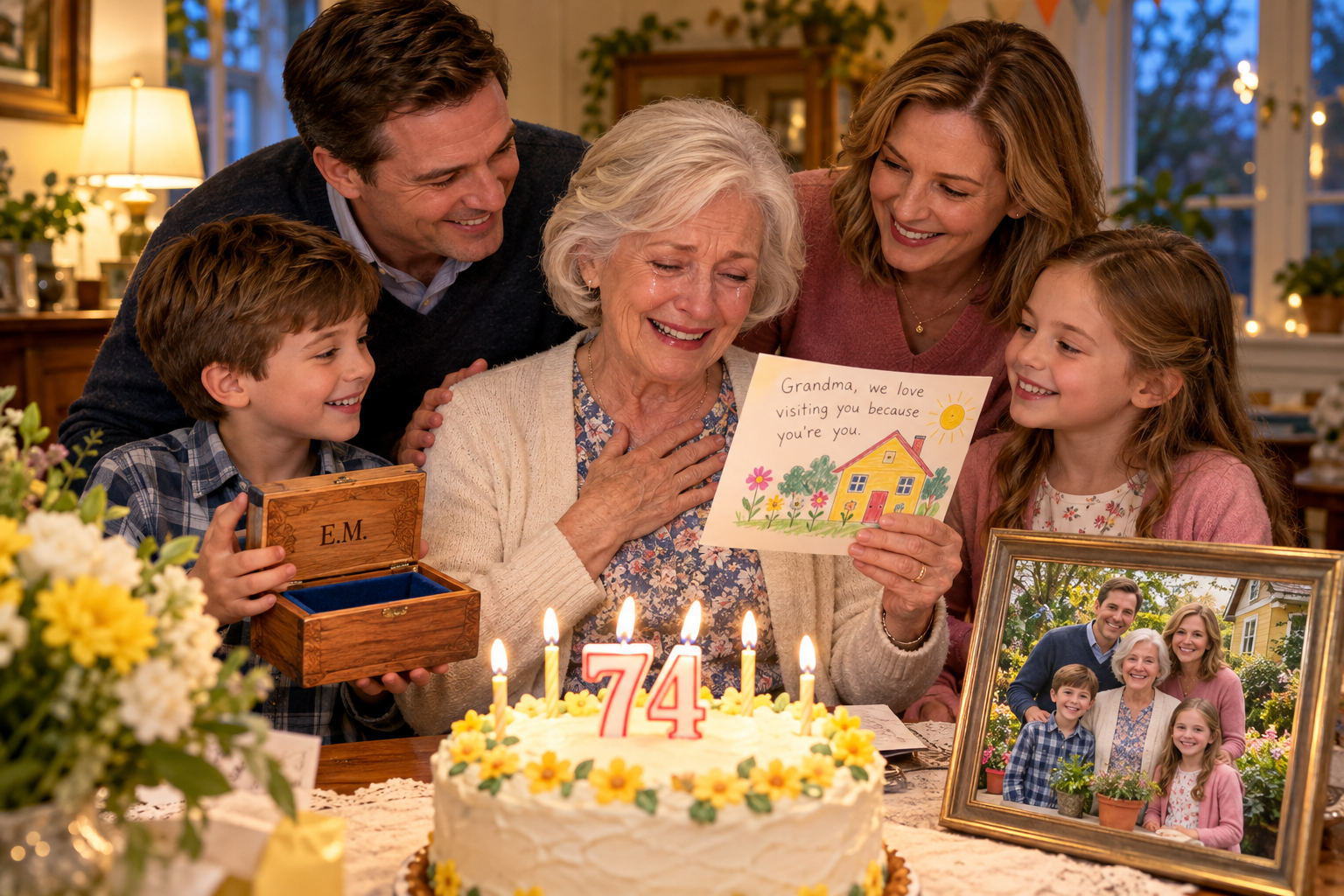
A few minutes later, she sent a photograph of a drawing she had made. It showed a yellow house with red flowers, a blue window, and three stick figures standing beside a dog.
I laughed.
There was no dog at the cottage, but perhaps Chloe had decided I needed one.
The drawing reminded me why I had established the education trusts. I wanted the children to have opportunities, security, and the freedom to build their own lives. I didn't want their futures shaped by the arguments currently dividing the adults around them.
The next morning, I printed Chloe's drawing and placed it on the refrigerator.
Then I called Martin.
I asked him to review the trusts once more, ensuring that the arrangements remained secure regardless of the dispute over the lottery ticket.
He assured me that the documents had been prepared carefully but agreed to conduct another review.
I thanked him.
When I ended the call, I stood in the kitchen looking at the drawing.
The little yellow house was crooked, the flowers were enormous, and the dog had six legs.
It was perfect.
Whatever happened with Paige's claim, I intended to protect the children's future without allowing their parents to control it.
Click here to continue reading: PART 11: My Granddaughter’s Holiday Visit Revealed What the Children Had Been Told, and I Faced a Painful Choice About Speaking Honestly
On My Seventy-Third Birthday, a Two-Dollar Gift Revealed a Secret That Would Change Everything I Believed About My Family
Part 10 of 31