Graham called on the first Monday of January with news that sounded almost cheerful. Their application for the brick rental house had been approved. It was smaller than the property they currently occupied, but it was within their budget and close enough to the children's school that neither Owen nor Chloe would need to transfer.
I was standing at the kitchen counter, cutting apples for breakfast, when he told me.
"That's wonderful," I said. "I'm glad you've found somewhere suitable."
He sounded relieved.
"The landlord seems reasonable. The place needs a little painting, but we can manage that."
"Will the children have their own rooms?"
"Yes. Owen's is smaller than he wanted, but he'll survive."
I smiled.
"And Chloe?"
"She's already planning where to put her books."
We spoke for several minutes about the move. Graham said they hoped to collect the keys within two weeks and would begin transferring their belongings shortly afterward. The property manager had been informed, and Martin's office would coordinate the final tenancy arrangements.
For the first time since the formal notice arrived, the practical problem of housing seemed close to resolution.
I felt genuinely pleased.
Graham had found a solution without relying on my lottery winnings. It might not be the house Paige had imagined, but it would provide stability for the children and allow the family to move forward.
Then his voice changed.
"Mom, there's something else."
I put down the knife.
"What is it?"
"Paige is still upset about the lottery."
I closed my eyes briefly.
"I know."
"Her attorney wants to continue asking questions."
"Martin is handling that."
"I told her she should stop."
"And?"
Graham sighed.
"She says she needs to know whether she has any rights."
I looked toward the window.
The morning was gray, and a thin layer of frost covered the garden.
"Graham, I can't control what Paige chooses to do. But I won't surrender money simply because she regrets giving me a lottery ticket."
"I understand."
He hesitated.
"She thinks you're trying to punish her."
"I'm not."
"I know."
I waited.
Then he said something that troubled me.
"She's been talking about limiting the kids' visits."
I sat down.
"What do you mean?"
"She says it's confusing for them to spend time with you while we're arguing."
I thought of Chloe's recent visit, the biscuits we had baked, and the afternoon we spent looking through photographs.
"Did Chloe seem confused when she came home?"
"No. She had a wonderful time."
"Then why would Paige want to stop the visits?"
Graham was silent.
I could hear the faint sound of traffic in the background.
Finally, he said, "I think she's angry."
I looked down at my hands.
I had expected financial pressure. I had expected legal correspondence. But the possibility that Paige might use the children's visits as leverage frightened me more than either.
"Graham," I said carefully, "Owen and Chloe shouldn't become part of this disagreement."
"I know."
"They need to feel loved by everyone in their family."
"I agree."
"Then please make sure they aren't asked to choose sides."
He promised to speak with Paige.
After we ended the call, I remained seated for a long time.
I knew that parents had the responsibility to make decisions about their children's visits and activities. I couldn't simply insist on seeing Owen and Chloe whenever I wished. But I hoped Graham and Paige would recognize that cutting off a loving relationship because of a financial dispute could hurt the children.
Later that morning, I telephoned Ruth.
She listened while I explained the situation.
"That's cruel," she said.
"I don't know whether Paige will actually do it."
"Then don't assume she will. But be prepared."
I sighed.
"I don't want to fight over the children."
"Then don't. Let Graham handle his responsibilities as their father. You can remain available and loving without turning this into another battle."
Her advice was sensible.
I decided not to contact Paige directly. Instead, I sent Graham a short message saying I hoped the children could continue visiting and that I would respect reasonable arrangements made by their parents.
He replied with a heart symbol and the words, I'll work on it.
That afternoon, Martin called with an update on the property sale.
The preliminary inspection had been completed, and the house was in generally good condition. A few repairs would be needed before marketing, but nothing unusual had been discovered.
He explained that the sale could proceed once the tenancy ended and the property was ready.
I asked whether Graham and Paige had confirmed their moving date.
"They've indicated they expect to leave before the notice period expires," he said.
"Good."
Martin then mentioned the lottery dispute.
Paige's attorney had requested another exchange of correspondence, but there had been no formal claim filed. Martin believed the available evidence continued to support the position that the ticket had been an unconditional birthday gift.
I asked whether the matter might end soon.
"It's possible," he said. "But we can't predict what the other party will decide."
I thanked him.
After the call, I went into the living room and opened the wooden box.
The birthday card lay beneath Thomas's letters.
I removed it and examined Paige's handwriting.
Happy Birthday, Evelyn.
The message was brief, but it was unmistakably a greeting attached to a gift.
I remembered the laughter around the dining table and the way Paige had urged me to scratch the ticket.
Nobody had mentioned sharing the prize.
Nobody had suggested that the ticket remained hers.
The memory was clear.
I placed the card back in the box.
For several minutes, I sat beside the fireplace, thinking about the strange path that had brought me here.
A two-dollar lottery ticket had given me financial independence.
That independence had allowed me to recognize how little control I had over my own life.
And now the same ticket was threatening to divide my family.
I wondered whether I would have made the same decisions without the money.
Perhaps I would eventually have moved out. Perhaps I would have found a small apartment near Ruth. Perhaps I would have continued living with Graham and Paige, quietly unhappy, until another event forced a change.
I couldn't know.
What I did know was that I didn't regret choosing independence.
The following weekend, Ruth and I attended a small community gathering at the local library. There were tables displaying volunteer opportunities, gardening clubs, and classes for older adults.
I signed up for a weekly book discussion group.
Ruth teased me about finally having time to read something other than grocery lists.
I laughed.
The gathering was ordinary, but it reminded me that my life contained possibilities beyond the family conflict.
I met a woman named Margaret who lived two streets away and volunteered at a local historical society. We spoke about books, gardens, and the difficulty of keeping roses healthy during unpredictable weather.
She invited me to join a small group that met for coffee on Wednesday mornings.
I accepted.
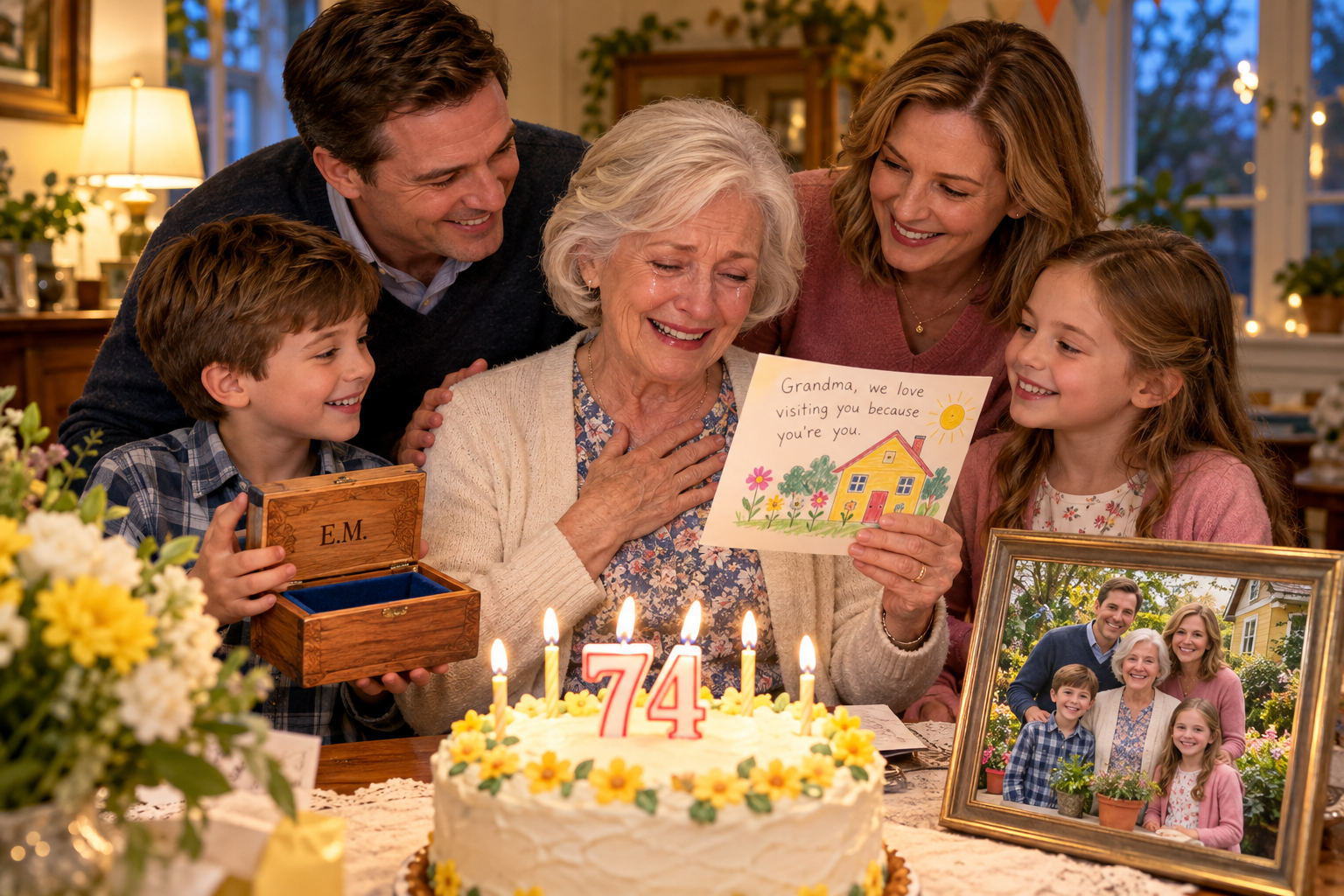
When I returned home, I placed the library schedule on the refrigerator beside Chloe's drawing.
The two pieces of paper seemed to represent different parts of my life: the family I loved and the independence I was learning to enjoy.
I wanted both.
That evening, Graham sent photographs of the new rental house.
The living room was smaller than their current one, but the windows were large, and the kitchen had enough space for a breakfast table.
Owen had already chosen a corner for his desk.
Chloe wanted yellow curtains.
I smiled when I saw that.
Perhaps she wanted her room to resemble my cottage.
I replied that the house looked comfortable and that I hoped the move would go smoothly.
A few minutes later, Graham called.
"Mom, Paige wants to talk to you."
I felt my stomach tighten.
"About what?"
He hesitated.
"She says she has a proposal."
I looked toward the darkened garden.
"What kind of proposal?"
"She wants to settle the lottery issue privately."
I remained silent.
Graham continued.
"She says if you give us a certain amount, she'll drop the claim and stop making things difficult."
The words seemed to hang in the air.
I felt a slow, painful disappointment.
"How much?" I asked.
He hesitated again.
"One million dollars."
I looked at Thomas's photograph.
For a moment, I couldn't speak.
Paige had turned a birthday gift into a financial demand, and now she was offering to restore peace in exchange for a payment.
I understood that Graham was uncomfortable repeating her proposal. His voice was quiet, almost ashamed.
"Mom, I told her I didn't think you'd agree."
"You were right."
He sighed.
"I know."
I took a slow breath.
"Graham, please tell Paige that any legal questions should go through Martin. I won't negotiate money in exchange for family harmony."
He didn't answer immediately.
Then he said, "I understand."
I looked toward Chloe's drawing on the refrigerator.
The little yellow house, the oversized flowers, and the six-legged dog were still there.
I thought about how much I loved my grandchildren and how easily that love could be used to pressure me.
"Graham," I said, "I hope you understand something else."
"What?"
"I will always love you and the children. But I will not pay someone to treat me with respect."
He was silent for a long moment.
Then he said, very quietly, "I think I'm beginning to understand."
After we ended the call, I remained at the kitchen table.
Outside, the wind moved through the bare branches.
Inside, the cottage was warm and quiet.
I had no way of knowing whether Paige would abandon her demand or continue pursuing it.
But I knew what I would do.
I would protect the money, maintain the boundaries I had established, and leave the legal questions to the professionals.
And whatever happened next, I would not allow the price of belonging to my own family to be set at one million dollars.
Click here to continue reading: PART 13: After Paige Demanded a Million Dollars, I Discovered That My Son Had Been Hiding a More Painful Truth About Their Marriage
On My Seventy-Third Birthday, a Two-Dollar Gift Revealed a Secret That Would Change Everything I Believed About My Family
Part 12 of 31