By the following summer, the Willow Creek archive had become larger than anyone expected.
Researchers came.
Students came.
Families came looking for names.
Some found records of property they had lost.
Others found nothing.
Margaret learned that history did not always provide closure.
Sometimes it only provided evidence.
That had to be enough.
One afternoon, Margaret visited the archive with her granddaughter.
The girl had begun studying history at school and had developed an interest in old documents.
“Show me something interesting,” she said.
Margaret smiled.
“Everything here is interesting.”
“That is what adults say when they don't know what to show you.”
Margaret laughed.
They walked through the archive.
Photographs.
Ledgers.
Letters.
Property maps.
Bank records.
Copies of court documents.
The redacted sections.
The restored names.
The evidence that had once seemed capable of destroying a family had become something else entirely.
A lesson.
Her granddaughter stopped in front of one display.
It contained the original photograph of Richard, Marian, and Samuel.
“That's the one.”
“Yes.”
“Do you think Grandpa would be upset that people can see it?”
“No.”
“Why?”
“Because he eventually understood that secrets don't become safer just because they stay private.”
They moved to another room.
There was a display about the community garden.
A photograph showed Margaret standing beside Clara.
Another showed Michael helping construct a greenhouse.
Jennifer appeared in a picture holding a stack of legal folders.
Lisa stood beside a group of older residents.
Margaret stared at the images.
“I didn't know they took that many photographs.”
Her granddaughter laughed.
“You're famous.”
“I am not.”
“You are in an archive.”
“That doesn't make someone famous.”
“What does?”
Margaret thought.
“Being remembered for the right reasons.”
The girl smiled.
They continued walking.
At the end of the hallway stood an empty display case.
“What's that for?”
Margaret looked at it.
“I've been wondering.”
“About what?”
“What belongs there.”
Her granddaughter studied the empty case.
“Maybe your will.”
Margaret laughed.
“Absolutely not.”
“Why?”
“Because it's not the most important thing.”
“What is?”
Margaret looked around.
“Everything people did after reading it.”
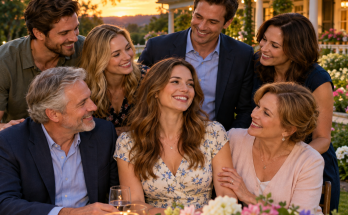
That evening, Margaret gathered the family.
She brought a small wooden box.
Everyone recognized it.
Inside were copies of the documents that had shaped their family.
Richard's letters.
Marian's letter.
The photograph of the three young people.
The photograph of Willow Creek.
A copy of Richard's final note.
A photograph of the family standing beneath the oak tree.
Margaret placed them on the table.
“I want these preserved.”
Jennifer nodded.
“We can put them in the archive.”
“Yes.”
Michael looked at the papers.
“All of them?”
“All of them.”
Lisa asked, “Even the painful ones?”
“Especially those.”
Her granddaughter looked at Margaret.
“What about your will?”
Margaret smiled.
“That stays private.”
Everyone laughed.
Margaret handed the box to Jennifer.
Then she stopped her.
“Wait.”
She took out one final envelope.
“This belongs in the archive too.”
Jennifer looked at it.
“What is it?”
“A letter.”
“From Grandpa?”
“No.”
“From you?”
“Yes.”
Everyone became quiet.
Margaret looked around the table.
“I wrote it after the family meeting.”
Her granddaughter leaned forward.
“Can we read it?”
“Not yet.”
“Why?”
“Because it's meant for whoever finds it years from now.”
Michael smiled.
“That sounds like Dad.”
Margaret shook her head.
“No. This one is mine.”
She placed the envelope into the box.
The family did not open it.
They respected the decision.
Later that night, Margaret sat alone at the kitchen table.
She looked at the refrigerator.
The old note was still there.
Don't ever change your will again without telling me first.
She laughed softly.
Then she took out a fresh piece of paper.
She wrote another note.
Not for her children.
Not for her granddaughter.
For whoever came after them.
She wrote about inheritance.
About how money could be useful but dangerous.
About how love could become unhealthy when it was measured by what someone was willing to give.
She wrote that forgiveness should never be confused with permission.
She wrote that family members could love one another deeply and still say no.
She wrote that the truth sometimes arrived late.
When it did, people had a choice.
They could defend the old story.
Or they could build a better one.
Margaret stopped writing.
She looked toward the window.
The garden lights were glowing outside.
She thought about Richard.
She thought about Marian.
She thought about Evelyn.
Daniel.
Clara.
Samuel.
Her children.
Her grandchildren.
All the people whose choices had intersected with hers.
She understood something now.
The story had never really been about a will.
The will had only been the moment when Margaret finally refused to let fear write the rest of her life.
She had thought she was protecting money.
In truth, she had been protecting the possibility that her family could learn to love without taking.
She had thought she was teaching her children a lesson.
In truth, they had taught her one too.
People could change.
Not because someone demanded it.
Not because someone threatened them.
But because they finally became tired of being the person their worst choices had created.
Margaret folded the letter.
She placed it in the envelope.
Then she wrote one line on the front.
For the person who thinks love means giving everything away.
She sealed it.
The next morning, she took it to Willow Creek.
Her granddaughter came with her.
They walked through the garden before entering the archive.
Margaret placed the envelope inside the final display case.
Her granddaughter watched.
“What does it say?”
“You'll know someday.”
“That is frustrating.”
“Good.”
“Why good?”
“Because some things should make you curious enough to grow.”
Her granddaughter smiled.
“Are you going to be around when I read it?”
Margaret looked at her.
“I hope so.”
“But if you're not?”
Margaret touched her cheek.
“Then you'll already know what it says.”
“How?”
“Because you lived it.”
The girl hugged her.
Margaret held her tightly.
Through the archive window, sunlight crossed the floor.
For a moment, Margaret saw the whole strange path of her life.
A lonely kitchen.
A phone call nobody answered.
A changed will.
A locked door.
An old house.
A hidden ledger.
A family history she never knew.
A garden where stolen ground became useful again.
Children who learned to stand.
A granddaughter who learned that love and boundaries could exist together.
Margaret looked at the display case.
The archive was full.
But the most important thing it contained was not paper.
It was evidence that people could choose differently.
She took her granddaughter's hand.
“Come on.”
“Where?”
“Home.”
They walked outside.
Behind them, the archive remained quiet.
The documents stayed where they belonged.
The names remained.
The truth remained.
And Margaret finally understood that leaving something behind did not mean making sure people remembered you.
It meant giving them something honest enough to build from.
She had spent much of her life afraid that when she was gone, her family would fight over what she left behind.
Now she knew they would not.
Because they had already learned the only lesson that mattered.
What she left them was never the money.
It was the freedom to choose who they would become.