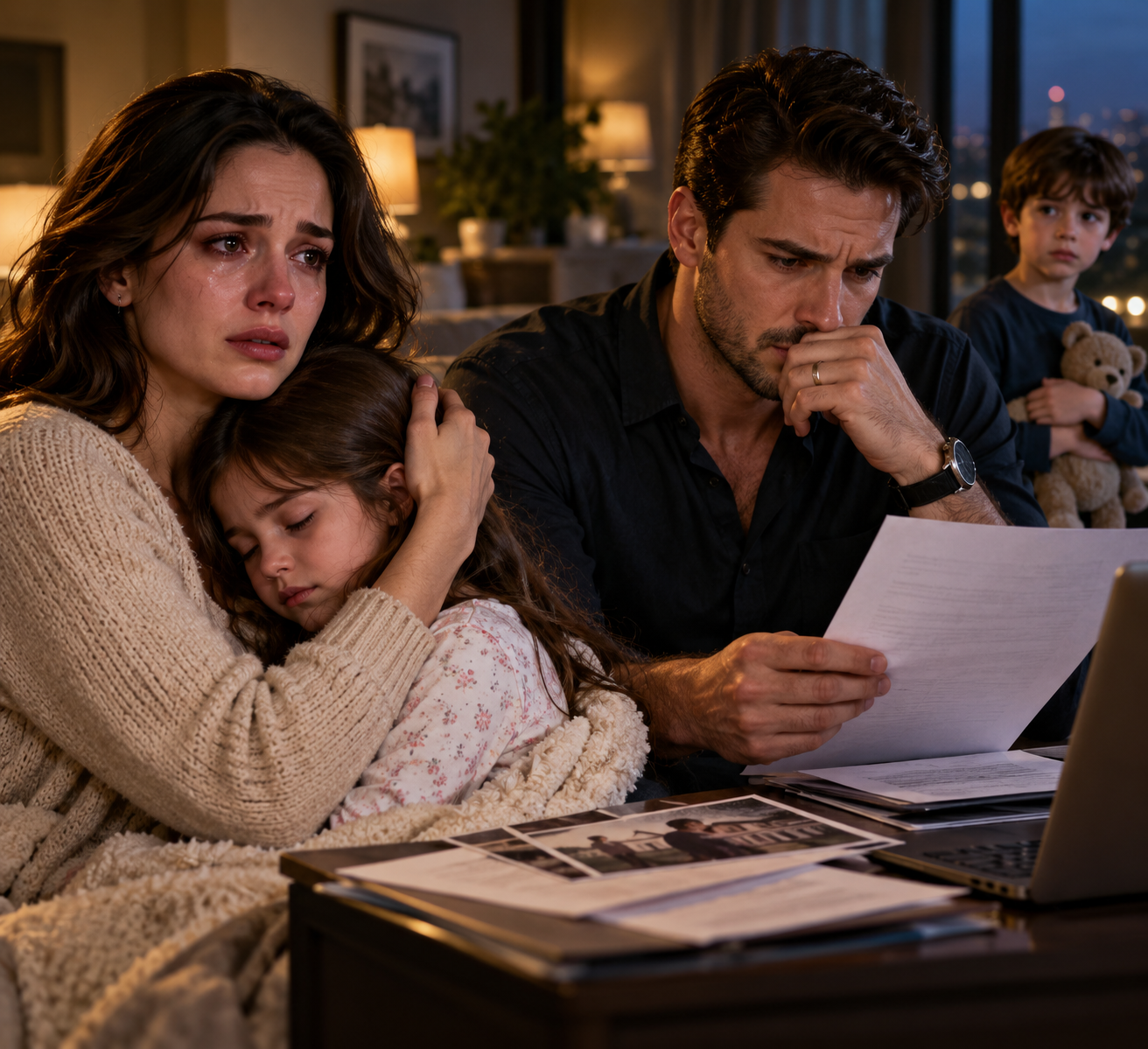
The discovery of the photograph changed nothing about the legal archive.
The records had already been preserved.
The property had already been returned.
The foundation was already functioning.
Still, the photograph gave Margaret something she had not expected.
Context.
For years, she had seen Samuel as a man who appeared suddenly near the end of the story.
Now she understood that he had been part of Richard's world long before she entered it.
That knowledge made Margaret more thoughtful, not more afraid.
She decided not to tell the children immediately.
Instead, she asked Evelyn to come over.
They sat in the garden.
“I keep thinking about one thing,” Margaret said.
“What?”
“How many things Richard carried alone.”
Evelyn looked toward the house.
“He believed secrecy was protection.”
“And eventually learned it wasn't.”
“Yes.”
Margaret sighed.
“I wonder how many families make the same mistake.”
“Most families do, in smaller ways.”
Margaret nodded.
They sat quietly.
Then Evelyn said, “You changed something Richard couldn't.”
“What?”
“You taught the children that honesty doesn't have to wait until the damage is enormous.”
Margaret smiled.
“I made plenty of mistakes.”
“So did Richard.”
“That's not comforting.”
“It isn't supposed to be.”
They laughed.
A few days later, Margaret invited Jennifer, Michael, Lisa, and their children for dinner.
Nobody knew why.
Michael arrived first.
“Is this another family meeting?”
Margaret smiled.
“Maybe.”
Jennifer walked in behind him.
“Should I be worried?”
“No.”
Lisa entered carrying dessert.
“Then I'm definitely worried.”
Everyone laughed.
They ate first.
Margaret had learned that difficult conversations went better when people were not hungry.
After dinner, she brought out the photograph.
Michael stared.
Jennifer leaned forward.
Lisa said nothing.
Margaret told them what Evelyn had explained.
When she finished, Michael looked at the picture again.
“So Dad knew Samuel when they were young.”
“Yes.”
“And Marian knew him too.”
“Yes.”
Jennifer asked, “Do you think Samuel was always going to become what he became?”
“No,” Margaret said.
Nobody spoke.
“That,” she continued, “is what makes choices frightening.”
Her granddaughter looked at the photograph.
“Could he have changed?”
“Yes.”
“Why didn't he?”
Margaret considered the question.
“Maybe because admitting you were wrong can cost you the identity you've built around being right.”
The girl nodded.
Michael looked at his mother.
“That's what you were trying to make us understand.”
“Partly.”
Jennifer said, “You wanted us to choose differently before we had to lose everything.”
“Yes.”
Lisa looked down.
“I wish we'd listened sooner.”
“So do I.”
Michael laughed.
“That's the first time you've admitted that.”
“I am allowed to regret things.”
Jennifer smiled.
“Apparently.”
They talked until late.
Not about inheritance.
Not about the will.
Not about who would receive what.
They talked about choices.
About their father's mistakes.
About their own.
About the difference between guilt and responsibility.
Guilt, Margaret explained, could become self-centered.
Responsibility looked outward.
Guilt asked, “How bad does this make me?”
Responsibility asked, “Who was harmed, and what can I do now?”
Michael nodded.
“That makes sense.”
Jennifer looked toward the window.
“Maybe that's why volunteering helped me.”
“Why?”
“Because I stopped thinking about whether I was a good person and started thinking about whether I was actually useful.”
Margaret smiled.
“That is a much better question.”
Lisa laughed.
“I think we've accidentally become adults.”
“You're only thirty years late,” Margaret said.
The children laughed.
Later, Margaret's granddaughter approached her privately.
“Can I ask you something?”
“Of course.”
“Did you ever want to punish us?”
Margaret knew what she meant.
“Sometimes I wanted you to feel what I felt.”
The girl looked surprised.
“But I didn't act on that feeling.”
“Why?”
“Because feelings are information. They aren't instructions.”
The girl repeated the phrase quietly.
“Feelings are information.”
“Yes.”
“I'm writing that down.”
Margaret laughed.
“Of course you are.”
Before everyone left, Margaret placed the photograph in the center of the table.
“This belongs to the archive,” she said. “But I want all of you to remember what it represents.”
Michael looked at the young faces.
“What?”
“That nobody is born knowing who they will become.”
Jennifer nodded.
“Choices do that.”
“Exactly.”
After they left, Margaret remained in the kitchen.
The house was quiet again.
But it no longer felt empty.
It felt lived in.
The next morning, she received a call from Thomas.
“I have an update.”
Margaret smiled.
“Why does everyone call me with updates?”
“Because you're impossible to surprise.”
“That isn't true.”
Thomas laughed.
“I received a request from a university.”
“What kind of request?”
“They want access to the Willow Creek archive for a research project.”
Margaret sat down.
“What are they researching?”
“Property fraud, family trusts, and restitution.”
Margaret thought about it.
“Will they use Richard's name?”
“Yes.”
“Will they include the parts that make him look bad?”
“They have to.”
“Then approve it.”
Thomas paused.
“Are you sure?”
“Yes.”
“What about your privacy?”
Margaret looked toward the garden.
“I've spent too long protecting people from the truth.”
Thomas said nothing.
“I don't want to do that anymore.”
The archive was opened for academic research.
Months later, Margaret received a copy of the first published study.
It described the property scheme in careful detail.
Richard was not portrayed as a hero.
He was not portrayed as a villain either.
He was described as a participant who later became a cooperating witness and played a significant role in preserving evidence.
Margaret read the passage several times.
Then she closed the book.
It was honest.
That was enough.
Jennifer called that evening.
“I read it.”
“So did I,” Margaret said.
“How do you feel?”
“Tired.”
Jennifer laughed.
“Only you could read a family history and feel tired.”
Margaret smiled.
“I've been living it for decades.”
There was a pause.
Then Jennifer said, “I'm proud of you.”
Margaret closed her eyes.
“Thank you.”
“I mean it.”
“I know.”
“I also think Dad would have hated that article.”
Margaret laughed.
“Probably.”
“He wouldn't have liked being described as complicated.”
“He was complicated.”
“I know.”
Margaret looked at the book.
“He deserved the truth.”
Jennifer agreed.
“So do we.”
Margaret smiled.
That sentence felt like the final piece of something.
Not the end of the family's history.
Just the end of their need to make it prettier than it was.