Five years after the final case closed, I returned to the museum one last time.
The exhibit had changed.
The black ledger was still there, but the description had been updated.
It no longer focused entirely on the Hail family.
The museum had expanded the exhibit to explain how financial systems could be manipulated and how ordinary people could protect themselves.
I stood before the glass.
The ledger looked smaller than I remembered.
Everything did.
The curator approached me.
“We've had thousands of visitors.”
“Really?”
“Yes.”
“What do they ask?”
“Mostly how people didn't notice.”
I looked at the ledger.
“That question is easy.”
She waited.
“People notice when they feel safe enough to admit something is wrong.”
She nodded.
“And if they don't?”
“Then they keep explaining away what they're seeing.”
The curator smiled.
“That should be on the wall.”
I laughed.
“No.”
She laughed too.
Before leaving, I walked toward the photograph section.
There was a picture of Walter.
Another of Edward.
Another of the old Hail office.
And one of the maple tree.
I stopped.
The photograph showed it in autumn.
Golden leaves.
Long shadows.
A small patch of grass beneath it.
No people.
No secrets.
Just a tree.
I stood there longer than I expected.
Then I noticed something beside the photograph.
A small plaque.
It explained that the property had once been part of the Hail Preservation Trust and had later been transferred out of the family structure.
There was no dramatic wording.
No mention of inheritance.
No suggestion that the family had been extraordinary.
It simply recorded what happened.
That was exactly how I wanted it.
History didn't need to flatter anyone.
It only needed to tell the truth.
When I returned home, Mom was waiting.
She was older now.
So was I.
But the kitchen still smelled like coffee.
The old kettle still complained when it boiled.
Some things never changed.
“You went to the museum,” she said.
“Yes.”
“Did you cry?”
“A little.”
She smiled.
“Good.”
I sat beside her.
For a while, we talked about nothing.
Then she asked, “Do you still think about your father every day?”
“No.”
She looked surprised.
“Do you feel guilty?”
“No.”
“Why not?”
“Because remembering someone doesn't require thinking about them every day.”
She nodded.
That night, I went into the study.
The room was mine now.
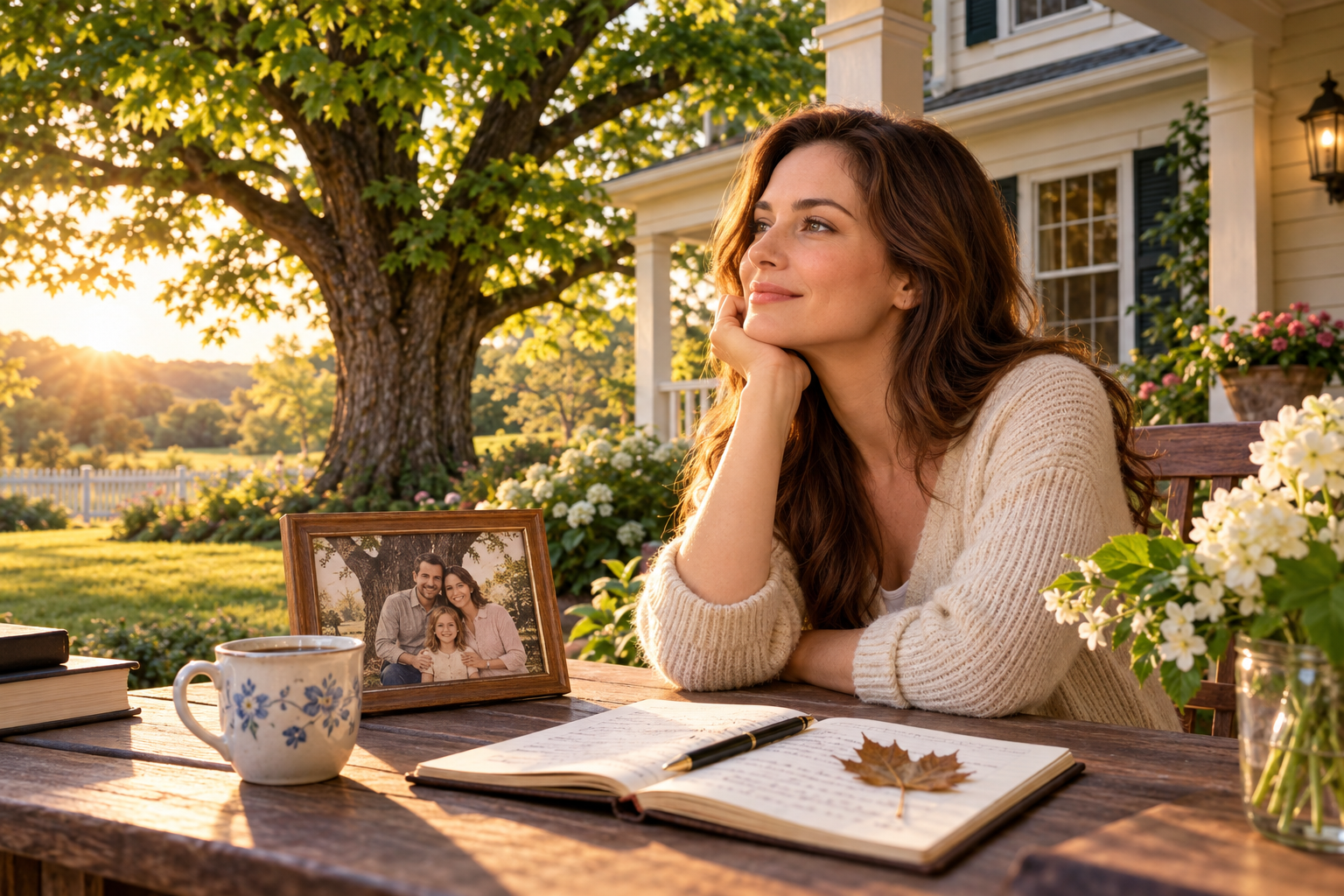
On the wall hung the photograph of my childhood self beneath the maple tree.
Beside it was the note I had written at nine years old.
I want to be happy.
I smiled.
My father had once filled this room with documents designed to control the future.
I had filled it with reminders of the past that no longer controlled me.
That difference mattered.
I opened the desk drawer.
The silver key was still there.
I picked it up.
For a moment, I considered throwing it away.
Then I placed it back.
Some things didn't need to be destroyed to stop controlling you.
They only needed to become ordinary.
The same was true of the brass seal.
The black ledger.
The old photographs.
The letters.
The house.
The family name.
They were all things.
They could tell stories.
They could hold history.
But they could not decide my future.
That decision belonged to me.
A week later, Nora visited.
She brought news from the foundation.
The scholarship program had grown.
The legal workshops had expanded.
Several families had recovered property.
One case had prevented an elderly couple from losing their home.
Another had helped a young woman discover that her signature had been forged.
Nora handed me the annual report.
“You should be proud.”
“I am.”
She smiled.
“You finally admitted it.”
“I've been practicing.”
We sat beneath the maple tree.
Nora looked up.
“Do you ever wish you'd never found the letter?”
I thought about it.
“Yes.”
She laughed.
“Really?”
“Sometimes.”
“What about the rest?”
“I wouldn't trade what I learned.”
“That sounds complicated.”
“It is.”
I looked toward the house.
“If I hadn't found the letter, I might still believe money was the safest thing in the world.”
“And now?”
“Trust is.”
Nora nodded.
“Trust in other people?”
“Sometimes.”
“Trust in yourself?”
“Mostly.”
That was the lesson I had fought hardest to learn.
I had spent years allowing other people to define what was safe.
My father.
Mark.
Samuel.
Edward.
Even the people who loved me.
I had mistaken their certainty for truth.
Eventually, I learned that love didn't give anyone the right to decide your life.
Protection didn't justify secrecy.
Inheritance didn't create obligation.
And family didn't excuse control.
Those lessons had cost me.
But they had also freed me.
That evening, I received one final letter.
No mysterious sender.
No hidden company.
It was from the foundation.
The board had voted to name a new program after the people who had come forward during the Bell investigations.
Not after Walter.
Not after the Hail family.
After the witnesses.
The people who had spoken.
I read the letter twice.
Then I signed the approval.
The program would fund legal support for whistleblowers and witnesses who feared retaliation.
It felt right.
The story had begun with silence.
It would end with voices.
Later that night, Mom and I sat outside.
The stars were visible.
She leaned back in her chair.
“Do you think your father would understand what you built?”
I looked at the house.
“I think he'd have questions.”
She laughed.
“He always did.”
“And I'd answer them.”
“Would you argue?”
“Definitely.”
She smiled.
“That sounds like family.”
We sat quietly.
The maple tree moved in the wind.
I listened.
Not for footsteps.
Not for engines.
Not for warnings.
Just leaves.
Just night.
Just home.
I thought about the girl I had been when this began.
She had believed that adults knew everything.
That signatures meant certainty.
That wealth meant safety.
That family meant protection.
She had been wrong.
But she had also been brave.
She had kept asking questions.
She had opened doors.
She had refused to sign what she didn't understand.
She had learned to trust herself.
I owed that girl everything.
I owed my father nothing.
And I no longer needed to hate him to say it.
I could remember him honestly.
I could love him honestly.
I could grieve him honestly.
And still choose a different life.
That was freedom.
Not forgetting.
Not forgiving everything.
Not pretending the past had never happened.
Choosing what the past was allowed to become.
The next morning, I opened the front door.
Sunlight spilled across the hallway.
Mom was making coffee.
The house smelled like toast.
The maple tree moved outside the window.
Nothing was hidden.
Nothing was waiting.
Nothing needed to be uncovered.
I stood there for a moment and smiled.
My family had spent generations believing the most valuable thing they could leave behind was ownership.
They were wrong.
What mattered was what I had learned.
A person can lose money and rebuild.
A person can lose property and find another home.
A person can lose a family name and still know who they are.
But if you lose the ability to choose your own life, no inheritance can replace it.
I had nearly lost that.
I hadn't.
I chose myself.
And this time, there was nothing left for anyone to steal.