Jeremy barely spoke during the drive home.
The Christmas lights passed across the windshield.
He sat with his hands folded in his lap, staring out the passenger window.
I knew he had questions.
Too many to ask at once.
When we reached my house, he helped me carry the leather folder inside.
I placed it on the dining table.
The same table where I had paid bills, written letters, and kept important papers for years.
Jeremy pulled out a chair.
"Mom, can we talk?"
I nodded.
"Of course."
He looked at the folder.
"How much money did you give his father?"
I sat across from him.
"Enough to help him get started."
"How much is enough?"
I gave him a tired smile.
"More than I could comfortably afford at the time."
He leaned back.
"Did you sell something?"
I nodded.
"Part of my property was involved."
He looked surprised.
"You never told me that."
"I know."
"Why?"
I thought about how to explain it.
Back then, I had believed that helping someone meant accepting a certain amount of risk.
I hadn't wanted praise.
I hadn't wanted my name attached to every decision.
And I certainly hadn't wanted my son growing up thinking that a successful business would someday belong to him.
"I wanted you to have your own life, Jeremy."
He looked down.
"I've been working there for years."
"I know."
"I defended that company whenever people complained."
"I know that too."
He rubbed his forehead.
"All this time, I thought Doug's family had built everything themselves."
I didn't answer immediately.
His father had worked hard.
I had never denied that.
But hard work wasn't the only thing that had made the business possible.
There had been a time when the company was nothing more than an idea and a stack of bills.
I remembered the first office.
The old carpet.
The broken heater.
The small desk with one drawer that wouldn't close.
Doug's father had sat across from me with papers spread everywhere.
He had looked exhausted.
But he had also looked determined.
He explained what he wanted to build.
He talked about customers, contracts, and the possibility of employing people.
I had listened.
Then I asked him what would happen if the business failed.
He didn't pretend failure was impossible.
He admitted that I could lose what I invested.
That honesty mattered to me.
I didn't make the decision because I was certain he would succeed.
I made it because I believed he deserved a chance.
Jeremy interrupted my thoughts.
"Did he pay you back?"
I looked at the folder.
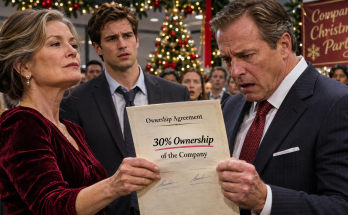
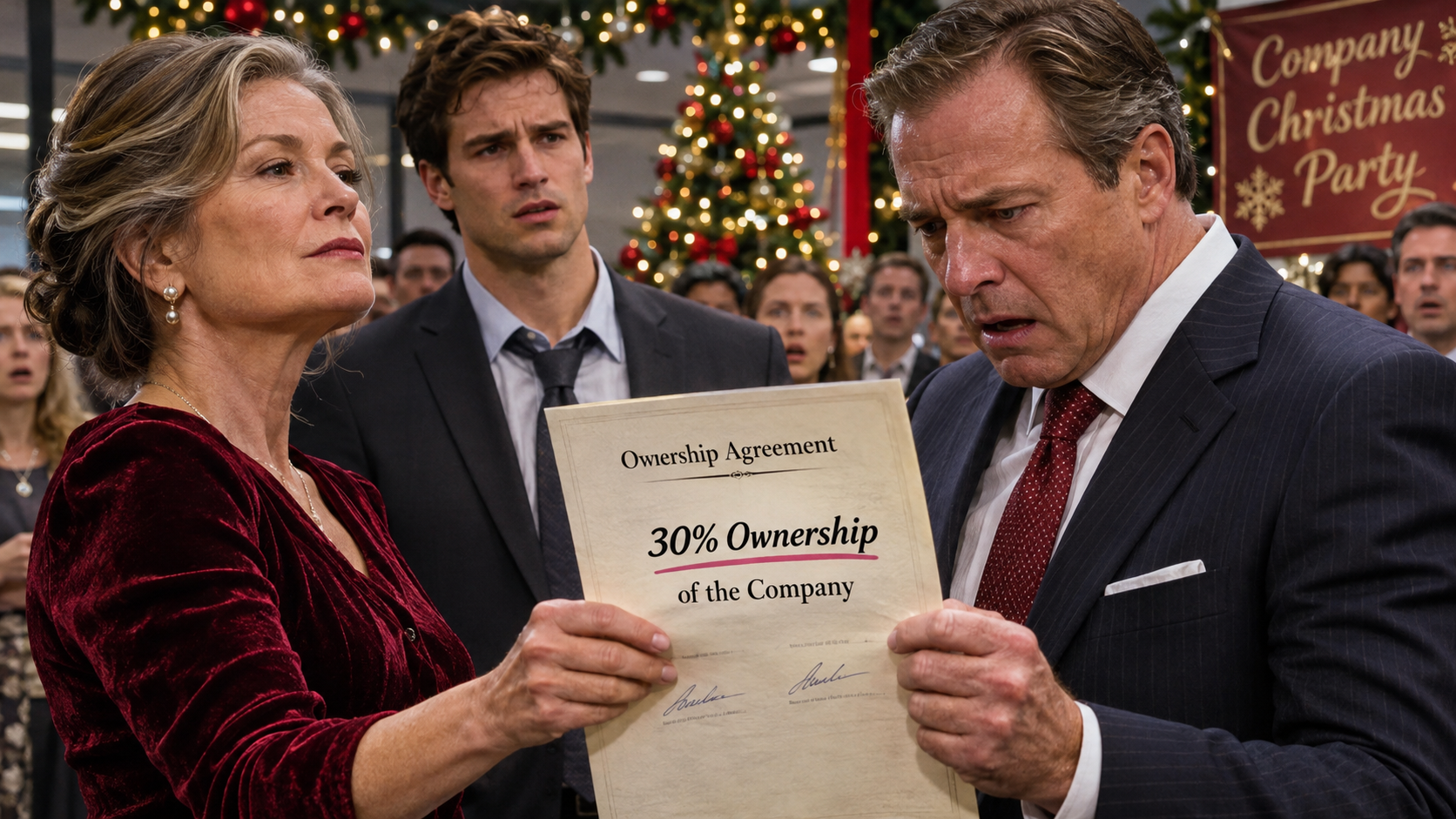
"The agreement wasn't simply a loan."
"So the thirty percent was your payment?"
"It was part of the arrangement."
He sat quietly.
I explained that I had wanted an ownership interest because I was taking a serious financial risk.
His father had agreed.
We signed the documents.
And I kept my copy.
"Did you ever receive money from the company?"
Jeremy asked.
I shook my head.
"Not that I remember."
"Then why didn't you ask for it?"
I looked at him.
"Because I never made helping that company my entire life."
He seemed unable to understand.
I didn't blame him.
For him, ownership meant control, money, and power.
For me, it had once meant trusting someone enough to take a risk.
That trust had lasted longer than I expected.
The following morning, Jeremy arrived before breakfast.
He had barely slept.
I could tell from the way he kept rubbing his eyes.
I made coffee.
He sat at the table and opened his phone.
"Doug sent me a message."
I stopped pouring.
"What did he say?"
Jeremy read it.
"He said the company would contact me about collecting my belongings."
I nodded.
"That's all?"
"He also said I shouldn't discuss last night's events with anyone."
I placed the coffee pot down.
"Did he explain why he fired you?"
"No."
Jeremy put his phone on the table.
"I don't even know what I did wrong."
That was the part that bothered me most.
A person could accept a difficult decision more easily when someone gave them an honest explanation.
But Doug had offered none.
He had chosen the stage.
The microphone.
The audience.
And the Christmas decorations.
I sat beside my son.
"Don't let his decision make you question everything you've done."
Jeremy stared at his coffee.
"It's hard not to."
"I understand."
He took a sip.
Then he asked the question I had been expecting.
"Are you going to take your thirty percent?"
I looked at him.
"Whatever the agreement gives me, I intend to have it properly recognized."
He nodded slowly.
I didn't promise him anything beyond that.
I didn't know what the lawyers would say.
I didn't know what the company records contained.
And I wasn't going to pretend that one document could answer every question.
But I knew what I had signed.
That afternoon, I placed the leather folder in a secure drawer.
I didn't want it sitting on the table anymore.
Not because I was afraid.
Because I understood that things were about to become more complicated.
And I wanted every original page protected.
Click here to continue reading: PART 6: Doug’s Lawyers Wanted to Question Every Detail, But the Old Papers Raised Questions Nobody Could Easily Answer
My Son Thought Losing His Job Was the Worst Thing That Could Happen That Night, Until I Asked One Question
Part 5 of 10