The formal paperwork arrived several days later.
It came in a large envelope addressed to me.
I placed it on the dining table beside my leather folder.
Jeremy was visiting that afternoon.
He noticed the envelope immediately.
"Is that from the company?"
I nodded.
He pulled out a chair.
"Are you going to open it?"
I smiled.
"I suppose I should."
I opened the envelope carefully.
Inside were several pages relating to the formal recognition process.
The company's lawyers had prepared the documents after completing their review.
I read everything slowly.
I didn't want to miss a single detail.
Some of the language was difficult.
Some sections referred to corporate records and ownership documentation.
But the central point was clear.
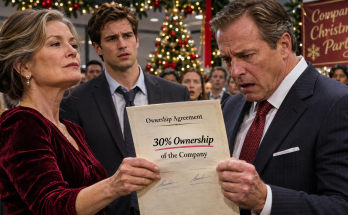
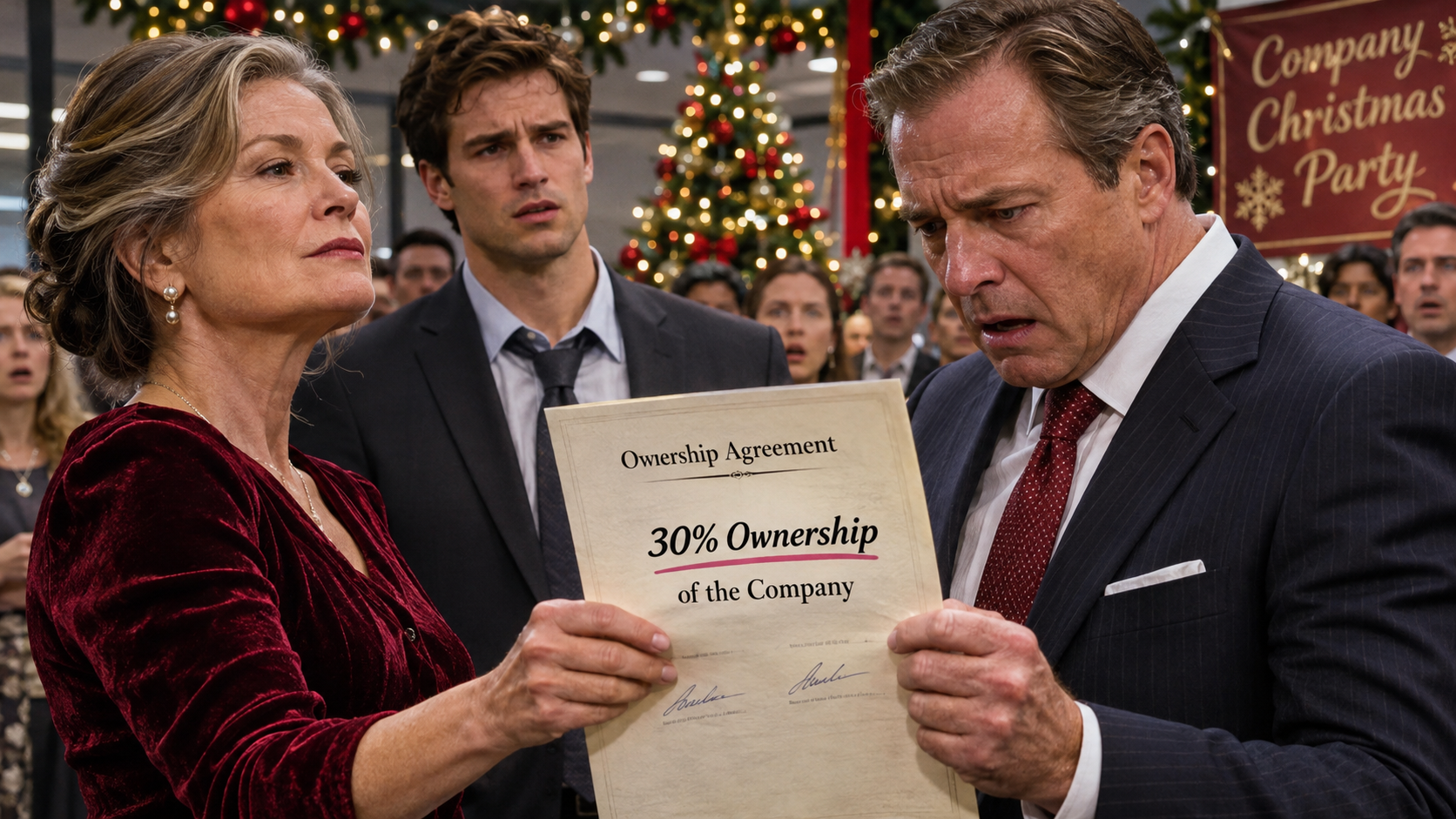
The company was proceeding with the recognition of the thirty percent ownership interest described in the original agreement.
I put the papers down.
Jeremy looked at me.
"Does that mean they accepted it?"
"It means they're formally recognizing the arrangement through the process we've been discussing."
He leaned back.
For a moment, neither of us spoke.
Then he smiled.
"Mom, you really did it."
I shook my head.
"I didn't do anything new. I simply refused to let an old agreement be ignored."
He looked at the leather folder.
"Still. You kept those papers all these years."
I touched the worn cover.
"I kept them because they mattered."
The following week, I attended another meeting with the company.
This time, the atmosphere was different.
There were fewer people in the room.
The lawyer reviewed the final documents with me.
She explained what had been recorded and what responsibilities came with the recognized ownership interest.
I asked several questions.
I wanted to understand the arrangement fully.
I wasn't interested in signing something simply because everyone else wanted the matter finished.
The lawyer answered patiently.
Then she placed the final pages in front of me.
I read them.
I checked the ownership provision.
I checked the relevant details.
And finally, I signed.
My hand was steady.
I thought about the day I had signed the original agreement with Doug's father.
I thought about the small office.
The broken heater.
The papers scattered across his desk.
Back then, I had never imagined sitting in a modern conference room decades later, watching his son acknowledge the same arrangement.
When I finished, the lawyer collected the documents.
"Thank you. We'll complete the remaining formal steps."
I nodded.
Doug was seated across from me.
He looked older than he had at the Christmas party.
Not physically.
Something about his confidence had changed.
He waited until the lawyer stepped outside.
Then he spoke.
"I owe you an apology."
I looked at him.
He continued.
"I should have known more about the company's history."
I said nothing.
"And I shouldn't have treated your son the way I did."
I looked toward the window.
Jeremy had been hurt.
That was something an apology couldn't simply erase.
But I also knew that refusing to hear an apology would not make the past disappear.
"Thank you for saying that," I replied.
Doug nodded.
"I hope we can move forward."
I considered his words.
"Moving forward doesn't mean pretending nothing happened."
He accepted that.
I stood and collected my handbag.
The leather folder was inside.
For the first time in many years, I no longer felt that I was carrying something unfinished.
A few days later, the company contacted Jeremy.
They offered to discuss his employment situation again.
He came to my house with the message open on his phone.
"They want me to come back."
I looked at him.
"What do you think?"
He sat down.
"I'm not sure."
"You don't have to decide today."
He read the message again.
"They said they would review my previous position and discuss a possible arrangement."
I nodded.
"Then take your time."
He looked at me.
"Would you want me to return?"
I thought carefully before answering.
"I want you to work somewhere you can be respected."
He smiled faintly.
"That's what I want too."
He eventually agreed to one conversation with the company.
Not because he needed the job.
Because he wanted to hear what they had to say.
The meeting took place a few days later.
I didn't attend.
This was his decision.
When he returned, he told me Doug had apologized again.
The company had acknowledged that his dismissal had been handled poorly.
They discussed the possibility of another role.
But Jeremy decided not to return.
He had already started looking elsewhere.
And he wanted a fresh beginning.
I supported him.
Sometimes leaving was the healthiest decision.
A month later, he received an offer from another company.
The position was similar to the one he had held before.
The salary was fair.
The responsibilities were clear.
Most importantly, the people interviewing him had treated him with respect.
He accepted.
When he told me, I hugged him.
"I'm proud of you."
He laughed.
"You've always been proud of me."
"That's true."
He looked toward the dining table.
The old leather folder was still there.
I had not put it away yet.
He picked it up.
"Can I see the original agreement again?"
I handed it to him.
He opened the cover carefully.
He looked at the old signatures.
Then he read the ownership provision.
"Your name is right here."
I nodded.
"Yes."
He traced the edge of the paper without touching the ink.
"All those years."
I smiled.
"All those years."
He closed the folder.
"Do you think Grandpa Lanning would have expected this?"
I considered the question.
I remembered the man who had sat across from me in that small office.
I remembered his determination.
I remembered the way he had thanked me after we signed.
"I think he would have wanted the agreement respected."
Jeremy nodded.
I placed the folder back on the table.
The company continued with its business.
The employees returned to their routines.
Doug remained in his position, but things were no longer exactly as they had been before the Christmas party.
The ownership records had changed.
My contribution was formally acknowledged.
And the people running the company now had to understand that its history was larger than the story they had told themselves.
I didn't suddenly begin attending every company meeting.
I didn't demand that everyone know who I was.
I didn't want my life to revolve around the business.
The thirty percent mattered.
Of course it mattered.
It represented a serious investment and an agreement that had stood for years.
But the greatest satisfaction wasn't seeing Doug uncomfortable.
It was knowing that the truth had finally been acknowledged.
One evening, Jeremy came over for dinner.
He brought a small cake.
Nothing expensive.
Just something from a bakery near his new office.
We sat at the same dining table where we had first discussed the agreement.
He told me about his new colleagues.
He talked about a project he had been assigned.
He sounded happy again.
After dinner, he looked at me.
"Mom, can I ask you something?"
"Anything."
"If you could go back to the beginning, knowing everything that happened, would you still help his father?"
I looked at the old folder.
Then I looked at my son.
For a long moment, I didn't answer.
Finally, I nodded.
"Yes."
He seemed surprised.
"Even after what Doug did?"
"His father's decision to accept my help was one thing. Doug's behavior years later was another."
I paused.
"I won't let one person's bad choices make me ashamed of something I once did for the right reasons."
Jeremy smiled.
Then he reached across the table and took my hand.
I looked at him and felt a quiet kind of relief.
For weeks, I had watched him carry the weight of that Christmas party.
Now he was moving forward.
And that was what I had wanted most.
Later that night, after he left, I put the leather folder away.
I closed the drawer.
The clasp no longer mattered.
The old papers had done what they needed to do.
I switched off the dining room light and stood for a moment in the quiet house.
I thought about the Christmas party.
The stage.
The microphone.
The employees watching.
Doug's expression when he first understood the thirty percent.
And Jeremy standing beside me, confused and hurt.
I had walked into that party as an ordinary mother accompanying her son.
I had left knowing that an agreement from decades earlier had finally been brought into the open.
But I hadn't won because a wealthy businessman had been frightened.
I hadn't won because the company had recognized a valuable ownership interest.
I had won because my son had learned something I wished I had understood earlier.
Respect should never depend on someone's title, bank account, or position in a room.
And being quiet doesn't mean someone has nothing to say.
Sometimes, the person standing quietly at the back of the room is the very person whose help made the room possible.
That Christmas, Doug had believed he could decide who belonged in his company.
He had forgotten to ask who helped build it.
I never forgot.
And neither would Jeremy.
The End
Read more original stories on Feel Every Story.
My Son Thought Losing His Job Was the Worst Thing That Could Happen That Night, Until I Asked One Question
Part 10 of 10