I didn't answer Camille's invitation right away.
Not because I wanted to hurt her.
I simply didn't know whether visiting her would mean we could finally speak honestly.
Or whether she expected me to walk through her front door and act as though nothing had happened.
That was how our family usually repaired things.
Nobody discussed the hurt.
Nobody admitted what they had done.
We just waited until enough days had passed.
Then someone invited everyone to dinner.
And the person who had been hurt was expected to smile.
I had done that for years.
I didn't want to do it again.
Three days after Camille sent her message, I sat at my kitchen table with my phone beside my coffee.
Her invitation was still there.
She had asked whether I wanted to come over.
She hadn't mentioned the restaurant.
She hadn't apologized for taking credit for the party.
She hadn't acknowledged telling me that the real family should eat first.
But she had mentioned Hannah.
That was what made the decision difficult.
My niece had seen more than I realized that evening.
She had noticed me sitting quietly while everyone applauded her mother.
She had noticed what happened when I picked up the white plate.
And afterward, she had asked questions the adults didn't want to answer.
I didn't want Hannah to think I had disappeared because of her.
She hadn't done anything wrong.
I loved that little girl.
But I also knew that Camille had sometimes used family closeness to make uncomfortable conversations disappear.
I needed to be careful.
I opened her message.
Then I typed a reply.
"I'd like to see Hannah. But before we visit, I think you and I need to talk about what happened at Alderwood."
I stared at the words.
They looked reasonable.
Still, my finger hesitated over the screen.
I could almost hear Camille telling me I was making things difficult.
I sent the message anyway.
Then I put my phone down.
It took her nearly an hour to respond.
"Are we seriously still doing this?"
I read it twice.
That was all she wrote.
Not a question about my feelings.
Not an apology.
Just irritation that the subject hadn't gone away.
I felt the old urge to reassure her.
I wanted to say we didn't have to discuss anything.
I wanted to tell her I wasn't angry.
I wanted to offer a convenient time to visit.
Instead, I wrote something shorter.
"Yes. I don't want us to pretend it didn't happen."
Her next message arrived immediately.
"You embarrassed the entire family."
I looked at the screen.
There it was again.
The same accusation.
I had heard it from Mom.
I had heard it from Camille.
Even Dad had initially worried more about the public embarrassment than about why I left.
I had begun to understand that my family measured harm by how visible it became.
What Mom said to me was acceptable because it was familiar.
What Camille did was acceptable because everyone praised her.
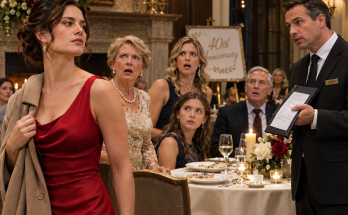
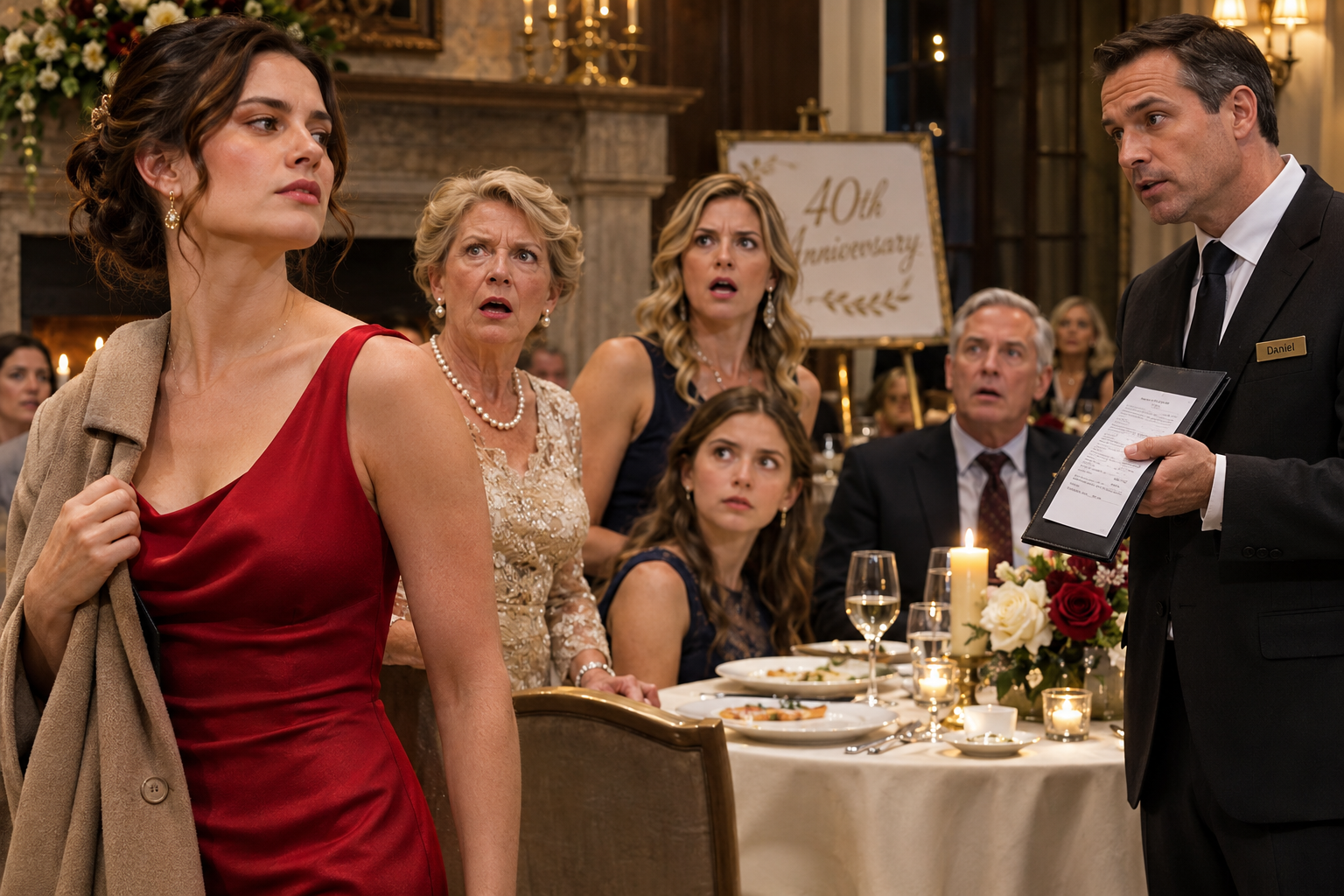
But the moment Daniel brought the bill to the table, the situation became a family crisis.
Because other people could see it.
I typed carefully.
"I didn't tell the guests what you did. I didn't make an announcement. I left because I was hurt."
Camille called.
I answered.
"Olivia, I don't understand why you're determined to keep punishing everyone."
Her voice was sharp.
I sat back.
"I'm not punishing anyone."
"Then why can't you just come over?"
"Because I don't want another visit where we act like everything is fine."
She sighed loudly.
"Mom already talked to you."
"Yes."
"And Dad apologized."
"He did."
"So what else do you want?"
I looked down at my hands.
It was a fair question.
I had spent days thinking about the answer.
"I want you to acknowledge what you did."
Silence.
Then she laughed once.
"What exactly did I do?"
I closed my eyes.
I had hoped she wouldn't ask it that way.
But I was prepared to answer.
"You told people you organized the anniversary dinner."
"I helped organize it."
"You made changes after I booked everything."
"You're arguing about details."
I looked toward my kitchen window.
Details.
That word again.
It was easy to dismiss something as a detail when someone else had taken responsibility for it.
"The room was booked under my name," I said.
"I know."
"The deposit came from my account."
"I know that now."
"The flowers, menu, and original arrangements were mine."
She didn't respond.
"Then you stood in front of everyone and claimed the celebration as your idea."
She sighed.
"I was trying to say something nice about Mom and Dad."
"You could have done that without taking credit for my work."
For a moment, there was no sound.
Then Camille spoke more quietly.
"Everybody was looking at me."
I waited.
She continued.
"I was standing there with the toast. What was I supposed to do?"
I felt something tighten in my chest.
She was describing attention as though it were something she couldn't refuse.
I had spent years giving it to her.
"Tell the truth," I said.
She didn't answer.
"You could have said we planned it together. I wouldn't have argued."
"But you did most of it."
The words surprised me.
I sat up.
"Yes."
Camille went quiet.
I hadn't expected her to admit that.
Not even privately.
For years, she had accepted praise for things I handled.
Sometimes she contributed.
Sometimes she didn't.
But she rarely corrected anyone who assumed she had done the work.
Now, for a moment, she had acknowledged what happened.
I didn't rush to fill the silence.
Finally, she said, "I didn't think it mattered who got credit."
I stared at the wall.
"It mattered because nobody treated me like I belonged at the party."
Her voice softened a little.
"You're exaggerating."
I shook my head.
"I didn't have a seat."
"We needed someone to keep an eye on the guests."
"And you decided that person should be me."
"You're good at that."
I looked at my coffee.
There it was.
The compliment that had always turned into another responsibility.
I knew how to organize.
I knew how to make people comfortable.
I knew how to solve problems.
And somehow, those qualities had become reasons I was never allowed to relax.
"Camille, I wanted to sit down and celebrate with our parents."
She was quiet.
"I wasn't working at the restaurant."
"I never said you were."
"You treated me as though I was."
Another silence followed.
I wasn't trying to win an argument.
I was trying to make my sister understand that being useful didn't mean I had stopped having needs.
Then I asked her about the white plate.
"Do you remember what you said when Mom told me not to eat?"
She hesitated.
"Olivia."
"Do you remember?"
She sighed.
"I made a joke."
I closed my eyes.
That was how she described it.
A joke.
Something harmless.
Something I should have laughed at.
"You said the important family members should eat first."
"I wasn't serious."
"I was standing there holding an empty plate."
She didn't respond.
"I had paid the deposit, and you already had a full plate. Then you laughed at me."
Camille was silent for a long moment.
Finally, she said, "I didn't realize you were that upset."
I looked down.
"I know."
I had heard those words from Dad.
I had heard something similar from Mom.
Nobody had realized.
Nobody had noticed.
Nobody had asked.
I was beginning to believe that the biggest problem wasn't that my family wanted to hurt me.
It was that they had become comfortable not considering me at all.
I told Camille that.
She didn't like hearing it.
"You make us sound terrible."
"I'm telling you how I felt."
"That's not the same as what happened."
I took a breath.
"Then tell me what you think happened."
For once, I let her explain.
She said she had wanted our parents' anniversary to be impressive.
She said she was excited about the flowers and champagne.
She said she thought I enjoyed managing the practical arrangements.
And she admitted that she hadn't considered where I would sit.
I listened.
Then she said something I hadn't expected.
"I thought you'd find a place when dinner started."
I closed my eyes.
That was exactly the problem.
Everyone else had a place arranged for them.
I was supposed to find one.
"I wanted you to think about me before the evening started," I said.
Camille didn't answer.
We remained on the phone for several seconds.
Then she said quietly, "Hannah asked me why I was mean to you."
My throat tightened.
I hadn't expected her to bring up Hannah herself.
"What did you tell her?"
Camille hesitated.
"I told her it was complicated."
I looked down at the table.
"And what did she say?"
"She said it didn't look complicated."
I almost smiled.
Not because the situation was funny.
Because Hannah had seen something the adults had spent years avoiding.
A woman had been told she didn't deserve to eat.
Then that woman left.
There were no complicated financial arrangements in the child's question.
There was simply a person being treated unkindly.
Camille continued.
"She asked why you paid for the party if everyone kept saying I organized it."
I swallowed.
That question would have been uncomfortable for anyone.
Especially someone who had accepted the praise.
"What did you tell her?"
"I told her you helped a lot."
I closed my eyes.
Even then, Camille hadn't quite been able to say it.
I had not merely helped.
I had made the reservation.
I had paid.
I had been responsible for making the entire evening happen.
Camille had contributed changes.
And she had accepted the applause.
I didn't correct her immediately.
Instead, I asked, "Do you think that's an honest explanation?"
She was quiet.
Then she said, "No."
That one word mattered.
It wasn't a complete apology.
It didn't repair everything.
But it was an honest answer.
For a moment, neither of us spoke.
Then Camille said something different.
"I'm sorry I took credit for your work."
I felt my eyes fill.
I hadn't realized how much I needed to hear it from her.
She continued.
"And I shouldn't have said what I said about the food."
I pressed my fingers against my forehead.
I wanted to accept the apology immediately.
I wanted to tell her everything was fine.
But I remembered Ruth's advice.
What happened afterward mattered more.
"Thank you," I said.
Camille sounded uncertain.
"That's all?"
I took a breath.
"I appreciate you saying it."
"Are we okay?"
I looked toward the window.
"I think we can work on being okay."
She didn't sound pleased with that answer.
But I meant it.
I wasn't going to promise that years of hurt had disappeared because of one conversation.
I also wasn't going to refuse an apology simply because it arrived late.
We talked a little longer.
Then Camille asked whether I still wanted to visit Hannah.
I said yes.
But I told her I wanted to come as her sister and Hannah's aunt.
Not as someone expected to arrange the next family gathering.
She was quiet.
Then she agreed.
After we ended the call, I sat at the kitchen table.
My coffee had gone cold.
I looked at my phone.
For years, a conversation like that would have ended with me apologizing for making everyone uncomfortable.
This time, I hadn't.
Camille had admitted what she did.
I had listened.
And neither of us had to pretend the anniversary dinner never happened.
I thought about Hannah.
Twelve years old.
Old enough to see unfairness.
Young enough to still ask why adults behaved as though it were normal.
I hoped she would remember that conversation differently from the way I remembered my ninth birthday.
I hoped she would learn that adults could admit mistakes.
That family members could say something hurt.
And that an apology didn't have to be followed by everyone pretending nothing had happened.
A few days later, I visited Camille's house.
Hannah greeted me at the door.
She hugged me before I had taken off my coat.
I held her for a moment.
Then she stepped back and looked at me.
"Are you okay, Aunt Olivia?"
I smiled.
"I'm doing better."
She nodded.
Then she asked about the red dress.
I laughed softly.
"It's still in my closet."
"I liked it."
That surprised me.
"You did?"
She nodded.
"You looked pretty."
I swallowed.
"Thank you, sweetheart."
It was such an ordinary compliment.
But I had bought that dress because I wanted to feel visible.
And Hannah had noticed.
She hadn't cared who paid for the flowers.
She hadn't cared who received the applause.
She had simply seen her aunt.
Camille came into the room.
For a moment, the three of us stood together.
Things were not perfectly comfortable.
I didn't expect them to be.
But Camille didn't ask me to organize anything.
She didn't make a joke about my sensitivity.
And she didn't pretend we hadn't spoken.
We spent some time together.
Nothing remarkable happened.
No announcement.
No dramatic confrontation.
Just a visit.
When I was leaving, Hannah hugged me again.
Then Camille walked me to the door.
She looked uncomfortable.
I waited.
Finally, she said, "I really am sorry."
I looked at her.
"I know."
She glanced down.
"I don't want Hannah thinking that's how sisters should treat each other."
I felt something soften.
"Then we should show her something different."
Camille nodded.
We didn't hug.
Not that day.
But I left without feeling I had abandoned myself to keep the peace.
That was new.
And for the first time, I began to believe my relationship with Camille might become something more than an endless exchange of favors and resentment.
Not because she had finally given me credit.
Because I had stopped allowing her approval to decide what I deserved.
Click here to continue reading: PART 10: When My Family Asked Me to Help Again, I Finally Understood That Being Loved Should Never Depend on What I Could Provide
I Was Nine When My Mother Turned My Own Birthday Cake Into a Lesson About What I Did Not Deserve
Part 9 of 10