
The first message from Camille arrived before I had finished breakfast.
It was long.
I could see that without opening it.
There were several paragraphs.
I had a feeling I knew what they would say.
I made coffee first.
Then I sat at my kitchen table and read.
Camille accused me of deliberately humiliating our parents.
She said I had turned their anniversary into an argument about money.
She said I should have spoken to her privately instead of allowing the manager to bring the bill to the table.
I read that sentence twice.
I had spoken to her privately.
At the party.
When I reached for my coat.
She had told me not to make the evening about myself.
She hadn't asked what was wrong.
She hadn't offered to listen.
She had simply assumed I was about to cause trouble.
Now she was angry because I had made a decision without consulting her.
Another message appeared while I was reading.
"You could have told me you were covering everything."
I looked at my coffee.
That was almost funny.
Camille had publicly accepted credit for arranging the dinner.
She had invited extra guests.
She had changed the flowers and champagne.
She had rearranged the seating.
But she had never asked who was paying.
I typed a response.
Then I deleted it.
I tried again.
This time, I kept it short.
"You knew I made the reservation. You also knew you were changing arrangements that cost money."
I sent it.
She replied almost immediately.
"That doesn't justify embarrassing Mom and Dad."
I stared at the screen.
I had begun to notice something about the language my family used.
When I was hurt, I was sensitive.
When I objected, I was difficult.
When I stopped paying, I was selfish.
But when Camille took credit for my work, she was being helpful.
When Mom told me not to eat, she was being practical.
The same actions were judged differently depending on who was doing them.
I hadn't wanted to admit that.
Admitting it meant I would have to change how I behaved.
And change frightened me.
Not because I enjoyed being treated poorly.
Because I knew my family would resist losing the person who always made their lives easier.
My phone rang.
Camille.
I considered letting it go unanswered.
Then I decided I wanted to hear what she had to say.
"Hello."
"Did you even read my messages?"
"Yes."
"Then why are you acting like this is no big deal?"
I looked at the window.
"I don't think it's a small thing."
"Good. Because Mom was devastated."
I took a breath.
"What exactly upset her?"
Camille sounded offended.
"What kind of question is that?"
"Was she upset because the manager presented the bill, or because she realized I had been paying?"
Camille didn't answer immediately.
Then she said, "You know what you did."
I shook my head.
"I know what I did. I stopped paying for a dinner where I was told I hadn't contributed."
"You're twisting everything."
"No, Camille."
My voice was quiet.
"I'm describing it."
She made a frustrated sound.
"You always do this."
I looked at the kitchen table.
I nearly asked what she meant.
Then I realized I didn't have to.
Whenever Camille couldn't defend something she had done, she turned the conversation toward my personality.
I was too serious.
Too sensitive.
Too particular.
Too concerned about details.
Those labels had followed me for years.
They were especially convenient when the details proved something she didn't want to acknowledge.
"You stood up and told everyone you organized the party," I said.
"I helped."
"You helped make changes."
"That's not fair."
"You invited more guests. You upgraded the flowers and champagne. You moved the seating."
She interrupted.
"Because I wanted the evening to be special."
"So did I."
There was a pause.
I continued.
"I wanted it to be special enough that I paid for it."
She said nothing.
I could hear movement on her end of the call.
Then she spoke again.
"Well, now everyone thinks I lied."
I stared at the wall.
That was the first thing she had said that sounded close to the truth.
I didn't know what the guests thought.
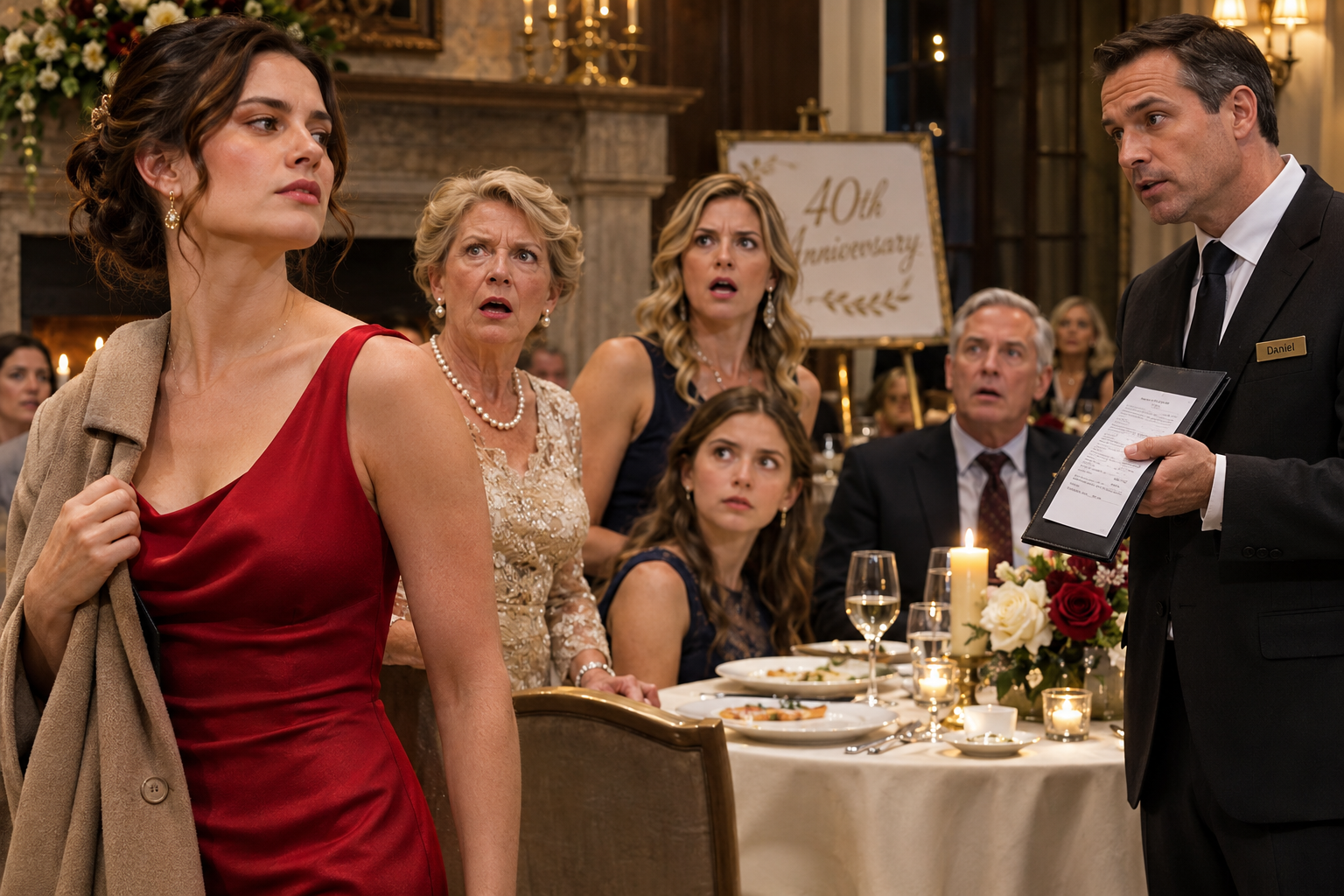
I hadn't been there when Daniel presented the bill.
But I understood why Camille was worried.
She had made herself the public face of the celebration.
And now the financial records contradicted the story she had told.
I wasn't going to reassure her that nobody would notice.
"Camille, you said you arranged everything."
"I was giving a toast."
"You could have mentioned that I handled the reservation."
"You never asked me to."
I felt something settle inside me.
There it was.
The responsibility was being returned to me again.
I should have told her.
I should have asked.
I should have corrected her.
I should have explained.
She didn't seem to consider that she could have told the truth without being instructed.
I placed my hand around the coffee cup.
"Did anyone ask why I left?"
Camille went quiet.
"Mom told people you weren't feeling well."
I closed my eyes.
Not feeling well.
That was easier than telling them what had happened.
It protected the party.
It protected my mother.
It protected Camille.
And it made my absence seem like something personal and inconvenient rather than the result of how I had been treated.
"Was Hannah there when Daniel brought the bill?" I asked.
Camille hesitated.
"Why are you bringing my daughter into this?"
"Because she saw what happened before I left."
"Leave Hannah out of it."
"I wasn't blaming her."
"Then stop talking about her."
I looked at the clock.
I didn't want to fight about a twelve-year-old girl.
Hannah hadn't done anything wrong.
She had been the only person I noticed watching me when Camille took credit for the party.
I remembered her expression.
Quiet.
Thoughtful.
Uncertain.
I wondered what she had understood.
But I wasn't going to use her as proof against her mother.
"You're right," I said.
"She shouldn't be involved in our argument."
Camille seemed surprised.
Perhaps she had expected me to keep fighting.
Then she asked whether I was going to help with the remaining restaurant charges.
I answered clearly.
"No."
"Olivia."
"I've already paid the deposit."
"That's not enough."
"It was the amount I chose to contribute after what happened."
She sighed.
"You can't just decide that."
"I already did."
For a moment, neither of us spoke.
Then Camille said something that sounded almost frightened.
"Things are going to be different now."
I looked down at my coffee.
"Yes."
She hung up.
I sat there for a while.
I didn't feel good about the conversation.
I had spent so much of my life hoping Camille would understand me that speaking plainly felt almost cruel.
But I hadn't insulted her.
I hadn't called her names.
I had only stopped agreeing with her version of events.
Later that morning, Ruth called.
I answered immediately.
She asked whether I had slept.
"A little."
"Your sister has been making phone calls."
I sighed.
"I know."
"She's very upset."
"She told me."
Ruth was quiet for a moment.
Then she said, "I think she's more upset about people finding out than about what happened to you."
I leaned back in my chair.
I didn't want to agree too quickly.
Ruth had always been fair with me.
She wasn't someone who encouraged arguments for entertainment.
And she hadn't told me to leave the party.
That decision had been mine.
"Did Daniel say anything inappropriate?" I asked.
"No."
Ruth explained that he had approached the table with the remaining balance after my departure.
He had addressed the payment situation politely.
Camille initially seemed confused.
My mother had asked why the bill wasn't going to my card.
Daniel explained that the person who made the reservation had withdrawn authorization for the remaining charges.
He had referred to me as the woman in the red dress who had left the celebration.
Ruth said my father's expression changed immediately.
My mother looked stunned.
Camille demanded an explanation.
Daniel repeated that the booking and original payment arrangement were in my name.
The room had gone quiet.
I listened without interrupting.
I pictured the same room that had fallen silent when Mom told me not to fill my plate.
This time, the silence had a different reason.
My family was hearing information they hadn't bothered to ask about.
Ruth told me the guests weren't all close enough to hear every word.
Some continued talking.
Others noticed something was wrong.
She didn't exaggerate.
She didn't claim everyone turned against Camille.
She simply described an uncomfortable moment.
Then she said, "Your father asked whether you had really paid the deposit."
I looked down.
"What did Daniel say?"
"He confirmed it."
I was silent.
Ruth continued.
"Your father didn't say anything for a while."
I thought about Dad's speech.
His cheerful question about what the family would do without Camille.
I had heard it while sitting in the room Camille had claimed as her accomplishment.
I wondered whether he remembered those words now.
"Did they settle the bill?" I asked.
Ruth said Camille and my parents had discussed it with Daniel.
They arranged to cover the remaining charges.
I felt my shoulders relax.
Not because I had changed my mind.
Because I hadn't wanted the restaurant staff to suffer for my family's behavior.
Daniel and his employees had done their jobs.
They deserved payment.
The people who stayed for dinner had accepted responsibility.
That was fair.
Ruth didn't offer exact figures.
I didn't ask.
I knew the original arrangements.
But Camille's extra guests and upgrades had changed the total.
The final amount was now their responsibility.
Ruth told me something else.
"Hannah asked where you had gone."
I closed my eyes.
"What did they tell her?"
"Your mother said you had left early."
I waited.
Ruth continued.
"Hannah said she saw what happened with the plate."
My throat tightened.
I had not expected that.
I knew Hannah had watched me during Camille's toast.
I hadn't realized she was paying attention later.
Ruth said Hannah asked why I had been told not to eat.
The adults apparently didn't know how to answer.
I looked at the kitchen table.
That was the part that hurt.
A twelve-year-old girl had asked the obvious question.
Why had I been told not to eat?
It was the same question nobody had asked when I was nine.
Back then, eight girls had stood around a birthday cake.
No one had challenged my mother.
I didn't blame those children.
They were too young to understand.
But now Hannah was old enough to recognize that something wasn't right.
I felt grateful.
And sad.
Because I didn't want her to learn that family celebrations worked this way.
I didn't want her to believe that one person could do all the work and still be treated as less important.
"Please don't put Hannah in the middle," I told Ruth.
"I won't."
"She's Camille's daughter."
"I know."
"And this isn't her responsibility."
Ruth agreed.
After we ended the call, I sat quietly.
For years, I had accepted the idea that keeping peace meant keeping silent.
Now I was beginning to understand that silence could teach people the wrong lesson.
It had taught Camille she could take credit without being questioned.
It had taught my mother that she could shame me without consequences.
It had taught me that my needs were always negotiable.
And it might have taught Hannah the same thing.
I didn't want that.
I couldn't control what my niece learned from her mother.
But I could control what she learned from watching me.
That afternoon, I opened the restaurant documents on my computer.
I checked the deposit record.
I reviewed the original reservation confirmation.
I looked at the arrangements I had authorized before Camille made her changes.
Then I closed the files.
I didn't need to send them to anyone.
Not yet.
I wasn't collecting evidence for revenge.
I was reminding myself that the facts had not changed simply because my family disliked them.
I had paid.
I had arranged the celebration.
I had been humiliated.
I had left.
And the remaining bill had been settled by the people who stayed.
For once, I didn't need another person's agreement to know what had happened.
Click here to continue reading: PART 7: My Father Wanted an Explanation After the Anniversary Dinner, but I Finally Asked Him the Question He Had Avoided for Years
I Was Nine When My Mother Turned My Own Birthday Cake Into a Lesson About What I Did Not Deserve
Part 6 of 10

One Comment on “PART 6 – My Sister Called Me Selfish After the Manager Exposed the Truth, but Her Own Daughter Had Seen Everything That Night”