The trouble with saying no to someone you love is that you remember every time you said yes.
I remembered plenty.
That Tuesday evening, I couldn't settle down.
I made myself something to eat, but I barely touched it.
My phone stayed on the table.
I kept looking at it, expecting Nathan to call.
He didn't.
Neither did Brooke.
Somehow, their silence bothered me nearly as much as their messages.
I had refused them.
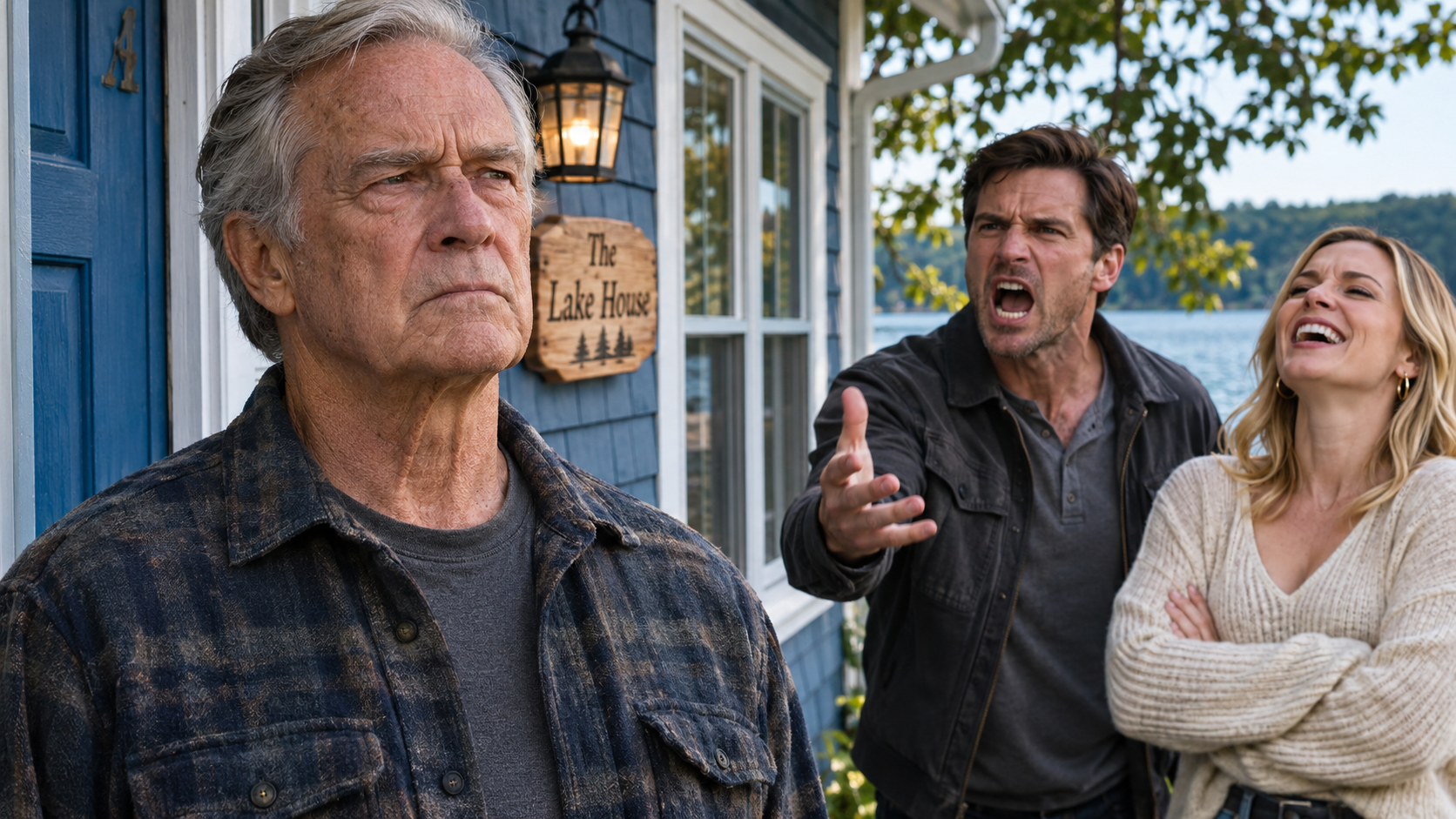
They had laughed.
And then they had carried on as though my answer didn't matter.
I sat alone with that thought.
Four years earlier, I had stood beside Ellen's grave while people offered me words I couldn't properly hear.
Everything from those days had blurred together except a few moments.
Nathan standing close to me was one of them.
He had put his hand on my shoulder.
I remembered how firm his grip felt.
"Dad, you won't have to handle everything by yourself."
I believed him.
I was grieving, tired, and frightened by the ordinary future waiting for me.
A future without Ellen.
I wanted to believe that the boy we raised had become a man who understood what family meant.
Nathan had seemed sincere.
He stayed near me during the funeral.
He spoke kindly.
He made sure I wasn't standing alone for too long.
For a while, I held on to those memories whenever something between us felt wrong.
I told myself that the son at the funeral was the real Nathan.
The impatient man who appeared later was simply busy.
Or stressed.
Or influenced by circumstances I didn't understand.
That explanation became very convenient.
Especially for him.
After Ellen died, I kept the lake house just as we had left it.
I maintained the property.
I paid the bills.
I repaired things when they needed repairing.
And I continued allowing Nathan to visit.
I wanted the cottage to remain part of his life.
He had grown up there.
There were memories in those rooms that belonged to him, too.
I never disputed that.
But the ownership was mine.
That had never been a mystery.
I held the responsibility.
I made the decisions.
I paid the expenses.
Nathan knew all of it.
He also had a spare key.
At the time, that seemed perfectly reasonable.
He was my son.
I didn't want him standing outside the blue door if he arrived before me.
I didn't want every family visit to require arrangements and permission slips.
Ellen wouldn't have wanted that either.
So I trusted him.
That word is difficult for me now.
Trusted.
I used to think trust meant giving someone room to do the right thing.
I didn't understand that some people treat trust as an invitation to see how far they can go.
Nathan's visits gradually changed.
At first, he came because he wanted to be at the lake.
Then the visits became less frequent.
When he did contact me, there was usually something attached.
A request.
An expense.
A favor.
Something I could do that would make his life easier.
I noticed the pattern.
I just didn't want to admit what it meant.
There was always a reason to excuse him.
He was working.
He was married.
He had responsibilities.
I told myself I shouldn't expect the same attention I had received when he was younger.
That part was true.
Children grow up.
Their lives change.
But there is a difference between growing independent and treating your father like a useful possession.
I didn't want to see that difference.
Brooke made it harder to ignore.
She had a confident way of speaking that often left little room for another opinion.
If she believed something made practical sense, she seemed to consider the discussion finished.
And when it came to my property, she had plenty of practical ideas.
The worst conversation happened the previous Thanksgiving.
I remembered it clearly as I sat at my kitchen table.
Nathan had been talking about money.
More precisely, my money.
He made a joke about my pension.
He called it an old-fashioned little payment, the sort of thing people his age could hardly imagine living on.
He smiled when he said it.
I didn't.
My pension had paid my bills.
It had allowed me to keep my home.
It was part of the life Ellen and I had worked for.
I saw nothing amusing about it.
But Nathan was already moving on.
Brooke began talking about what might happen as I grew older.
She presented it as concern.
I should consider a place designed for older people, she said.
Somewhere with fewer responsibilities.
Somewhere I wouldn't have to maintain a property.
She was talking about senior housing.
I listened.
Then she brought up the lake house.
It would make sense to sell it.
The money could be handled more efficiently.
Nathan and Brooke could take care of the financial arrangements.
They made it sound simple.
Sell the cottage.
Move me somewhere smaller.
Let them oversee what remained.
I remember looking at Nathan while Brooke explained this wonderful plan for my future.
He wasn't uncomfortable.
He wasn't surprised.
He appeared to think it was a sensible conversation.
That told me they had probably discussed the idea before bringing it to me.
I had not been invited into that discussion.
Only informed of its conclusion.
Just like the messages about thirty days at the lake.
I told them I wasn't selling.
Brooke tried to explain again.
I repeated myself.
Nathan gave me an irritated look.
He seemed disappointed, as though I had rejected an opportunity they were generously offering.
I didn't raise my voice.
I didn't tell either of them to leave.
I simply made it clear that the cottage wasn't available for sale.
Afterward, I spent too much time wondering whether I had embarrassed them.
That embarrasses me now.
They had discussed selling a home filled with memories of Ellen.
They had spoken about managing my money.
And I was the one worrying about their feelings.
I can see how badly my judgment had been affected by wanting to keep peace with my son.
I had confused keeping the peace with keeping quiet.
The two aren't the same.
At Thanksgiving, I still believed Nathan would accept my answer once he had time to think.
He knew what the cottage meant to Ellen.
He knew what it meant to me.
I expected that history to count for something.
But the message on Tuesday showed me that my refusal had taught him very little.
He had stopped asking about selling.
Now he was announcing that he would occupy the property.
For a month.
With other people.
And Brooke wanted me to prepare everything.
I took the phone from the table and opened the conversation again.
I read the messages in order.
Nathan first.
Brooke second.
Me saying no.
Nathan laughing.
Brooke telling me the decision was already made.
It was like watching the Thanksgiving conversation happen again in a smaller space.
Different subject.
Same assumption.
They decided.
I complied.
Except I hadn't complied.
That was the important difference.
I thought about Ellen's final request.
She didn't want anyone to feel shut out of the cottage.
I had interpreted that generously.
Perhaps too generously.
But she had never asked me to surrender the place to someone who treated it like an asset waiting to be claimed.
She had loved welcoming people.
She had also loved taking care of what we built.
I imagined her standing beside that blue door.
I remembered how carefully she had chosen the paint.
How pleased she had been when the last brushstroke dried.
Nathan had seen that door countless times.
He had walked through it carrying fishing supplies and wet shoes.
He had never needed to knock when we were there.
That was because he was welcome.
Not because he owned the house.
I tried to think of a single time I had told Nathan he couldn't visit the cottage without a good reason.
I couldn't.
I had been accommodating for years.
Maybe that was part of the problem.
He had become so accustomed to being welcomed that he no longer recognized the kindness behind it.
A favor repeated often enough had become, in his mind, an entitlement.
I set my phone down.
I wanted to call Nathan and explain everything.
The history.
The work.
His mother's wishes.
Why his messages had hurt me.
Then I realized I had explained those things before.
Not in one formal speech.
But in conversations over many years.
He knew how much we had sacrificed.
He knew the property belonged to me.
He knew Ellen wanted it cared for.
I didn't need to teach him those facts again.
I needed to accept that knowing them hadn't stopped him.
By the time I went to bed, I had made one decision.
I wouldn't offer the cottage for thirty days simply because Nathan had announced he wanted it.
I wouldn't apologize for that decision.
And I wouldn't pretend Brooke's instructions were normal.
It felt uncomfortable.
For years, I had softened my answers so my son wouldn't become upset.
That night, I allowed him to be upset.
I lay awake thinking about Ellen.
I wished I could tell her that I was trying to keep our promise without losing what we had built.
I still didn't know how far Nathan and Brooke were prepared to go.
But I knew one thing.
The spare key I had given my son was supposed to open a door.
It was never supposed to give him the right to make decisions about my home.
Click here to continue reading: PART 3: Three Days After I Refused My Son, a Neighbor Called About My Cottage, and One Question Made Me Fear the Worst
My Son Told Me He Was Taking My Lake House for Thirty Days, but His Wife’s Next Message Made Me Put Down My Tools
Part 2 of 10