The officer's eyes moved from my daughter to me.
I knew why.
He had come to ask questions about a vehicle.
Instead, he was standing in front of a child who thought the police might have something to do with her grandmother being angry about Christmas.
I looked at my daughter.
She wasn't thinking about registration papers.
She wasn't concerned about who had the legal right to drive an SUV.
She was still thinking about the message.
The one telling her she shouldn't come.
The one that made her put down her handmade present.
The one that had stayed with her through breakfast, the craft store, and even the afternoon at the ice rink.
I had hoped that seeing her laugh meant she was starting to feel better.
And perhaps she was.
But I understood then that a happy afternoon couldn't make her forget being rejected.
That realization hurt.
I thought about the police report.
My mother had known the SUV belonged to me.
My father had asked to continue borrowing it.
I had the messages to prove that.
Yet somehow, after I reclaimed it, they had decided to involve the authorities.
They had made their anger official.
And my daughter had been forced to watch the consequences arrive at our home.
I wished she hadn't been there for that.
I wished she hadn't needed to hear strangers ask whether I had taken something illegally.
Most of all, I wished she hadn't connected those questions to her grandmother's message.
But she had.
I could see it in her face.
She was searching for an explanation.
She wanted to understand why people who called themselves her family had become angry with us.
I thought about the previous Christmas.
About my sister's child suggesting that some grandchildren mattered more than others.
About my sister dismissing my concerns.
About the way I had accepted that explanation because I didn't want a fight.
That decision looked different now.
At the time, I had told myself the remark was childish.
Something that shouldn't be allowed to grow into a family argument.
But my daughter had remembered it.
Of course she had.
Children remember when someone tells them they don't belong.
They remember who laughs.
They remember who speaks up.
And they remember when the adults who should protect them say nothing.
I had not forgotten what happened the previous Christmas.
I had simply tried to move past it.
There was a difference.
My daughter had never been given the same choice.
Then this Christmas came.
And instead of making her feel welcome, my mother sent her away before she even arrived.
She made the decision herself.
She gave reasons involving my sister's children.
And she sent those reasons directly to a ten-year-old girl who had already lost her father.
I looked toward the folder in my hands.
All those documents had been so easy to find.
The title established who owned the SUV.
The registration confirmed it.
The messages explained why my parents had been driving it.
The officers could examine everything and understand the situation.
But there was no folder that could explain to my daughter why her grandmother didn't want her at Christmas.
No official paper could make that message harmless.
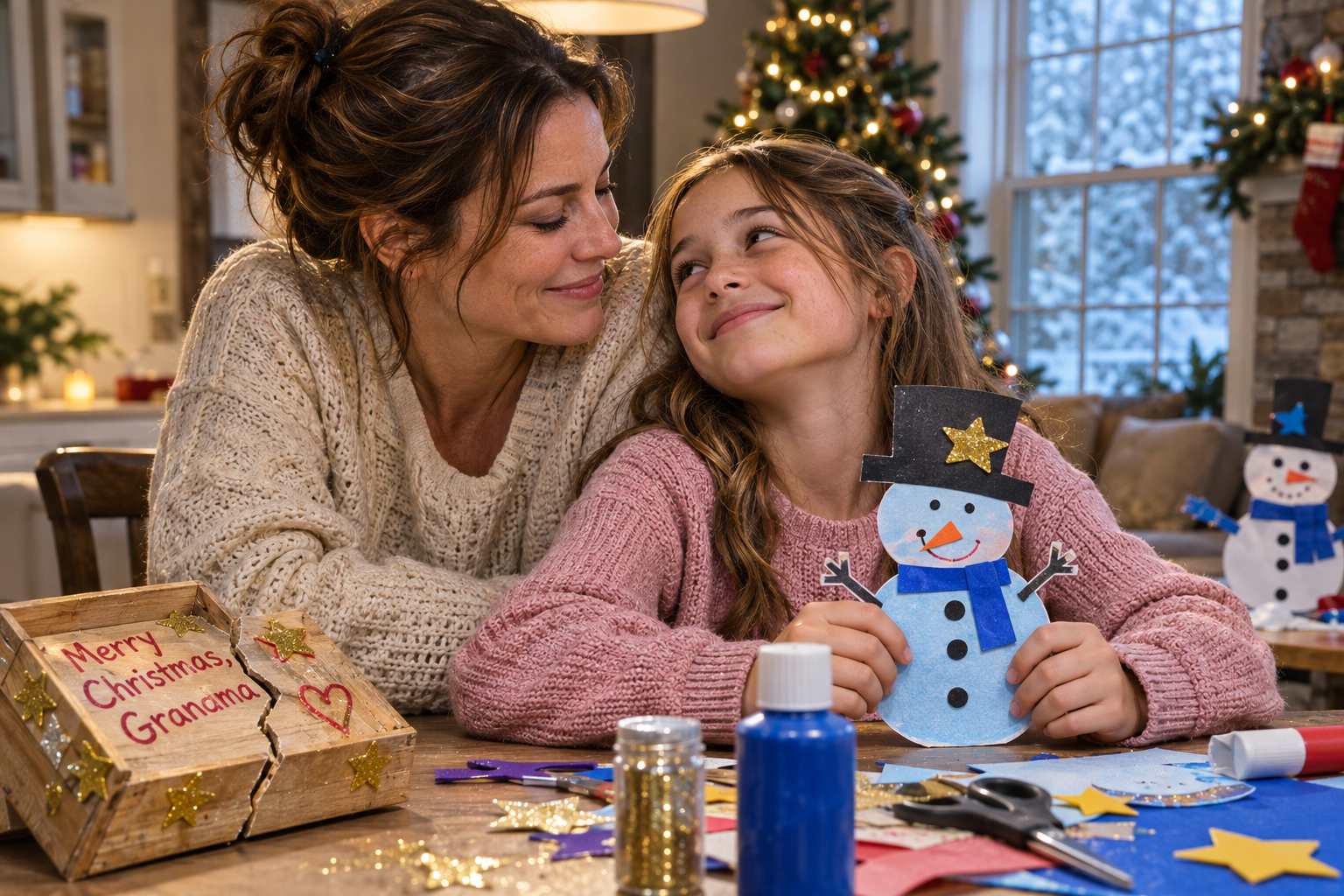
No document could make the broken wooden box whole again.
I thought about finding it in the trash.
The two pieces of the lid.
The decorations she had placed so carefully.
The words she had written for her grandmother.
I hadn't asked her why she broke it.
I knew enough.
She had made something out of love.
Then the person meant to receive it told her to stay away.
It was a small wooden box.
But it represented something much bigger to her.
I could see that now.
I also thought about the SUV.
My parents had relied on it since spring.
They were used to having it available.
My father had even said it was helping them financially.
I understood that losing access to it made their lives harder.
I wasn't pretending otherwise.
I had known they depended on it when I took it back.
That was part of what made my decision difficult.
But the difficulty didn't mean the vehicle belonged to them.
I had lent it because I wanted to help.
That help had never been unconditional ownership.
It had never meant they could treat my daughter however they pleased while expecting nothing in our relationship to change.
They were allowed to be upset.
They were allowed to disagree with me.
But reporting my property as stolen did not change whose name was on the title.
And it didn't change what my mother had done.
I remembered her first message after I took the SUV.
She had asked about the car.
She had said my father needed it.
Not once had she asked whether my daughter was all right.
Then came my father's anger.
My sister's warning.
The accusation that I had spoiled Christmas.
All of them had something to say about my decision.
None had shown the same concern for the child they had excluded.
That was what I couldn't get past.
My family seemed to understand exactly how the loss of a vehicle affected them.
They could explain every inconvenience.
Every disrupted plan.
Every reason they believed I had acted unfairly.
Yet they seemed unable to consider what their words had done to my daughter.
I looked down at her.
She was only ten years old.
She shouldn't have been standing near our front door wondering whether police officers had arrived because Grandma didn't want her at Christmas.
She should have been thinking about her blue paper snowman.
About the time we fell on the ice.
About how much she had laughed.
Instead, she was trying to make sense of adult anger.
And somewhere in that confusion, she was still asking whether she was responsible.
I knew then that I couldn't keep excusing the way my family treated her.
I couldn't dismiss it as a misunderstanding.
I couldn't tell myself that another holiday would somehow make everything better.
The officer had already explained that she had done nothing wrong.
I wanted those words to matter to her.
I wanted her to believe them.
Because they were true.
She hadn't caused the argument.
She hadn't taken the SUV.
She hadn't made the police report.
And she hadn't done anything to deserve being excluded from Christmas.
The adults had made those decisions.
My mother had sent the message.
I had reclaimed my vehicle.
My parents had contacted the police.
Those choices belonged to us.
Not to her.
I stood there holding the folder that proved the SUV was mine.
The officers had the information they needed to follow up on the complaint.
But I was thinking about something else.
For months, I had been generous with a vehicle.
For longer than that, I had tried to be understanding with my family.
I had allowed my sister's excuses to settle arguments that should have been addressed.
I had watched my daughter try to fit into a family that sometimes made her feel less important.
I hadn't meant to allow that.
But intentions didn't erase what she had experienced.
Looking back, that was the part I needed to admit.
I had wanted peace.
And too often, peace meant asking my daughter to endure things that should never have happened.
I couldn't change the message she had received.
I couldn't undo the previous Christmas.
And I couldn't pretend the police visit hadn't happened.
But I could stop confusing family loyalty with accepting mistreatment.
My daughter had asked a question.
She was still waiting to understand why her grandmother had acted this way.
I didn't have an explanation that could make it right.
I only knew she wasn't the one who needed to apologize.
And as I stood beside her, with the officers still at our door, that was the one thing I refused to forget.
Click here to continue reading: PART 5: After the Police Left My Doorstep, I Finally Looked at How Much Money I Had Been Giving My Parents Without Asking Questions
My Daughter Had Made Her Grandmother a Christmas Present, but One Message Made Her Wonder Whether She Belonged in Our Family
Part 4 of 10