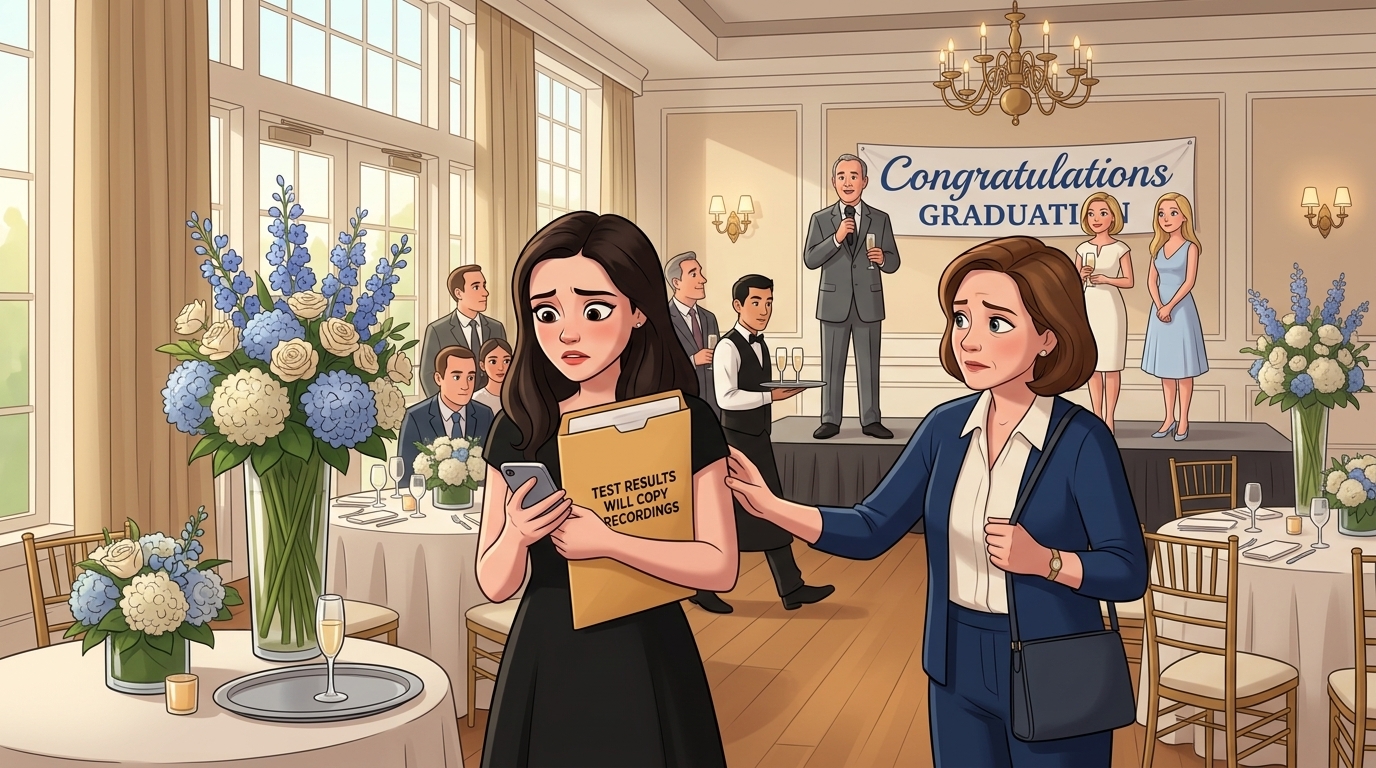
The paper bag slipped against my damp palm just as I reached the rehabilitation center’s second-floor corridor. Inside were two sweet rolls Ethan liked, still warm enough to leave a patch of butter on the bottom of the bag. I had driven across town for them after his physical therapist mentioned he had been irritable all morning. Five years into caring for my husband, I still believed small kindnesses could soften a difficult day. Then I heard Ethan laughing behind the half-closed door of the visitors’ lounge, and I stopped before going in.
A man I recognized from Ethan’s therapy group was speaking with him. I couldn’t make out the first few words, but Ethan’s answer carried clearly into the hallway. He was amused, almost proud. He described everything I did at home—bathing him, dressing him, preparing meals, driving him to appointments, handling medication, cleaning the equipment, getting up when he needed something during the night. Then he laughed again and reduced all of it to a joke. Why would he pay for a nurse, a servant, a cook, or a driver, he asked, when Brenda did everything for free?
The other man gave an uncomfortable chuckle. Ethan kept talking. He said marriage had turned out to be useful after all. As long as I continued serving him, he saw no reason to change anything. Something inside me waited for anger to arrive. It didn’t. I stood beneath the humming fluorescent lights holding that ridiculous bag of pastries while a cold clarity moved through me. The man in the room did not sound frustrated, depressed, or embarrassed by dependence. He sounded pleased with himself.
I had heard every explanation for Ethan’s cruelty over the previous five years. Pain made people sharp. Paralysis changed personalities. Dependence was humiliating. Medication affected moods. Grief did strange things. Whenever he snapped because his coffee was too cool or accused me of taking too long at the grocery store, I had repeated those explanations until they became a kind of prayer. He had survived an accident. I was his wife. Good wives did not keep score.
I remembered the first months after the accident, when our living room became a medical ward. The hospital bed arrived before Ethan came home. Contractors widened one doorway and installed rails in the bathroom. I learned how to move him without hurting his back, how to check his skin, how to position his legs, how to keep my voice calm when neither of us had slept. At twenty-nine, I stopped thinking about weekends, restaurants, perfume, dresses, or spontaneous afternoons. Everything was organized around medication times and appointments.
Our savings thinned quickly. Ethan liked to tell people the house was his, but it had belonged to my mother before she transferred it to me. I rarely corrected him. Correcting Ethan had become exhausting. I paid property taxes, groceries, transportation, accessibility modifications, supplemental therapy, and temporary nursing help when I was physically unable to manage alone. Whenever money frightened me, Ethan said I worried too much. Whenever I asked about his finances, he told me a wife who loved her husband should not sound like an accountant.
The strange thing was that I had never thought of myself as trapped. Tired, yes. Lonely, certainly. Sometimes resentful enough to cry silently in the shower, but never trapped. I believed we were surviving something together. That belief was the thread holding the previous five years in place. Listening outside the visitors’ lounge, I understood that Ethan and I had not been living the same marriage. I had considered my labor a sacrifice for someone I loved. He considered it a bargain he had cleverly obtained.
The man with him lowered his voice. “Does Brenda ever complain?”
“Where would she go?” Ethan replied.
Those four words did more damage than the joke about the free nurse. They were not spoken impulsively. There was confidence in them. He believed my exhaustion had become permanent. He believed responsibility had erased my alternatives. Most of all, he believed I had forgotten that I possessed a life separate from his.
I backed away from the doorway before either man could see me. My shoes squeaked against the polished floor, and I winced at the sound, but the conversation continued. At the elevator I looked down and realized the pastry bag had crumpled in my fist. Butter had soaked through the paper and onto my fingers. I threw the entire thing into a trash bin. Then I walked outside without visiting my husband.
The parking lot was bright enough to hurt my eyes. I sat behind the steering wheel and did not start the car. For several minutes I watched people enter and leave the building: an elderly couple moving slowly together, a teenager pushing his grandfather’s wheelchair, a nurse drinking something from a plastic cup. Ordinary lives. Ordinary burdens. My hands began shaking only after I was safely alone.
I did not call my mother. I did not call my sister. I did not confront Ethan by phone. Instead I opened the notes application on my cell and typed down what I remembered, including his exact meaning and who had been in the room. Then I wrote the time, date, and location. Five years of managing medications and insurance claims had trained me to document details. For the first time, I used that habit for myself.
On the drive home, memories rearranged themselves. Ethan refusing an outside caregiver because strangers made him “uncomfortable.” Ethan insisting I quit part-time work because nobody understood his needs like I did. Ethan criticizing me when I stayed too long with my mother. Ethan complaining whenever my sister offered to sit with him so I could have an afternoon alone. What I had treated as vulnerability now looked uncomfortably like control.
The house greeted me with the medicinal smell I barely noticed anymore. There were boxes of gloves beneath the console table, folded absorbent pads in a cabinet, bottles lined beside the sink. Ethan’s equipment occupied spaces where our furniture had once stood. I walked from room to room as if inspecting somebody else’s home. Five years earlier, every change had seemed temporary. Somewhere along the way, I had stopped expecting anything to return.
I opened the desk drawer where I kept household records. There were property documents, tax receipts, insurance statements, therapy invoices, bank records, renovation bills, and medical correspondence. I began sorting them across the dining table. The work steadied me. Every piece of paper represented something measurable, unlike loyalty or guilt. I discovered expenses I had forgotten paying. I also noticed transfers from our joint account that I did not recognize.
At first I assumed they were medical charges. Then I looked more carefully. The amounts repeated irregularly—several hundred dollars here, more than a thousand there—and the destination information was unfamiliar. I checked older statements. The pattern went back years. Ethan had always managed portions of our banking online, usually from his tablet. I had trusted him because questioning a disabled husband about money had felt ugly. Suddenly trust seemed like another resource he had learned to spend.
When Ethan called that afternoon, I answered on the fourth ring. “Where were you?”
His tone was already accusing me.
“I got delayed.”
“You were supposed to bring those pastries.”
“I know.”
“So?”
“I couldn’t make it.”
There was a silence. I could almost see his expression tightening. “You know I was waiting.”
“I’m sorry.”
The apology came easily because I had practiced it for years.
He complained for another minute, then asked whether I would pick him up at four. I said yes. My voice sounded so normal that it frightened me. Ethan relaxed immediately. Whatever suspicion had entered his mind disappeared. He still believed the old Brenda was on the phone—the woman who explained herself, accommodated him, and returned whenever summoned.
Before leaving the house, I photographed every document on the table. I copied several electronic statements to a private storage account and changed the password on my personal email. Then I put everything back precisely where it had been. The action felt almost theatrical, yet there was no pleasure in it. I was not planning revenge. I needed to know whether the contempt I had overheard was the ugliest truth in my marriage or merely the first one I had finally noticed.
At the rehabilitation center, Ethan was waiting near the entrance. He looked irritated until he saw me, then held out his bag without greeting me. I placed it in the back seat and helped secure his wheelchair for transport. My hands knew every movement automatically. Lock. Strap. Check. Adjust. For years I had measured love through competence. That afternoon, competence became camouflage.
“You look weird,” he said once we were driving.
“Long day.”
“You’re always tired.”
I glanced at him in the mirror. “That happens.”
He returned to his phone.
At home, I prepared dinner while Ethan watched television. He asked for water, then wanted ice, then decided the glass was too full. I responded without argument. Later I helped him with his evening routine. Every ordinary task felt different now because I could hear the voice from the rehabilitation center behind it: free nurse, free servant, nowhere to go. When I finally lay down, my back ached and my hands smelled faintly of antiseptic soap.
Ethan fell asleep quickly. I remained awake beside him, listening to the familiar sounds of the house. Around midnight, his phone lit on the bedside table. A message preview appeared from someone whose name I did not recognize. I did not touch the phone. I only read the few visible words before the screen went dark: “I transferred it. Please don’t ask me again this month.”
By morning, I had made an appointment with an attorney named Ms. Paredes. I told the receptionist I needed advice about property, marital finances, and a disabled spouse whose care depended largely on me. My voice nearly failed on the last sentence. The receptionist offered an appointment two days later. I accepted it.
Then I walked into the kitchen and made Ethan breakfast.
He never looked up long enough to notice that I had stopped wearing my wedding ring.