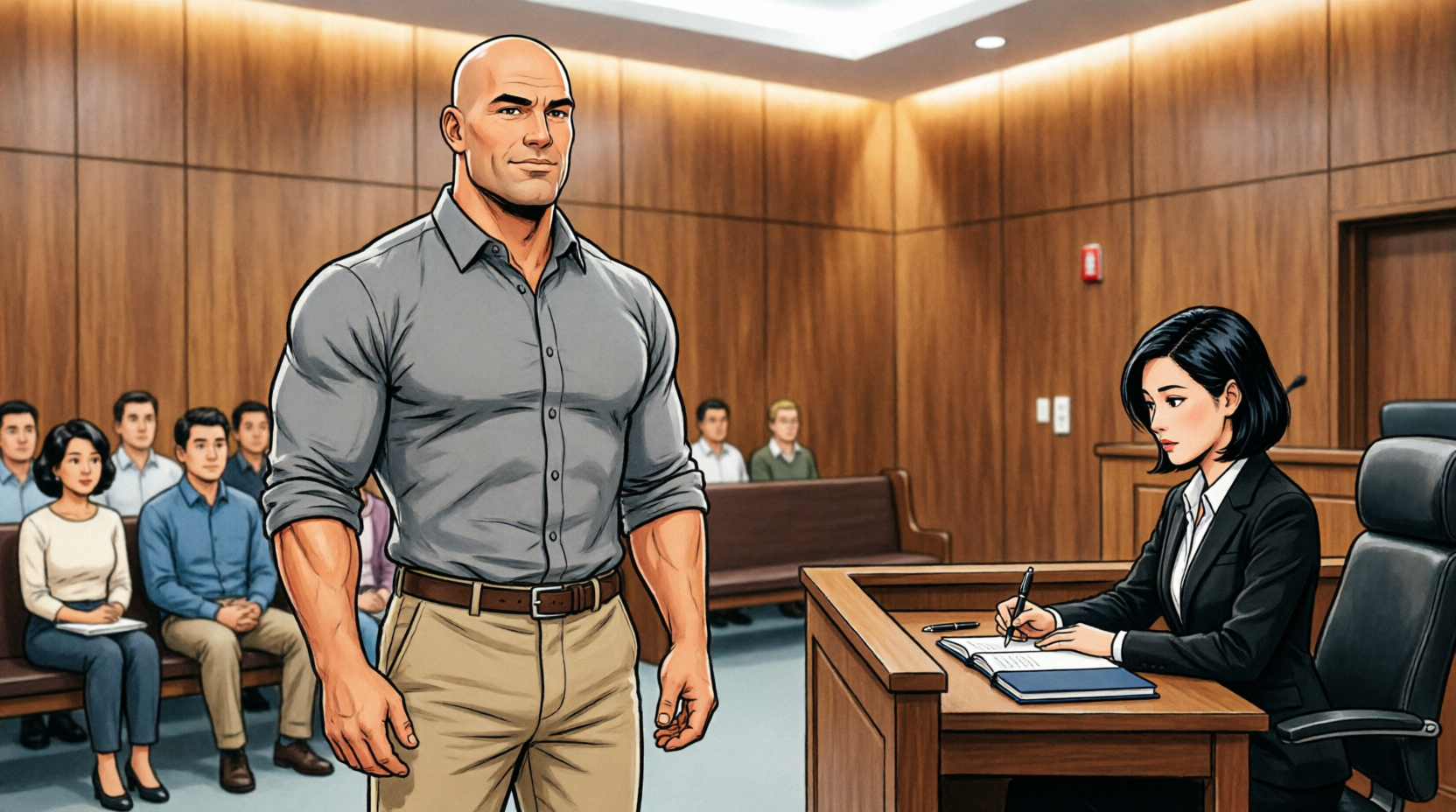
I thought about Emma. I thought about the last weekend I had with her, two weeks ago, a Saturday afternoon that we had spent at the science museum because it was her current enthusiasm and because there are few things in the world more satisfying than watching a nine-year-old discover that friction is interesting. She had explained three separate exhibits to me with the confidence of someone who has recently acquired knowledge and finds it almost unbearably worth sharing.
I thought about what I wanted for her.
Not what I wanted her to have. What I wanted her to be. Someone who understood that the story other people tell about you is not the story you are required to live inside. Someone who knew that preparation is more durable than performance and that the patient version of a plan is almost always the right version. Someone who knew, when it mattered, what her father was.
“After the process,” I said, “I go pick up my daughter.”
David looked at the parking lot. He looked at the court building behind us. He looked at me in the blue Walmart shirt that I had worn deliberately into a room where it was supposed to tell one story and had ended up telling a different one entirely.
“You know,” he said, “you could have told them at the beginning.”
“Yes,” I said.
“It would have been simpler.”
“Simpler is not always better.”
He thought about that.
“Jessica is going to be very angry,” he said.
“Jessica has been angry before,” I said. “It doesn’t change anything I need to do.”
He nodded. We stood in the parking lot for another minute, the way people stand after something has concluded, when the adrenaline is settling and the next thing has not quite begun.
“The Denver people called again this morning,” he said.
“What did you tell them?”
“That we were still deciding.”
“That’s accurate,” I said.
A sale of the company was one of the things to decide. Not today, not this week, not until the custody arrangement was settled and the full shape of what came next was clear. Twenty-three million dollars was enough to change the character of a life, and I had learned over the past eighteen months to be careful about changes that arrived faster than you could understand them.
What I knew was this: Emma would not grow up watching her father treated as a lesser thing. Not because I had money, which was a means and not an end, but because I had refused to be what they said I was, and I had proved it in the room where they had been most certain.
I drove home to the apartment.
I made dinner. I ate it at the kitchen table, which was also the desk where I had read the Meridian filing the previous evening. The mildew smell was there when I opened the back window, as it always was. I had never minded it as much as the aesthetics of the thing might suggest, because the apartment had served its purpose, which was to be exactly what it looked like: a place that told a simple story to people who were only looking at the surface.
After dinner I called Emma.
She answered on the second ring, which meant she had been near her phone, which probably meant she had been waiting for the call.
“Dad,” she said.
“Hi, Em.”
“How did it go?”
She was nine. She knew, in the way children know things they have not been told in full, that today had been important. I had not burdened her with the specifics. But she was perceptive in the way her grandmother had always said I was perceptive, and she had known something was happening.
“It went fine,” I said. “I’m going to get to see you more.”
A pause.
“How much more?”
“A lot more,” I said. “We’ll figure out the schedule, but a lot more.”
Another pause, and then the sound she made was not a word, just a sound, the sound of a nine-year-old girl letting go of something she had been holding, and it was the best thing I had heard all day.
We talked for half an hour. She told me about the science project she was working on, something about soil composition and plant growth, and I asked the questions that kept her talking, because listening to her talk was one of the things I had been quietly most afraid of losing, and I did not take it for granted.
After I hung up, I sat with the phone in my hand for a while.
Outside, the November evening had gone dark early and the streetlights had come on. Somewhere down the block, a car alarm cycled through its sequence and then stopped. The ordinary sounds of an ordinary street, the kind of street that looked like nothing and was everything to the people who lived on it.
I thought about the look on Judge Whitmore’s face when the name landed.
I thought about the pen stopping in midair.
I thought about Hartwell holding my pay stubs between two fingers, and the laugh in the gallery, and the buzzing of the fluorescent lights that had become part of the air itself, and the blue shirt I had worn deliberately into a room where it was supposed to make me small.
Some things you prepare for a long time before the moment comes. And then the moment comes, and you give the room the one thing you kept to yourself all morning, and you watch it land, and you understand that the waiting was exactly right.
I folded the shirt and put it on the chair.
I went to bed.
In thirty days I would be back in that courtroom with Sandra beside me and the complete picture on the record and the process moving toward what it was always going to move toward, which was the truth, which always gets there eventually, which had been on its way all along.
In thirty days I would pick up my daughter.
In the meantime, there was work to do.
There was always work to do.
That had never been the problem.