
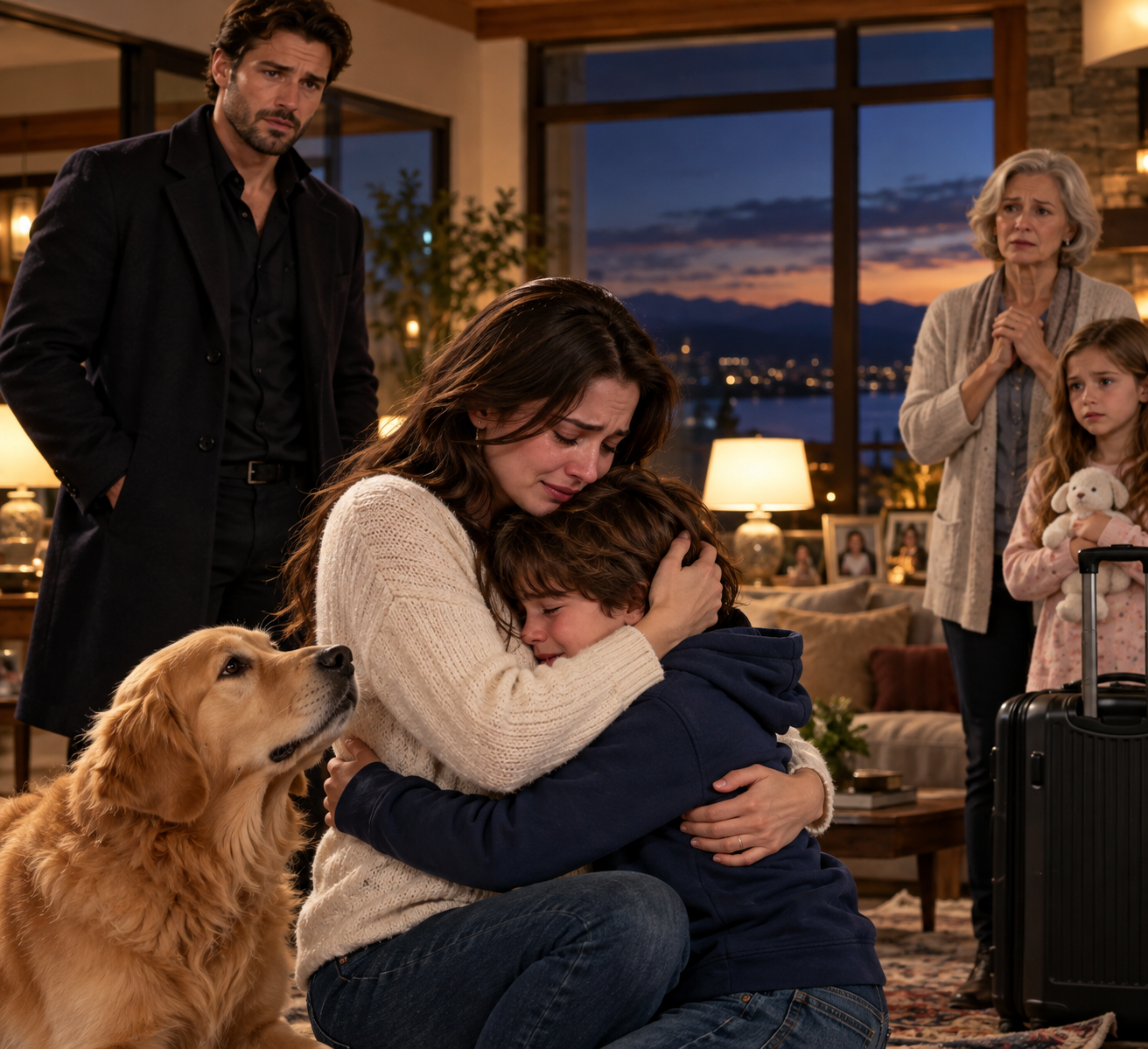
The first six weeks after Anna's birth were chaos.
Margaret loved them.
From a respectful distance.
That part required discipline.
Daniel and Sarah operated in a world measured by feedings, diapers, sleep intervals, and unexplained crying.
Time lost normal shape.
Daniel called once at four in the afternoon and sounded surprised when Margaret mentioned daylight.
"I thought it was morning."
"How much have you slept?"
"I don't understand the question."
Margaret laughed.
"Do you need anything?"
"Sleep."
"Something available in the physical world."
"Food."
"What kind?"
"Anything."
Margaret brought dinner.
Then left.
That was the difficult part.
Leaving.
Anna was asleep in Sarah's arms.
Daniel looked exhausted.
Laundry sat unfolded.
The sink contained bottles.
Every cell in Margaret's body wanted to stay.
Clean.
Organize.
Take over.
She put the casserole in the refrigerator.
Kissed Sarah.
Kissed Daniel.
Touched Anna's tiny foot.
Then said, "Call if you want help."
Daniel looked suspicious.
"You're leaving?"
"Yes."
"Are you sick?"
Margaret glared.
He laughed.
"Thank you."
Sarah looked relieved.
That relieved Margaret too.
The following morning they called.
"Can you come?"
Margaret smiled.
"Yes."
This time she stayed six hours.
Because invited help felt different.
She held Anna while Sarah slept.
Washed bottles.
Folded laundry after asking.
Prepared lunch.
No reorganizing cabinets.
No opinions about feeding schedules.
No critique of the nursery temperature.
She almost commented on the bassinet placement.
Stopped herself.
Sarah noticed.
"What?"
"Nothing."
"You made a face."
"I didn't."
"You did."
Margaret sighed.
"The bassinet seems close to the vent."
Sarah looked.
"Oh."
Margaret immediately said, "Ignore me."
"No."
Sarah moved it slightly.
"That's actually useful."
Margaret smiled.
"Permission-based wisdom."
"Don't get excited."
They laughed.
Anna grew.
Margaret visited often but not constantly.
Sometimes Evelyn came.
Sometimes Richard.
Sometimes Emily.
The family had more grandparents than available baby.
This was a good problem.
Richard surprised everyone.
He never arrived unannounced.
Not once.
He asked before holding Anna.
The first time Sarah saw him do that, she cried afterward.
Daniel found her in the kitchen.
"What's wrong?"
"He asked."
Daniel understood.
Something as simple as asking had become evidence.
Richard also gave one gift.
A savings bond opened only after Daniel and Sarah approved the structure.
No trust.
No control provisions.
No conditions.
Sarah stared at the paperwork.
"Dad."
"I asked."
"I know."
He looked nervous.
"If you don't want it—"
"No."
Sarah smiled.
"This is fine."
Richard exhaled.
Small changes.
Millimeters.
Accumulation.
Margaret herself had to confront a different temptation.
Anna adored her.
At four months, the baby began smiling whenever Margaret appeared.
Margaret knew infant smiles were not moral judgments.
Still, she enjoyed them excessively.
One afternoon Daniel handed Anna to her.
The baby immediately stopped fussing.
Daniel stared.
"Traitor."
Margaret smiled triumphantly.
"She has taste."
Sarah rolled her eyes.
For several weeks Margaret found herself waiting for those reactions.
The smile.
The reach.
The recognition.
Then she noticed something.
When Anna fussed in Daniel's arms, Margaret sometimes felt the urge to take her.
Not because Daniel asked.
Because being the one who soothed her felt good.
Necessary.
Familiar.
Dangerously familiar.
One evening Margaret reached automatically.
"I've got her."
Daniel held the baby slightly tighter.
"No."
Margaret froze.
He did not sound angry.
Just clear.
"Okay."
Daniel rocked Anna.
She cried harder.
Margaret's hands itched.
Daniel looked tired.
Still he kept going.
Eventually Anna quieted.
Daniel smiled at her.
Then looked at Margaret.
"You okay?"
"Yes."
"Really?"
Margaret laughed softly.
"No."
He understood immediately.
"You wanted to fix it."
"Very badly."
"Why?"
Margaret thought.
"Because I'm good at babies."
Daniel smiled.
"That's allowed."
"And because she needed something."
"Also allowed."
Margaret looked at Anna.
"And because being the person she needs feels wonderful."
Daniel's expression softened.
"Mom."
"I know."
He sat beside her.
"You're her grandmother."
"Yes."
"She can need you."
"I know."
"That isn't automatically unhealthy."
Margaret smiled.
"You're teaching me my own lesson."
"Terrible, isn't it?"
She laughed.
Daniel continued.
"You just don't get to take every need away from everyone else."
Margaret nodded.
"Exactly."
Grandmotherhood, she discovered, offered a new version of the old temptation.
Children required things.
Constantly.
It would be easy to mistake availability for entitlement.
She practiced.
Ask.
Wait.
Help when invited.
Enjoy closeness without turning it into jurisdiction.
Henry watched all of this with amusement.
"You have become aggressively respectful."
"Do not mock me."
"I would never."
"You are."
"Only gently."
Henry had recovered well from the stroke.
His right hand still tired.
He complained about buttons.
Margaret sometimes helped.
Sometimes he refused.
They had become comfortable with temporary dependence.
That comfort made the relationship deeper rather than narrower.
One evening they sat on Margaret's balcony.
Anna was six months old.
A photograph of her slept inside Margaret's phone because apparently grandparents had become people who showed strangers baby pictures.
Henry asked, "Do you ever wish we'd met earlier?"
Margaret thought.
"No."
He looked offended.
"That was quick."
"I mean it."
"Why?"
"If we'd met when Robert was alive, that would've been awkward."
Henry laughed.
Margaret continued.
"If we'd met right after Judith and Robert died, we'd probably have tried to rescue each other."
Henry considered.
"True."
"We met when we were lonely enough to want company and healed enough not to call company salvation."
Henry smiled.
"That's annoyingly good."
"I know."
He reached for her hand.
"Do you love me?"
Margaret raised an eyebrow.
"Fishing?"
"Possibly."
"Yes."
"Good."
"Do you love me?"
"No."
Margaret punched his shoulder.
He laughed.
"Obviously."
They sat quietly.
Then Henry said, "Laura wants me to move back to Ohio."
Margaret's chest tightened.
Again.
But this time his tone was different.
"Why?"
"She got a job offer in Colorado."
Margaret frowned.
"What does that have to do with Ohio?"
"Ethan wants to finish high school there."
Henry explained.
Laura was considering moving after the school year.
Ethan wanted to stay with his father.
Nothing required Henry permanently.
The request was not actually about moving.
Laura had asked whether Henry would consider spending more time in Ohio during the transition.
Margaret relaxed slightly.
"Do you want to?"
"Some."
"How much?"
"I don't know."
They had learned to tolerate that phrase.
Henry continued.
"I was thinking maybe two weeks there, two here for a few months."
Margaret considered.
"Sounds reasonable."
"That's it?"
"What do you want?"
"A dramatic declaration that our love cannot survive geography."
She laughed.
"Wrong woman."
Henry smiled.
"Good."
Their relationship stretched again.
Not broke.
Not threatened.
Stretched.
Henry spent more time in Ohio.
Margaret filled the space not with panic but with life.
Volunteering.
Emily.
Daniel.
Anna.
Travel with friends from the nonprofit.
Her therapy.
Alone time.
That last one had become valuable.
Margaret discovered she genuinely liked certain evenings with no one around.
That realization would have terrified her years earlier.
Loneliness and solitude were not identical.
She had finally learned the difference.
Emily finished another semester.
Teaching had become something she wanted to continue.
She began considering doctoral work.
Margaret did not offer opinions until asked.
When asked, she said, "Do you want the degree or the life attached to it?"
Emily stared.
"That's obnoxiously useful."
"I know."
Daniel became full partner at Northbridge.
The announcement appeared on the firm's website.
Margaret printed it.
Then laughed at herself.
She placed the copy inside the wooden box anyway.
Not as proof of worth.
As family history.
The old notebook remained there too.
The one with $535,436.
Margaret no longer avoided it.
Sometimes she opened it.
Not to feel guilt.
To remember how easily love could become structure without anyone deciding.
One afternoon, when Anna was almost one year old, Daniel came to Margaret's condominium carrying the old notebook.
She looked at it.
"You stole my evidence."
"You gave it to me originally."
"Then I apparently repossessed it."
"Family tradition."
They laughed.
Daniel sat.
"I want to destroy this."
Margaret became serious.
"Why?"
"Because I don't need it anymore."
She looked at the cover.
Years of financial history.
Pain.
Awakening.
"Do you want to?"
"Yes."
"Then why ask me?"
He smiled.
"Because some of it belongs to you."
Margaret appreciated that.
She thought.
"Don't burn it."
Daniel frowned.
"You want to keep it?"
"No."
Margaret touched the cover.
"Give it to Linda."
"For what?"
"Let her retain the financial records she legally needs."
"And the notebook?"
"Shred it."
Daniel stared.
"Really?"
"Really."
He smiled slowly.
The next week they went together.
Linda watched with amusement as Daniel fed pages into the shredder.
"Very ceremonial," she said.
"Margaret dislikes ceremony," Daniel replied.
Margaret glared.
Page after page disappeared.
Wedding costs.
Cars.
Medical bills.
House.
Numbers became strips.
Daniel looked at Margaret after the final page.
"How do you feel?"
She expected relief.
Instead she felt ordinary.
"Fine."
Daniel laughed.
"That's it?"
"Yes."
Maybe that was appropriate.
The numbers no longer needed dramatic destruction because they no longer governed anything.
The second ledger remained with Daniel.
No totals.
No debt.
Just days.
On Anna's first birthday, the family gathered in Daniel and Sarah's backyard.
Anna smashed cake.
Everyone photographed it.
Richard wore frosting on his sleeve and pretended not to mind.
Evelyn laughed at him.
Emily's children competed for Anna's attention.
Henry had returned from Ohio.
Margaret stood slightly apart for a moment.
She looked at everyone.
Not perfect.
Never perfect.
But different.
Daniel noticed.
"What?"
"Nothing."
"You look emotional."
"I'm old."
"Same thing?"
Margaret swatted him.
He laughed.
Then handed Anna to her.
The child reached willingly.
Margaret held her.
Anna touched Margaret's face.
No memory of the house.
No knowledge of Thanksgiving.
No understanding of family patterns.
Good.
Margaret kissed her forehead.
The family did not need Anna to remember what happened.
Adults were responsible for remembering their own lessons.
Children deserved the freedom not to carry the debt.
That evening, after everyone left, Margaret found a small envelope in her purse.
No name.
She opened it.
Inside was a photograph.
Anna sleeping against Margaret's chest.
On the back, Daniel had written:
No ledger needed.
Margaret smiled.
She placed the photograph inside the wooden box.
Some things were worth keeping.
Not because they measured what had been given.
Because they reminded her what could exist when nobody was keeping score.
Click here to continue reading: PART 35: Years After the Thanksgiving That Broke Their Family Open, Margaret Learned the House Was Never What She Had Needed Back
Two Weeks After Margaret Gave Her Son a House, One Thanksgiving Message Made Her Question Every Sacrifice She Had Made
Part 34 of 35

One Comment on “PART 34 – Anna’s Arrival Gave Margaret Everything She Once Thought She Needed, but Her Response Proved How Completely Her Idea of Family Had Changed”