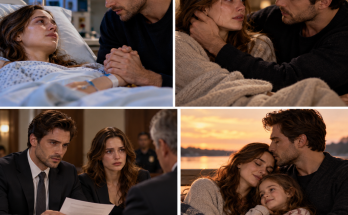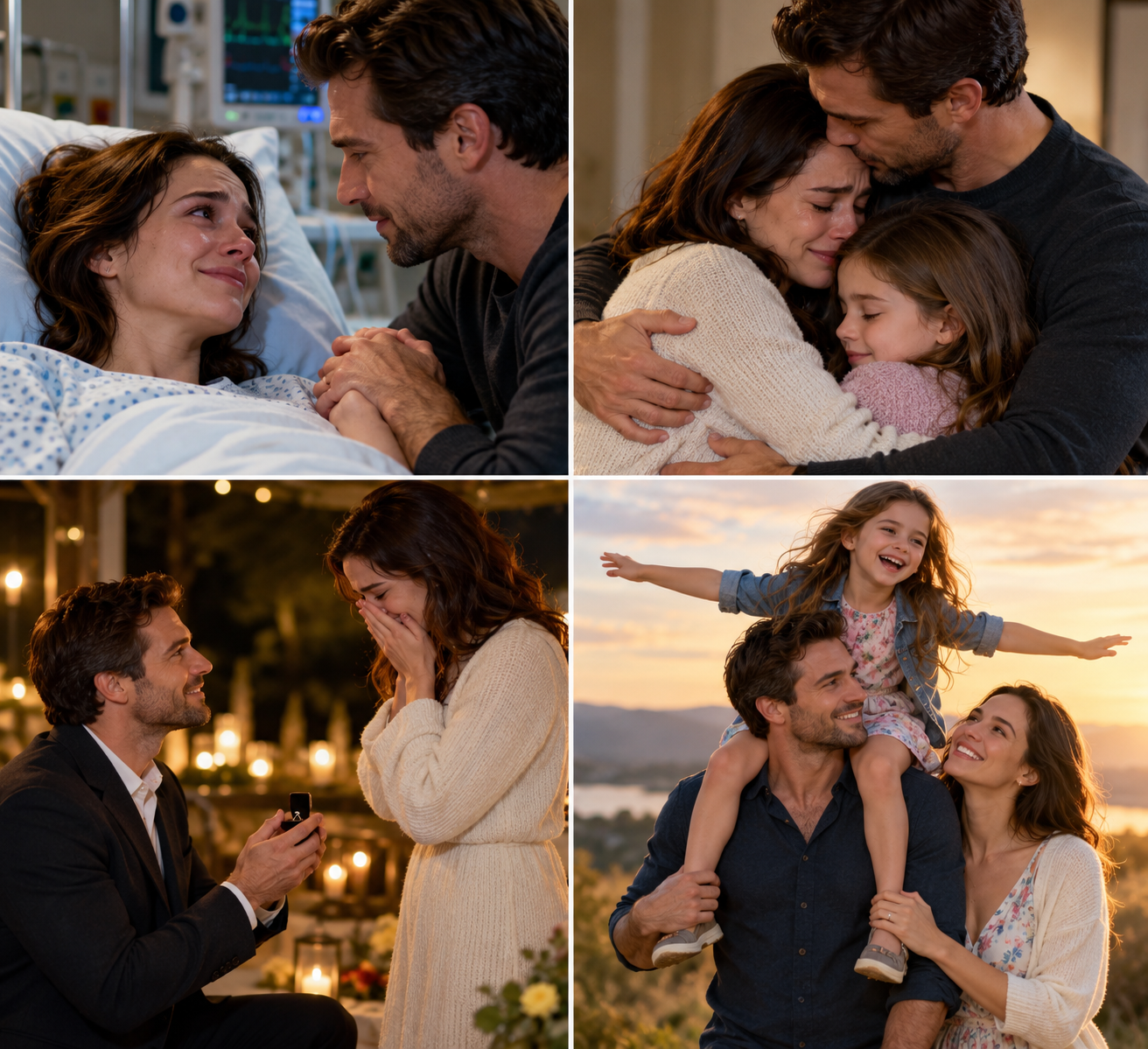
Margaret’s stroke happened on a Monday morning.
Sarah was with her.
That mattered.
She had gone over to help organize insurance paperwork.
At 9:18, Margaret dropped a folder.
At 9:19, Sarah noticed one side of her face had changed.
At 9:20, she called emergency services.
No hesitation.
No private workaround.
No attempt to drive Margaret herself.
No fear of records.
Just the correct call.
I arrived at the hospital twenty-five minutes later.
Sarah stood near the emergency department doors with both hands pressed together.
When she saw me, she walked directly into my arms.
No explanation first.
No update.
Just contact.
“What happened?”
“Stroke.”
“Is she conscious?”
“Yes.”
“Talking?”
“Some.”
“Doctor?”
“Inside.”
Sarah was shaking.
I had seen her under federal investigation remain calmer.
Fear behaves differently when there is nothing strategic to do.
“Come sit.”
“I can’t.”
“Then stand.”
We stood.
A neurologist came out.
Treatment had started quickly.
That mattered.
The stroke appeared serious but survivable.
Speech affected.
Weakness on one side.
Recovery uncertain.
Sarah asked precise questions.
Medication.
Timeline.
Rehabilitation.
Risks.
Then she stopped herself.
“Sorry.”
The doctor looked confused.
“For what?”
“I’m asking too much.”
“No. You’re not.”
I saw Sarah absorb that.
There were contexts where taking control through information was appropriate.
She was still learning that too.
Margaret spent six days in the hospital.
Then rehabilitation.
Sarah reorganized her entire schedule.
I watched carefully.
Not because I distrusted her intentions.
Because I knew her instinct.
When afraid, Sarah built systems.
Schedules.
Lists.
Authority.
By day three, Margaret snapped at her.
“Stop telling me when to drink water.”
Sarah froze.
The therapist looked uncomfortable.
I hid a smile.
Margaret continued, speech slower but clear enough.
“I am not one of your accounts.”
Sarah sat beside the bed.
“You’re right.”
“Say it without sounding like a hostage negotiator.”
Sarah laughed.
Then cried.
Margaret reached with her stronger hand.
“Come here.”
Sarah leaned down.
Margaret touched her cheek.
“You’re allowed to help me.”
Sarah nodded.
“You’re not allowed to run my life because you’re scared.”
Another nod.
I stood by the door and thought:
That is the whole story.
Not just Sarah and Margaret.
Sarah and me.
Sarah and crime.
Sarah and Harbor.
Fear becoming control.
Control becoming secrecy.
Secrecy becoming harm.
The difference now was that someone could tell Sarah to stop and she did.
Not perfectly.
But sooner.
Rehabilitation took months.
Margaret recovered enough to return home with assistance.
She hated the walker.
Called it humiliating.
Decorated it with a ribbon anyway.
Sarah wanted her to move in with us.
Margaret refused.
“I already survived raising one version of you.”
Sarah laughed.
“Fair.”
They compromised.
Home aide.
Regular visits.
Emergency monitor.
Sarah did not hide a backup system.
I checked.
She was offended for approximately four seconds.
Then admitted she deserved that.
One afternoon Margaret asked to speak to me alone.
Sarah had gone to the pharmacy.
Margaret sat near the window.
Her speech still required patience.
“I want to ask you something.”
“Okay.”
“Are you going to marry her again?”
I nearly choked on coffee.
“You recovered enough for ambush questions.”
She smiled.
“Well?”
“I don’t know.”
“Why?”
“Because we’re not sure marriage is what we want.”
“Do you love her?”
“Yes.”
No hesitation anymore.
Margaret noticed.
“Then what are you afraid of?”
“Lots.”
“Specific.”
I looked at her.
“Legal entanglement.”
“Prenup.”
“Financial history.”
“Lawyer.”
“Trust.”
She raised an eyebrow.
“Not lawyer.”
I laughed.
“No.”
She tapped the arm of her chair.
“You know she’ll never be easy.”
“I know.”
“You aren’t either.”
“Thank you.”
“You check doors twice.”
“That’s not a personality flaw.”
“You alphabetize medicine.”
“That was Sarah.”
“She learned it from you.”
I surrendered.
Margaret became serious.
“I’m not telling you to marry her.”
“Good.”
“I’m telling you don’t let Marcus make the decision after he’s dead.”
That sentence landed hard.
“Meaning?”
“If part of why you refuse marriage is because he made marriage dangerous, then he’s still choosing.”
I thought about it.
“I don’t know if that’s true.”
“Then find out.”
Sarah returned with medication before we finished.
Margaret immediately changed the subject.
That evening I told Sarah.
Everything.
No strategic withholding.
“Your mother asked whether we’re getting married.”
Sarah stared.
“She did not.”
“She did.”
“I’m putting her back in rehab.”
I laughed.
Then Sarah became quiet.
“What did you say?”
“I don’t know.”
“Good.”
“You?”
“I don’t know.”
Also good.
We did not turn it into a proposal conversation.
Not then.
Instead we examined the question over months.
Why had we married the first time?
Love.
Cover.
Hope.
Fear.
Respectability.
Desire.
Multiple motives.
Why might we marry now?
Practical reasons?
Medical rights?
Inheritance?
Commitment?
Social meaning?
Habit?
Fear of losing each other?
The exercise felt absurdly clinical at times.
But after a life built on unexamined motives, examination felt useful.
One night Sarah said:
“If we marry, I want separate finances.”
“Agreed.”
“Prenup.”
“Agreed.”
“No hidden beneficiary structures.”
“Strongly agreed.”
“No changing estate documents without telling each other.”
“Yes.”
“If either of us wants to leave, we say it.”
“Yes.”
“No disappearing.”
“Yes.”
Sarah looked at me.
“That one sounds childish written down.”
“Keep it anyway.”
“Okay.”
We had begun making a list.
Not vows.
Boundaries.
Then Sarah wrote:
No protecting the other person by removing their choice.
I looked at it.
“That’s the one.”
“Yes.”
We stopped.
Nothing else needed equal emphasis.
Several weeks later, Margaret had another medical scare.
Not another stroke.
An infection.
Hospital overnight.
Sarah and I sat beside her bed.
Margaret woke around midnight and looked between us.
“You two look terrible.”
“Thank you,” Sarah said.
Margaret pointed weakly at me.
“You.”
“What?”
“You still thinking?”
Sarah covered her face.
“Mom.”
“What?”
“You are on antibiotics.”
“I’m not dead.”
“Please don’t propose to my boyfriend for me.”
Margaret smiled.
“Boyfriend.”
Sarah groaned.
I laughed so loudly a nurse looked through the doorway.
The next morning Margaret improved.
The danger passed.
Driving home, Sarah said, “I’m sorry.”
“For what?”
“Her.”
“She’s funny.”
“She’s terrifying.”
“Family trait.”
Sarah gave me a look.
Then we drove quietly.
At a red light, I said:
“I think I want to marry you.”
Sarah stared straight ahead.
The light changed.
A driver behind us honked.
She drove through.
No response for almost a minute.
Then:
“Why?”
Good question.
“Not because Margaret asked.”
“Good.”
“Not because Marcus is dead.”
“Good.”
“Not because the first marriage was fake.”
“It wasn’t.”
“I know.”
“Then why?”
I thought.
“Because this version would be informed.”
Sarah’s eyes filled.
“That sounds romantic.”
“It’s the best I have.”
She laughed through tears.
“Keep going.”
“Because I know who you were.”
“Yes.”
“Who you are now.”
“Mostly.”
“Enough.”
She smiled.
“And you know me.”
“Yes.”
“More than I’d prefer.”
“Yes.”
“And if either of us changes our mind?”
“We say it.”
“Before a border crossing.”
“Preferably.”
She laughed.
Then became serious.
“I want to marry you too.”
No ring.
No kneeling.
No rooftop.
No hidden cameras, as far as we knew.
A traffic light.
A honking driver.
That felt more appropriate.
We told Margaret first.
She cried.
Then denied crying.
Then demanded veto power over flowers.
We told Reynolds by text.
His reply:
PLEASE DO NOT INVOLVE ME PROFESSIONALLY.
Martinez sent:
Drive the speed limit.
We did not announce publicly beyond friends and family.
No story sold.
No redemption feature.
No dramatic headline about the criminal wife marrying the husband she deceived.
This belonged to us.
That privacy felt different from secrecy because nobody whose choices were affected was being denied the truth.
The wedding was scheduled for spring.
Small.
Courthouse ceremony followed by dinner at Margaret’s house if her health allowed.
No elaborate memory table.
No institutional ballroom.
No performance.
Then Sarah surprised me.
“I want one thing.”
“What?”
“The original ring.”
I looked at her.
“My old one?”
“Yes.”
“Why?”
“I don’t want you to wear it.”
“Good.”
“I want it melted.”
I understood immediately.
“Into what?”
“Something else.”
“What?”
“Two plain bands.”
I thought about the gold.
Old inscription mostly removed.
Hidden digits erased.
Harbor fragment gone.
The ring had carried too much.
Melting it would not erase history.
It would physically refuse its old form.
“Yes.”
Sarah looked relieved.
We took it to the same jeweler.
He remembered me.
“More engraving removal?”
“Opposite.”
We explained only that we wanted the old band melted with additional new gold and made into two simple rings.
“No inscription?” he asked.
Sarah looked at me.
I looked at her.
“No.”
Nothing hidden inside.
Nothing permanent enough to become a trap.
When we picked them up, they looked completely ordinary.
That was perfect.
The week before the wedding, Reynolds contacted me.
Retired or not, he remained occasionally looped into final archival matters.
“There’s one thing you should know.”
I laughed.
“No.”
“It’s not danger.”
“No.”
“David.”
“What?”
“Voss.”
The unresolved name.
“What about him?”
“Confirmed dead.”
I went quiet.
“When?”
“Apparently almost two years ago.”
“How?”
“Natural causes, likely. Foreign jurisdiction finally verified identity through DNA.”
“Why tell me?”
“Because the last credible external threat tied to Harbor is gone or incarcerated.”
Marcus dead.
Ward imprisoned.
Ross imprisoned.
Voss dead.
Chen cooperated.
Harbor dismantled.
The architecture finally had no active owner.
“You okay?” Reynolds asked.
“Yes.”
“Does it feel final?”
“No.”
“Why?”
“Because final is probably not a feeling.”
He laughed.
“You learned.”
“So did you.”
“Unfortunately.”
I told Sarah that evening.
She nodded.
No visible relief at first.
Then she sat down.
“Everyone from that world is gone.”
“Not everyone.”
“Enough.”
“You’re still here.”
She looked at me.
“So are you.”
That was true.
We were not what remained after the story.
We were two people still capable of choosing what came next.
On the morning of the wedding, rain began.
Sarah sent me a text from Margaret’s house.
Of course.
I replied:
Do not speed.
Her answer:
Seventy-eight?
I laughed aloud.
Then:
Never again.
That was the last message before we met at the courthouse.
Click here to continue reading: PART 35: At Our Second Wedding, Sarah and I Returned to the Question That Began Everything and Finally Chose an Answer Without Fear
A Routine Traffic Stop Became Something Else When the Trooper Walked Past My Wife and Came Straight to Me
Part 34 of 35