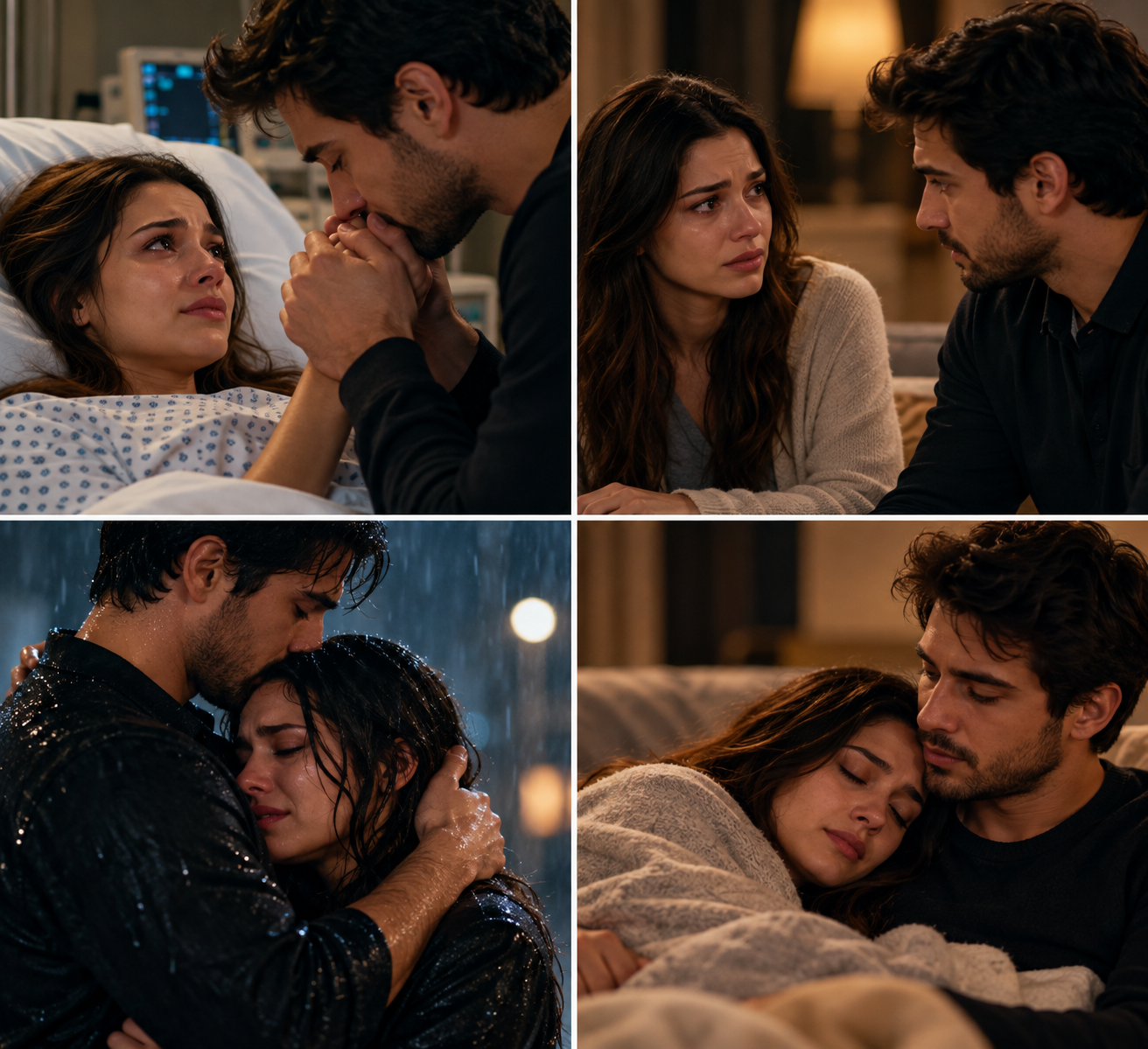
By the time Andrew and I reached the hospital, Daniel had sent four messages.
The first said they were checking Paola in.
The second said labor was progressing faster than expected.
The third contained only:
She’s scared.
The fourth arrived while we were parking.
I am too.
I found Daniel outside the maternity unit wearing a visitor sticker crooked across his shirt.
He looked exhausted already.
Paola had been in labor less than three hours.
“How is she?”
“In pain.”
“That tends to happen.”
He gave me a look.
“Helpful.”
“You texted me because you wanted helpful?”
“No.”
He rubbed both hands across his face.
“I don’t know why I texted.”
“Yes, you do.”
He looked through the small window in the unit doors.
“She asked for her mother.”
“Teresa’s coming.”
“I know.”
“And Marisol?”
His expression changed.
“She’s downstairs.”
“Why downstairs?”
“She won’t come up.”
“Why?”
“She says this isn’t her moment.”
That sounded like something Marisol would say after a lifetime of having other people decide whether she could enter rooms.
“Did you invite her?”
“Yes.”
“And?”
“She said she’ll wait.”
“Then let her.”
Daniel nodded.
For once, neither of us tried to fix everyone at once.
Teresa arrived ten minutes later.
Her hair was still damp from a rushed shower, and she carried Paola’s overnight bag even though Daniel had already brought another.
Mothers apparently duplicate necessities when frightened.
She hugged Daniel.
“How is she?”
“She wants you.”
Teresa moved toward the doors, then stopped.
“What?”
Daniel frowned.
She looked suddenly uncertain.
“Do I go in?”
He stared.
“You’re her mother.”
Teresa swallowed.
After everything that had happened, even that simple title carried weight.
Daniel opened the door.
“She asked for you.”
That settled it.
Teresa disappeared into the maternity unit.
Daniel remained outside with me.
Andrew went downstairs for coffee and returned with Marisol.
She stood farther back than necessary.
“You can sit,” I told her.
“I’m fine.”
“You’ve been standing downstairs for half an hour.”
“I’ve stood longer.”
Daniel looked at her.
“Come here.”
She hesitated.
Then came closer.
He seemed about to say something, stopped, and finally asked:
“Were you scared when I was born?”
Marisol’s face softened.
“Yes.”
“Before or after?”
“Both.”
“Helpful.”
I almost laughed.
Marisol did.
Daniel looked toward the maternity doors.
“Paola thinks something will go wrong.”
“That is common during labor.”
“She keeps asking whether Elena’s heart rate is normal.”
“And is it?”
“Yes.”
“Then tell her yes every time.”
Daniel nodded.
Marisol studied him.
“What are you really asking me?”
He looked down.
“Did you know how to be a mother?”
The question was so naked that even Andrew looked away.
Marisol answered without pretending.
“No.”
Daniel looked up.
“I was twenty-one.”
She folded her hands.
“I knew how to hold you because a nurse showed me. I knew how to feed you because someone explained it. I knew I loved you.”
She paused.
“That was all.”
“Did it feel like enough?”
“No.”
“Was it?”
“For three days.”
Daniel’s mouth tightened.
Marisol continued.
“People make parenthood sound like knowledge arrives with the child.”
“It doesn’t?”
“No.”
She almost smiled.
“The child arrives. Then you panic.”
Daniel exhaled through his nose.
“That sounds more believable.”
“It is.”
A nurse came through the doors.
“Daniel?”
He turned instantly.
“Your wife wants you.”
His face went pale.
“Okay.”
He did not move.
The nurse smiled.
“Now would be good.”
He looked at us.
Andrew lifted one hand.
“Go.”
Daniel took three steps.
Then came back.
He hugged me.
Hard.
“Daniel.”
“I know.”
“What?”
“Nothing.”
He released me and turned to Marisol.
For one strange second they simply looked at each other.
Then he hugged her too.
Her arms came around him immediately.
“Go meet your daughter,” she whispered.
He nodded.
Then disappeared through the doors.
Marisol sat down after he left.
At last.
Her hands shook.
I noticed but said nothing.
After several minutes she asked:
“Did Emma tell you about your birth?”
“All the time.”
“What happened?”
“She said I screamed before the doctor finished announcing I was a girl.”
Marisol laughed.
“That sounds like you.”
“Apparently I was impatient.”
“Also sounds like you.”
Andrew handed her coffee.
She accepted.
We waited.
Hospitals distort time.
Five minutes feels like an hour.
An hour disappears.
Nurses pass carrying clipboards.
Doors open.
Close.
Machines beep beyond walls.
Families learn things while everyone else sits under fluorescent lights pretending not to listen.
Celeste arrived next.
Then Elvira.
I had not expected her.
She carried a small bouquet of white daisies.
“No roses?” I asked.
“I’m finished with symbolic flowers.”
Good.
She sat beside Marisol.
The two women greeted each other awkwardly.
They had known of each other for decades before truly knowing each other.
That had become ordinary in our family.
Celeste joined Andrew near the vending machines.
For a while, nobody discussed Arturo, Cole, trials, DNA, missing children, or forged records.
We discussed parking.
Coffee.
Hospital chairs.
Whether the air conditioning was too cold.
It was a relief.
Then Elvira handed me her phone.
“What?”
“News.”
A local outlet had published the first report on the federal investigation.
No victim names.
No sensational family details.
Only arrests.
A decades-long illegal adoption network.
Financial fraud.
Evidence recovered.
Multiple active cases under review.
Arturo Salcedo’s survival after his staged death was public now.
So were Victor’s charges.
Cole’s.
Rafael Mendez’s.
I read the first paragraphs.
My stomach tightened.
“Do we have to deal with reporters?”
“Probably.”
“No.”
Elvira raised an eyebrow.
“No?”
“No.”
“You think saying no makes them disappear?”
“No.”
“Then?”
“I mean we don’t have to tell them anything.”
That realization felt surprisingly powerful.
We had spent weeks chasing information.
Now we could choose silence without using silence to hide wrongdoing.
Privacy was different from secrecy.
Mom had tried to teach that.
Elvira took her phone back.
“Good.”
A few minutes later, my own phone rang.
Elias.
I ignored it.
It rang again.
I ignored it.
A message arrived.
The article is restrained. That won’t last.
I typed:
Then don’t make it worse.
He replied:
I’m not planning to.
Growth.
Small, irritating growth.
Another message followed.
I contacted counsel for the affected families. We’ll follow the private notification process.
I stared.
Then typed:
Thank you.
He responded:
Emma would enjoy how painful that was for me.
I smiled.
She would.
The maternity doors opened.
Teresa appeared.
Her face was wet with tears.
Everybody stood.
“What?” I asked.
“She’s okay.”
The entire waiting area breathed.
“And Elena?”
Teresa laughed through tears.
“Loud.”
“That’s good.”
“Very loud.”
Daniel emerged behind her wearing a blue disposable gown.
He looked stunned.
Not frightened.
Not confused.
Stunned.
“She’s here.”
Paola had delivered a healthy daughter.
Seven pounds, two ounces.
Dark hair.
Strong lungs.
Ten fingers.
Ten toes.
All the details people repeat because birth makes ordinary anatomy feel miraculous.
Daniel stared at Marisol.
Then me.
Then everyone.
“I’m a dad.”
“Yes,” I said.
He shook his head.
“No, I know. I just…”
He laughed.
“I’m a dad.”
Marisol began crying.
Daniel crossed the waiting area.
He took her hand.
“Do you want to meet her?”
Marisol looked terrified.
“Does Paola?”
“Yes.”
“Did you ask?”
“Yes.”
“And?”
“She said stop making everybody ask permission twice.”
That sounded like Paola.
Marisol wiped her face.
“Okay.”
Daniel brought us in in pairs.
Andrew and me first.
Paola looked exhausted, sweaty, pale, and happier than I had ever seen her.
Elena slept against her chest beneath a striped hospital blanket.
No sign.
No embroidered name.
No inherited symbolism visible anywhere.
Just a baby.
Paola looked at me.
“Want to meet her?”
I approached slowly.
Elena’s face was red and slightly scrunched.
“She looks furious.”
“She is.”
“She looks like Daniel.”
“That is rude.”
Daniel protested.
“I’m standing here.”
Paola smiled.
“Exactly.”
I touched one finger to Elena’s tiny hand.
Her fingers closed reflexively.
Something inside my chest shifted.
Not toward Emma.
Not toward Mom.
Toward this child.
Present tense.
Living.
Paola watched me.
“You okay?”
“Yes.”
I meant it.
No jealousy.
No ownership.
No thought that this should have been my daughter’s name or my mother’s name or anyone else’s.
Just Elena.
“Hi,” I whispered.
Her eyes stayed closed.
Andrew stood behind me.
Daniel watched.
For a moment, the family history became very small compared with breathing.
Later Teresa came in.
Paola handed her the baby.
Teresa froze before accepting.
“You’ve held babies before,” Paola said.
“Not this one.”
“You’re her grandmother.”
Teresa’s face crumpled.
That title had no caveat.
No DNA dispute.
No adoption fraud.
No rewritten certificate.
Grandmother.
Clear.
She took Elena.
The baby shifted against her.
Teresa kissed the top of her head.
“My Elena.”
Paola smiled.
Then corrected gently:
“Our Elena.”
Teresa laughed.
“Right.”
Marisol came last.
She stopped inside the doorway.
Daniel stood beside her.
Elena was back in his arms.
“Come here.”
Marisol moved closer.
Daniel looked down at the baby.
“This is Elena.”
Marisol’s lips trembled.
“Hello, Elena.”
Daniel held the baby out.
Marisol stepped backward.
“No.”
He frowned.
“You don’t want to hold her?”
“I do.”
“Then?”
“I’m afraid.”
“Of what?”
She looked at him.
“I held you and lost you.”
The room became still.
Daniel’s expression softened.
He stepped closer.
“You’re not going to lose her.”
Marisol’s face twisted.
“You can’t promise that.”
“No.”
He nodded.
“You’re right.”
Then he shifted Elena carefully.
“But you can hold her now.”
That was all.
Now.
No promises about forever.
No bargain.
No protection through silence.
Just the moment available.
Marisol held out her arms.
Daniel placed Elena into them.
The older woman looked down.
A sound escaped her.
Half laugh.
Half sob.
“She’s so small.”
Paola smiled weakly.
“You should have seen her five minutes ago.”
Marisol touched Elena’s cheek with one fingertip.
Daniel stood beside her.
She whispered something.
I could not hear.
He did.
“What?”
Marisol looked embarrassed.
“Nothing.”
“Tell me.”
“I said I wish Emma could see this.”
Nobody spoke.
Then Paola said:
“So do I.”
It was not awkward.
No one corrected her.
Emma belonged in the room without possessing it.
That was new.
That night, after everyone left except Daniel, Paola, and Teresa, I drove home with Andrew.
For the first time in weeks, my phone stayed silent.
No anonymous messages.
No threats.
No hidden names.
At home, the wooden box sat on my dresser.
Mom’s box.
The false bottom still removed.
I touched the compartment.
There was nothing left inside.
I expected emptiness to feel sad.
Instead it felt right.
A hiding place with nothing left to hide.
Before bed, Daniel sent one photograph.
Elena asleep on his chest.
His eyes closed too.
Paola’s hand visible at the edge of the frame.
Below it:
I finally understand what Mom meant.
I typed:
About what?
His reply came a minute later.
You don’t become someone’s parent because of the story of how they arrived.
You become it after.
I stared at the screen.
Then answered:
She’d like that.
Daniel replied:
Which mom?
I smiled.
Then typed:
Exactly.
Click here to continue reading: PART 34: The Trials Forced Every Hidden Choice Into Public Record, but the Hardest Verdicts Came From the People Whose Names Had Been Stolen
The Name I Had Carried for Years Became Someone Else’s Announcement Before I Could Say Why It Mattered
Part 33 of 35