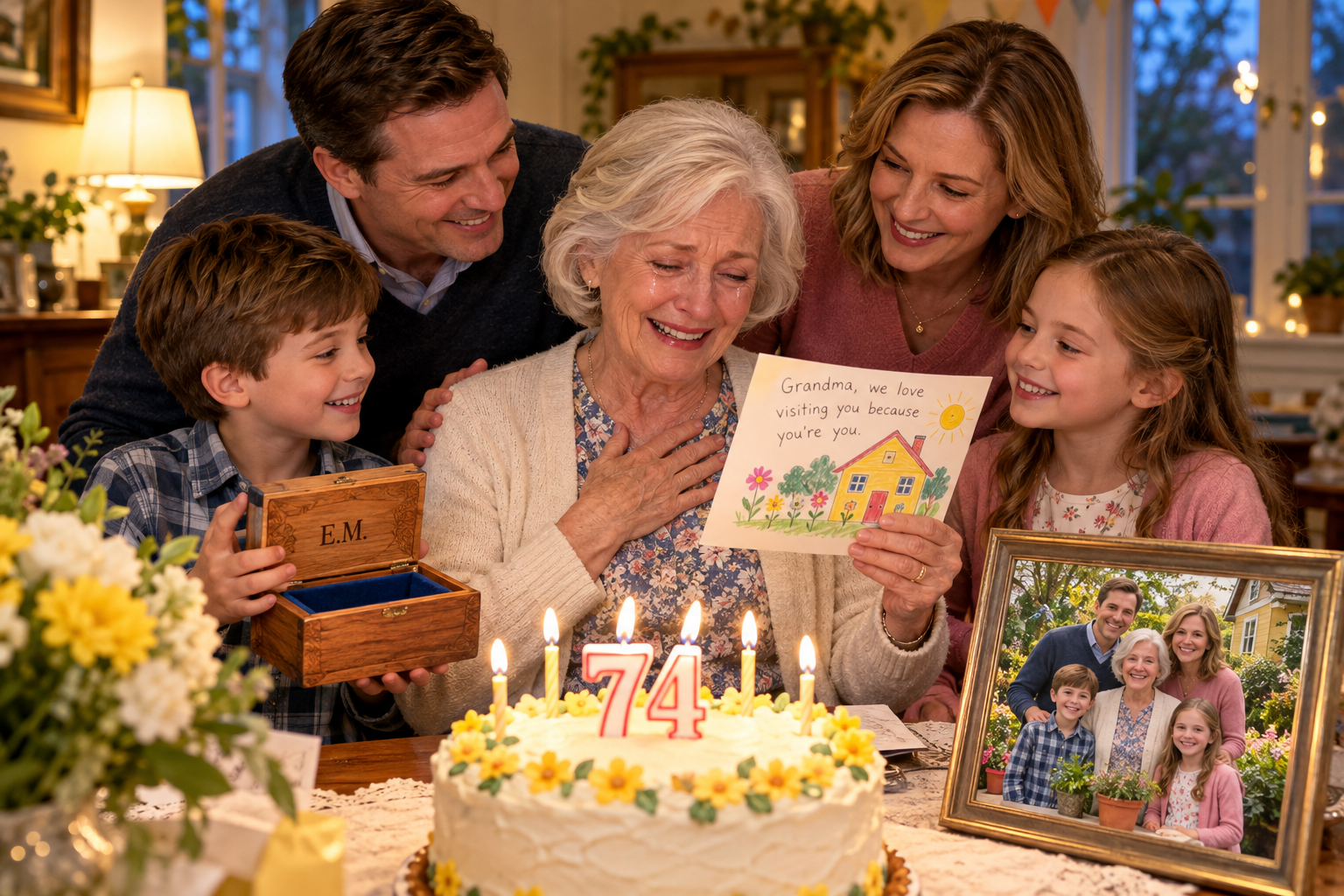
The morning after my seventy-fifth birthday was almost comically ordinary.
There were plates stacked in the sink, half-empty glasses on the patio, napkins scattered across the garden, and one abandoned child's shoe beneath the dining table.
I stood in the kitchen holding my coffee and smiled.
A year earlier, I might have looked at the mess and thought about cleaning it immediately.
That morning, I didn't.
I sat down.
I drank my coffee.
I watched sunlight move across the floor.
For the first time, I understood that not every mess required my immediate attention.
Some things could wait.
That realization seemed small.
It wasn't.
For most of my life, I had been the person who fixed things.
If Thomas worried, I reassured him.
If Graham struggled, I helped.
If the house needed something, I handled it.
If someone was unhappy, I tried to make peace.
I had confused usefulness with worth.
Now I knew better.
I was still useful.
But I no longer needed to prove that I deserved to be loved.
Around noon, Anna called.
“How's the birthday girl?”
“Recovering.”
“From the party?”
“From your singing.”
She laughed.
“I was excellent.”
“You were terrible.”
“You're just jealous.”
I smiled.
We talked about nothing important.
That was becoming one of my favorite things about our relationship.
Not every conversation needed a revelation.
Sometimes we could simply talk.
Before hanging up, Anna said, “Mom, I have something to ask.”
“What?”
“Would you come to Oregon for Thanksgiving?”
I looked around the kitchen.
“I'd love to.”
She sounded pleased.
“Good.”
“Is there a catch?”
“Absolutely.”
“What?”
“You're cooking.”
I laughed.
“Then I'm reconsidering.”
She laughed too.
When the call ended, I realized how extraordinary that ordinary invitation was.
For forty-eight years, Thanksgiving had been something I imagined my missing daughter experiencing somewhere else.
Now she was inviting me to her table.
Life had a strange way of returning what you thought was permanently lost.
Not in the same form.
Better.
A week later, I received a letter from the foundation.
The new executive director wanted my approval for a project.
I read the proposal.
It was ambitious.
The foundation would purchase several small apartment buildings and convert them into affordable housing for single parents and young adults leaving foster care.
I called the director.
“You don't need my permission.”
“We wanted your opinion.”
“My opinion is that you should do it if the numbers work.”
“They do.”
“Then do it.”
There was a pause.
“That's it?”
“Yes.”
“You're not going to review everything?”
“No.”
“You've changed.”
“I hope so.”
After hanging up, I sat quietly.
Thomas would have reviewed every number.
Then he would have asked another question.
Then another.
Then he would have created three contingency plans.
I smiled.
He would have hated my approach.
Or maybe, finally, he would have understood it.
A few days later, Graham visited.
He brought his daughter.
She ran through the house looking for cookies.
“Grandma!”
“Yes?”
“Mom says I can't have another.”
I looked at Graham.
He raised his hands.
“Don't involve me.”
I gave the child a cookie.
Graham sighed.
“You're undermining me.”
“That's what grandmothers are for.”
He smiled.
We sat outside.
His business had grown again.
He had hired more employees.
He had also turned down another acquisition offer.
“You really don't want to sell,” I said.
“No.”
“Why?”
“Because I like what I've built.”
I nodded.
“That is a good reason.”
He looked at me.
“Dad would've sold.”
“Maybe.”
“Do you think he would have been disappointed?”
“No.”
Graham looked surprised.
“He would have wanted you to make your own decision.”
“Even if it wasn't his?”
“Especially then.”
He smiled.
“I wish I'd understood that sooner.”
“So do I.”
We sat quietly.
Then Graham asked, “Do you ever regret what happened?”
I knew what he meant.
The lottery.
The family conflict.
The investigation.
The secrets.
Anna.
Everything.
I looked toward the garden.
“I regret the pain.”
He nodded.
“But I don't regret the truth.”
“Even the ugly parts?”
“Especially the ugly parts.”
“Why?”
“Because pretending everything was fine kept me trapped longer than any person ever did.”
He looked at me.
“You really are different.”
“I finally had to become.”
That evening, Paige stopped by.
She had brought flowers.
She placed them on the kitchen table.
“They're for you.”
“Thank you.”
She looked around.
“This house feels different.”
“It is.”
“How?”
“No one is afraid here.”
She smiled sadly.
“I remember being afraid.”
“I know.”
“I wish I had done things differently.”
“So do I.”
She looked at me.
“Do you think people can really change?”
“Yes.”
“How do you know?”
“Because I've watched you.”
Her eyes filled.
She looked away.
“I don't deserve that.”
“Maybe not.”
She laughed softly through tears.
“But I mean it.”
She nodded.
Before leaving, she hugged me.
It wasn't the hug of a daughter.
It wasn't the hug of a stranger.
It was something between.
A relationship that had survived damage without pretending damage hadn't occurred.
That was enough.
Winter came.
Then spring.
Then another summer.
Life continued.
The foundation opened another housing project.
Anna's scholarship program expanded.
Graham's company began training apprentices from low-income neighborhoods.
Ruth returned from another trip, this time carrying photographs of Greece.
Daniel retired from investigative work.
He said he was tired of chasing people who thought money made them clever.
I told him that sounded like a personal insult.
He laughed.
“I've met enough of them.”
He remained on the foundation's oversight committee.
Not because he needed the work.
Because he believed in the mission.
One afternoon, he brought me a box.
I stared at it.
“No.”
He laughed.
“You haven't even opened it.”
“I've learned.”
“It's not another secret.”
“That's what everyone says.”
He opened it himself.
Inside were copies of the original trust documents.
The first version.
The second.
The final version.
Nothing else.
“I thought you should have them.”
I looked at the papers.
“No.”
He frowned.
“No?”
“I don't need them.”
“They're part of your history.”
“I know.”
“Then why not keep them?”
“Because the history is already inside me.”
He smiled.
“That sounds like something Thomas would have hated.”
“Probably.”
I pushed the box toward him.
“Archive them.”
“For the foundation?”
“Yes.”
“Why?”
“So someday someone can study what happened without needing to know me.”
He nodded.
That was exactly what I wanted.
The story was no longer mine alone.
It had become history.
Not a family weapon.
Not a secret.
History.
That night, I opened the window in the yellow kitchen.
The air smelled like rain.
I thought about the first night I had scratched the ticket.
How my hands had shaken.
How I had believed eleven million dollars meant my life had suddenly become valuable.
I knew better now.
My life had always been valuable.
The money had only exposed how little I had believed that.
That was the cruelest part.
I hadn't needed the lottery to become worthy.
I had needed the lottery to realize I already was.
I went to bed early.
No alarms.
No appointments.
No emergencies.
Just sleep.
Before turning out the light, I looked at the framed photograph of Thomas.
“I think we're okay now,” I whispered.
And for once, I didn't wait for an answer.