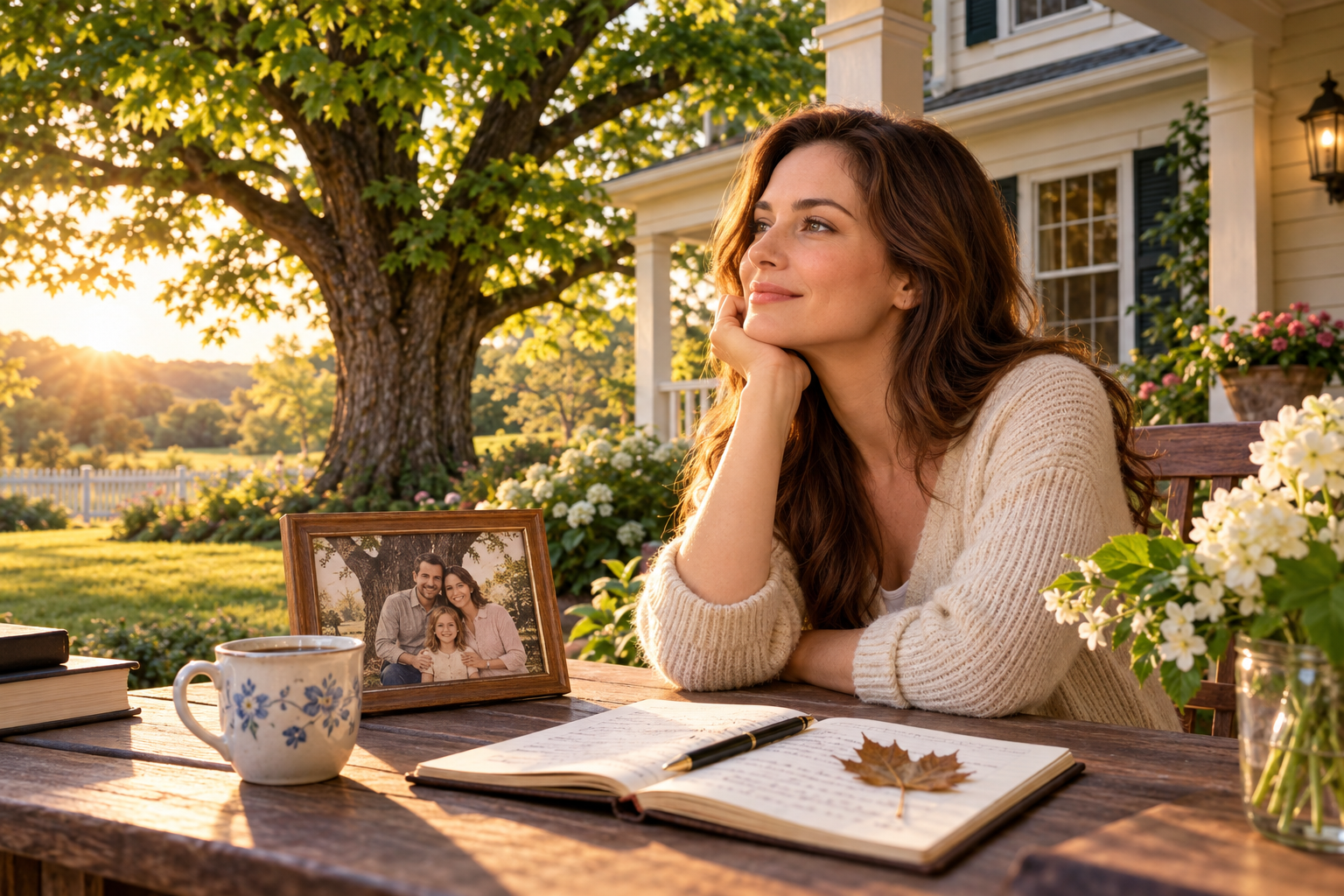
The years after the Hail case did not become empty.
They simply became ordinary.
That distinction mattered more to me than I could explain.
For so long, I had measured time by discoveries. The day I found the letter. The day Samuel showed me the trust. The day I learned Mark had lied. The day my mother returned. The day Edward appeared. The day the final archive was opened.
Every date had carried a revelation.
Now the important dates were different.
The day the foundation opened a new office.
The day a family received the deed to their home.
The day a scholarship recipient graduated.
The day Mom planted flowers along the front walkway.
The day I realized I had gone an entire week without thinking about the Hail name.
That last one happened without warning.
I was standing in the grocery store, comparing two brands of coffee, when I suddenly realized that I hadn't thought about my father in several days.
For a moment, I felt guilty.
Then I laughed at myself.
I put the cheaper coffee in my cart.
That was progress too.
When I returned home, Mom was sitting at the kitchen table with a stack of mail.
“You're late.”
“I was buying coffee.”
“You've been gone an hour.”
“Coffee is complicated.”
She looked at the bag.
“You bought the wrong one.”
I stared at her.
“You said you didn't care.”
“I said I didn't care which one you bought.”
“That sounds like caring.”
She smiled.
“Your father used to make the same mistake.”
I froze for half a second.
Then we both laughed.
It no longer hurt to hear his name unexpectedly.
That was another change.
At first, every memory had been a door.
Now most memories were simply windows.
I could look through them without falling inside.
The foundation's work continued to grow.
The witness program became one of its most important projects.
We began helping people who had spent years afraid to speak.
Some were former employees.
Some were spouses.
Some were adult children who discovered that parents had manipulated family assets.
Others were elderly people whose trusted advisers had quietly transferred property or savings.
The details varied.
The pattern remained.
Someone would say, “I didn't know I was allowed to question them.”
And I would think about my younger self.
I had believed the same thing.
One afternoon, Nora asked me to speak at a workshop.
“I don't want to tell the whole story.”
“You don't have to.”
“What should I say?”
“Tell them what you wish someone had told you.”
That was easier.
So I stood in front of a room of thirty people.
I didn't mention every name.
I didn't describe every crime.
I didn't tell them about hidden rooms or storage units.
Instead, I talked about questions.
Ask what you're signing.
Ask who owns the company.
Ask where the money goes.
Ask why someone needs your signature immediately.
Ask why you aren't allowed to speak with an independent lawyer.
Ask what happens if you say no.
And if someone becomes angry because you asked, ask why.
The room became very quiet.
A woman near the front raised her hand.
“What if it's your family?”
I looked at her.
“Especially then.”
She nodded.
I knew the answer because I had lived it.
Love didn't eliminate the need for boundaries.
Family didn't make contracts harmless.
Trust didn't require surrender.
After the workshop, several people approached me.
One man shook my hand.
“My daughter keeps telling me I'm too trusting.”
“Maybe she's right.”
He laughed.
“She is.”
Another woman said, “I thought asking questions would make me seem ungrateful.”
“Questions don't make you ungrateful.”
She smiled.
“They might make you difficult.”
“Sometimes difficult people stay safe.”
She laughed.
That sentence became something of a joke at the foundation.
Be difficult when necessary.
I liked it.
The scholarship program also expanded.
The first recipient, Daniel Reyes, had graduated by then and returned as a volunteer instructor.
He taught students how to trace corporate ownership.
“You know,” he told me one afternoon, “your father would have hated my class.”
“Why?”
“Because I teach people how to find what companies don't want found.”
I smiled.
“Then he'd probably have respected you.”
Daniel looked at me.
“That's a complicated compliment.”
“My family specializes in those.”
He laughed.
The foundation eventually created a permanent archive.
Not a secret archive.
The opposite.
Documents that had legal or historical value were preserved in a public-access collection.
Researchers could study the old financial structures.
Law students could examine how fraud had operated.
Investigators could understand how shell companies had been used.
But personal information was protected.
Names were removed when necessary.
Survivors were asked for permission.
The archive belonged to history, not to the Hail family.
That was important.
One day, I received a letter from a university professor asking whether the collection could be used in a course.
I agreed.
The professor wrote back that the students had been fascinated by one particular lesson.
They wanted to know why the people inside the network hadn't stopped it sooner.
I knew the answer.
Because systems rarely announce themselves as evil.
They begin with convenience.
Then loyalty.
Then secrecy.
Then one compromise.
Then another.
Eventually, people are so deeply involved that admitting the truth means admitting they helped build the cage.
That was what happened to Mark.
That was what happened to Diane.
That was what happened to others before them.
And it was why prevention mattered.
Not because everyone was secretly dangerous.
Because ordinary people could make terrible decisions one small step at a time.
I began writing those lessons down.
Not as a memoir.
Not yet.
Just notes.
Questions I wished someone had asked me.
Mistakes I wanted other people to recognize.
Things I learned about money.
Things I learned about trust.
Things I learned about fear.
One evening, Mom found the notebook.
“What are you writing?”
“Nothing.”
“That means something.”
I closed it.
“Maybe someday.”
She nodded.
“Your father used to say that.”
I looked at her.
“What?”
“Maybe someday.”
I laughed.
“I'm already starting to sound like him.”
“No.”
She shook her head.
“You're writing things down so other people can question them.”
She tapped the notebook.
“He wrote things down so nobody could.”
I smiled.
That difference was everything.
A few weeks later, I received another photograph from Edward.
This one showed a road disappearing into a forest.
There was no message.
I pinned it to the refrigerator beside his earlier postcard.
Mom looked at it.
“Where is that?”
“I don't know.”
“Do you think he'll ever come back?”
“Maybe.”
“Would you want him to?”
I considered it.
“Yes.”
She smiled.
“But?”
“But I don't need him to.”
Mom nodded.
That was the right answer.
Edward had spent decades surviving by disappearing.
I didn't want his return to become another obligation.
If he wanted to come home, he knew where home was.
If he wanted to remain somewhere beyond the reach of the past, that was his choice.
The same freedom I had claimed for myself belonged to him.
That night, I walked through the house.
The study door was open.
The kitchen light was on.
Mom's shoes were beside the stairs.
The house was imperfect.
There were dishes in the sink.
A stack of mail on the counter.
A broken drawer waiting to be repaired.
It was nothing like the carefully controlled home my father had maintained.
And I loved it.
A home wasn't supposed to be a fortress.
It was supposed to be a place where you could put your keys down and stop being afraid.
I turned off the lights.
The maple tree was visible through the window.
Its branches moved against the dark sky.
I smiled.
For years, I had thought inheritance meant receiving something after someone died.
Now I knew better.
Inheritance was also what you refused to repeat.
What you repaired.
What you taught.
What you released.
What you chose to become.
And perhaps that was the greatest thing I could leave behind.
Not a fortune.
Not a name.
A lesson.