I used to believe that when someone said they were fine, you should believe them.
It was an easy way to live.
It was also how I missed what my daughter was trying to tell me.
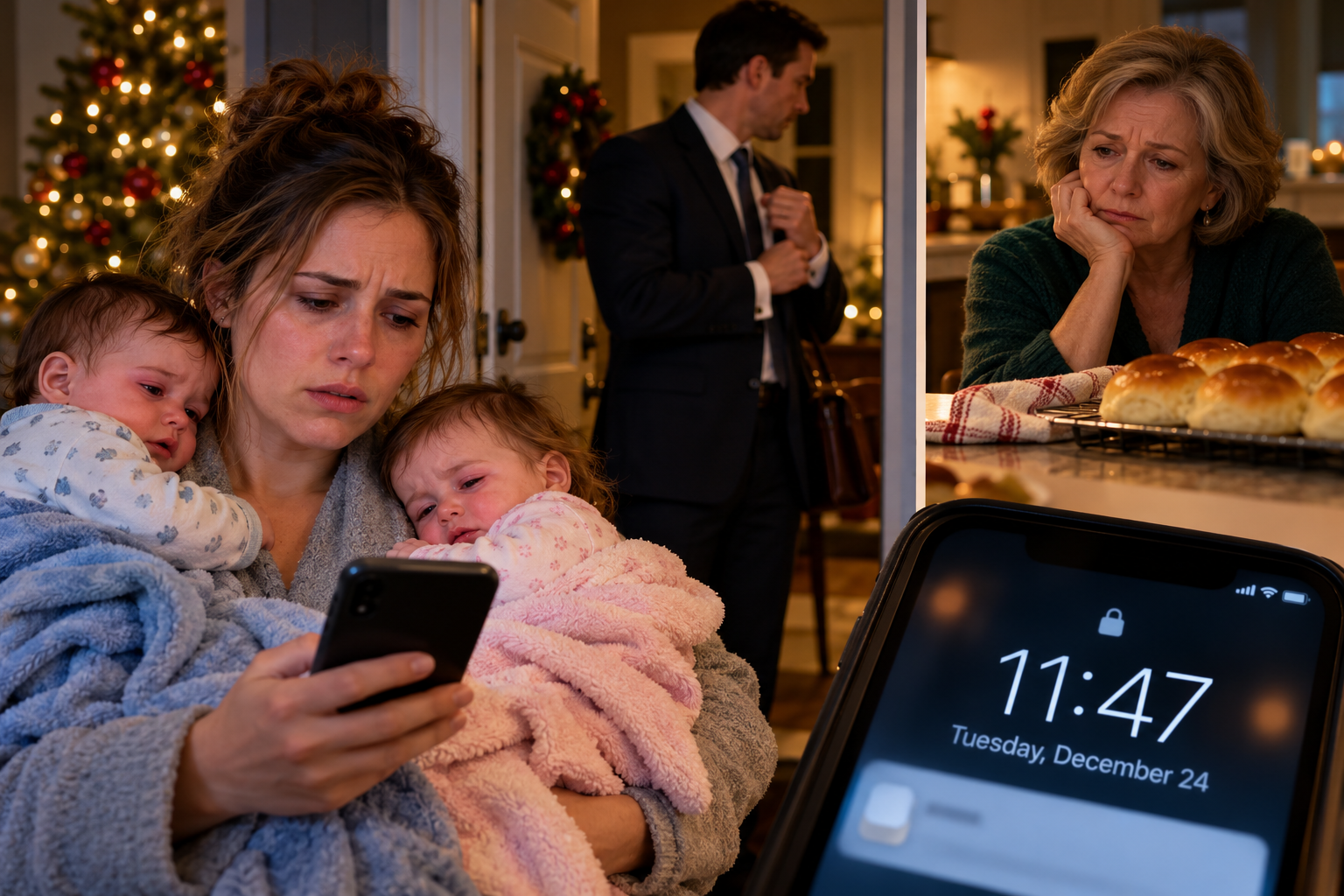
On Christmas Eve, Lauren was alone with two sick babies, and I was sitting at home thinking the evening had gone according to plan.
I didn't know any of that until later.
I lived in a small house outside the county seat, far enough from town that the roads became quiet after dark.
My kitchen was warm.
A tray of dinner rolls sat on the counter, cooling beneath a clean towel.
I'd spent most of the afternoon helping at church, and my feet hurt in that familiar way they did after standing too long.
Nothing about the evening seemed unusual.
Christmas was coming.
The house was ready.
My daughter had her own family to care for, and I assumed she was doing what mothers everywhere did on holidays.
Getting through the evening.
I had no idea how much I had assumed.
Lauren had called me earlier that night.
I didn't answer.
I was helping put things away at church, and my phone was somewhere I couldn't hear it.
By the time I picked it up, there was a message from her.
Never mind. Everything's okay.
I read it once.
Then I read it again, mostly because I felt guilty about missing the call.
But the words themselves sounded reassuring enough.
So I accepted them.
I didn't call her back.
That decision would bother me long after the Christmas decorations had been put away.
At the time, I told myself she would have asked again if she truly needed me.
That was what I wanted to believe.
Lauren had never been the kind of daughter who asked for much.
Even as a child, she tried to solve her own problems before bringing them to me.
If something broke, she would attempt to fix it.
If someone hurt her feelings, she would say it wasn't a big deal.
And if she needed help, she usually apologized before asking.
I had always admired that about her.
I had also benefited from it.
There is a difference between a child being independent and a child learning that asking for help doesn't always get a response.
I didn't understand that difference soon enough.
Lauren's husband, Cole, had a way of making ordinary things sound final.
He didn't need to shout.
He could say something in a calm voice and leave no room for discussion.
When he made a decision, he expected everyone else to adjust.
I had noticed it before.
I told myself that marriage required compromise.
I told myself that people had different personalities.
I told myself a lot of things.
Lauren and Cole had seven-month-old twins, Noah and Lily.
Two babies meant two bottles, two sets of clothes, two little bodies needing attention at the same time.
And that evening, both children were running fevers.
Lauren later explained that she had already contacted their pediatrician.
She wasn't guessing.
She wasn't simply worried because the babies were crying.
She had reason to be concerned, and she wanted Cole to stay home with her.
He had other plans.
A dinner with clients, he told her.
Christmas Eve was a busy time for business, and he apparently considered the dinner important enough that nothing at home should interfere with it.
I learned the details afterward, when Lauren finally told me what had happened.
She remembered the front door.
She remembered standing near it with Noah resting against her shoulder.
She remembered Cole checking his clothes before leaving.
A small movement.
A final adjustment.
As if he were preparing for an ordinary evening while she tried to figure out how to manage two feverish babies alone.
She asked him not to go.
He reminded her that the people he was meeting were clients.
She told him the twins were ill.
He suggested she contact the doctor again.
That was how their conversation went.
No long argument.
No dramatic scene.
Just a mother asking her husband to stay, and a man treating the request as an inconvenience.
Lauren said she watched him reach for the things he needed before leaving.
She was holding Noah.
Lily was crying nearby.
The house was already filled with the sounds of two unhappy babies, and she was trying to decide which one needed her first.
She asked him one more time.
He didn't change his mind.
I wish I could say I had known what was happening.
I wish I could tell you that I had called her back, heard the strain in her voice, and driven straight to her house.
But I didn't.
I was home, thinking about Christmas morning.
I was thinking about whether the rolls would stay soft until breakfast.
I was thinking about small, ordinary things.
Lauren had called me because she needed something.
I would eventually understand that much.
What I couldn't understand yet was why she had decided not to ask again.
She knew I loved her.
She knew I loved those babies.
But love, by itself, doesn't always tell another person whether it is safe to depend on you.
Sometimes you have to show them.
That evening, I hadn't.
The clock moved toward midnight.
Outside, the roads were quiet, and the house had settled into the stillness that comes after a long day.
I put away the last of the kitchen things.
I checked the doors.
Then I went to bed.
I didn't know that Lauren was still awake.
I didn't know that she was moving between two cribs, checking little foreheads and trying to comfort one child while the other cried.
I didn't know that she had been left to make decisions she had hoped not to make alone.
And I certainly didn't know that the time on her phone would become something I would remember.
11:47 p.m.
I would see that number later.
Not that night.
That night, I slept.
Click here to continue reading: PART 2: The Message I Mistook for Reassurance Hid a Night of Exhaustion, Fear, and a Daughter Who Had Stopped Asking Twice
I Thought My Daughter Was Managing Just Fine Until I Learned What Happened While I Was Busy Preparing for Christmas
Part 1 of 20