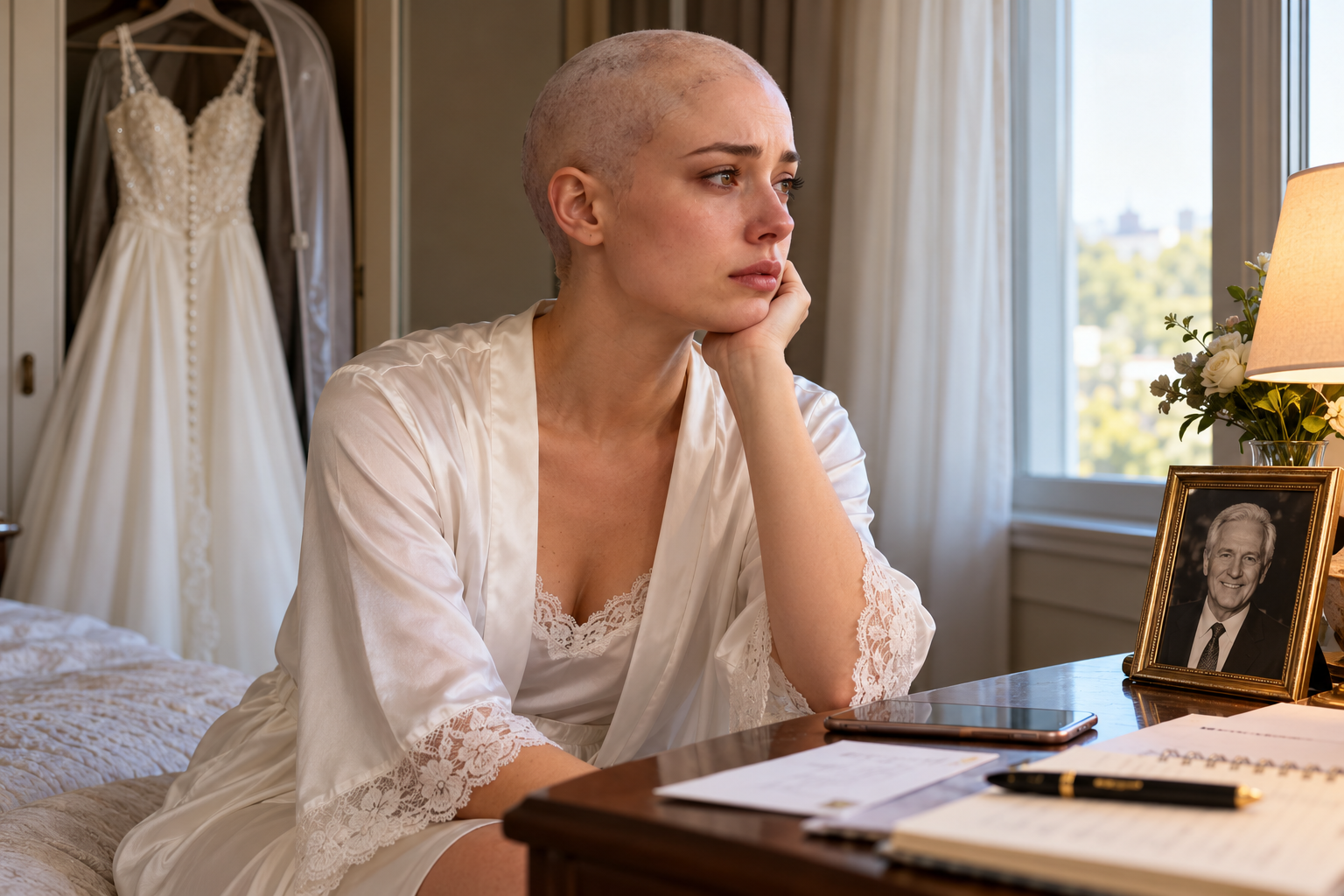
I sat at the small desk beside the window and found a sheet of paper.
It seemed foolish at first. My life was not a problem that could be solved by making a list.
Still, my thoughts had been circling the same questions for hours, and I needed a way to separate them.
At the top of the page, I wrote three words.
What I know.
Underneath, I wrote that I had woken up with my hair shaved unevenly. I had a small cut near my ear. I had not given anyone permission to do this to me.
Those were facts.
Below them, I wrote another heading.
What I don't know.
I stared at the empty space for a moment before continuing.
I did not know who had shaved my head.
I did not know when it had happened.
I did not know whether Carter knew anything about it.
I did not know whether the act had anything to do with my grandfather's money.
The last question made my hand pause.
I remembered the trust, the warnings, and the conversations I had once dismissed as unnecessary caution. I remembered how often I had reassured myself that Carter loved me for who I was.
But I could not turn a suspicion into proof simply because the possibility frightened me.
I underlined the words I don't know.
That distinction mattered.
If I accused Carter without evidence, I would be doing something I might regret. If I ignored what had happened because I feared an argument, I might regret that too.
I set the pen down.
Outside, the morning continued as if nothing had changed. A vehicle passed along the road. Somewhere nearby, someone called to another person, and a door closed.
Ordinary sounds had never seemed so distant.
I thought about the guests who would be preparing to attend the wedding. Some had traveled a long way. Others had helped with arrangements, choosing flowers and confirming details because they believed they were supporting a happy occasion.
I did not want to humiliate anyone.
But I could not make a private decision about my future based on the number of people who might be disappointed.
That was another lesson I had been slow to learn.
I had always been good at making things comfortable for other people. When plans changed, I adjusted. When someone said something hurtful, I searched for a reason they might not have meant it that way.
I called it patience.
Sometimes it was.
Other times, it was fear wearing a more respectable name.
I picked up the pen again.
Under the second heading, I added one more sentence.
I don't know whether the man I love is the man I thought I knew.
I read it twice.
It hurt more than the words about my hair.
I could not decide whether that was because the sentence was true or because I had finally allowed myself to write it.
I folded the paper once and placed it in the desk drawer.
Then I checked my phone.
Still no message from Carter.
I tried to imagine what I would say if he called. I would ask where he had been and whether he knew anything about what had happened to me.
I would listen to his answer.
I would not promise to believe him before he spoke, and I would not decide he was guilty before he had the chance to respond.
That seemed fair.
It also seemed terribly difficult.
I took another look at the wedding gown.
The garment bag had slipped slightly off the hanger. I adjusted it carefully, making sure the fabric did not catch on the hook.
The gesture reminded me of all the small things I had done to prepare for the wedding. I had checked the seating plan, reviewed the schedule, and made sure the arrangements honored the people who mattered to us.
I had wanted every detail to feel thoughtful.
I had never imagined that I would spend the morning wondering whether I should walk away.
My grandfather's photograph caught my eye again.
I remembered how he had listened when I told him about Carter. He had not criticized him. He had asked questions, some of which I had answered impatiently.
Did Carter respect your decisions?
Did he accept no without making you feel guilty?
Did he talk about your future as something you would build together?
At the time, I thought the questions were overly cautious.
Now I could see that they were ordinary questions about an ordinary relationship.
I had been so eager to defend Carter that I had sometimes failed to answer them honestly.
He could be generous.
He could also become distant when I disagreed with him.
He could make me feel special in a room full of people, then dismiss a concern when we were alone.
None of those things proved he had anything to do with my shaved head.
But they were part of the relationship I had been living in, and I could not erase them simply because they were uncomfortable to consider.
I rose and went to the window.
The glass reflected my face faintly. I could see the shape of my head and the uneven line where my hair had been cut.
For a moment, I wanted to cover it.
Then I let my hand fall.
There was no shame in what someone had done to me.
I had not chosen this.
I did not need to make myself smaller to protect the person responsible, whoever that person might be.
I returned to the desk and opened the drawer. I took out the folded paper, smoothed it, and read the two headings again.
What I know.
What I don't know.
The list had not made the decision for me. It had made one thing clear: I could not answer the questions I had not yet asked.
I would need to speak to Carter.
But I would do it because I wanted the truth, not because I needed him to rescue me from the uncertainty.
I folded the paper again and slipped it into the pocket of my robe.
Then I put the phone beside the grandfather's photograph and stepped away from the desk.
The next conversation could wait until I was ready to have it.
I would not let fear dictate its timing.
Click here to continue reading: PART 11: The Dress I Had Chosen
I Thought My Wedding Day Would Be the Beginning of Forever, Until I Saw What Someone Had Done to My Hair
Part 10 of 20