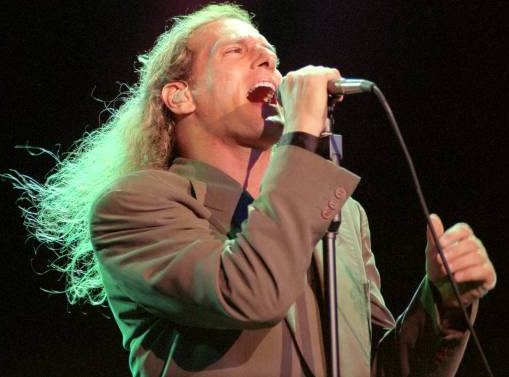
In the quiet, sun-drenched sanctuary of his Connecticut family home, far away from the thunderous roars of eighty-thousand-seat stadiums and flashing red carpets, a gentle grandfather sits in a comfortable armchair.
Outside the tall picture windows, the peaceful autumn leaves drift across green lawns, carrying the whispers of an extraordinary, historic life that has spanned more than seven decades of struggle, triumph, and grace.
For much of his storied adult life, Michael Bolton belonged entirely, breathlessly, and unconditionally to the adoring eyes and hungry hearts of the outside world.
His earth-shaking, sandpaper-and-velvet voice filled the world’s most prestigious concert halls from Tokyo to London, turning his sweeping romantic soul anthems into the sacred soundtrack of modern American romance.
His emotional, soaring ballads became an indispensable part of countless millions of weddings, golden anniversaries, high-school prom dances, and late-night reconciliations between fractured lovers desperately searching for hope.
His unmistakable flowing mane of golden curls, intense blue eyes, and heart-wrenching blue-eyed soul phrasing made him one of the most recognizable, celebrated romantic singers in the entire history of popular music.
His multi-platinum albums like Soul Provider and Time, Love and Tenderness shattered global sales records, selling more than seventy-five million records worldwide and cementing his legendary status.
He swept the music industry’s highest honors, capturing two prestigious Grammy Awards, multiple American Music Awards, and a permanent place in the pantheon of iconic twentieth-century vocal powerhouses.
Yet the dazzling, blinding glare of international pop superstardom has an insidious way of making the public forget that even the greatest cultural titans have another sacred life waiting beyond the stage.
Beneath the commercial machinery, the corporate record label contracts, and the deafening screams of stadium audiences, Michael Bolton was never merely an untouchable pop idol wrapped in glamorous velvet suits.
He is not only a two-time Grammy-winning singer whose vocal cords were insured for millions of dollars by cautious corporate concert promoters.
He is, above all earthly titles, the devoted father of three fiercely loyal adult daughters—Isa, Holly, and Taryn—and the deeply cherished grandfather of six precious grandchildren.
And as he has courageously faced life-threatening, terrifying health challenges in recent years, the stark contrast between his glittering public image and his tender private sanctuary has become especially, breathtakingly moving.
The man who once spent nine grueling months of every single year living out of luxury hotels, private tour jets, and arena dressing rooms now inhabits a radically different, sacred realm.
He is surrounded by a tight-knit family whose pure, unconditional devotion does not depend on a single note he sings, nor on how many gold records hang upon his studio walls.
To tens of millions of weeping, adoring fans across six continents, he will always remain the immortal, magnetic voice behind “When a Man Loves a Woman” and “How Am I Supposed to Live Without You.”
He will forever be remembered as the vocal titan who could drop to his knees on stage, unleash a raw, blues-drenched scream, and move arena crowds to tears of catharsis.
But to six innocent children who run through his living room, climb onto his lap, and tug at his sleeves, he possesses a vastly simpler, infinitely more sacred identity.
To those six grandchildren, he is not Michael Bolton the diamond-certified superstar, the television headliner, or the cultural icon of nineteen-eighties adult contemporary music.
He is simply “Grandpa”—a warm, laughing, gentle protector who makes pancakes on Sunday mornings, reads bedtime fairy tales, and kisses scraped knees without an ounce of celebrity vanity.
And that single, tender, ordinary word says something profound about Michael Bolton’s triumphant life that even his greatest, most poetic love songs could never fully capture or express.
It speaks of a man who looked into the hollow abyss of fame, refused to let it corrupt his soul, and built an impenetrable, eternal fortress of genuine family love.
To truly understand why the sacred title of “Grandpa” means infinitely more to Michael Bolton than any golden Grammy trophy, one must look deep into the bitter crucible of his youth.
That unbending moral spine, that fierce reverence for family protection, and that total refusal to abandon his children were hammered into his marrow through decades of poverty and starvation.
Long before the world knew him as Michael Bolton, the international vocal phenomenon, he was young Michael Bolotin, an impoverished Jewish boy born in nineteen-fifty-three in hardscrabble New Haven, Connecticut.
His father, Jack Bolotin, was a local political organizer and laborer who fought an exhausting, losing battle against economic tides, while his angelic mother Helen held their fragile household together.
Helen was a saintly, tireless matriarch who poured every drop of her spirit into protecting her children, using needles, thread, and endless midnight prayers to shield them from despair and cold.
Yet the dark specter of financial ruin perpetually stalked their doorstep, forcing the struggling family from one drafty, cramped apartment to another as rent increases continually outpaced their meager earnings.
When Michael was barely thirteen years old, the fragile roof over their heads collapsed entirely when his parents divorced, leaving his mother to raise three young children in terrifying, unpredictable poverty.
Young Michael sat in the shadows of the cramped kitchen, watching his exhausted mother count copper pennies beneath a single bare lightbulb while unpaid utility bills piled up in frightening stacks.
The iron radiators hissed with freezing air in the dead of winter, the pantry shelves sat empty, and young Michael lay shivering in bed, tasting the bitter copper of absolute powerlessness.
He watched his beloved mother skip meals day after day so her babies could eat, hiding her weeping eyes behind a trembling smile, never uttering a complaint about her heavy cross.
In those freezing New Haven nights, listening to winter gales rattle the loose window glass, young Michael made a solemn, tearful covenant with Almighty God and his devoted mother.
He swore that he would take his voice—the lone, raw gift granted to him—and use it like an iron hammer to shatter the chains of poverty crushing his family.
He dropped out of high school at fifteen, hitchhiking into the concrete canyons of New York City with a cardboard suitcase, determined to conquer the ruthless music business or die trying.
Yet what followed was not a triumphant overnight fairytale, but nearly two full decades of soul-crushing failure, brutal industry rejection, and humiliating obscurity that would have broken an ordinary spirit.
For eighteen agonizing years, record executives slammed doors in his face, mocking his raw, blues-drenched voice as too gravelly, too intense, and completely unsuited for mainstream commercial American radio stations.
He fronted struggling rock bands, played empty roadside dive bars where chicken wire protected the stage from flying beer bottles, and slept in unheated touring vans on snowy highway shoulders.
By his mid-twenties, Michael was a struggling young father with three baby daughters—Isa, Holly, and Taryn—living in condemned, unheated flats where municipal authorities periodically shut off the winter gas.
He took grueling, backbreaking day jobs on shipping docks, hauling heavy industrial freight until his calloused hands were cracked, bleeding, and raw, just to buy milk, diapers, and baby formula.
There were terrifying winter nights when he had to heat infant food over cans of Sterno in the freezing darkness because there was no money to pay the city gas company.
He walked miles through blinding New England blizzards to pawn shops, reluctantly parting with his beloved acoustic guitars and winter coats just to keep his precious babies from being evicted.
Yet through all those agonizing years of starvation, eviction notices, and despair, those three little girls were the sacred reason he refused to surrender to the darkness.
He would look into their innocent, trusting eyes as they slept bundled under thin blankets, swearing that no matter how hard the industry battered him, he would never give up.
Then, in nineteen-eighty-seven, after nearly two decades of wandering through the valley of the shadow of death, the universe finally rewarded his unbroken resilience with an explosion of glory.
He shortened his surname to Bolton, released his breakthrough ballads, and unleashed one of the most astonishing commercial comebacks in the entire history of modern American popular music and recording arts.
Suddenly, the starving young father from New Haven who once heated baby formula over Sterno cans was selling out Madison Square Garden, touring the planet, and winning Grammy Awards.

He bought his beloved mother Helen the beautiful, warm home he had promised her as a destitute teenager, paid off every family debt, and established multi-million-dollar philanthropic foundations.
Yet through all the private jets, the world tours, and the millions of dollars that flooded his bank accounts, Bolton never allowed celebrity ego to detach him from his daughters.
He did not abandon his children to be raised by nannies while he chased Hollywood parties; he flew home from international tour stops just to attend parent-teacher conferences and soccer games.
He washed dishes, packed school lunches, and remained their steady, humble anchor, teaching them that character, kindness, and humility are worth infinitely more than fleeting fame or superficial glamour.
In nineteen-ninety-three, building upon his deep reverence for family protection, he established The Michael Bolton Charities, dedicating his fortune to providing direct shelter and education to women escaping domestic abuse.
He knew firsthand the terror of an insecure home, and he vowed that no mother or child within his reach would ever face cold darkness alone, terrified, and unprotected from harm.
Decades later, when those three little girls grew into strong, remarkable women and blessed him with six beautiful grandchildren, Bolton felt his life come full circle with holy completion.
His home became a bustling, joyous haven filled with toys, laughter, and children who knew nothing of Billboard charts, caring only that Grandpa was there to hold their hands.
Then, in late twenty-twenty-three, precisely when life seemed most peaceful, a terrifying medical catastrophe struck Michael Bolton with the force of a sudden, brutal lightning bolt.
Doctors delivered a devastating diagnosis just before the holidays: an aggressive brain tumor requiring an immediate, life-threatening emergency craniotomy to save his life.
The world held its breath as the iconic singer was wheeled into the operating room, facing the terrifying risks of paralysis, memory loss, or the permanent destruction of his voice.

Yet as he lay pale beneath hospital bandages, fighting his way through post-operative pain, he was surrounded by an impenetrable wall of love that fame could never buy.
His three daughters sat by his bedside for days, holding his calloused hands, whispering prayers, and reminding him of the little grandchildren waiting for him at home.
When he finally opened his eyes and began humming a melody in that hospital room, it was not the desire for another hit record that pulled him back from death.
It was the fierce, burning desire to see his grandchildren grow up, to hold them in his arms, and to continue being their gentle, loving protector on this earth.
Today, in late 2026, at seventy-three years old, as Michael Bolton looks back across his legendary life, his ultimate victory is absolute, sacred, and completely undisputed across the world.
Platinum records eventually gather dust in forgotten display cases, arena cheers fade into the quiet mist of memory, and pop-culture headlines blow away like dry autumn leaves.
Yet the love of his three daughters and the innocent laughter of his six grandchildren remain an eternal, indestructible monument that time itself can never erode or destroy.
Michael Bolton conquered the freezing winter of childhood poverty, survived the perilous shadow of brain surgery, and proved that being a loving grandfather is the greatest song of all.