Adam knew about the hockey collection.
That was one thing I didn't have to explain.
He knew Walter had spent years gathering those things.
He knew about the auction.
And he knew the sale had brought in money.
What he didn't seem to understand was how difficult it had been for me to let the collection go.
Walter hadn't collected things casually.
He paid attention.
If he found an old program, he wanted to know its history.
If he bought a ticket from a game years before, he wanted to preserve it properly.
If a photograph belonged with other items, he kept them together.
He made labels.
He filled binders.
He arranged shelves.
I had lived alongside those shelves for years.
Sometimes I barely noticed them.
Sometimes I wondered how much more space he could possibly need.
I could remember being amused by how seriously he treated his collection.
But after he died, I understood something I hadn't appreciated enough.
Those things were part of how Walter had spent his life.
Not all of it.
But a meaningful part.
He had searched flea markets.
He had visited estate sales.
He had brought things home and carefully organized them.
He had built something slowly.
One item at a time.
There was no quick way to measure what thirty years of attention meant.
An auction company could put prices on the objects.
It couldn't put a price on the hours Walter had spent with them.
I knew the difference.
That was why sorting through his belongings had taken so long.
I wasn't simply clearing shelves.
I was making decisions about pieces of a life I had shared.
At first, even looking through some of his possessions was difficult.
I could recognize his habits everywhere.
The careful organization.
The familiar handwriting.
The way he had kept related items together.
He had left things in the order that made sense to him.
And I had been the one left to decide what happened next.
I took my time.
Two years.
I kept the things I wanted to preserve.
I sold what I believed I could part with.
The collection was especially difficult.
Once it went to auction, I knew it wouldn't remain together.
The company cataloged it.
They prepared the items for sale.
Then they sold them separately.
Months passed.
I let the process continue.
I didn't pretend it was easy.
But I had made the decision.
When the final payment came, I looked at the amount.
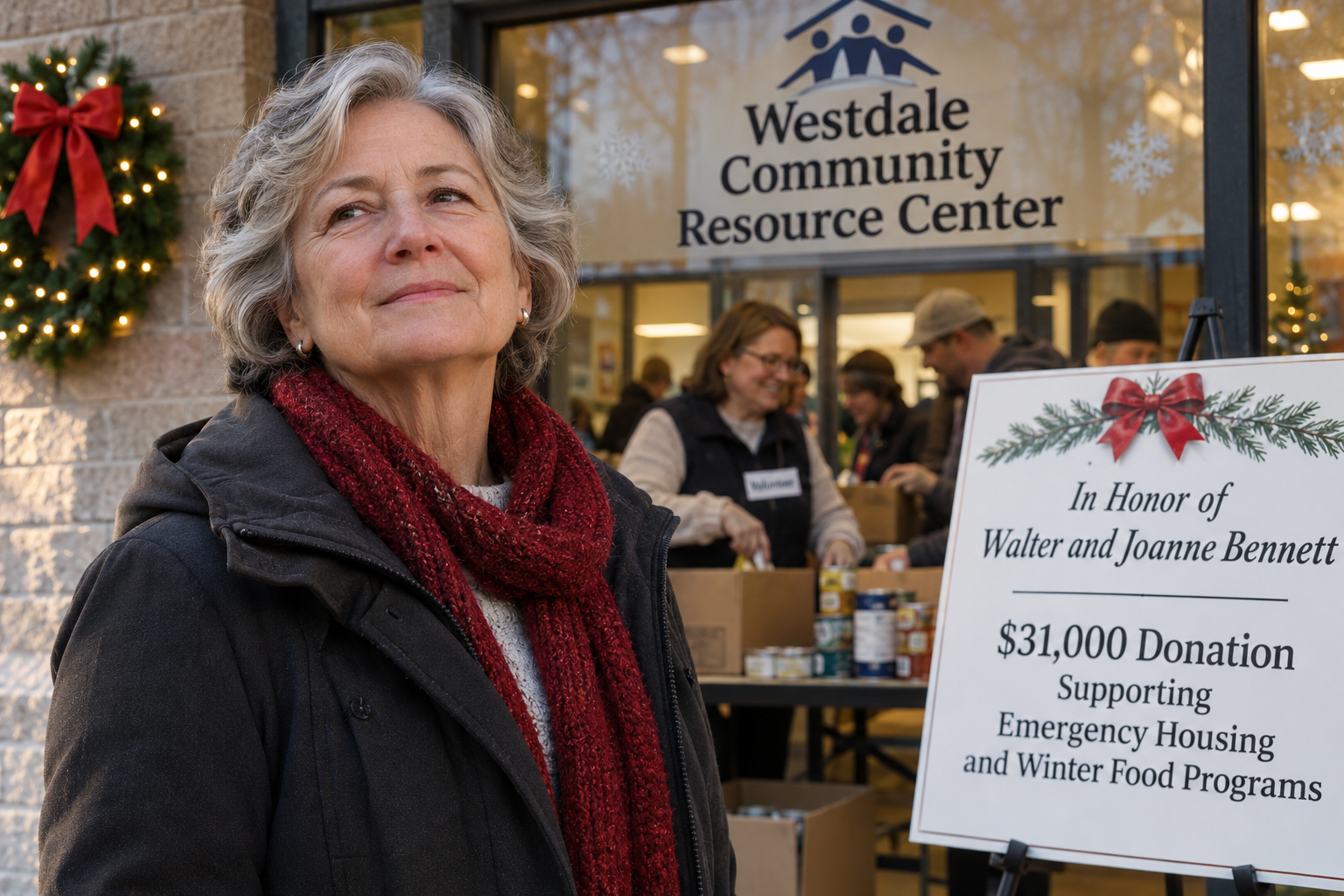
Thirty-one thousand dollars.
That was what remained after expenses.
It was more than a number to me.
I thought of Walter.
I thought of all those years.
I thought of the shelves that had once held his binders.
And I left the money alone.
Six weeks passed.
I didn't use it to buy anything.
I didn't divide it into smaller amounts.
I didn't spend it on a holiday.
I let it remain untouched while I considered what it should mean.
There were many things I could have done with it.
I knew that.
It wasn't money I needed for ordinary living expenses.
My house was paid for.
My retirement income covered what I required.
I had savings for emergencies.
I was careful with money.
Walter had known that about me.
I didn't make large decisions without thinking.
And I hadn't made this one without thought.
Months before Christmas, I'd told Clare I might make a donation from the proceeds.
I had said I wanted to honor Walter.
She knew that.
The idea wasn't new.
Only the amount remained undecided.
I thought I might give some of the money.
I hadn't settled on how much.
I wanted to understand what the center needed.
I wanted the donation to be useful.
And I wanted Walter's name connected to something real.
That was what mattered.
Adam knew about the sale.
I had mentioned the proceeds to him.
It hadn't been a secret.
He and Renee had been looking for a house.
Nearly a year.
They wanted to buy one.
I knew that, too.
When I told Adam how much the auction had produced, he immediately saw another possible use for it.
A down payment.
He said the money would go a reasonable distance toward buying a house.
I agreed that it could.
Because it was true.
Thirty-one thousand dollars could help someone purchase a home.
I didn't need to argue with that.
But agreeing that money could be useful wasn't the same as promising to give it away.
That distinction had seemed clear to me.
Apparently, it hadn't been clear enough.
Looking back, I should have said more.
I should have explained what I was considering.
I should have told Adam that the collection's proceeds weren't being held for a particular purpose involving him and Renee.
I hadn't made a promise.
But I also hadn't made my intentions completely plain.
We simply moved on.
There was no second conversation.
No agreement.
No decision to help with a house.
Just one remark about a possible down payment.
And my acknowledgment that the money could serve that purpose.
It was a small exchange.
I hadn't thought much about it afterward.
Not until Adam arrived at my house demanding to know whether I'd given away everything.
Then I remembered.
The down payment.
His response when I mentioned the auction.
The fact that he knew the exact amount.
I couldn't say what he was thinking.
He hadn't told me.
But I knew what he had once suggested.
And I knew I had never promised him the money.
I thought about that distinction as I stood inside my house.
Adam was my son.
I wanted him and Renee to have a good life.
I wanted Lily and Noah to be comfortable.
I wanted them to find the home they were looking for.
Those feelings were real.
But so was my right to make decisions about money that belonged to me.
I didn't believe being a mother meant every dollar I owned was already assigned to someone else.
I hadn't stopped loving my family.
I hadn't decided their needs didn't matter.
I had simply made a choice about a particular sum.
A sum that had come from Walter's collection.
A sum I had considered donating long before the argument over Christmas.
A sum that could help people I didn't know.
I kept returning to that last thought.
People I didn't know.
Walter had helped strangers for years.
He didn't need them to be relatives.
He didn't need their gratitude.
He didn't need them to remember his name.
If someone needed food, he helped move groceries.
If an older person needed to reach a medical appointment, he drove.
If something at the center was broken and he could repair it, he worked on it.
That was the man I'd been married to.
And I wanted the proceeds from his collection to reflect something of that life.
Not because Adam was unimportant.
Not because I was trying to punish anyone.
But because Walter's years at the center mattered.
They mattered to me.
And I believed they deserved to be remembered.
The day before Adam arrived, I sat in Clare's office and thought about all of this.
The money.
The collection.
My house.
My retirement.
The families the center served.
I had to consider whether giving away the full amount would leave me financially secure.
It would.
I knew my circumstances.
I had no mortgage.
My regular expenses were covered.
I had other savings.
The donation wouldn't put my own housing or retirement at risk.
That mattered.
I wouldn't have made the decision otherwise.
I wasn't trying to prove a point by making myself vulnerable.
I was trying to use money I didn't need for something meaningful.
I wanted Clare to explain what the center needed.
I wanted to understand how the money could help.
And I wanted to make the decision while I was able to do so clearly.
I hadn't expected Adam to approve.
I hadn't even told him first.
That was another thing I had to admit.
Perhaps I should have told him before he saw the announcement.
Perhaps hearing it from me would have been easier.
But telling him in advance wouldn't have changed who owned the money.
And it wouldn't have changed what I wanted to do.
Standing in the hallway, I looked at my son.
I could still see the damp marks his boots had left behind.
I didn't want our conversation to become another argument about what I owed him.
I wanted him to understand what I'd chosen.
Thirty years of Walter's collecting had become thirty-one thousand dollars.
And I had decided that those years would be remembered through the work he had loved.
Click here to continue reading: PART 7: Before I Signed the Check, I Asked Clare One Question About the Families Still Waiting for Help at Christmas
My Son Arrived at My Front Door With His Phone in His Hand, and I Knew He Had Finally Seen What I Had Done
Part 6 of 10