The first thing I learned after that Friday was that telling the truth did not make life easier.
It simply made it harder for everyone else to keep lying.
For nearly two weeks, my mother did not contact me.
Michaela sent three messages.
I did not answer any of them.
The first said she missed me.
The second said she was frightened about what might happen to her family.
The third asked whether I could remember that we had once been close.
I sat at the kitchen table and read that last message several times.
Of course I remembered.
That was the problem.
I remembered her sleeping on my floor when I was studying for my pharmacy exams.
I remembered giving a toast at her wedding.
I remembered the money I had contributed toward her fertility treatments.
I remembered believing she would never deliberately put me in danger.
And I remembered the blue ceramic plate.
The pear tart.
The powdered sugar.
The little paper flag.
I remembered my fork resting against the pastry when Fred's warning appeared on my phone.
Those memories belonged to the same sister.
I could not separate them simply because one version was easier to love.
Fred found me reading her message.
He placed a cup of coffee beside my laptop.
"Are you going to answer?"
I shook my head.
"Not yet."
He sat across from me.
"You don't have to."
I knew that.
But learning that I had a choice was different from feeling comfortable making it.
For thirty-four years, I had treated my mother's unhappiness as something I was responsible for fixing.
Michaela had learned to expect the same thing.
I was trying to stop.
Some mornings, it felt simple.
Other mornings, I reached for my phone before remembering why I was no longer calling them.
The legal proceedings continued without the dramatic moments I had once imagined.
Laura Bennett sent updates.
Gregory Ashby continued gathering records.
The trust's financial administrator provided additional statements.
And the investigator handling the baby shower incident asked for more information.
Every development seemed to produce another document.
Another signature.
Another date that needed checking.
I made folders on my computer.
I labeled them carefully.
Estate records.
Laboratory evidence.
Messages.
Financial documents.
Correspondence.
I had spent years organizing medication records and reviewing details that could affect patient safety.
Now I was using those same habits to examine what had happened inside my own family.
It was a strange way to live.
But it gave me something to do when the fear became difficult to manage.
One Tuesday afternoon, Laura called.
Her voice sounded more serious than usual.
"Christy, we received the preliminary handwriting examination."
I closed the document I had been reading.
"Okay."
"The examiner found significant differences between your verified signatures and the signatures on the disputed authorizations."
I held my breath.
Laura continued.
"The findings support your position that those signatures were not written by you."
I closed my eyes.
I had known they were wrong.
I had known from the first moment Gregory placed the documents in front of me.
But hearing an independent examiner confirm it felt different.
It meant the evidence did not depend on whether my mother could make me doubt myself.
I asked whether the report identified who had signed my name.
"Not conclusively," Laura said.
She explained that identifying the writer would require further comparison and investigation.
I appreciated that she was careful.
I did not want her to promise something the evidence could not establish.
Still, the report mattered.
It changed the way the disputed documents could be treated.
Laura told me the findings would be added to the estate proceedings.
She also explained that the financial review had uncovered more troubling information.
Several invoices submitted through Whitcomb Family Holdings described maintenance work that could not be independently verified.
Some listed services at Grandma Eleanor's cottage.
Others referred to the second property held in the trust.
The payments had not all gone directly to my mother or sister.
Some had passed through business accounts.
Others had been transferred between accounts associated with the company.
Laura warned me that questionable records did not automatically prove every payment was improper.
But the investigators had identified enough inconsistencies to require a detailed accounting.
I looked toward the window.
For a moment, I could picture Grandma's roses.
I wondered whether she had ever imagined someone would use the maintenance of her garden and property to justify questionable payments.
I asked Laura what would happen if the transactions proved unauthorized.
She explained that recovery claims could be pursued.
The people responsible might be required to return money.
Other consequences would depend on the evidence and the decisions of the relevant authorities.
I listened.
Then I asked the question that made me feel ashamed.
"Would my mother lose everything?"
Laura paused.
"Christy, I can't predict that."
I stared down at my hands.
"I know."
She waited.
I finally told her what was bothering me.
I did not want my mother to suffer.
I wanted her to stop hurting me.
Those were not the same thing.
Laura's answer was quiet.
"Protecting your rights doesn't require you to decide what consequences other people deserve."
I wrote those words on a piece of paper after we hung up.
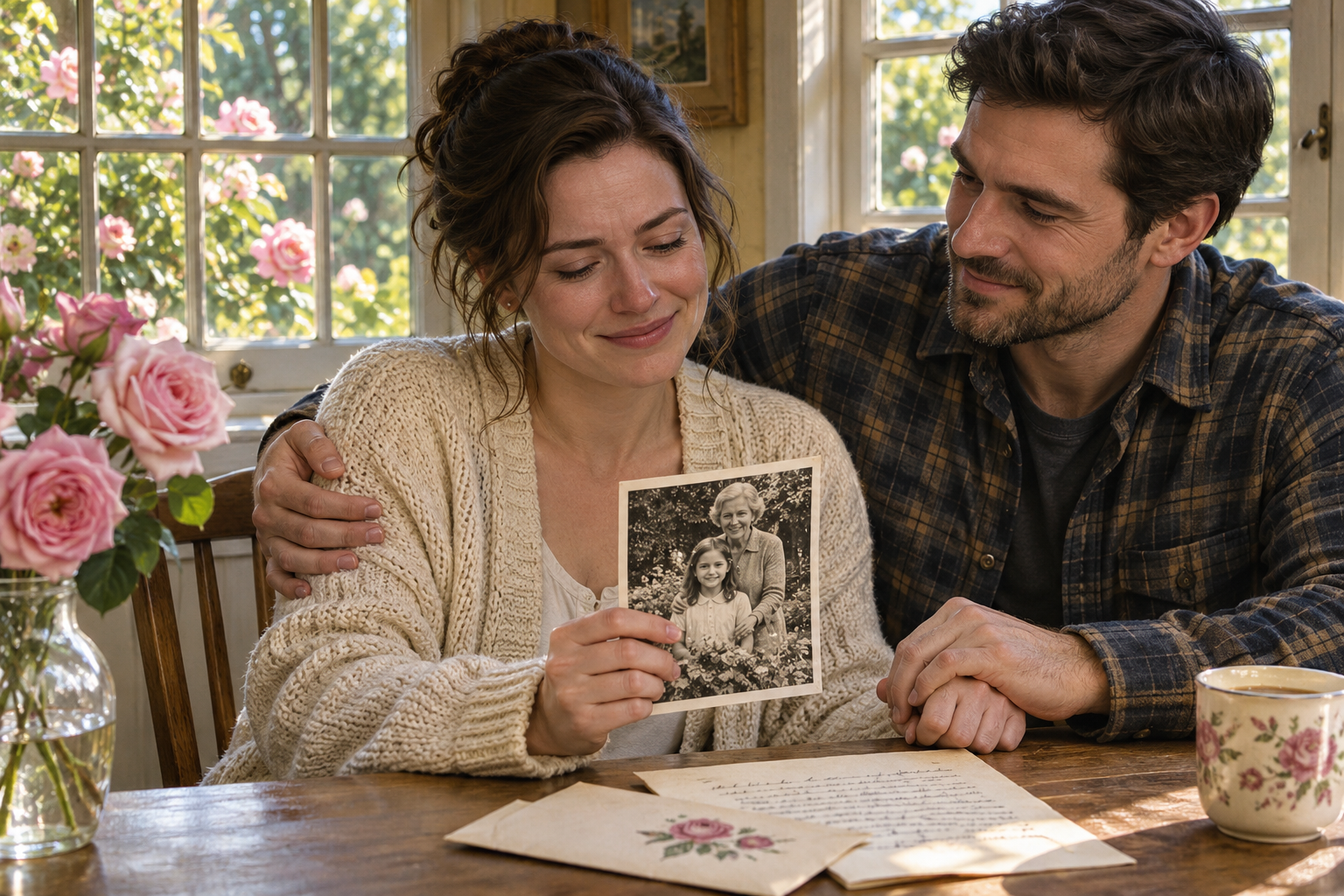
I kept the paper beside Grandma's letter.
A few days later, I met with the investigator.
Fred came with me.
We brought the documents requested.
The photographs of the bakery packaging.
The screenshots from Michaela's iPad.
The messages sent after the shower.
The laboratory report.
And the records showing that I had obtained replacement injectors immediately afterward.
The investigator had also requested additional information from the bakery.
According to the records discussed at our meeting, the special dessert had been ordered separately.
The bakery's paperwork reflected a walnut-containing tart.
There was no documented nut-free instruction for that particular item.
I sat with my hands folded in my lap.
I remembered Michaela standing beside me.
I remembered her telling everyone she had checked the ingredients three times.
I had believed her.
Not because I had seen the order.
Because she was my sister.
The investigator asked me to describe exactly what Michaela had said.
I repeated what I remembered.
Then she asked about my missing auto-injectors.
I explained where I normally kept them.
I described opening the interior pocket of my purse.
I explained that both had been gone.
She asked whether anyone else knew where I kept them.
I nodded.
My mother.
Michaela.
Fred.
Several people close to me.
But the messages on the iPad specifically mentioned Michaela's diaper bag.
That was the evidence I wanted the investigator to examine.
I did not claim I had seen my sister remove the injectors.
I hadn't.
I only knew what the message said.
The investigator made that distinction clear in her notes.
I was grateful.
I wanted the evidence to be accurate.
Not exaggerated.
Not softened.
Accurate.
Near the end of the meeting, she told us Terrence had agreed to provide a statement.
I looked up.
"He did?"
"Yes."
I thought about his pale face at the baby shower.
Fred had shown him something on the family iPad.
Terrence had looked horrified.
At the time, I had been too frightened to think about what that meant for his marriage.
Now I realized he had been living with the consequences too.
I asked whether he had confirmed the messages came from Michaela's account.
The investigator said she could not share every detail of another witness's statement.
I understood.
Still, knowing he was cooperating brought a strange feeling of relief.
Someone else was willing to describe what had happened.
I was not carrying the whole truth alone.
That evening, Terrence sent me a message.
He asked whether we could speak.
I showed Fred.
He nodded.
We called him together.
Terrence sounded exhausted.
He told us he had moved into the guest room.
Michaela had been angry with him for speaking to investigators.
He said she kept insisting that he was choosing my side over hers.
I listened.
Then he said something I had not expected.
"I told her there shouldn't be sides when someone could have died."
I covered my mouth.
Fred looked away.
Terrence continued.
He said he had spent days reviewing the events of the shower in his mind.
The blue plate.
The dessert.
The speaker.
The iPad.
My sudden departure.
He had originally believed Michaela when she described the situation as an argument between sisters.
But after seeing the messages and learning more about my allergy, he could not accept that explanation.
He apologized for not recognizing the danger sooner.
I told him he had not known what I knew.
He was quiet.
Then he said he had found records relating to Whitcomb Family Holdings among the household paperwork.
He had turned copies over to his attorney after learning the company was being examined.
I asked what they showed.
He said he was leaving that determination to the lawyers and investigators.
I respected that.
Before ending the call, he asked whether I had heard from Michaela.
I told him about the messages.
He sighed.
"She keeps asking everyone to remember who she used to be."
I looked at Fred.
"That's what I've been doing."
After we hung up, I sat beside my husband for a long time.
I thought about the sister who had made me laugh during pharmacy school.
I thought about the woman who had placed a walnut tart in front of me.
I could not understand how both versions existed in one person.
But I was finally accepting that my inability to understand her did not change what she had done.
Three days later, my mother contacted Laura's office.
She wanted to arrange a private meeting.
Laura called me before agreeing to anything.
I asked what my mother wanted to discuss.
"She says she would like to resolve the family dispute."
I nearly laughed.
The family dispute.
That was what she called it.
Not the disputed signatures.
Not the money.
Not the months of intercepted correspondence.
Not the baby shower.
A family dispute.
I told Laura I would consider meeting only if the conversation occurred with counsel present.
She agreed.
We scheduled it for the following week.
I spent the weekend wondering whether I had made a mistake.
Fred did not tell me what to do.
He asked what I hoped to accomplish.
I thought about that.
At first, I wanted an apology.
Then I realized an apology would not tell me why she had hidden Grandma's trust for eight years.
It would not explain the documents bearing my name.
It would not tell me why Michaela had tried to keep me away from Gregory's office.
I wanted answers.
And I wanted to hear whether my mother could give them without blaming me.
The meeting took place in a conference room at Laura's office.
My mother arrived with an attorney.
She looked older than she had at the estate review.
I noticed that immediately.
Her hair was neatly arranged.
Her clothes were pressed.
But she seemed smaller.
I hated that I felt sorry for her.
Then I reminded myself that sympathy did not require surrender.
We sat across from one another.
The lawyers explained the purpose of the meeting.
No one was there to negotiate the baby shower investigation.
That matter would continue separately.
The conversation concerned the estate, disputed authorizations, and financial records.
My mother kept her hands folded on the table.
For several minutes, she barely looked at me.
Then she spoke.
"I never thought things would become this serious."
I waited.
She looked toward her attorney.
He nodded slightly.
She continued.
"Your grandmother didn't trust me."
I felt my chest tighten.
"Why?"
Mom looked at me.
"She thought I treated you differently from Michaela."
I said nothing.
She gave a tired sigh.
"She believed you needed protecting."
I thought about Grandma's letter.
The roses.
The cookie tins.
I asked whether Grandma had told her that.
"Yes."
"When?"
She hesitated.
"Before she died."
I kept my voice steady.
"And you knew about the trust?"
She nodded.
"Yes."
"Did you know I was supposed to receive notice?"
Another pause.
"Yes."
I felt Fred shift beside me.
I looked down at the table.
There it was.
The answer I had spent weeks trying to obtain.
She had known.
She had known I was supposed to hear from the estate.
She had known Grandma intended to provide for me.
And she had allowed years to pass without telling me.
I asked why.
My mother rubbed her forehead.
She said she had believed the money would divide the family.
She said Michaela had struggled financially.
She said it seemed unfair that one daughter would receive so much.
I stared at her.
"Grandma's property wasn't yours to divide."
Her face tightened.
"I was trying to look after both of you."
I shook my head.
"You were making decisions about something that belonged to me."
She looked away.
Then she said something I would remember for a long time.
"I thought you would understand eventually."
I sat back.
Understand.
I had heard that word my entire life.
Understand why Michaela needed more help.
Understand why Mom was upset.
Understand why I should apologize.
Understand why it was easier not to argue.
I looked at my mother.
"I understand more than you think."
She began crying.
For a moment, I felt the old instinct.
Get up.
Move around the table.
Comfort her.
Tell her everything would be all right.
I kept my hands in my lap.
Laura asked about the disputed authorizations.
My mother's attorney answered first.
He said the handwriting findings were preliminary and that no final determination of responsibility had been made.
Laura acknowledged that.
Then she asked whether my mother had personally witnessed me sign any of the documents.
My mother said she had not.
I looked directly at her.
"Then why did you tell people I'd agreed?"
She swallowed.
"I thought it was what you would have wanted."
I could not speak for several seconds.
She had been making decisions about my life for so long that she apparently believed she could decide what I would have wanted without asking me.
I thought about the altered wedding catering order.
The missing injector when I was a teenager.
Every time I had been told not to make trouble.
I looked at her.
"You never asked."
She started to respond.
I shook my head.
"You didn't ask me."
That was all I could say.
My mother's attorney eventually proposed discussing a financial resolution after the accounting was completed.
Laura said we would review any formal proposal through the proper process.
No agreement was reached that day.
Before we left, my mother asked whether we could speak alone.
I looked at Laura.
Then I looked at Fred.
I knew what my mother wanted.
A conversation without witnesses.
Without records.
Without someone reminding me that I had a right to say no.
I told her I was not ready for that.
She looked hurt.
But she did not argue.
As we stood, she spoke quietly.
"Christy, I do love you."
I believed she believed that.
Maybe that was the saddest part.
I looked at her.
"Then you should have protected me."
She lowered her eyes.
I walked out with Fred.
That evening, Gregory called with news about Grandma's cottage.
The property inspection had been completed.
Despite some neglected maintenance, the structure was sound.
The garden needed attention.
Several rosebushes were overgrown.
But they were still alive.
I closed my eyes.
For reasons I could not explain, that mattered more to me than the financial statements.
Grandma's roses were still there.
After everything.
I asked Gregory whether I could visit the cottage.
He said access could be arranged through the trustee while the proceedings continued.
I thanked him.
Then I sat at the kitchen table and opened Grandma's letter again.
I read the last page.
She had wanted me to build a life in which I could make decisions without fear of disappointing someone.
I had spent so many years trying to keep my family happy that I hardly knew what that kind of life would look like.
But for the first time, I wanted to find out.
The next morning, I called Laura.
I told her I wanted every questionable transaction examined.
I wanted the trust properly administered.
I wanted any money shown to have been improperly taken returned.
And I wanted the investigation into the baby shower to continue without interference.
I also told her I did not want unnecessary public accusations.
I wanted facts established through the appropriate process.
Laura listened.
Then she asked whether I was certain.
I looked at Grandma's envelope beside my coffee.
"Yes."
I finally understood something I had resisted for years.
I did not have to choose between loving my family and protecting myself.
I could remember the good years.
I could mourn what had happened.
And I could still refuse to let them hurt me again.
Click here to continue reading: PART 10: When the Final Decisions Came, I Learned What My Grandmother Had Really Given Me and What It Would Cost to Keep It
The Lawyer Who Had Been Looking for Me Since August Knew Something About My Family That I Had Never Been Told
Part 9 of 10