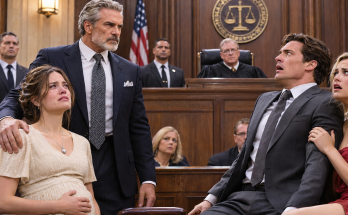
It took nearly a year for the legal matters to reach their conclusions.
There were appointments I dreaded.
Documents I didn't understand until Gregory explained them.
Mornings when I wanted to turn off my phone and pretend none of it was happening.
But life continued between those difficult days.
I went to work.
Fred and I bought groceries.
Kelly occasionally came over for dinner.
We discussed ordinary things again.
I began discovering that surviving something terrible didn't mean every remaining moment had to belong to it.
The cottage helped me understand that.
Once the necessary arrangements were completed, Gregory formally handed me the keys.
I remember the green plastic covering on Grandma's front-door key.
I held it in my palm while he explained the final property documents.
The cottage was securely mine.
There were no remaining claims from my mother or sister against my ownership of it.
I thanked Gregory.
He smiled.
“Your grandmother would be pleased.”
I hoped so.
Fred and I began working on the house the following weekend.
We opened the windows.
We removed the dusty furniture coverings.
We washed the curtains.
We made a list of things that needed repairing.
The porch railing was near the top.
So was the garden.
I put on the gloves Fred had given me for my birthday.
They were still clean.
That didn't last long.
I spent the afternoon pulling weeds from around Grandma's roses.
Fred repaired several loose boards on the porch.
Every so often, he brought me water and reminded me to rest.
By evening, my back hurt.
My knees were dirty.
My gloves were stained.
I was happier than I had been in months.
We sat on the front steps and watched the sunlight move across the garden.
“This is going to take a while,” Fred said.
I nodded.
“That's okay.”
For once, I wasn't in a hurry.
There was no deadline hanging over my head.
No Friday I needed to reach.
No person I needed to avoid disappointing.
I could take my time.
The financial investigation eventually established that most of the questionable expenditures had not been authorized under Grandma's trust.
My mother's explanations did not withstand examination of the records.
Some money was recovered through the legal proceedings.
Other amounts remained subject to repayment obligations.
The process wasn't perfect.
Not every dollar could be returned immediately.
Gregory had prepared me for that possibility.
At first, I struggled with it.
I wanted everything restored exactly as Grandma had intended.
But I eventually accepted that no court document could undo eight years of dishonesty.
Recovering what could reasonably be recovered was enough.
Protecting what remained was necessary.
The investment accounts were placed under arrangements that reflected my rights and decisions.
For the first time, I received statements directly.
I opened every one.
Not because I had become obsessed with money.
Because I understood the importance of knowing what was happening in my own life.
I continued working as a clinical pharmacist.
I loved my profession.
Having an inheritance didn't change that.
It did change the way I thought about my future.
Fred and I could make decisions without constantly worrying about unexpected expenses.
We could save more comfortably.
We could maintain the cottage.
We could help people when we genuinely wanted to, instead of because someone had made us feel guilty.
That difference mattered.
Meanwhile, the criminal case proceeded.
The laboratory report confirmed the presence of walnuts.
The electronic evidence supported the conversation Fred had discovered.
Additional records and statements established that the incident had not been an innocent misunderstanding about food.
Michaela eventually admitted her involvement through a negotiated legal resolution.
My mother also accepted responsibility for offenses arising from her participation and her handling of the trust.
Both received criminal sentences and conditions imposed by the court.
They faced consequences that could not be erased by a family apology.
I attended the proceedings I was required to attend.
Fred was always nearby when permitted.
Kelly checked on me afterward.
There were days when hearing my sister's name spoken in a courtroom felt unbearable.
I kept remembering her wedding.
I remembered standing beside her and giving a speech about how much I loved her.
I remembered the photographs.
Her white dress.
Her smiling face.
My mother crying proudly.
Those memories belonged to the same people sitting in that courtroom.
I couldn't separate them.
I eventually stopped trying.
People weren't made entirely of their best moments.
They weren't made entirely of their worst ones either.
But their decisions still mattered.
Michaela had given birth before the criminal proceedings were completed.
Terrence sent me a photograph after the baby arrived.
A little girl.
She had pink cheeks and one tiny hand curled beneath her chin.
I looked at the picture for a long time.
Then I cried.
I had waited years to become an aunt.
I had imagined holding that baby while Michaela complained that I was spoiling her.
I had imagined buying birthday presents and teaching her things.
None of those hopes had included court proceedings or conversations with investigators.
Terrence told me the baby was healthy.
He was arranging her care in accordance with the legal and family circumstances.
His marriage to Michaela had broken down.
He was working through the separation and making decisions concerning their daughter.
I told him I was glad the baby was safe.
He thanked me.
Later, with his agreement, I sent a small package containing several children's books.
I included no message for Michaela.
I didn't want the gift to become another complicated family negotiation.
It was for the baby.
Only the baby.
Inside one book, I wrote that I hoped she would grow up surrounded by people who made her feel safe.
That was all.
I hoped someday she would understand how sincerely I meant it.
A few months after the cottage became mine, a letter arrived from Michaela.
I recognized her handwriting immediately.
I left it unopened on the kitchen counter for two days.
Fred didn't ask me to read it.
He didn't suggest throwing it away.
He let me make the decision.
Eventually, I sat down alone and opened it.
Michaela wrote that she was sorry.
She said she had been overwhelmed by financial worries.
She described the pressure she felt from our mother.
She said she had convinced herself that the situation wouldn't become as serious as it had.
I stopped reading there.
I needed a few minutes.
Then I continued.
For the first time, she acknowledged that she had known about the walnuts.
She acknowledged that she had interfered with my access to medication.
She admitted that her knowledge of the trust had influenced her decisions.
She wrote that she wished she could take everything back.
I believed she probably did.
But wishing something hadn't happened wasn't the same as understanding why it was wrong.
I read the letter again.
Then I put it back in its envelope.
I didn't write a response that day.
Or the next.
Eventually, I sent a brief message through the appropriate channel.
I told her I had received her apology.
I hoped she would take responsibility for her choices and become someone her daughter could trust.
I also told her I wasn't ready to have a relationship with her.
I didn't know whether I ever would be.
Writing those words hurt.
But leaving them unwritten would have hurt me more.
My mother sent letters too.
Some contained apologies.
Others contained explanations.
One accused Gregory of turning me against my family.
Another reminded me that she had raised me without much help.
I read them until I realized I was falling back into an old habit.
Searching her words for evidence that I had misunderstood her.
Looking for a reason to feel responsible.
I stopped reading every letter immediately.
I allowed myself to decide when, and whether, I wanted to open them.
There was one conversation with my mother after the proceedings had concluded.
It happened under circumstances where I felt comfortable and protected.
She looked older than I remembered.
Her shoulders seemed smaller.
Seeing her like that was difficult.
She was still the woman who had raised me.
Still the person whose approval I had wanted for so many years.
She asked whether I hated her.
“No.”
She looked surprised.
“Then why won't you forgive me?”
I considered my answer carefully.
“Forgiving you wouldn't mean I had to trust you again.”
She looked down.
I told her that what happened at the shower had changed my understanding of our relationship.
The missing money mattered.
The deception mattered.
But the danger she and Michaela had placed me in mattered more than either.
She began crying.
“I made mistakes.”
I shook my head.
“You made decisions, Mom.”
She didn't answer.
I hadn't raised my voice.
I wasn't trying to humiliate her.
I simply needed to stop pretending that everything painful had happened by accident.
The cookie tins.
The camping trip.
The wedding menu.
I still couldn't prove who had been responsible for every earlier incident.
I accepted that uncertainty.
But I had enough evidence about the baby shower to know what boundaries I needed.
I told her that I hoped she would use whatever opportunities she had to change.
I wished her no additional suffering.
Then I said goodbye.
Walking away was one of the hardest things I had ever done.
I cried in the car afterward.
Fred sat beside me.
He didn't tell me I should feel proud.
He didn't tell me my mother deserved what had happened.
He simply held my hand.
That was enough.
As spring arrived, Grandma's garden began changing.
Several of the rosebushes responded well to the attention.
Fresh leaves appeared.
Then came the buds.
I photographed the first bloom and sent the picture to Kelly.
She replied that Grandma would have loved it.
I stood beside the bush smiling at my phone.
The flower wasn't particularly large.
One petal had been damaged by an insect.
It was beautiful anyway.
Fred and I eventually repaired the cottage's porch.
We painted the railing.
We cleaned Grandma's favorite chair and had the damaged upholstery restored.
I kept the original fabric where it could be preserved.
The worn armrest remained.
I liked it that way.
It reminded me that the chair had been used by somebody who had really lived.
One afternoon, while sitting there, I took out Grandma's letter.
The cream-colored envelope had become slightly creased from being handled so often.
I read her words about education and independence.
Then I read the passage about accepting blame for other people's unhappiness.
I finally understood why those words mattered so much.
Grandma hadn't been asking me to become hard.
She hadn't wanted me to stop caring about people.
She had wanted me to recognize that I was one of the people worth caring about.
I folded the letter and placed it in a wooden box beside my chair.
It no longer needed to follow me from room to room.
I knew what it said.
More importantly, I was beginning to live accordingly.
On my thirty-sixth birthday, Fred asked what I wanted to do.
I told him I wanted dinner at the cottage.
Nothing elaborate.
Just a few people I trusted.
Kelly came.
Gregory stopped by briefly with flowers.
Terrence brought his daughter for a short visit earlier that afternoon.
She was growing quickly.
When he placed her in my arms, she grabbed one of my fingers.
I looked down at her tiny hand.
For a moment, I thought about everything that had happened before she was born.
Then I looked at her face.
She was innocent.
She deserved a future that wasn't defined by those events.
I held her gently.
“Hello, sweetheart.”
She made a little sound and settled against me.
I felt something inside me soften.
I hadn't lost the ability to love.
I had simply learned that love needed to exist alongside safety and judgment.
That evening, after everyone else had gone home, Fred and I sat at Grandma's kitchen table.
He had brought a small birthday cake from a bakery we trusted.
We had checked the ingredients ourselves.
He placed two plates on the table.
Both were plain white.
I noticed them immediately.
Then I smiled.
For a long time after the shower, I had been uncomfortable accepting food from other people.
Certain desserts made me anxious.
Seeing a blue ceramic plate could bring back the entire afternoon.
Those feelings hadn't disappeared overnight.
I had worked through them gradually.
I had sought professional support when I needed it.
And Fred had been patient.
He never made jokes about my caution.
He understood that checking my medication wasn't something I did for attention.
It was something I needed to do.
Before sitting down, I opened my purse.
Both injectors were inside.
I zipped the pocket.
Then Fred handed me a slice of cake.
“Happy birthday.”
“Thank you.”
I took a bite.
It was good.
We talked about the garden.
We discussed replacing the kitchen flooring.
We laughed about how many trips to the hardware store a simple porch repair had required.
Nothing extraordinary happened.
That was what made the evening extraordinary to me.
I was eating dessert without being pressured.
Nobody was watching me with hidden expectations.
Nobody wanted something from my birthday.
I was simply celebrating another year of my life.
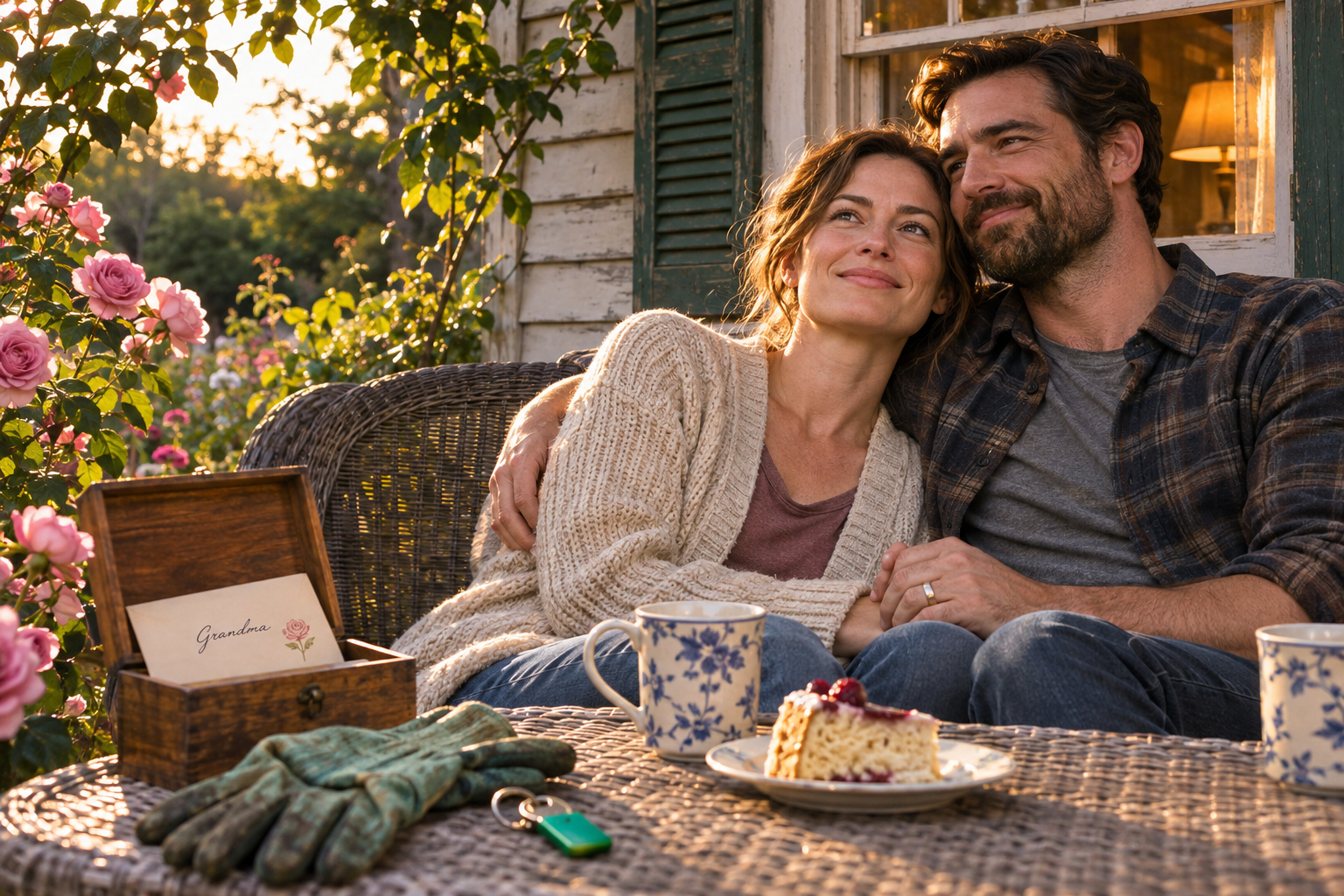
After dinner, we carried our coffee onto the porch.
The roses were moving gently in the evening breeze.
My gardening gloves rested beside the steps.
The green plastic key hung from the ring in my pocket.
Inside the house, Grandma's letter waited in its wooden box.
These were small things.
Ordinary things.
But they belonged to a life I had nearly been denied the chance to continue.
Fred reached for my hand.
I leaned against his shoulder.
I thought about the message he had sent me from across Michaela's living room.
At the time, putting down my fork had seemed like the smallest possible decision.
It had saved me from something I could never fully bear to imagine.
Everything that followed had required other decisions.
Leaving the shower.
Preserving the evidence.
Calling Gregory.
Refusing to withdraw the report.
Keeping my front door closed.
Choosing to honor Grandma's wishes.
None of those decisions had been easy.
But each had brought me closer to the life I was living now.
I still missed my mother sometimes.
I missed the sister I thought I knew.
I accepted that grief without allowing it to become an invitation for them to hurt me again.
I had learned that missing someone didn't mean I needed to bring them back into my life.
And being related to someone didn't give them ownership of my future.
Fred asked whether I wanted another cup of coffee.
I smiled.
“In a minute.”
I wanted to sit there a little longer.
The porch was quiet.
The garden smelled of fresh earth.
A light was glowing through the kitchen window.
For thirty-four years, I had believed that being a good daughter and sister meant making everybody else comfortable.
Grandma had tried to teach me something different.
It had taken me years to understand her.
But I understood now.
I was allowed to protect myself.
I was allowed to keep what she had left me.
I was allowed to say no without explaining myself until somebody else approved.
And I was allowed to be happy without feeling guilty about the people who had tried to take that happiness away.
I looked at Fred.
Then I looked at Grandma's roses.
I didn't have the family I once believed I had.
But I had a husband who loved me, friends who stood beside me, a home filled with beautiful memories, and a future I could finally call my own.
For the first time, I wasn't waiting for anyone's permission.
I was home.
And I was safe.
The End
Read more original stories on Feel Every Story.
The Phone Call That Made Me Question Everything I Had Believed About My Mother and the Family I Grew Up With
Part 10 of 10