Nearly a year after the repair that brought Hector into our lives, I stood outside a courtroom holding a folder.
Inside were copies of documents I had spent months collecting.
Messages.
Statements.
Records of conversations.
Things I never imagined would become evidence against my own daughter.
Daniel stood nearby.
We didn't speak much that morning.
There wasn't anything either of us could say that would make the proceedings easier.
The criminal case had established that Noah had been deliberately confined and seriously neglected.
The explanations offered by my daughter and Ryan had not overcome the evidence.
Both eventually accepted responsibility through guilty pleas to offenses arising from their treatment of Noah.
Ryan received a custodial sentence.
My daughter also received a custodial sentence, although her circumstances and cooperation were considered separately.
The court imposed restrictions concerning future contact with Noah.
Any possible contact would have to comply with those restrictions and the decisions of the authorities responsible for his welfare.
I listened carefully when the decisions were announced.
I didn't celebrate.
There was no satisfaction in seeing my daughter face punishment.
I remembered carrying her when she was small.
I remembered worrying about her whenever she became ill.
I remembered believing that she would understand what it meant to protect a child because she had once been protected herself.
Those memories remained.
They didn't excuse anything.
When I saw her afterward, she looked at me across the room.
I couldn't tell what she was thinking.
For once, I didn't try.
I had spent too many years creating explanations for things I didn't understand.
Later, I received a letter from her.
I recognized her handwriting immediately.
I sat at the kitchen table before opening it.
She wrote that she had been thinking about the decisions she had made.
She admitted that keeping Noah isolated had allowed her to avoid conflicts with Ryan.
She admitted that lying about California had prevented me from discovering what was happening.
She wrote that she had been afraid of losing her marriage.
I lowered the letter.
Afraid of losing her marriage.
And in protecting that marriage, she had nearly destroyed her son's childhood.
I continued reading.
For the first time, she didn't ask me to excuse her actions.
She didn't say that everything had been misunderstood.
She acknowledged that she had failed Noah.
At the bottom of the letter, she asked whether I could ever forgive her.
I folded it carefully.
I wasn't ready to answer.
Forgiveness wasn't something I could offer on Noah's behalf.
And I wasn't going to make promises simply because my daughter was finally prepared to acknowledge the truth.
Eventually, I wrote back.
I told her that I hoped she would use her time to understand the harm she had caused.
I told her that accepting responsibility mattered even when nobody was offering reassurance.
I also told her that Noah's well-being would remain the priority in every decision I made.
I didn't discuss the details of his new routines.
I didn't send photographs.
I respected the boundaries that had been established for his protection.
After mailing my response, I felt sad.
But I didn't feel uncertain.
The separate family court proceedings eventually resulted in Daniel receiving custody of Noah, following the assessments and gradual transition that professionals had recommended.
It wasn't a sudden change.
Noah spent increasing amounts of time with his father before moving permanently into his care.
Daniel made sure that Noah had a bedroom of his own.
He asked me to help prepare it.
We chose furniture together.
A bed.
A small desk.
A bookshelf.
Daniel wanted Noah to choose some things himself, so we left several decisions until he could participate.
When Noah saw the room, he walked toward the window first.
“Can I see outside?”
Daniel smiled.
“Whenever you want.”
Noah stood there for several minutes.
Then he turned toward the bookshelf.
“Can my books go there?”
“That's what it's for.”
He took the hospital blanket from his bag and placed it on the bed.
I felt something catch in my throat.
That blanket had traveled with him through so many unfamiliar places.
Now it had somewhere to stay.
Daniel looked at me.
“Would you help him put his clothes away?”
“Of course.”
We opened Noah's bag.
He had become much less concerned about arranging everything perfectly.
A shirt landed on the floor while he was unpacking.
He picked it up and laughed.
I smiled.
He hadn't looked toward either of us to see whether we were angry.
He had simply picked it up.
That evening, I prepared to leave.
Noah followed me toward the front door.
“Are you going home?”
“Yes.”
He looked disappointed.
I knelt beside him.
“I'll see you again very soon.”
“Tomorrow?”
“We've arranged for you to come over this weekend.”
He thought about that.
“Can we make eggs?”
“Absolutely.”
He hugged me.
Then he returned to Daniel.
I walked to my car.
I sat behind the steering wheel for a few minutes before starting the engine.
My house was going to feel very different without him there every morning.
I knew that.
I also knew that my sadness didn't mean the arrangement was wrong.
A grandfather could miss his grandson without needing to keep him.
I had learned that the hard way.
When I returned home, his old bedroom was quiet.
The small light outside the door was still there.
I turned it off.
I stood looking at the empty bed.
Then I went downstairs and washed the breakfast dishes that I had left beside the sink.
A few days later, Daniel sent me a picture of Noah helping prepare dinner.
He was holding a spoon.
There was flour on his shirt.
His smile was enormous.
I looked at that photograph for a long time.
The flour mattered to me almost as much as the smile.
Nobody had stopped him from enjoying himself because he might make a mess.
Nobody had made him afraid of being a child.
I printed the photograph and placed it beside his drawing of the house.
Life gradually developed a new rhythm.
Noah continued receiving educational and psychological support.
Some days were difficult.
Certain sounds still frightened him.
Unexpected changes could make him anxious.
He occasionally needed reassurance that a closed door wouldn't prevent him from leaving a room.
Healing wasn't as straightforward as I once imagined.
But Daniel was patient.
He attended appointments.
He listened to recommendations.
He learned to recognize when Noah needed space and when he needed company.
He also asked for help when he didn't know what to do.
I respected that.
There was no pretending that love alone could erase everything.
Daniel's parents visited from California.
They stayed nearby and spent time with Noah without expecting him to immediately understand their relationship.
His grandmother brought a few children's books.
His grandfather brought a small model airplane they could assemble together.
Noah liked the airplane.
They spent an afternoon at the kitchen table working on it.
One piece didn't fit properly.
His grandfather examined it.
“Well, we'll just have to try again.”
Noah laughed.
I watched from across the room.
For years, I had imagined moments like that happening in California.
Now they were happening in front of me.
They were later than they should have been.
But they were real.
Around that time, I contacted Hector again.
I invited him to visit and see how Noah was doing.
He arrived carrying a small package.
Noah recognized him.
“That's the man who came to fix things.”
Hector smiled.
“That's me.”
Noah opened the package.
Inside was a simple wooden puzzle.
He sat down immediately and began examining the pieces.
Hector looked around the kitchen.
Several drawings were still displayed on the wall.
“He seems happy.”
“He's doing much better.”
Hector nodded.
I wanted to tell him how important that repair appointment had become.
I wanted him to understand what his willingness to stay and help had meant to our family.
But Hector wasn't interested in making himself the center of the story.
He sat with Noah and helped him finish the puzzle.
Before leaving, he shook my hand.
“Take care of him.”
“We will.”
I meant the plural.
Noah had more than one adult looking after him now.
And none of us had to pretend we could do everything alone.
Eventually, I dealt with the house where Noah had been discovered.
Once the authorities no longer needed access to the property, I arranged for the upstairs utility room to be cleared.
I stood outside it while the work was being completed.
I hadn't wanted to go back inside.
But I needed to see it one final time.
The room looked smaller than I remembered.
It was difficult to understand how so much of a child's life had been contained within that space.
The lock was removed.
I watched the worker carry it away with the old fittings.
I didn't keep it.
I didn't want a physical reminder of what my grandson had endured.
There were other things worth keeping.
His first drawing.
His colored pencils.
Photographs of him smiling without hesitation.
I eventually decided to sell the property.
I couldn't continue owning a house that had become associated with so much suffering.
Before leaving it for the final time, I checked the upstairs room.
The doorway stood open.
I switched off the light and walked downstairs.
The next electricity bill arrived a few weeks later.
It was the final bill connected with that house.
I paid it.
Then I removed the property from my household accounts.
For years, that bill had represented a responsibility I believed I was fulfilling.
Now I understood how little responsibility meant when it wasn't accompanied by attention.
I had paid bills.
I had accepted explanations.
I had avoided difficult conversations.
I could do better than that.
The following autumn, Noah began attending school under a plan designed to support his learning and adjustment.
Daniel asked whether I wanted to accompany them on his first morning.
I accepted immediately.
Noah wore a new backpack.
He had selected it himself.
Blue.
Of course.
We stood near the school entrance while other children hurried past us.
Some were laughing.
Some were holding their parents' hands.
Others were already discussing what they hoped to do during recess.
Noah watched them.
“Grandpa?”
“Yes?”
“Are all those kids going inside?”
“Yes.”
“Can I play with them?”
“When it's time for recess.”
He smiled.
Daniel adjusted one of the backpack straps.
“You've got everything?”
Noah nodded.
Then he looked at both of us.
“Who's picking me up?”
“I am,” Daniel said.
Noah glanced at me.
“And you'll see Grandpa this weekend.”
He seemed satisfied.
A teacher approached and greeted him.
She had already met Noah during preparations for his school placement.
He recognized her.
“Ready?”
Noah took a breath.
Then he nodded.
He walked beside her toward the entrance.
For a moment, he turned around.
He waved.
Daniel and I waved back.
I watched him disappear through the school doors.
There was no lock keeping him inside a forgotten room.
There was no frightened little boy asking whether he was permitted to go outdoors.
There was a child carrying a blue backpack into a building full of other children.
I wiped my eyes.
Daniel looked at me.
“You all right?”
“Yes.”
And I was.
Not because everything that had happened was suddenly acceptable.
Not because my family had returned to what it once was.
It hadn't.
My relationship with my daughter remained deeply damaged.
Ryan was no longer part of Noah's daily life.
The consequences of their decisions would continue long after the legal proceedings had ended.
Noah still had challenges ahead.
But he also had possibilities.
That afternoon, Daniel called me after collecting him from school.
Noah wanted to speak with me.
“Grandpa, I made a friend.”
I sat down.
“That's wonderful.”
“We played outside.”
I closed my eyes.
“What did you play?”
He began telling me about a game involving a ball.
He described the other children.
He told me about his teacher.
He complained that lunchtime hadn't lasted long enough.
I listened to every word.
It was the kind of conversation I had once imagined him having with somebody else.
Now I was hearing it myself.
That weekend, Noah came to stay with me.
We made scrambled eggs.
He stirred them while I prepared the toast.
A little egg spilled onto the counter.
He reached for a towel without interrupting his story about school.
I didn't even need to say anything.
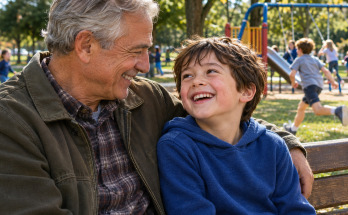
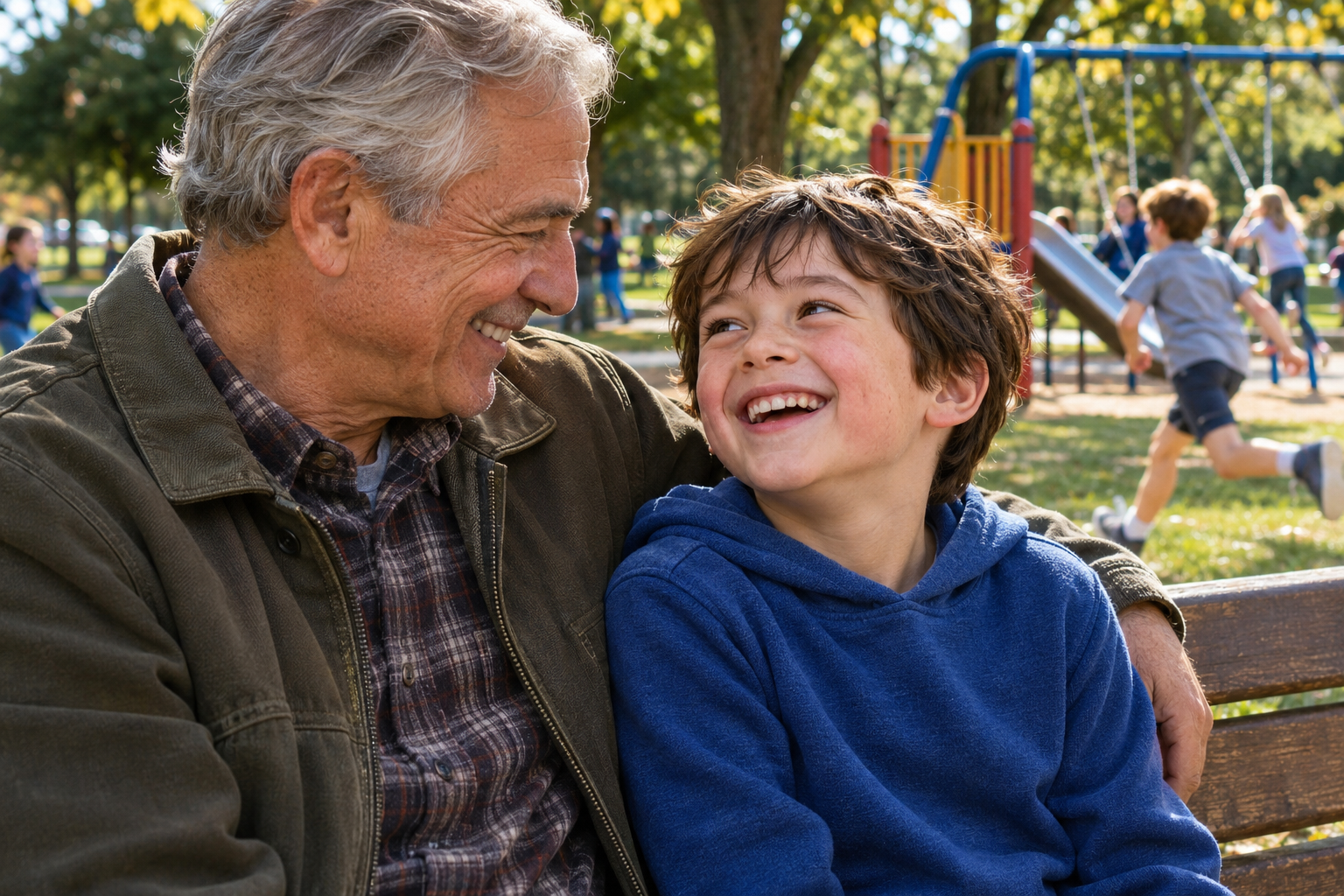
After breakfast, he asked whether we could go to the park.
We put on our shoes and left the house.
He ran ahead of me along the path, stopping occasionally to make sure I was following.
At the playground, he joined several children near the swings.
I sat on a bench.
The sun was warm.
There were leaves moving above my head.
Noah laughed when another child challenged him to a race.
I watched him run.
For six years, I had believed he was somewhere far away, enjoying a childhood I had never actually witnessed.
I couldn't recover those years.
But I could be present for this one.
When Noah eventually came back to the bench, his face was red from running.
“Did you see me?”
“I did.”
“I was really fast.”
“You certainly were.”
He grinned.
Then he asked whether he could go back and play some more.
I looked at the other children.
I looked at my grandson.
“Go ahead.”
He ran toward them.
And this time, nobody told him that the world outside was something he needed to fear.
The End
Read more original stories on Feel Every Story.
I Thought I Knew Where My Grandson Had Been Living Until He Asked Me a Question I Was Completely Unprepared to Answer
Part 10 of 10