Winter arrived early that year.
Mom called me one afternoon.
Her voice sounded different.
Not frightened.
Just uncertain.
“Can you come over?”
“Of course.”
“There's something I want to talk about.”
I drove over that evening.
Dad wasn't home.
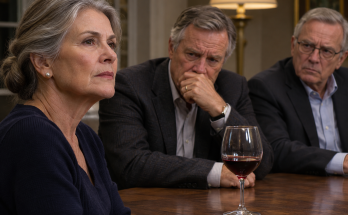
Mom was sitting at the kitchen table with a folder in front of her.
I recognized the expression immediately.
“What happened?”
“Nothing terrible.”
I sat down.
She opened the folder.
Inside were medical bills.
Small ones.
Routine ones.
But there were several.
“I've been worried about these,” she said.
I looked at the numbers.
“You can afford them?”
“Yes.”
“Then what's wrong?”
She hesitated.
“I don't know whether I'm managing everything correctly.”
I leaned back.
“Okay.”
“I thought maybe you could look.”
She stopped.
Then she corrected herself.
“Only if you want to.”
I smiled.
That sentence mattered more than she knew.
“You can ask me.”
“I know.”
“And I can say no.”
“I know.”
“And you won't be angry?”
She shook her head.
“No.”
I looked through the papers.
The bills were manageable.
Her insurance had covered most of the larger expenses.
There was one payment she had accidentally duplicated.
“That one needs to be corrected.”
She nodded.
“Can you show me how?”
“Of course.”
We spent forty minutes going through everything.
I didn't take out my checkbook.
She didn't ask me to.
When we finished, she closed the folder.
“Thank you.”
“You're welcome.”
She looked at me.
“I was scared to ask.”
“Why?”
“Because I didn't want to become the woman I used to be.”
I understood.
“You aren't.”
“How do you know?”
“Because you asked for information.”
She smiled.
“Not money.”
“Exactly.”
Mom reached across the table.
“You really changed us.”
I shook my head.
“We changed each other.”
She thought about that.
“I like that better.”
When Dad came home, Mom told him about the bills.
He listened.
Then he said, “Good.”
I laughed.
“You're not going to ask me to pay them?”
He looked offended.
“Absolutely not.”
Mom smiled.
“He's learning.”
“I've been learning for years.”
“Slowly.”
He laughed.
The evening passed peacefully.
Before I left, Mom handed me a small package.
“What is this?”
“Open it at home.”
I waited until I was in my car.
Inside was a knitted scarf.
Mom had made it herself.
It wasn't perfect.
One side was longer than the other.
I smiled.
She had never been good at knitting.
But I wrapped it around my neck.
It was warm.
The next week, Carla called again.
The new family at the bungalow was struggling.
My heart jumped.
“What happened?”
“Marcus lost some work.”
I waited.
“His hours were cut.”
“Are they going to lose the house?”
“No.”
“Good.”
“But they may need additional support.”
“Then they should get it.”
“They are.”
I smiled.
“Okay.”
There was a pause.
“You sound calm.”
“I am.”
“You used to panic.”
“I know.”
“That’s growth.”
“Or exhaustion.”
Carla laughed.
She told me the organization had connected Marcus with a job-placement program.
Elena had begun looking for part-time work she could manage while recovering.
The children were still attending school.
Nothing had collapsed.
They simply needed help.
The difference mattered.
I thanked her.
That evening, I thought about the old version of myself.
I would have driven to the bungalow.
I would have offered money.
I would have called employers.
I would have tried to solve everything before anyone asked.
I might have even felt proud of myself.
Now I understood that my urgency could sometimes become another form of control.
I could care without taking over.
That was harder.
But it was healthier.
A month later, Marcus called.
“I got another job.”
I smiled.
“That's great.”
“Better hours.”
“Good.”
“I wanted to tell you.”
“I'm glad.”
He paused.
“I almost called you for money when the hours were cut.”
I didn't know what to say.
“But then I remembered something you told me.”
“What?”
“Try the next thing before asking someone else to fix it.”
I smiled.
“I'm glad you remembered.”
“I did.”
He laughed.
“I didn't always like hearing it.”
“Most useful things aren't pleasant at first.”
He agreed.
Then he said, “We're going to be okay.”
“I believe you.”
After we hung up, I looked at Mom's scarf.
I thought about how strange it was that my life had become filled with small things.
A scarf.
A photograph.
A letter.
A drawing.
A set of keys.
A cake.
None of them were worth much money.
But together they represented something I had spent years trying to buy with money.
Security.
Not financial security.
Emotional security.
The kind that comes from knowing people can survive without you and still choose you.
That was the difference.
I didn't need to be indispensable anymore.
I only needed to be loved.
And I was.
That spring, Monica invited us to her new apartment.
She had finally settled into her own place.
Laya was there.
Evan too.
They had decorated the living room with photographs from their years in the program.
Mia came with Rosa and Daniel.
The two families had become friends.
They had met because of the bungalow.
I stood in the doorway and watched the children laughing together.
It felt surreal.
The house had brought strangers into each other's lives.
And somehow, the effects kept spreading.
Monica hugged me.
“You remember Laya's drawing?”
“Of course.”
“She made another one.”
Laya appeared holding a piece of paper.
It showed three houses.
The bungalow was in the middle.
Her family's apartment was on one side.
Mia's house was on the other.
At the bottom she had written:
“THE HOUSE HELPED US FIND OUR HOUSES.”
I stared at it.
“That might be the best thing you've ever drawn.”
She smiled.
“I'm getting better.”
“You are.”
Later, I sat with Monica.
She told me she was saving for a car.
“I'll need one for work.”
“That makes sense.”
“I thought about asking you.”
I smiled.
“You can ask.”
She looked surprised.
“I know.”
“But?”
“But I decided to save.”
I nodded.
“Good.”
She laughed.
“You really are consistent.”
“I try.”
That night, when I drove home, I realized how different the question had become.
People no longer looked at me and asked what I could give them.
They looked at themselves and asked what they could build.
That was the real transformation.
Not mine.
Theirs.
Ours.
And maybe that was why the bungalow had needed to leave my parents' hands.
It could never have taught them independence if I kept using it to prove how much I could provide.
The house had to become useful to people who were ready to move forward.
And I had to learn the same lesson.
I couldn't hold everyone forever.
I didn't need to.
Click here to continue reading: PART 16: The Last Time I Held the Bungalow Keys, I Finally Knew Why I Had Been Afraid to Let Them Go
I Thought the Keys Would Be the Best Christmas Gift My Parents Had Ever Received Until One Sentence Changed What I Meant by Family
Part 15 of 20