
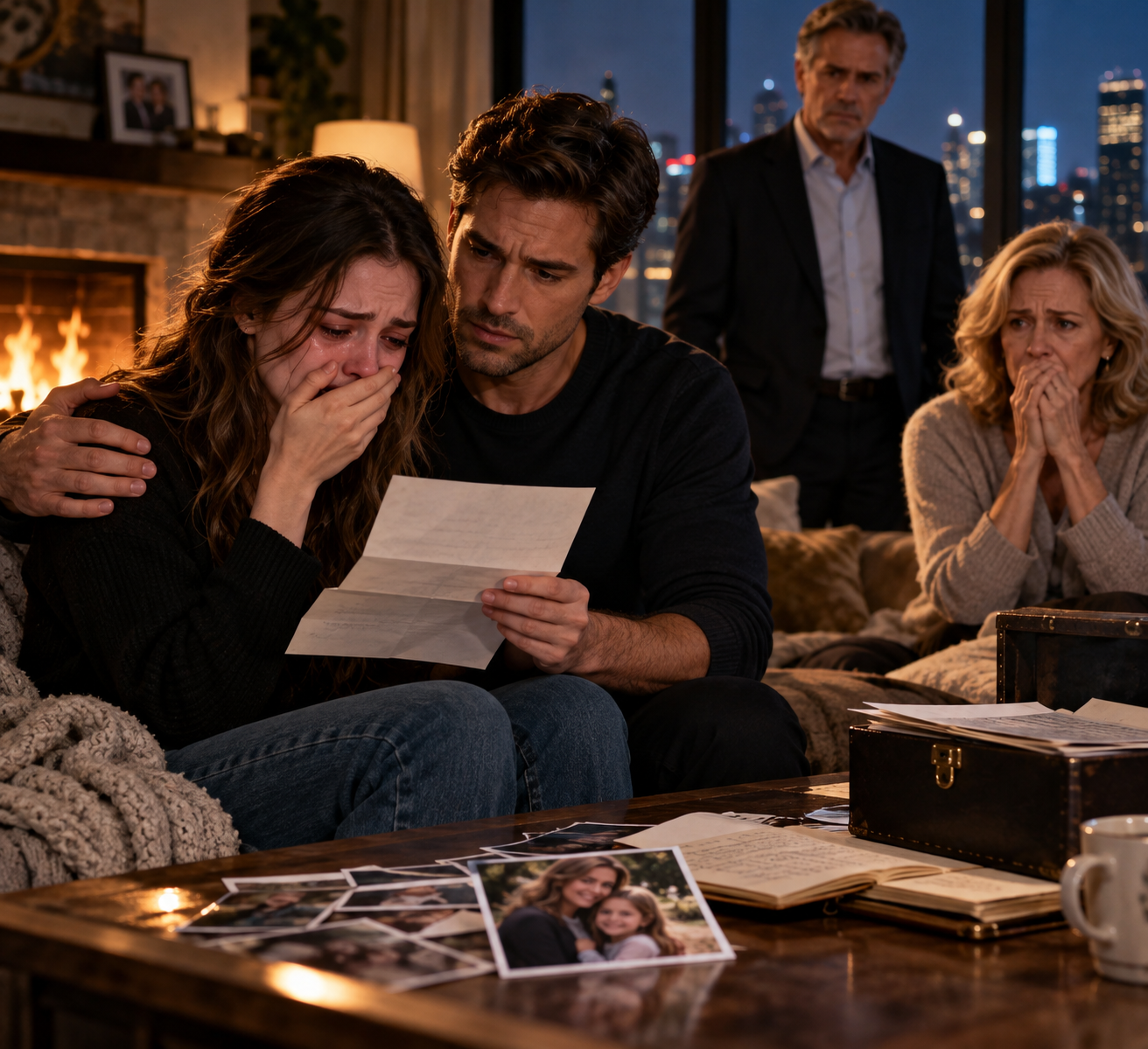
The address Margaret gave us led inland, away from the harbor and into a quiet neighborhood of narrow roads and mature trees. The house stood at the end of a short lane, surrounded by an overgrown garden. Its windows were dark, and a weathered fence leaned toward the sidewalk. A faded number remained beside the front door, but the mailbox had been removed.
Thomas stared at the house through the windshield. He had spent his childhood imagining where his mother might have gone, but he had never pictured a place so ordinary. There was no sign of a dramatic escape, no abandoned suitcase on the porch, no obvious clue that a woman had once lived there while trying to find her way back to her son.
Daniel walked around the property first. He checked the windows without touching them and examined the gate for a lock or fresh damage. I stayed beside Thomas, watching his expression. He seemed to be measuring the house against the letter in his hands, trying to decide whether the woman who had written those words had ever stood behind the glass.
The front door was locked, and the windows were too dusty to reveal much. We had no right to force our way inside, so Daniel returned to the car and searched for a local property record. The house had been sold several times, and the last recorded owner had died years earlier. There was no current contact information for the person who had occupied it under Evelyn’s assumed name.
A neighbor across the street watched us from behind a curtain. When Daniel approached and explained that we were trying to locate a former resident, the man opened his door only halfway. He was elderly and wore a cardigan despite the mild weather. His eyes moved quickly from Daniel to the rest of us.
“People have asked about that house before,” he said. “Not recently, but they came asking questions a long time ago.”
Daniel asked whether he remembered a woman named Evelyn Morgan. The neighbor frowned, then nodded slowly. He remembered a quiet woman who lived there under another surname, though he could not be certain of the name. She kept the garden neat for a while, then stopped going outside. He rarely saw visitors, except for a man who arrived in a dark car.
“Tall, thin, gray hair,” the neighbor said. “He didn’t stay long. He carried a folder. One afternoon, he came back and loaded a few things into his car. After that, the woman was gone.”
“Did she leave willingly?” Thomas asked.
The neighbor looked at him more carefully. “I couldn’t tell you. I saw her crying through the front window once. She had a letter in her hand. The man was standing in the doorway, talking to her. I couldn’t hear what he said, but she looked frightened.”
The description matched Margaret’s account. The man with the damaged taillight had visited the clock shop and later collected Evelyn’s belongings. Whether he was Michael Bell or someone else remained uncertain, but the evidence suggested he had known where she was staying and had played a role in her next disappearance.
Thomas asked whether the neighbor had seen Evelyn again. The man shook his head. He said the house remained empty for a few months, then a real-estate agent appeared and the property was sold. He had assumed the woman had moved to another town, perhaps to live with relatives. He had never considered that her departure might have been forced.
I asked about the letter. The neighbor remembered that it had been folded in half and held tightly in Evelyn’s hand. She kept reading it while the man spoke. At one point, she shook her head and stepped back from him. The neighbor had thought they were arguing about money, but now he wondered whether the letter had contained a threat.
Daniel thanked him and returned to the house. We did not have permission to enter, and there was no reason to risk damaging a property that might still belong to someone. Instead, he photographed the exterior, the mailbox slot, and the rear gate. If the house had been used as a temporary hiding place, any surviving records might identify the person who helped Evelyn rent it.
While Daniel worked, Thomas opened his mother’s letter again. He had read it so many times that he could almost recite it, but one detail now bothered him. Evelyn had written that she tried to return more than once. The letter did not say where she had gone after leaving the house, nor did it explain who had stopped her. It was a message of love, but it was also a record of repeated failure.
My phone vibrated. The message came from an address I did not recognize, with no subject line and no text beyond an attachment. The image showed the empty house from the opposite side of the road. It had been taken only minutes earlier. Our car was visible near the curb, and Daniel stood beside the gate.
Beneath the photograph were six words: “You are close enough. Leave now.”
I felt the same cold fear I had experienced when someone first threatened Lily. Whoever had sent the message knew where we were and had watched us approach the house. This was no longer an old family mystery confined to papers and memories. Someone was actively trying to control what we learned.
I showed Daniel the message. He checked the street, but no car was visible. Thomas looked at the photograph, then at the house. He said he would not leave without knowing whether his mother had survived. I understood his determination, but I also knew that continuing carelessly could put all of us in danger.
We returned to the car and drove to a public café several blocks away. Daniel contacted Rebecca and sent her the photograph, asking whether she could identify the number plate of any vehicle visible in the image. She replied that the photograph was too tightly framed to show the street clearly, but she would compare the details with the records she had collected.
While we waited, I called Michael Bell. He answered after several rings, sounding breathless, as if he had been walking quickly. I told him about the storage unit, the clock shop, and the empty house. When I described the man who had visited Margaret and later collected Evelyn’s belongings, Michael went silent.
“I think I know who you mean,” he said at last. “But I need to see you before I explain. There are things I only learned after Robert died, and I didn’t know how much you had already uncovered.”
I asked whether the man had been Edward Morgan. Michael said he could not be certain. Edward had been older by then, and several people associated with the trust had the same narrow, severe appearance. What he knew was that Robert had helped Evelyn move at least once after her disappearance. He had believed she was in danger, and he had tried to keep her location from anyone connected to the property dispute.
That answer unsettled me. Robert had moved Evelyn, perhaps to protect her, while allowing his own family to believe she had vanished without explanation. He had hidden the truth from Thomas, too, and in doing so had allowed a false story to become the only story Thomas knew.
Michael asked us to meet him at the public library the following morning. He said he had found something that might explain why Robert had kept the ledger away from Thomas. Before ending the call, he warned us not to search the house or contact anyone listed in the old property records.
Thomas listened without speaking. Then he folded Evelyn’s letter carefully and returned it to the envelope. “If Dad helped her move,” he said, “then he knew she was alive after everyone told me she was gone.”
I could not answer. The man who had kept secrets from us might also have been the only person who tried to protect Evelyn. Both things could be true, and neither made the years of silence easier to accept.
As we left the café, I checked my email again. The anonymous message had disappeared from the inbox, but the photograph remained saved on my phone. Whoever sent it had wanted us to understand that our search was visible. I had no idea whether the warning came from the person who had taken Evelyn away, someone protecting the ledger, or someone who feared what the final page might reveal.
What I did know was that the next morning, Michael Bell intended to show us the evidence he had kept hidden. For the first time, he seemed ready to explain what Robert had been trying to accomplish—and why the truth about Evelyn had been buried for so long.
Click here to continue reading: PART 24: The Ledger’s Final Page and the Name Robert Never Revealed
The Moment My Daughter Began Crying, I Realized There Was Something She Had Been Afraid to Tell Me
Part 23 of 35

