The next review took place three months later.
The community program had not become a perfect system.
No one in the room expected it to.
The referral directory was more accurate than it had been, although partner organizations still changed their capacity without warning.
Staff were making fewer unnecessary referrals.
Applicants were receiving clearer explanations of the program's limits.
The transportation fund was being used more consistently.
The number of unresolved cases remained substantial.
I read the report before the meeting began.
This time, I did not start with the completion rate.
I started with the section describing what had prevented people from moving forward.
Some had been unable to reach services that were full.
Some had lacked documents.
Some had decided that the available assistance did not fit their circumstances.
Others had stopped responding, and the staff did not know why.
The report did not attempt to turn those cases into a single conclusion.
It left the uncertainty visible.
I found that more useful than the polished summaries I used to prefer.
When the meeting began, Elaine presented the results.
She described the improvements, then explained the remaining gaps.
She did not exaggerate either side.
Afterward, Robert discussed the financial impact.
The program had spent more on transportation and document fees than originally planned.
However, the revised process had reduced costs associated with repeated referrals and unnecessary appointments.
The savings did not cover every additional expense.
They did not need to.
The purpose was to make the assistance more reliable, not to claim that every human problem could be reduced to a favorable financial calculation.
A board member asked whether the program should be expanded.
I waited while the team discussed the question.
They recommended expanding it gradually.
The referral directory needed more reliable partner updates.
The staff needed additional training.
The transportation fund needed another period of review.
There was enough evidence to continue.
There was not enough evidence to claim that the model would work equally well everywhere.
I approved a measured expansion.
We would add two more service areas, keep the existing reporting requirements, and review the results after another six months.
No one applauded.
We moved to the next item on the agenda.
That was how it should have been.
After the meeting, Denise stopped beside my office.
“I wanted to tell you something about the center,” she said.
I put down my pen.
“Go ahead.”
“The staff have started using the new categories in conversations, not just reports. They explain the difference between a completed step and a completed outcome.”
“Has that helped?”
“It has made some conversations harder.”
I raised my eyebrows.
“Harder?”
“People ask more questions when we tell them the truth. They want to know why a referral is taking so long or why one service has space and another doesn't.”
“Can the staff answer?”
“Sometimes. When they can't, they tell people what they still need to find out.”
I nodded.
“That sounds right.”
“It isn't always comfortable.”
“No,” I said. “I imagine it isn't.”
Denise stood quietly for a moment.
Then she added, “The staff seem less afraid of admitting when they don't know something.”
I thought about the way I used to handle uncertainty.
I had treated it as a weakness that needed to be hidden behind confidence.
Now I understood that pretending to know an answer could create more work for everyone who had to live with the consequences.
“I'm glad,” I said.
Denise smiled and returned to her office.
That evening, I attended a dinner for business leaders.
The room was bright, the tables were crowded, and the conversation moved quickly from markets to acquisitions to charitable commitments.
A man I knew asked about the community program.
He had heard that Ashford Global had expanded its assistance pilot.
“Is it working?” he asked.
I could have given him the short answer.
I could have mentioned the improvements in referral accuracy and the increase in completed intake steps.
Instead, I told him the truth.
“Some parts are working better. Other parts still need work.”
He waited for more.
“We've improved the way people reach services, but we can't guarantee that the services will have space. We can explain the options more clearly and avoid some unnecessary costs. We still have unresolved cases.”
He looked slightly disappointed.
“That isn't much of a success story.”
“It isn't a finished story.”
He laughed and changed the subject.
I did not mind.
For years, I had been eager to make people understand that my work mattered.
I had believed that if I explained my intentions clearly enough, they would recognize the good in them.
But intentions were not the same as results.
And results did not need to become a story about me.
When I returned home, I found the apartment exactly as I had left it.
The long dining table stood in the dark.
The photograph of my father remained on the kitchen counter.
I turned on a light and made tea.
While the kettle heated, I opened a drawer and found the folded note Denise had given me months earlier.
People don't always need us to decide for them. They need us to make the choices clear.
The paper had begun to soften along the creases.
I placed it beside the kettle.
I had kept it because I wanted a reminder.
At first, I thought the note was about charity.
Now I understood that it applied to more than that.
It applied to the way I treated employees, the way I handled disagreements, and the way I thought about my own family.
It applied whenever I was tempted to mistake authority for understanding.
I had no way to return to the day before Mara walked up to me.
I could not undo the years I had spent believing that a large enough gift could settle a complicated situation.
I could not know what would have happened if I had asked different questions or offered different help.
I could only decide what to do with what I had learned.
I could fund a program without claiming that funding made me a hero.
I could ask staff to explain their decisions and give them the authority to make those decisions.
I could read an uncomfortable report without asking someone to make it look better.
I could accept that a person might decline assistance, reject my opinion, or leave without thanking me.
And I could let a stranger remain a stranger.
That last lesson had taken longer than I expected.
Mara had not entered my life to teach me anything.
She had needed something.
I had offered a resource.
She had used it, returned it, and gone on with her life.
Whatever meaning I carried away belonged to me.
I could not turn her into a character in a story about my generosity and then demand that the ending confirm what I wanted to believe.
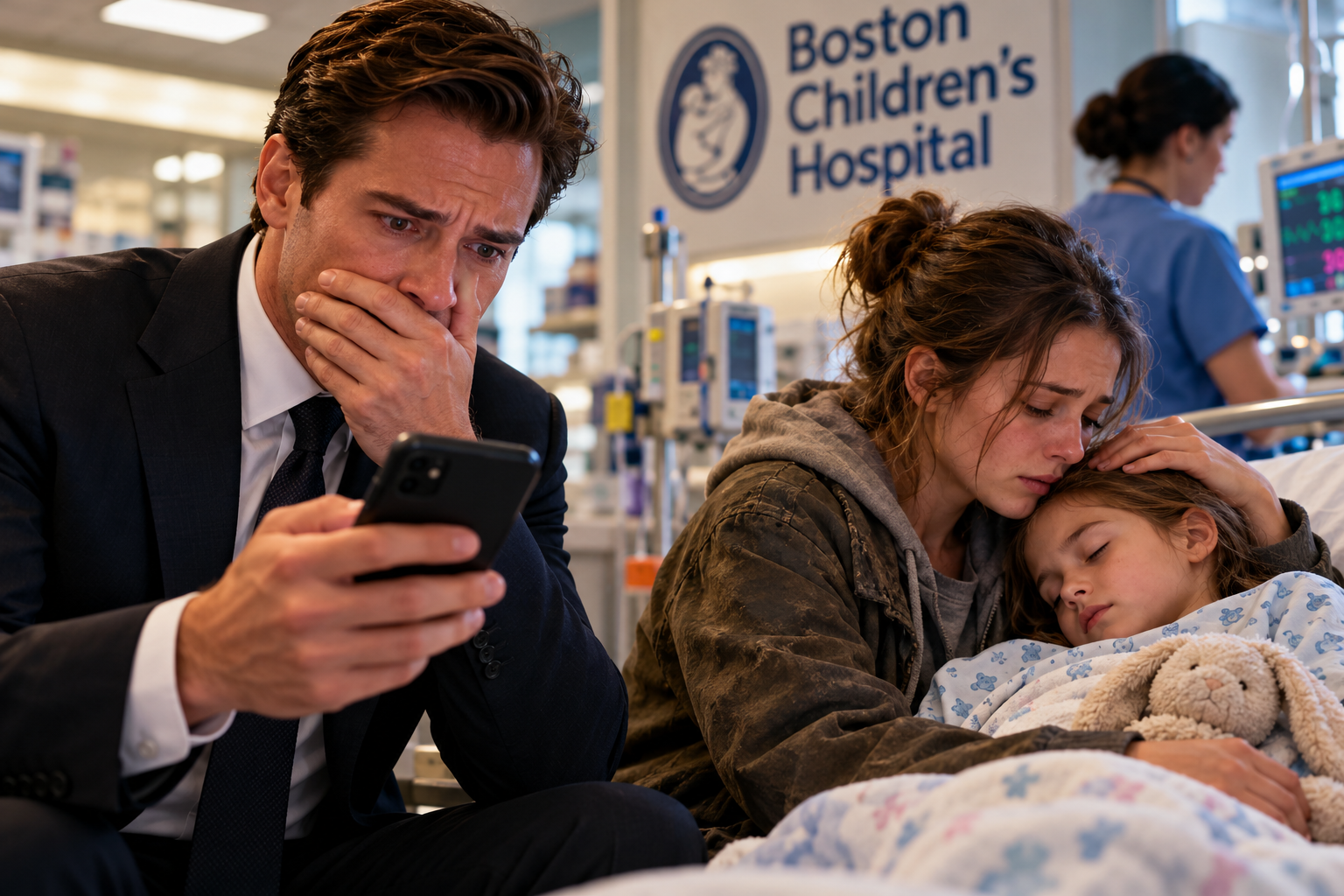
I did not know what happened to her and Lily.
I hoped they were safe.
I hoped Lily was feeling better.
But I had no evidence that would let me claim either thing.
So I did not.
I finished my tea and washed the cup.
The next morning, I would return to the office.
There would be another budget, another report, and another problem that resisted an easy answer.
I would probably grow impatient again.
I would probably want a cleaner result than the facts allowed.
Change had not made me a different person overnight.
It had given me a reason to notice what I was doing.
That was enough for the next day.
I turned off the kitchen light.
The apartment fell quiet.
For once, I did not check my phone before going to bed.
I had nothing to prove before morning.
And there was work waiting that did not require me to be the hero of anyone else's life.
It only required me to do my part, honestly, and leave room for other people to do theirs.
The End
Read more original stories on Feel Every Story.
I Thought Money Could Solve Any Problem Until a Stranger Asked Me for Something I Could Never Buy Back
Part 20 of 20