By the end of the month, the new assistance program had become part of my regular schedule.
Every Monday, I received a report.
Every Thursday, I met with the people responsible for reviewing it.
I learned the names of the staff members who handled difficult applications.
I learned which rules caused the most confusion.
I learned how often a person could qualify for assistance and still fail to receive it.
The information changed the way I read our other reports.
I started asking questions that made meetings longer.
Sometimes, the answers were uncomfortable.
Sometimes, they showed that a program worked well.
I learned to accept both.
I also stopped opening my banking app every time I thought about Mara.
That took longer than I expected.
For several days after our last conversation, I had wondered whether she would contact me.
She didn't.
I told myself that was good.
She had never promised to keep in touch.
She had never agreed to become part of my life.
I had offered her a bank card for one day, not a reason to remain connected to me.
Still, I thought about her more often than I admitted.
One evening, I stayed late to review a contract.
The office lights had dimmed automatically, leaving the far end of the room in shadow.
My coffee had gone cold.
I was about to leave when I found a handwritten note tucked between two pages of the community program report.
It had been added by Denise.
The note read: People don't always need us to decide for them. They need us to make the choices clear.
I sat back.
It wasn't a complicated statement.
I had heard similar things before.
But I recognized something in it that I had failed to understand when Mara stood in the hospital lobby.
She had not rejected help because she wanted to suffer.
She had rejected the idea that accepting help meant surrendering control.
I had treated her questions as resistance.
Now I wondered how many people had felt the same way in my presence.
The next morning, I asked my assistant to arrange a review of our charitable partnerships.
I wanted to know whether applicants were being treated respectfully.
I also wanted to know whether the programs asked people to disclose more personal information than necessary.
My assistant took notes.
When I finished, she looked up.
"May I ask what's prompted this?"
I considered giving her a polished explanation.
Instead, I told her about the woman I had met outside the restaurant.
I didn't share details about Lily or the hospital transactions.
Those were not mine to discuss beyond what Mara had chosen to tell me.
I explained that I had offered help without understanding how it might feel to receive it.
My assistant listened without interrupting.
When I finished, she said, "You can't make every encounter right after the fact."
"I know."
"But you can change what happens next."
I looked at the handwritten note on my desk.
"That's what I'm trying to do."
She nodded and returned to her work.
I kept the note.
Not because it was profound.
Because it was easy to forget.
Weeks passed.
The program expanded carefully.
We added more staff training and simplified several forms.
We also created a way for applicants to explain why they could not provide a required document immediately.
The changes were modest.
They required more patience than money.
I had to learn to accept that progress could be slow without being meaningless.
Then came a difficult review.
One of our partner organizations had been rejecting applications that lacked a particular document, even when the program's guidelines allowed exceptions.
The staff had been following an old internal checklist.
Nobody had intended to deny help unfairly.
But the result was the same.
I felt anger rise as I read the report.
My first instinct was to call the organization's director and demand an explanation.
I picked up the phone.
Then I set it down.
I asked the program team to confirm the facts first.
They did.
The checklist was outdated.
The organization corrected it, contacted affected applicants where possible, and agreed to retrain its staff.
We added a regular review of local procedures to the partnership agreement.
It was not a satisfying ending.
There was no single person to blame.
There was only a process that had continued long after it stopped serving its purpose.
I found that more difficult to accept than a clear mistake.
That night, I walked through my apartment without turning on the television.
The rooms were large and quiet.
I had bought most of the furniture because it looked right in photographs.
The dining table could seat twelve people.
I usually ate at one end.
I stood beside the table and looked at the empty chairs.
For years, I had thought of loneliness as something that happened to people who had nobody.
I was beginning to understand that a person could have a full calendar and still avoid the conversations that mattered.
I had plenty of people around me.
I simply kept most of them at a distance.
Mara had asked me a question I couldn't answer.
How long would I wait before asking for help for someone I loved?
I still didn't know.
I hoped that if the moment came, I would be quicker to act.
But I also hoped I would remember to listen.
The next morning, I returned to the office.
The handwritten note was still beside my keyboard.
I read it once.
Then I placed it inside the folder I carried to meetings.
I wasn't trying to turn Mara into a symbol.
She was a real person with a life I knew almost nothing about.
I had no right to decide what her experience meant for her.
I could only decide what I would do with the part she had shared with me.
For now, that meant continuing the work without expecting her to see it.
It meant allowing the results to matter even if she never knew they existed.
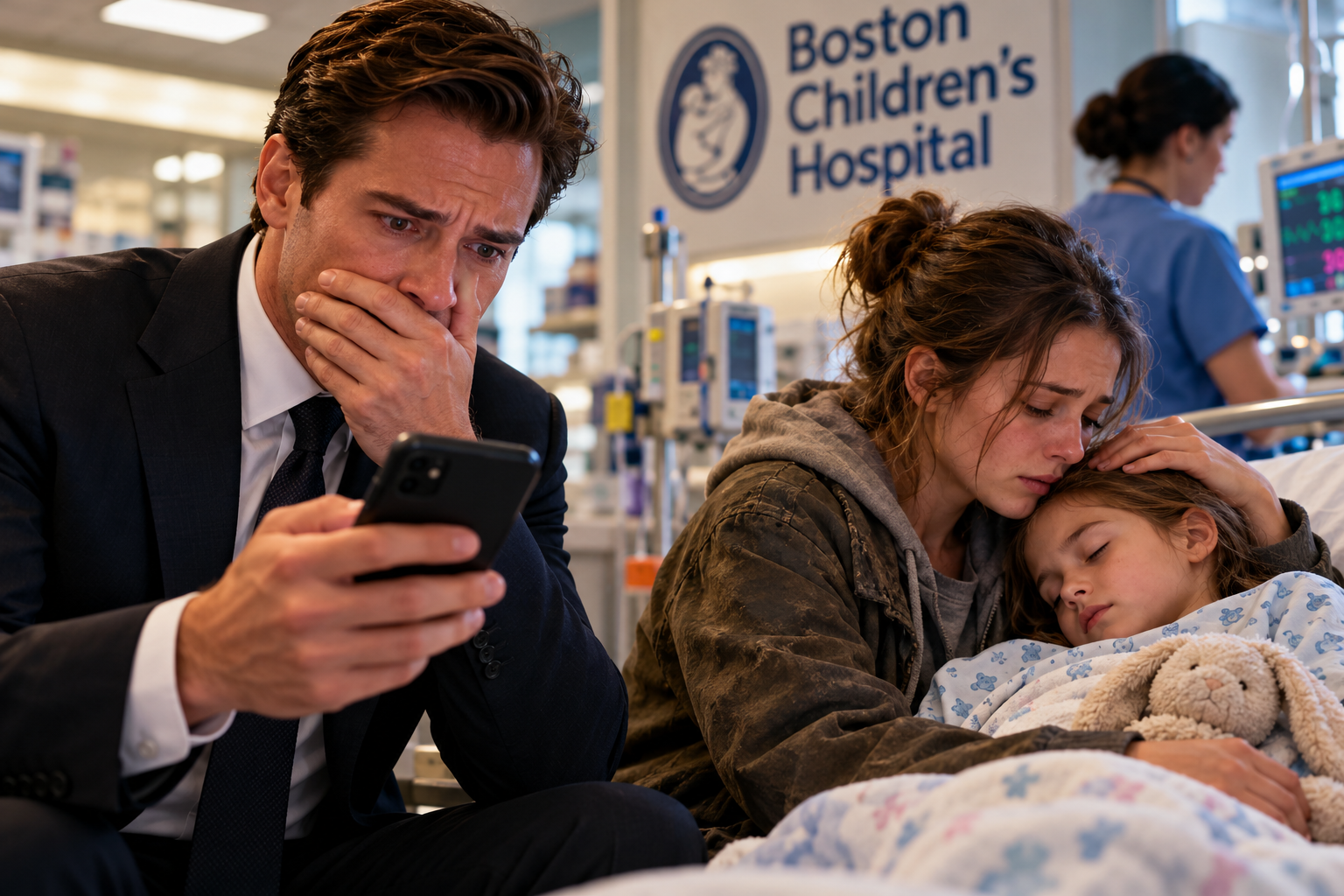
And it meant accepting that I might never receive the explanation I had wanted when those two hospital charges appeared on my phone.
I could live with that.
At least, I was learning how to.
Click here to continue reading: PART 8: The Most Difficult Decision Was Not How Much Money to Give, but How to Build Something Useful Without Making Myself Its Hero
I Thought Money Could Solve Any Problem Until a Stranger Asked Me for Something I Could Never Buy Back
Part 7 of 20