I spent the next few days trying to return to my normal routine.
Work.
Food.
Bills.
Sleep, when I could manage it.
I told myself that the office would eventually sort everything out.
I had always believed that most problems became smaller when you stopped staring at them.
This one didn't.
I began noticing how often I relied on my identity without thinking about it.
A form needed my name.
I wrote it.
A payment needed to be verified.
I supplied my number.
A document asked for my date of birth.
I entered it without hesitation.
Every ordinary task reminded me of the conversation with Marcus.
I had spent thirty-two years assuming those details belonged together.
Now a government record had put that assumption in doubt.
I didn't know what to do with that.
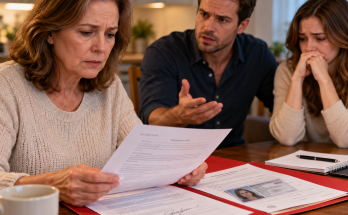
One evening, I sat at the kitchen table and tried to remember the earliest thing I could recall about my childhood.
The memories came in pieces.
A room.
A voice.
The feeling of waiting for someone to notice me.
None of it proved anything.
I had no clear memory of being taken somewhere or told that my name was changing.
I had no recollection of a disappearance.
I had simply grown up believing the people around me were my family and that my life began where my earliest memories began.
I couldn't use the absence of another memory as evidence.
Still, I wondered why certain parts of my childhood felt so difficult to explain.
I remembered leaving home at eighteen.
That memory was clear.
I remembered the feeling of being unwanted and the determination I had carried with me when I started supporting myself.
I had told myself that leaving was the beginning of my independence.
I had never thought of it as an escape from a question I didn't know how to ask.
I pushed the thought away.
I was beginning to make connections without knowing whether any of them were real.
That wasn't fair to anyone.
Especially not to people I might be blaming simply because I was frightened.
The following day, I contacted the benefits office again.
I was told Marcus was not available to speak with me at that moment.
I left my contact information and returned to work.
I didn't want to spend every day calling and asking the same questions.
I also couldn't accept sitting quietly while a record threatened to make my life more complicated.
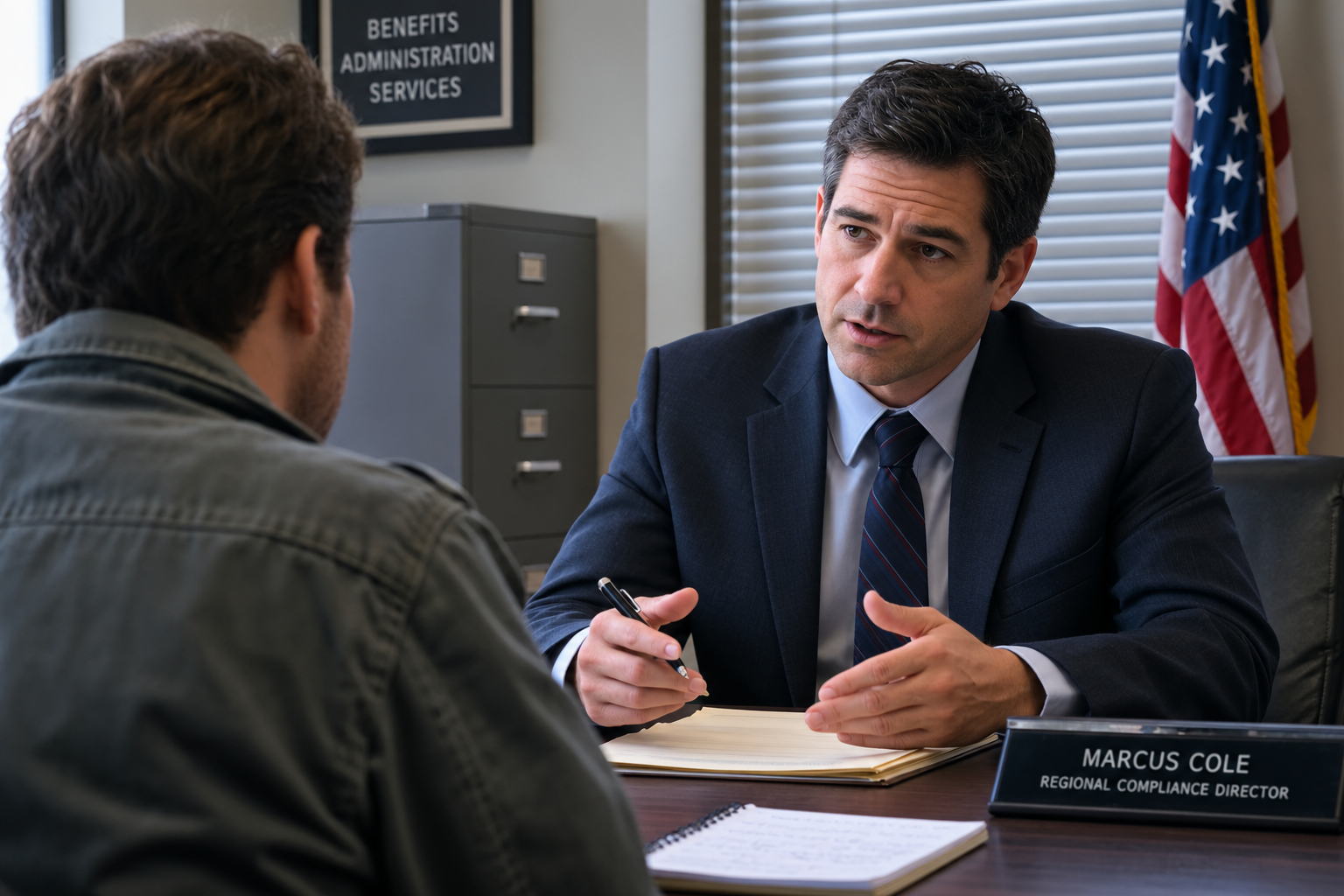
When Marcus finally contacted me, he asked whether I could return for another meeting.
I agreed.
I arrived with the same small collection of documents.
He had added papers to the folder.
I noticed the difference immediately.
"Does that mean you've found something?"
"It means there is more information to review."
I sat down.
He explained that the office was examining the historical case alongside the information I had provided.
He still couldn't give me a complete account of what had happened in 1990.
There were details that needed to be confirmed.
I asked whether the file contained proof that I had been alive after the date of the recorded death.
Marcus said he wasn't ready to make that determination.
I pressed my hands together.
"Then what can you tell me?"
He looked at me for a moment.
"I can tell you that your current record and the historical record cannot be treated as unrelated."
That was the closest thing to a direct answer I had received.
I waited for him to explain further.
He said the connection was serious enough that the office needed to investigate it before completing my application.
I asked whether the problem could be resolved by correcting the record.
"That depends on what the review establishes."
I leaned back.
There it was again.
Everything depended on something I hadn't been allowed to see.
I tried to imagine what it would feel like to learn that the record was wrong.
I would be embarrassed by how frightened I had become.
I would probably complain about the wasted time.
Then I would return to work and stop thinking about it.
But the possibility of a simple mistake no longer felt as reassuring as it had at first.
A mistake could explain a wrong date.
It didn't necessarily explain why the case involved a missing child.
I asked Marcus whether he had found any evidence that the child's death had been confirmed.
He said he couldn't discuss that conclusion yet.
I looked at him sharply.
"Does that mean the death wasn't confirmed?"
"It means I can't give you a conclusion before the review is complete."
I understood the answer.
I also understood that it wasn't the answer I needed.
I stared at the folder.
The edge of one page stuck out from beneath the cover.
I could see a line of text, but not enough to read it.
I resisted the urge to reach across the desk.
Marcus noticed where I was looking.
He adjusted the papers and closed the folder.
I felt foolish for having hoped he might let me read it.
Then I reminded myself that he was handling a restricted case.
He wasn't going to abandon the process because I was desperate.
I asked what I should do while the review continued.
He told me to keep any original documents I found and make sure the office could contact me.
I said I would.
Before I left, I asked him whether he thought I had done anything wrong.
He answered without hesitation.
"I have no reason to believe you have."
I hadn't realized how much I needed to hear that until he said it.
For a moment, the room felt less hostile.
I thanked him.
He nodded, and I walked back through the hallway.
Outside, I sat in my truck and let my hands rest on the steering wheel.
I wasn't relieved.
Not exactly.
But I had one thing I hadn't had when I first arrived.
Marcus wasn't treating me as a criminal.
He was treating me as a man whose history needed to be understood.
That was something.
I drove home and placed my papers in a drawer instead of spreading them across the table again.
I told myself I would wait for the next call.
For a few hours, I managed to think about other things.
Then night came, and I remembered the question Marcus had refused to answer directly.
Had the child's death been confirmed?
I didn't know.
I only knew that the file had made my identity uncertain in a way I could no longer ignore.
Click here to continue reading: PART 7: I Had Built My Adult Life Around the Belief That I Knew Where I Came From, Until One Unanswered Question Made That Belief Feel Fragile
I Went to the Benefits Office Expecting a Simple Answer, but One Red Warning on a Computer Screen Changed Everything
Part 6 of 20