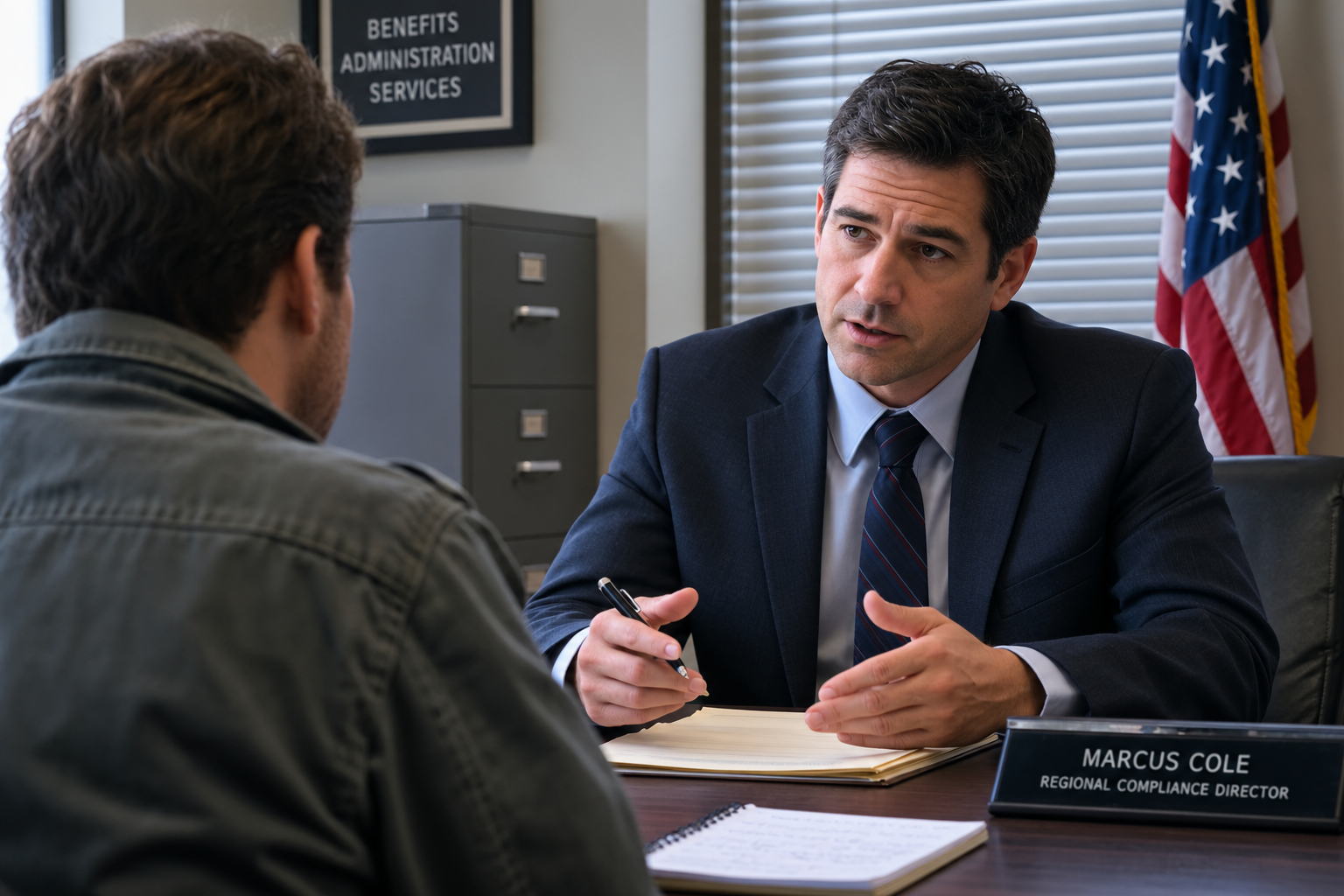
The days after my meeting with Marcus passed without another call.
I checked my messages each morning, but I stopped reaching for my phone every time it made a sound.
I had learned that waiting for information could become a habit of its own.
At first, I had treated every quiet day as a sign that something was wrong. Now I tried to remember what Marcus had actually told me.
The review was continuing.
He had no verified finding to share.
He would contact me if information became available that was relevant to my case and could properly be discussed.
Those statements were not an answer, but they were the most accurate description of my situation.
I repeated them to myself whenever my thoughts began to wander.
One Monday morning, I arrived at work early and found a stack of paperwork waiting on my desk.
I sat down, opened the first folder, and began working through it.
For nearly an hour, I thought about nothing except the task in front of me.
It was a relief.
The case had occupied so much of my attention that I had started to forget what it felt like to concentrate on something ordinary.
I did not want to lose that part of myself.
At lunchtime, I went outside and ate at a small table near the building.
I watched people walk past with their bags and cups of coffee.
They looked as though they were thinking about the same things they had thought about the day before.
Work.
Bills.
Family.
Whatever they needed to do before the day ended.
I wondered how many people carried unanswered questions they never discussed with anyone.
Then I reminded myself that other people's private struggles had nothing to do with my own investigation.
I finished my lunch and went back inside.
That evening, I opened the drawer where I kept the envelope of identity records.
I had no new reason to examine them.
Still, I wanted to make sure the papers were where I had left them.
The envelope sat beside my notebook.
The handwritten label on its front looked ordinary.
I took it out, checked the contents, and put everything back in the same order.
The oldest documents were still the oldest documents.
The dates were unchanged.
The references to earlier paperwork still pointed toward records I did not possess.
Nothing had appeared while I was away.
I closed the envelope and returned it to the drawer.
For once, I did not sit down afterward to imagine what the missing documents might contain.
I washed my hands, prepared dinner, and listened to the radio while I ate.
The ordinary sound of someone talking about the weather filled the kitchen.
I found comfort in its unimportance.
The following week, I received a message confirming that my contact information remained current with the benefits office.
It contained no details about the historical case.
I read it twice, then saved it with my other administrative messages.
I did not treat it as evidence that the investigation had advanced.
It was simply a confirmation that the office could reach me.
I was beginning to understand how much difference that small distinction made.
Before the first meeting with Marcus, I had assumed that official communications usually meant a decision had been made.
Now I knew that a message could confirm only one small thing.
A request could establish what someone needed.
An appointment could establish when we would speak.
A historical record could establish that a particular designation existed.
None of those things necessarily answered the larger question behind them.
I wanted to remember that.
A few days later, I considered calling the person I had spoken with earlier about my childhood records.
I wondered whether they might have remembered something after our conversation.
I picked up my phone, found the contact, and hesitated.
I did not want to ask the same questions repeatedly until the person felt pressured to produce a memory.
If they remembered something specific, they could tell me.
Until then, I had no reason to assume that silence meant they were withholding information.
I put the phone down.
That decision felt small, but it was important.
I had begun to see how fear could change the way I interpreted ordinary behavior.
A pause could become suspicious.
A forgotten date could become a clue.
A person's uncertainty could begin to feel like a refusal.
I did not want to build my search for the truth on those assumptions.
When I next checked my notebook, I found the question I had written near the beginning of the review.
What is the earliest verified record connecting my name to my Social Security number?
It remained unanswered.
I drew a small line beneath it and added the date of my last meeting with Marcus.
Then I closed the notebook.
I could not manufacture progress by writing the question again.
I could only preserve it until there was information that might help answer it.
On Friday evening, I went for a walk after work.
The air was cool, and the streets were quieter than they had been during the afternoon.
I walked without a particular destination, thinking about how much my expectations had changed since I first entered the benefits office.
At the beginning, I had wanted one conversation to explain everything.
I had imagined that the right person would open the right file and tell me exactly who I was.
Now I understood that the answer might require several separate findings.
The historical record would need to be understood.
The death designation would need to be placed in context.
The connection to my Social Security number would need to be examined.
And whatever was established would have to be distinguished from what remained unknown.
I still wanted those answers.
I had simply stopped pretending that they could all arrive at once.
When I returned home, I checked the drawer one last time before going to bed.
The envelope was safe.
The notebook was beside it.
I shut the drawer and turned off the light.
There was no new discovery that night.
There was no hidden message waiting for me.
There was only the same unresolved question and the decision to keep seeking an honest answer.
Click here to continue reading: PART 18: I Returned to Marcus With One Final Request for Clarity, Because I Needed to Understand What the Investigation Could Establish and What It Could Not
I Went to the Benefits Office Expecting a Simple Answer, but One Red Warning on a Computer Screen Changed Everything
Part 17 of 20