I wanted to believe that calling Chloe's father would make things easier.
Looking back, I should have paid more attention to what happened when he walked into the room.
But that came later.
First, we had to find her mother.
Rachel Thorne was still searching the county records when I returned to the intake counter.
She had found the Miller property.
Thirty acres outside town.
A farmhouse set back from Route 4.
No emergency contact other than Alan Miller.
"He still has certain notification rights connected to the property," Rachel explained.
"Even after the divorce?"
"That's what the records say."
I looked at the clock.
The minutes seemed to be passing too quickly.
"Call him."
"I already left a message."
"Did you reach him?"
"No answer yet."
I turned away from the counter.
There was nothing more I could do with that information.
I went to check on Chloe.
She was sitting beside the treatment area with the blanket around her shoulders.
The cereal box was on the small table.
She had folded the loose cardboard flap down.
I wondered how many times she had opened it over the previous three days.
I wondered whether she had eaten anything besides cereal.
Those were not questions I wanted to ask in front of her.
Dr. Ross had arranged for the infants to be transferred to neonatal care as soon as appropriate beds were available.
The smaller baby had begun responding to treatment.
The boy was still dangerously underweight.
Both needed close observation.
Chloe listened when I explained that they were receiving help.
She did not smile.
"Can Mommy come here too?"
"Ben went to find her."
She nodded.
"He's got the key?"
"Yes."
That seemed to comfort her.
For a moment, she leaned back in the chair.
Then she sat forward again.
"Mommy said to keep the key safe."
"You did."
She looked at me.
"Will he give it back?"
"I'll make sure we ask him."
Her hands relaxed a little.
I remember being surprised that she could worry about a key after everything she had done.
But children hold on to the things adults tell them are important.
She had protected that key.
The same way she had protected the babies.
At 9:15, Ben returned to the hospital.
He came through the ambulance entrance with damp shoulders and dirt on his boots.
I met him beside reception.
"Did you find Sarah?"
"Not yet."
My heart sank.
"What happened?"
"The driveway is blocked."
"Blocked how?"
He described a chain stretched across the outside gate.
A heavy padlock held it shut.
The chain looked recently installed.
I stared at him.
"You're sure?"
"There's no mistaking it."
"Could you drive around?"
"Not with an ambulance. There's fencing and soft ground on either side."
I thought about Chloe pushing the wheelbarrow through the fields.
Of course she had avoided the main driveway.
She had been forced to.
Ben told me that the Sheriff's Office had been notified and officers were arranging access.
He had given Chloe's brass key to a responding deputy.
I looked toward the treatment corridor.
"Did you see the house?"
"From a distance."
"And the car?"
"There was one parked near the buildings."
I remembered Chloe's answer.
The car needed keys.
Sarah's car had not been gone.
It had been sitting there.
I asked Ben whether the chain looked old.
He shook his head.
"The metal was clean."
I felt a chill.
It was possible Sarah had locked the gate before becoming ill.
It was possible there was a harmless explanation.
I knew that.
But something did not fit.
A locked gate.
A mother unconscious inside.
Newborn children without care.
And a six-year-old who knew how to get out through an old farm path.
I asked Ben one more question.
"Could a person fasten that padlock while standing inside the property?"
He thought for a moment.
"Not the way I saw it."
I said nothing.
Neither did he.
Then he returned to the ambulance bay to coordinate the next response.
I was still thinking about that gate when the main hospital doors opened shortly before ten.
A man entered wearing a charcoal-colored coat.
His shoes were polished.
His hair was neatly cut.
He carried himself like somebody arriving for a business appointment rather than a family emergency.
He stopped at the directory.
Checked his wristwatch.
Then approached the reception counter.
"I'm Alan Miller."
His voice was calm.
Almost too calm.
Rachel came out to meet him.
She thanked him for responding to the call.
He asked about Chloe first.
Then the twins.
Then Sarah.
The order was reasonable.
There was nothing wrong with it.
I tell myself that now because I do not want to pretend I knew immediately that something was wrong.
I did not.
I was suspicious.
That is different from knowing.
Rachel told him Chloe was resting and the babies were receiving treatment.
She explained that emergency personnel were still working to reach Sarah.
Alan listened.
He asked whether the infants were expected to recover.
Rachel said the doctors were treating them.
He looked at his watch again.
I noticed it.
I should not have cared about a wristwatch.
But when somebody's family is in danger, small things become difficult to ignore.
Rachel led him toward the pediatric room.
I followed at a distance.
Chloe was sitting in the same chair.
She held an empty paper cup with both hands.
Alan approached her.
"Hi, Chloe."
She did not look up.
He stood beside the chair.
Then he placed a hand on her shoulder.
Her entire body went rigid.
Not a frightened jump.
Not the ordinary surprise of being touched unexpectedly.
She stopped moving altogether.
Her fingers tightened around the paper cup.
Alan kept speaking.
I could not hear every word.
But I saw Chloe look toward the floor.
She made no move to hug him.
She did not ask him to help her mother.
She did not ask whether he could take her home.
I felt something unpleasant settle in my stomach.
Rachel asked Alan to come to the consultation room.
He followed her.
I remained near the doorway.
For several minutes, I considered going back to reception.
It was my proper place.
I had paperwork waiting.
Patients needed registration forms.
The telephone kept ringing.
But I stayed.
Rachel began asking Alan about Sarah.
He described his former wife as withdrawn.
He said she had become difficult to reach.
He said she avoided visitors.
He said her emotional condition had worsened since the twins were born.
I listened.
The words sounded reasonable when spoken slowly.
But they did not explain the wheelbarrow.
Rachel asked why Sarah had remained at the farm.
Alan said she had insisted on keeping the property.
He described the land as poorly maintained.
He spoke about neglected fields and her unwillingness to accept assistance.
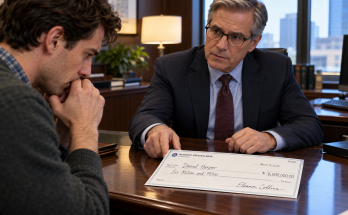
Then he produced paperwork from his portfolio.
I could not see the entire document.
Rachel examined it.
She asked when it had been prepared and what it established about his interest in the property and family.
Alan answered without hesitation.
I remember his careful tone.
He seemed more comfortable discussing documents than discussing the child who had arrived covered in mud.
I stepped closer.
"Sarah has managed that place on her own for years," I said.
Alan turned toward me.
For the first time, his expression changed.
Not dramatically.
His smile simply disappeared.
"Mrs. Vance, Sarah hasn't been coping well."
"Chloe brought two newborn babies here without help."
"I understand that."
"She came through the fields."
He looked at Rachel.
"Children do strange things when they're scared."
That was true.
But this was more than a frightened child running for help.
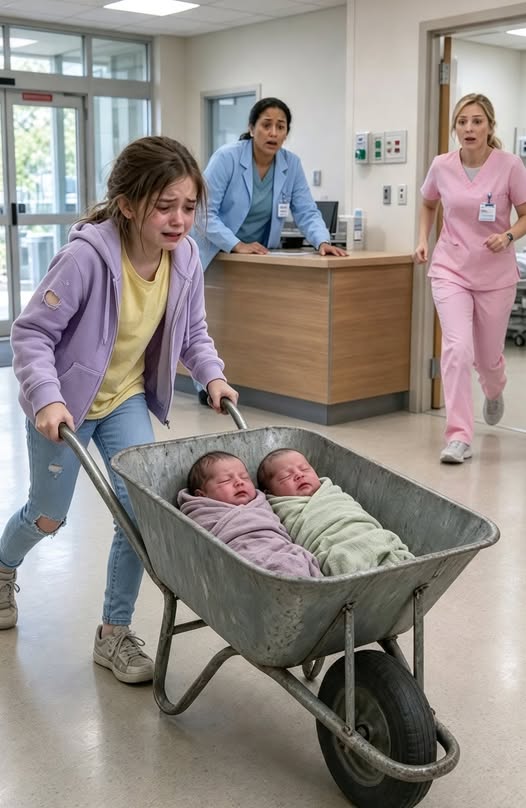
Chloe had found towels.
She had placed two infants into a wheelbarrow.
She had followed a route through muddy farmland.
She had arrived at the hospital.
And she had carried the house key her mother had told her to protect.
Those were deliberate choices.
Alan continued explaining Sarah's behavior.
He suggested she had chosen isolation.
He implied the situation was the result of her refusing help.
Rachel wrote notes.
I watched her pen.
At one point, she looked up.
"Why would Chloe need to take the babies such a long distance if her mother could have contacted someone?"
Alan said Sarah sometimes withdrew from everyone around her.
He claimed the little girl had probably become frightened when her mother did not respond.
That explanation did not answer the question.
It moved around it.
I had heard people do that before.
Sometimes because they were embarrassed.
Sometimes because they were afraid.
And sometimes because the truth would hurt them.
I had no proof which one applied to Alan.
So I stayed quiet.
He folded his papers and said he intended to have them formally registered with hospital administration.
Rachel asked him to remain available while the situation was reviewed.
He agreed.
Then he walked out.
I followed him into the central corridor.
He stopped to sign the visitor register.
I stood across the counter from him.
"Mr. Miller?"
He looked up.
"Yes?"
"Sarah's car is at the farm."
"So I understand."
"Chloe said the keys were missing."
"Sarah misplaces things."
"She couldn't use the car."
Alan put down the pen.
"She has refused to leave that property before."
I thought about the chain.
"Someone locked the outer gate."
He adjusted the cuff of his coat.
"She wanted privacy."
"From outside the gate?"
His face hardened.
Only for a moment.
Then he smiled.
"You're making assumptions about a complicated situation."
"Chloe walked through the tractor lane."
"She knows that land."
"She said she wanted to stay out of sight."
"Probably because the wind was worse along the road."
I looked at him.
He had an answer for everything.
But none of his answers seemed to begin with concern for how Chloe had survived the journey.
He leaned closer.
"Mrs. Vance, your job is to register patients. I suggest you leave the family matters to the people responsible for them."
I felt my face grow warm.
He was not wrong about my job description.
I was an intake receptionist.
Not a police officer.
Not a lawyer.
Not a social worker.
But I had been the person standing at the front desk when Chloe arrived.
I had watched Karen uncover those babies.
And I had seen how Chloe reacted when Alan touched her.
I could not simply set those things aside because he spoke confidently.
Alan turned and walked toward the pediatric wing.
I remained behind the counter.
My hands were shaking.
I pressed them against the laminate surface until they stopped.
Then I went to the ambulance bay.
Ben was checking equipment near his vehicle.
I told him about Alan's explanation.
He listened without interrupting.
"Do you believe him?" I asked.
Ben looked toward the hospital.
"I believe what the little girl showed us."
I waited.
He continued.
"She knew how to get around that gate."
I nodded.
"She couldn't use the driveway."
"That's right."
"And the chain was fastened from outside."
"That's what it looked like."
He did not accuse anybody.
Neither did I.
But I asked him to photograph the gate and anything else unusual when he returned.
He agreed.
Then I remembered the wheelbarrow.
It was still parked near the service area.
I walked over and examined it.
The red paint had worn away around the front supports.
The wheel was crooked.
A little metal tag hung near the axle.
There were numbers stamped into it.
884-02.
I wrote them down.
I did not know why they might matter.
I only knew that small details were easy to lose once a busy hospital moved on to the next emergency.
I looked at the tray.
The towels had been removed.
The metal bottom was scratched and dirty.
I pictured Chloe's small arms pushing against the handles.
Three miles.
I had finally understood the distance.
Three miles of fields, gravel, and weeds.
I stood there for a long moment.
Then I returned inside.
Rachel was speaking to someone from the county office.
Alan's name came up several times.
I heard references to paperwork and temporary arrangements for the children.
I felt the situation slipping away from the simple emergency it had seemed to be that morning.
There were doctors treating babies.
Paramedics trying to reach a mother.
A father preparing legal documents.
And a little girl who had not yet been told whether her mother was alive.
I went back to Chloe.
She was watching the hospital hallway.
"Is Ben coming back?" she asked.
"Yes."
"With Mommy?"
"I hope so."
She pulled the blanket closer.
Then she looked at me.
"Did I do it right?"
I did not understand at first.
"What do you mean?"
"The babies."
She lowered her eyes.
"I brought both."
I felt tears behind my eyes.
I did not let them fall.
"You brought them where they could get help."
She nodded.
Then she looked toward the cribs.
I sat beside her.
I wanted to tell her everything would be fine.
But I had spent too many years in hospitals to make promises I could not keep.
So I gave her the only answer I knew was true.
"You did something very important, Chloe."
She rested her head against the chair.
For the first time that morning, she closed her eyes.
I remained beside her until her breathing became steady.
Then I went back to work.
But I could not forget Alan's words.
Sarah wanted privacy.
Sarah refused assistance.
Sarah chose to stay alone.
I kept thinking about the chain across the gate.
Because whatever Sarah had wanted, somebody had made it very difficult for anyone to reach her.
And that was not the same thing as choosing to be alone.
Click here to continue reading: PART 3: I Risked My Hospital Job to Open an Old Patient File, and What I Found Changed How We Tried to Save Sarah
I Thought It Was Another Ordinary Morning Until a Six-Year-Old Girl Pushed a Rusty Wheelbarrow Through Our Emergency Room Doors
Part 2 of 10