The letter arrived in an ordinary white envelope.
No federal seal.
No law-firm return address.
State Lottery Claims Division.
I left it on the counter while making tea.
Old habits.
Dangerous envelopes had trained me to finish beverages first.
When I opened it, the language was bureaucratic.
Evidence retention period complete.
Associated criminal proceedings concluded sufficiently for archival disposition.
Claim materials available according to policy.
Then the line that stopped me:
The original winning ticket may be returned to claimant upon request after final imaging and record certification.
I stared.
The ticket.
The actual two-dollar scratch ticket.
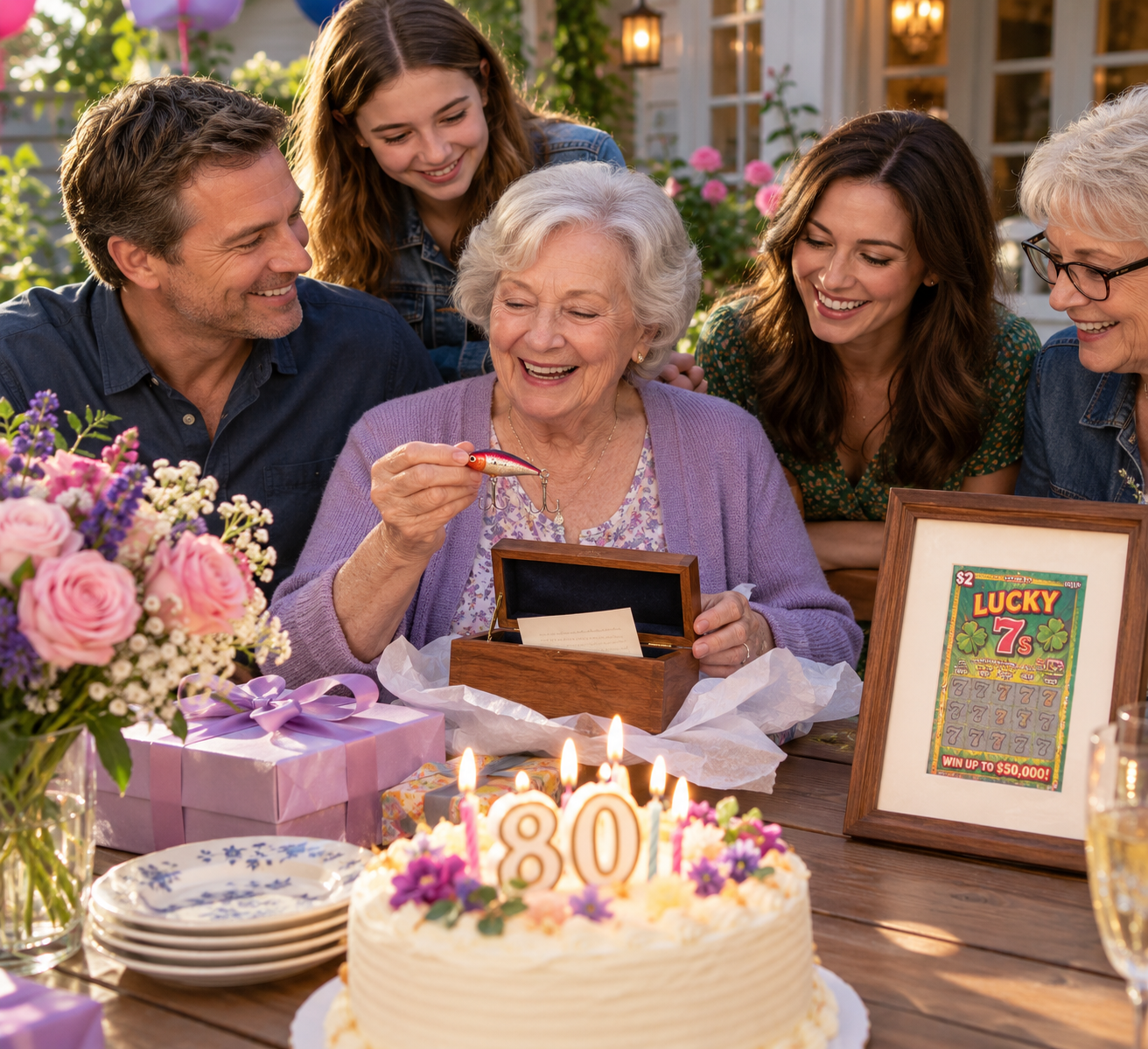
The one Renata handed across the birthday table.
The one I folded into my cardigan pocket.
The one I hid behind Harold’s fishing photograph.
The piece of cardboard everyone had talked about for years.
I could have it back.
My first reaction surprised me.
No.
Then curiosity arrived.
What did it look like now?
Probably faded.
Stamped.
Signed.
Official markings.
Would touching it feel important?
Would I remember the moment when eleven million dollars appeared beneath silver dust?
Would I feel grateful?
Angry?
Nothing?
I put the letter aside.
Did not decide.
At lunch, Eileen saw it.
“You should get it.”
“Why?”
“History.”
“I have enough history.”
“Sell it.”
“To whom?”
“People buy strange things.”
“No.”
“Frame it next to the loser.”
“That would look like a morality exhibit.”
“It already does.”
I rolled my eyes.
Daniel had a different answer.
“Don’t get it.”
“Why?”
“Because people will make it important again.”
I considered.
“Do you want it?”
“Absolutely not.”
“Why?”
He laughed.
“That ticket has caused enough trouble.”
“Technically people caused trouble.”
“Fine. Retire the cardboard.”
Sophie wanted it returned.
“For the family archive.”
“What family archive?”
“The box you pretend isn’t an archive.”
She meant the box with Harold’s letters, court notices, photographs, and the purple card.
“That is storage.”
“Grandma, that is an archive.”
“No labels.”
“There are three folders labeled.”
I ignored that.
Sophie continued.
“You don’t have to worship it. Just keep it.”
“Why?”
“Because someday somebody will tell this story badly.”
That stopped me.
“What do you mean?”
“People already do.”
She was right.
Online versions of our case had become distorted.
Some said I had intentionally tricked Renata.
Some said I won fifty million.
One claimed I evicted Daniel on Christmas morning and bought a mansion.
Another said Harold had been murdered for the ticket, which was chronologically impossible.
Truth becomes entertainment quickly.
“Keeping the ticket won’t fix that.”
“No.”
“Then?”
“It keeps one small fact real.”
I looked at her.
That was a good answer.
Not enough to decide yet.
The lottery gave me sixty days.
I used fifty-seven.
During that time, something else changed.
My name came off most news searches except when older stories resurfaced.
Wonderful.
The fund continued without me.
Daniel earned a promotion to shift coordinator.
Also wonderful.
Sophie began dating someone named Maya.
I learned this after three months because Sophie correctly decided her relationship was hers before it was family information.
I pretended not to be offended.
Mostly.
When I met Maya, she was funny, direct, and apparently immune to family mythology.
At dinner she pointed to the ceramic trout.
“What is that?”
Sophie whispered, “Careful.”
I said, “Art.”
Maya stared.
“No.”
I liked her immediately.
Eileen adopted a cat.
Despite mocking Sophie’s campaigns.
The cat hated everyone except Eileen and my porch shelf.
It knocked the rosemary plant over twice.
I threatened legal action.
Eileen said I had enough lawyers.
Ordinary life.
Messy.
Unimportant.
Precious.
On day fifty-seven, I called the lottery office.
“I want the ticket returned.”
The clerk explained procedures.
Identity verification.
Certified delivery or in-person collection.
I chose in person.
Not because of sentiment.
Because after everything, I was not trusting the mail with that particular object.
Sophie came.
Daniel came.
Eileen too.
It felt absurd.
Four adults entering a lottery office to retrieve a piece of cardboard worth nothing now.
The clerk brought out a small archival sleeve.
There it was.
My ticket.
Faded slightly.
Claim stamp across the back.
My signature.
Official verification marks.
I held it.
Nothing happened.
No music.
No revelation.
Just paper.
I laughed.
“What?” Sophie asked.
“It’s ugly.”
Daniel looked.
“It always was.”
The clerk smiled politely, clearly accustomed to winners behaving strangely.
I turned the ticket over.
The scratched numbers remained visible.
Eleven million.
Once.
Now zero.
Its value had already been converted into money, houses, lawyers, fund grants, independence, taxes, and several lifetimes of therapy bills.
The ticket itself was done.
On the drive home, Sophie asked, “Frame?”
“No.”
“Archive?”
“Maybe.”
Daniel said, “Burn it.”
Eileen objected.
“History.”
I listened to them argue.
Then understood something.
For years, other people had assigned meaning to the ticket.
Renata called it a joke.
Caleb called it a test.
Patricia called it leverage.
Reporters called it fate.
Daniel called it trouble.
Sophie called it history.
I could decide what it was.
At home, I removed the losing ticket from its frame.
Sophie protested.
“Grandma.”
“Relax.”
I put both tickets on the kitchen table.
Winner.
Loser.
One changed my life.
One changed nothing.
I looked at them for a long time.
Then I framed only the loser again.
The winner went into the storage box.
Not because it did not matter.
Because I did not want the largest accident of my life displayed as the explanation for who I became.
Money gave me options.
It did not give me courage from nowhere.
It did not create Renata’s greed.
It did not create Harold’s evidence.
It did not create Daniel’s choices.
It accelerated things.
Exposed things.
Paid for lawyers.
Bought distance.
But the deciding moments were still human.
I left the lottery office.
I bought the rental house.
I said no to Sunrise Pines.
I told police.
Eileen spoke.
Sophie preserved the memory card.
Daniel eventually testified.
Rebecca questioned a chart.
Walter wrote a warning.
Robert kept a cassette.
Harold documented.
No ticket made those choices.
That evening, Daniel stayed for dinner.
While washing dishes, he asked, “Do you ever think about what would’ve happened if the ticket really won five hundred?”
“Yes.”
“What do you think?”
I dried a plate.
“I might have given it to you.”
He laughed.
“Really?”
“Probably.”
“That is depressing.”
“I was different.”
“Would they still have moved you?”
“Maybe.”
“Sunrise Pines?”
“Likely.”
“Would you have found out about Dad?”
“I don’t know.”
He turned off the faucet.
“That bothers me.”
“Me too.”
“Then aren’t you glad you won?”
I thought.
“Glad is not the word.”
“What word?”
“Grateful for what I could do with it.”
He nodded.
That was close enough.
Later, I sat on the porch alone.
I imagined the other version.
Five hundred dollars.
Maybe I announce it.
Maybe Renata laughs and says dinner is on me.
Maybe Daniel suggests saving it.
Maybe I give Sophie some.
Maybe life continues.
Frank’s plan keeps moving.
Voss’s notes accumulate.
Sunrise Pines.
Meadowridge.
The rural house.
Dora Fields.
The thought chilled me.
But counterfactual lives are dangerous too.
You can spend years grieving events that never happened.
I returned to what did.
I noticed.
I acted.
I survived.
A month later, David completed the final restructuring of my estate.
Nothing dramatic.
Savannah house to a trust with clear occupancy instructions.
Cash reserves.
Charitable provisions.
Sophie’s independent trust.
No automatic large inheritance to Daniel.
He knew.
Accepted.
“Why not?”
“I have money.”
“You mean me?”
“I mean I am not using inheritance to repair our relationship.”
He nodded.
“Good.”
“If you need legitimate help someday, you can ask.”
“And you can say no.”
“Yes.”
“Terrifying system.”
“Very.”
My healthcare directive included a paragraph David considered excessive.
I insisted.
If any person claims I am cognitively impaired, I want direct independent evaluation by a clinician with no financial relationship to family, guardian, facility, trustee, or attorney. I want the evaluator to speak to me privately. I want all major claims explained to me directly unless medically impossible.
David said, “This is very specific.”
“Experience.”
We added it.
I also required any future residential-care placement to include documented personal consent whenever I had capacity.
Not family preference.
Mine.
“Anything else?” David asked.
“Yes.”
“No purple balloons.”
He stared.
I laughed.
“Joke.”
“Hard to tell with you now.”
The final criminal case connected to the network closed the following year.
Not every victim had resolution.
Some claims failed for lack of evidence.
Some defendants completed their sentences earlier than families wanted.
Some died before proceedings ended.
Justice remained incomplete.
That stopped bothering me as much.
Not because incomplete justice was acceptable.
Because I no longer expected one institution to repair reality.
Courts could convict.
Money could be returned.
Records corrected.
But time was still gone.
Trust changed.
People dead.
Healing belonged elsewhere.
One Sunday, Daniel arrived carrying groceries.
“Why?”
“Dinner.”
“At my house?”
“You said I could cook.”
“I did not say I would eat.”
He ignored me.
Made chicken.
Better than last time.
We sat outside.
He asked, “Do you think we’re okay?”
I looked at him.
“What does okay mean?”
“Us.”
“I think we’re honest more often.”
“That sounds like therapist language.”
“It is.”
“Are we close?”
“Yes.”
He looked relieved.
“Do you trust me?”
I thought carefully.
“Yes.”
He blinked.
“Really?”
“Yes.”
“Completely?”
“No.”
He laughed.
“Of course.”
“Do you trust me completely?”
Daniel considered.
“No.”
“Good.”
He smiled.
“That feels weirdly healthy.”
“It is less romantic than people think.”
Trust was no longer a light switch.
It was a set of permissions.
I trusted Daniel with my house key.
Not my accounts.
Trusted him to tell me when he was struggling.
Not to automatically know what I needed.
Trusted him to love me.
Not to decide for me.
That was enough.
Before leaving, he paused by the mantel.
The ceramic trout stared at him.
“Can I have that someday?”
“No.”
“Why?”
“I suffered for this fish.”
“It was Grandpa’s.”
“Exactly.”
“Estate theft.”
“Call a lawyer.”
He laughed.
Then hugged me.
I stood alone after he left.
The house quiet.
No dread.
No loneliness pretending to be danger.
Just quiet.
I finally understood why the losing ticket deserved the frame.
It reminded me that most days do not contain a jackpot or catastrophe.
Most days are ordinary.
That was not emptiness.
It was the prize.
Click here to continue reading: PART 33: Sophie Asked Me What I Wanted People to Remember, and I Realized the Story Everyone Told About My Luck Had Missed the Only Part That Mattered
My Daughter-in-Law Called Me a Household Expense, but the Two-Dollar Birthday Joke in My Hand Was About to Change Everything
Part 32 of 35