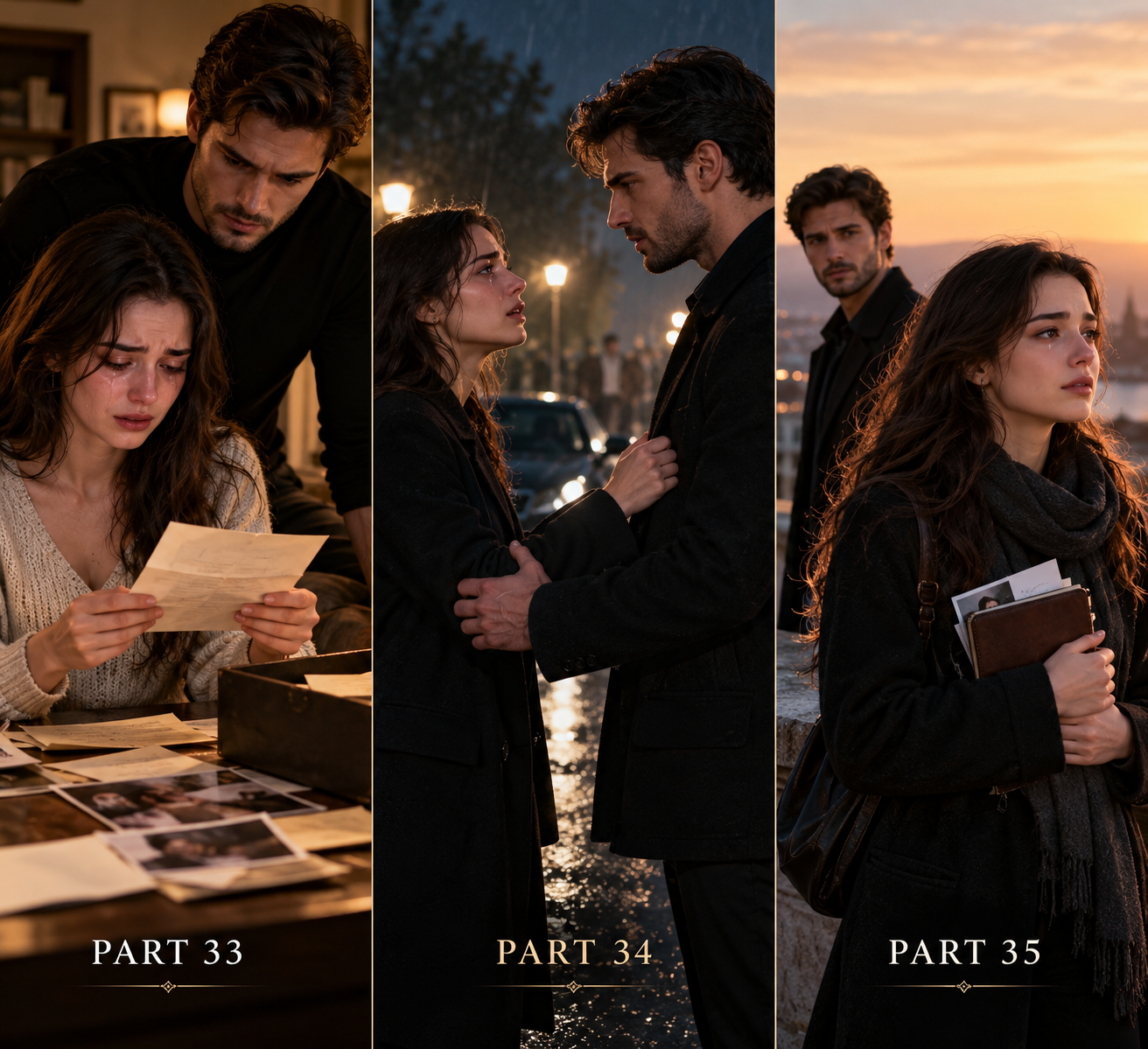
Chloe did not cry.
That frightened me more than when she did.
She stared at Detective Patel as though the words had arrived in a language she could not understand.
“I’m what?”
“Documents identify you as trustee of Cedar Ridge Ventures.”
“I don’t know what that is.”
“I understand.”
“No, you don’t.”
Her voice rose.
“I have never heard those words before.”
Sarah moved toward her.
Chloe pulled away.
“Don’t.”
Sarah stopped.
Patel remained calm.
“Do you remember signing trust documents two years ago?”
“No.”
“Anything your father asked you to sign around that time?”
“No.”
Chloe pressed both hands against her temples.
“Two years ago I was nineteen. I signed apartment paperwork. School stuff. A new phone contract.”
“What month was your birthday?”
“March.”
“The Cedar Ridge filing is dated March twenty-third.”
Three days after Chloe’s nineteenth birthday.
Her face changed.
“Wait.”
Everyone went still.
“What?” Sarah asked.
“Dad gave me money.”
“How much?”
“Five thousand dollars.”
“For what?”
“My birthday.”
Ethan frowned.
“Dad gave you five grand?”
“He said Grandma Laura had left something for me.”
David’s mother.
The estate account.
Another line connected.
“Did you sign anything?”
Chloe looked sick.
“I think so.”
“What?”
“A receipt.”
Patel leaned forward.
“Describe it.”
“It was at Dad’s office.”
“Which office?”
“The Oak Creek office.”
“Who was there?”
“Dad. Maybe Marcus came in later. I don’t remember.”
“Notary?”
“I don’t know.”
“Did you read the document?”
“No.”
Sarah closed her eyes.
“Chloe.”
“I was nineteen.”
“I know.”
“He said it was a receipt.”
“I know.”
Chloe’s voice broke.
“I trusted him.”
No one corrected her.
Patel asked whether she still had the five thousand dollars.
“No. It went toward school.”
“Bank deposit?”
“Yes.”
Good.
External records.
Always external records.
Jessica asked Patel to obtain the Cedar Ridge trust instrument through proper channels.
Patel said investigators were already doing so.
Then Chloe remembered another detail.
“He took a picture.”
“Of what?”
“Me holding the check.”
“Why?”
“He said Grandma would have liked knowing I got it.”
Laura had already been dead.
A sentimental explanation.
A photograph proving Chloe received consideration.
Perhaps a birthday memory.
Perhaps something else.
“What was behind you in the picture?” Patel asked.
“I don’t know.”
“Desk?”
“Yes.”
“Documents visible?”
“Maybe.”
“Do you still have the photo?”
“I think Dad texted it.”
Her old phone was evidence.
Investigators could recover it.
For the next hour, Chloe gave a detailed statement about the birthday.
Cake at Sarah’s apartment.
Lunch with Ethan.
Then David picking her up.
He drove her to Oak Creek because he said the inheritance paperwork was there.
He gave her a cashier’s check.
He pointed to highlighted lines.
She signed.
She did not receive copies.
She did not know she had become trustee of anything.
“What does being trustee mean?” she asked Jessica.
“It depends entirely on the trust.”
“Could I owe money?”
“Possibly duties. Liability depends on facts.”
Her face went white again.
“But I didn’t do anything.”
“That will matter.”
“Could Dad have opened accounts using my name?”
“Yes.”
“Could he move money?”
“If the documents gave him authority as manager, agent, adviser, or authorized signer.”
Chloe looked at Ethan.
“This is CKB all over again.”
Maybe.
But Cedar Ridge was older.
More valuable.
More deliberate.
CKB had looked like a shell created from Chloe’s information.
Cedar Ridge might have been built around her identity to obscure David’s own beneficial control.
At ten thirty, Patel received the trust instrument.
She reviewed it privately first.
Then gave a copy to Jessica under agreed conditions.
Jessica read for several minutes.
Her expression hardened.
“Chloe is named trustee.”
Chloe swallowed.
“Beneficiary?”
Jessica continued.
“Primary beneficiary during the first ten years is Laura Bennett Family Legacy Fund.”
Ethan frowned.
“That sounds fake.”
Jessica kept reading.
The Legacy Fund was another private entity.
Manager:
David Bennett.
Successor beneficiary:
Chloe Bennett.
Then, after a specified date, distributions could be made for property management, education, family investment, and other broad purposes.
“Who can direct investments?” I asked.
Jessica found the clause.
“Investment adviser.”
“Who?”
She turned the page.
“David.”
There it was.
Chloe had the title.
David had operational authority.
“Can the trustee remove the adviser?” Jessica continued.
“Yes.”
Chloe looked up.
“I can fire him?”
“Under this document, apparently.”
“Do it.”
“Not yet.”
Chloe stared.
“Why not?”
“Because we need independent counsel to review the trust, current assets, obligations, and whether any action should be coordinated with investigators.”
Again, waiting.
Again, the unbearable right answer.
Chloe crossed her arms.
“I hate lawyers.”
Jessica nodded.
“Common.”
The trust instrument contained a signature page.
Chloe’s signature looked genuine.
She stared at it.
“That might actually be mine.”
Not every document was forged.
That was the danger.
David had obtained real signatures under false or incomplete explanations.
“What did the document say near the signature?” Patel asked.
Jessica showed her.
The page identified Chloe as accepting appointment as trustee.
Chloe shook her head.
“I would remember that.”
“Maybe.”
“No. I was studying business. I knew what trustee meant.”
That was important.
If the page had been presented separately, she might not have seen the full context.
The document contained initials at the bottom of several pages.
Chloe examined them.
“Those aren’t mine.”
Jessica looked closer.
“You’re sure?”
“Yes.”
“I never initial with just C.”
Some pages had C.B.
Others a single C.
The signature might be genuine while supporting pages had been assembled around it.
The same method again.
One real piece validating surrounding paperwork.
“What about the notary?” Sarah asked.
We turned to the acknowledgment.
Elaine Carver.
Everyone froze.
Impossible.
Elaine had died two years before the trust date.
There it was again.
A dead woman’s notarial identity used on a later document.
This was no old procedural irregularity.
The trust had been formed after Elaine’s death.
Whoever applied that notarization knew she could not have witnessed Chloe’s signature.
Patel photographed the page.
“The physical original will matter.”
“Where is it?” Chloe asked.
According to the trust, originals were maintained by the investment adviser.
David.
Possibly among the seized records.
Jessica called Chloe’s independent attorney.
He arrived before noon.
From then on, he spoke for her interests.
I was grateful.
Even though I wanted to protect her, I did not want to become another adult telling Chloe what she should do with documents carrying her name.
At one, bank records began clarifying Cedar Ridge.
The trust held interests in three limited liability companies.
Those companies held six properties.
Estimated equity was substantial.
The $52,400 taken from my savings had moved through Oak Creek into a Cedar Ridge management account.
From there, $48,000 went toward delinquent taxes on one property.
The remainder paid insurance and fees.
“So my money protected Cedar Ridge property,” I said.
Patel nodded.
“That is what the transaction trail currently indicates.”
“Property technically held for Laura’s Legacy Fund?”
“Yes.”
“Controlled by David?”
“He had investment authority.”
“Benefiting Chloe later?”
“Potentially.”
Chloe looked horrified.
“I don’t want it.”
Her lawyer said quietly, “Do not make decisions about assets before we understand them.”
“I don’t want stolen money.”
“No one is asking you to keep stolen money.”
“But my name is on it.”
He nodded.
“And that is why we trace it carefully.”
Sarah asked the question none of us wanted to ask.
“Was David trying to hide assets for Chloe?”
It was possible.
A father placing property into a daughter’s trust could be legitimate estate planning.
But why hide the trust from the daughter?
Why use a dead notary?
Why move my money into it without my authorization?
Why omit it from settlement disclosures?
The legitimate explanation kept shrinking.
At two thirty, Marcus’s attorney provided historical records concerning Cedar Ridge.
Marcus claimed he had urged David to separate family assets from Oak Creek creditors.
Four years earlier, during one of Oak Creek’s financial crises, David proposed creating a family trust.
Marcus introduced him to an estate planner.
“Who?” Jessica asked.
The answer surprised us.
Not Daniel Price.
Samuel Warren’s brother.
Thomas Warren.
An estate attorney.
The medical connection was partly coincidence.
Dr. Samuel Warren and attorney Thomas Warren were brothers.
David knew Samuel through property investments because Thomas had structured Cedar Ridge.
That explained years of contact.
It did not prove medical misconduct.
It did, however, show why David thought Samuel might be approachable.
A familiar professional connection.
“Did Thomas know Elaine was dead when her notarization appeared?” Patel asked.
Marcus did not know.
Thomas Warren had retired the previous year.
Investigators contacted him.
He agreed to speak.
His response arrived quickly.
Thomas remembered drafting an early Cedar Ridge trust proposal.
But not the final instrument investigators had shown him.
The draft he prepared named David as trustee.
Not Chloe.
It also did not contain Elaine Carver’s notarization.
He had refused to finalize the trust because David wanted unusually broad investment control while shielding beneficial ownership.
David later told him he had used another lawyer.
“Who?” I asked.
Nobody knew yet.
Thomas provided his draft.
Comparing versions revealed something disturbing.
Large sections were identical.
But the trustee page had changed.
The beneficiary structure had changed.
The signature pages had changed.
And a notarization had been added after Thomas stopped working on it.
A legitimate draft had become the skeleton for something else.
Again.
Real material.
Altered context.
At four, investigators found the Cedar Ridge originals in David’s garage safe.
The pages were not stapled.
They were held in a binder.
Different paper stocks.
Different printer characteristics.
The signature page containing Chloe’s genuine-looking signature did not match the paper used for the trust body.
Chloe’s attorney said nothing for several seconds.
Then:
“She may have signed a different document.”
My stomach tightened.
Patel remained cautious.
“Forensic examination is required.”
But the possibility fit everything.
Birthday receipt.
Real signature.
Later inserted into trust acceptance.
The photograph David took of Chloe holding the check could prove she received money and signed something that day.
Without proving what she signed.
David did not always need to forge handwriting.
He collected it.
At five, Ethan remembered his own similar moment.
“Dad had me sign blank tax authorization forms once.”
Every head turned.
“When?”
“Years ago.”
“How many?”
“Three or four.”
“Blank?”
“Mostly.”
“Why?”
“He said the accountant needed originals.”
Jessica wrote it down.
Ethan looked sick.
“Could those be what he used?”
“Possibly.”
His forged guarantee might not have required a forged signature at all.
It could have used a genuine signature cut from another page.
Or scanned.
Or placed digitally.
Again, forensic analysis would decide.
But David’s signature library suddenly made more sense.
He had spent years collecting legitimate exemplars.
Not necessarily with a criminal plan every time.
But once he had them, access became possibility.
At six fifteen, David’s attorney finally answered Jessica’s Cedar Ridge question.
Did David possess a direct, indirect, beneficial, managerial, contractual, or financial interest?
Response:
Mr. Bennett serves as investment adviser to Cedar Ridge Ventures pursuant to the trust instrument and may be entitled to reasonable management compensation.
There it was.
He had an interest.
Not title.
Not necessarily beneficial ownership.
But control and compensation.
The original settlement disclosure had omitted it.
Jessica sent an amended demand.
David’s attorney responded that settlement discussions were suspended pending review.
I felt no disappointment.
The offer had never been closure.
It had been another deadline.
Another attempt to make me sign before the full picture emerged.
At seven, Chloe sat beside me near the conference-room window.
“Do you think Dad meant to leave Cedar Ridge to me?”
“Yes.”
She looked surprised.
“You do?”
“Possibly.”
“After everything?”
“Those things can coexist.”
She stared outside.
“What does that mean?”
“He may have wanted to protect property for you.”
“By stealing from you?”
“That part is not protection.”
She looked down.
“I keep wanting him to be completely evil.”
“I know.”
“Because then none of this is confusing.”
“Yes.”
“What if he actually thought he was helping us?”
I considered the question.
“Then he still decided our consent didn’t matter.”
She nodded.
That was the line I could finally see clearly.
Intentions did not erase choices.
Love did not create authority.
Family did not eliminate consent.
At eight twenty, Patel returned with a recovered email from David to himself.
Subject:
Cedar structure.
Dated two years ago.
The body contained only a few lines.
Chloe signs receipt Thursday.
Use clean signature page.
Move trust after birthday.
Do not tell Sarah until structure funded.
My stomach turned.
Chloe read it twice.
“Clean signature page.”
Her attorney’s expression hardened.
Patel continued.
There was an attachment.
A one-page document.
ACKNOWLEDGMENT OF FAMILY LEGACY DISTRIBUTION.
It stated that Chloe had received $5,000 from Laura Bennett’s estate.
At the bottom was the signature that appeared in the Cedar Ridge trust.
Same placement.
Same tiny upward stroke at the end.
Same scan artifacts.
Not similar.
The same image.
David had taken Chloe’s genuine signature from a birthday receipt and placed it onto the trustee acceptance.
Chloe finally cried.
Not loudly.
She pressed her face into Sarah’s shoulder and shook.
Sarah held her.
Ethan turned away.
I stared at the document until anger became something colder.
David had given his daughter five thousand dollars from her grandmother.
Taken a photograph.
Made it look like a loving birthday moment.
Then used her signature to place her at the front of a trust she knew nothing about.
Maybe he intended to leave her wealth.
Maybe he intended to protect assets.
Maybe he told himself that one day she would thank him.
None of that changed the fact that he had stolen her decision.
Detective Patel closed the laptop.
“There’s one more thing.”
We waited.
“The birthday receipt was witnessed.”
“By whom?” Sarah asked.
Patel turned the page.
The witness signature belonged to Marcus Reed.
Marcus had been there after all.
Chloe wiped her face.
“He saw me sign the receipt?”
“Apparently.”
“Did he know Dad used it for the trust?”
“We don’t know.”
Chloe looked at her attorney.
“I want to know.”
He nodded.
“So do I.”
For the first time, Marcus was no longer merely a man who knew too much about old Oak Creek disputes.
He had been physically present when David collected the exact signature later used to create Cedar Ridge.
Click here to continue reading: PART 23: Marcus Finally Explained What He Saw on Chloe’s Birthday—and Why He Had Spent Years Paying to Keep David’s Disputes Quiet
On Christmas Morning, My Husband Asked Me to Disappear Before the Family I Helped Raise Arrived Home
Part 22 of 35