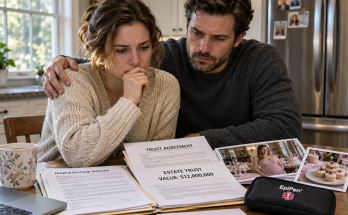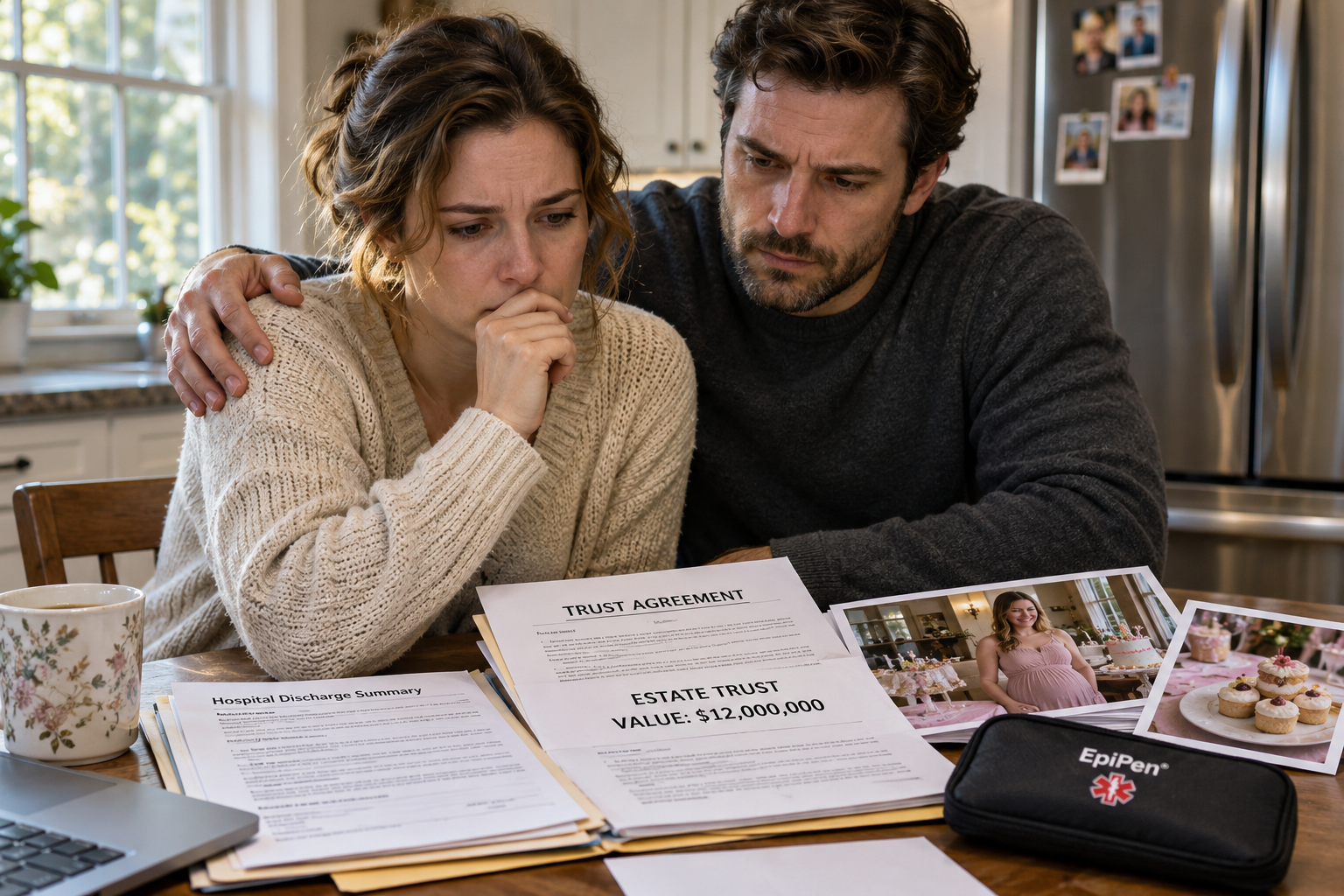
The question about the certified letter stayed with me.
I couldn't get past it.
There were ordinary letters people forgot.
Bills.
Advertisements.
Notices that arrived when life was busy and disappeared beneath other papers.
But a certified letter was different.
At least, that was how I understood it.
Someone had to account for its delivery.
And the lawyer had asked whether one had reached me.
I hadn't received one.
I knew that much.
What I didn't know was whether one had ever been sent.
That uncertainty began to trouble me.
I replayed the conversation in my mind, trying not to add anything the lawyer hadn't actually said.
He had referred to a trust.
He had asked about correspondence.
He had mentioned certified mail.
Those were the facts.
Everything beyond them was still unknown.
I wished I had asked him to explain why he expected me to have received anything.
I wished I had asked what the correspondence was supposed to contain.
But when the questions came, I hadn't been prepared.
I had been too surprised by the mention of my grandmother.
Nearly two years.
That length of time felt different now.
Before the call, it was simply the time that had passed since her death.
After the call, it became a period I couldn't account for.
I didn't know what had happened with the trust during those months.
I didn't know who had been notified.
I didn't know whether anyone else had received the documents the lawyer was asking about.
I didn't even know what my own name meant in relation to the trust.
There were too many unknowns.
And I hated how quickly my mind tried to connect them.
I thought about my family.
Then I felt guilty for thinking about them.
Nothing the lawyer had said proved anyone had done something wrong.
A missing letter was not proof of a crime.
A delayed conversation was not proof of a lie.
I understood that.
Still, something about his silence bothered me.
When I said I hadn't received correspondence, he didn't sound merely inconvenienced.
He seemed to be considering what my answer meant.
And I wanted to know why.
I tried to remember every word I could.
His introduction.
The mention of the trust.
His question about notices.
Then that pause.
I returned to it again and again.
Had he expected me to know about the trust already?
It sounded that way.
Had he believed his office had contacted me?
Possibly.
Had he been told I had received the information?
I didn't know.
That was the dangerous part.
I could feel myself moving from what I knew into what I feared.
And the two were not the same.
I forced myself to think more carefully.
My grandmother had died.
A trust existed, according to the lawyer.
His office had some reason to believe correspondence should have reached me.
I had received none.
Nothing else had been established.
No one had yet explained the gap.
And no one had explained why it was being addressed now.
I wondered whether the documents were still somewhere.
Not because I knew they existed in a particular place.
But because written records were the only things I could imagine that might settle the questions.
A letter would have a date.
An envelope might have an address.
A delivery record might show what happened.
I wanted something I could read.
Something that didn't depend on another person's memory.
I had never expected to feel that way about my grandmother's final affairs.
I had believed that after someone died, the people responsible for handling things simply did what needed to be done.
I hadn't thought much about how that process worked.
Maybe I should have.
I could see that now.
But I didn't want to turn my own lack of knowledge into an excuse for whatever had happened.
Not receiving a letter wasn't something I could have corrected before I knew it existed.
That was what I kept returning to.
I couldn't answer a notice I had never seen.
I couldn't ask questions about a trust I didn't know had been established.
And I couldn't make an informed decision about something that had never been explained to me.
The lawyer's question had opened a problem larger than the question itself.
He wasn't asking me to recall an ordinary family conversation.
He was asking whether his office had communicated with me about a legal arrangement.
And my answer was definite.
No.
I remembered feeling almost apologetic when I said it.
As though I had failed to receive something properly.
As though my ignorance were an inconvenience to him.
Looking back, that embarrassed me.
I had answered the truth.
I had no reason to apologize for it.
The more I thought about the conversation, the more I understood that the next explanation needed to come from the records.
Not from my guesses.
Not from the way the lawyer's voice changed.
Not from a suspicion about anyone in my family.
From the actual documents.
I wanted to know what was sent.
When it was sent.
And why the lawyer believed I might already have received it.
Until those questions were answered, I couldn't honestly say what had gone wrong.
I could only say that something did not fit.
And for once, I wasn't willing to pretend that it did.
Click here to continue reading: PART 3: For Almost Two Years I Had Known Nothing About the Trust, and the Lawyer’s Questions Made That Silence Impossible to Ignore
The Lawyer Asked About My Grandmother’s Trust, and I Realized Someone Had Kept Her Final Wishes From Me
Part 2 of 8