I didn't turn on the television when I got home.
That was unusual for me.
Most afternoons, I liked having a little noise in the house.
Nothing important.
Just somebody talking while I put away my things or made something to eat.
But that day, I wanted silence.
I set my purse on the kitchen table.
Then I took out Todd's folded notebook paper.
The two circles around the eight hundred dollars had become slightly creased.
I smoothed the sheet with my palm.
For a moment, I just looked at it.
I had spent twenty-two years working with accounts at the lumberyard.
I knew how to make a column of numbers tell the truth.
The difficult part was accepting what those numbers sometimes said.
I opened the drawer beside my chair and took out a pencil.
There was a clean sheet of paper inside.
I placed it beside Todd's.
His paper showed what he wanted from me.
Mine would show what I could afford.
I wrote my monthly income at the top.
$1,640.
Then I wrote the amount Todd expected.
$800.
I subtracted it.
$840.
I already knew the answer.
I had calculated it at Michelle's table.
But seeing the figures written in my own handwriting made them harder to ignore.
Eight hundred and forty dollars.
That was what would remain after I paid for the basement.
I hadn't bought a bottle of medicine.
I hadn't put gasoline in my car.
I hadn't purchased a single thing for myself.
And nearly half of my income would already be gone.
I leaned back in my chair.
The kitchen was quiet.
I could hear the refrigerator running.
There was something comforting about that ordinary sound.
It belonged to my home.
A home where I didn't need to ask whether I could close my bedroom door.
A home where my schedule was my own.
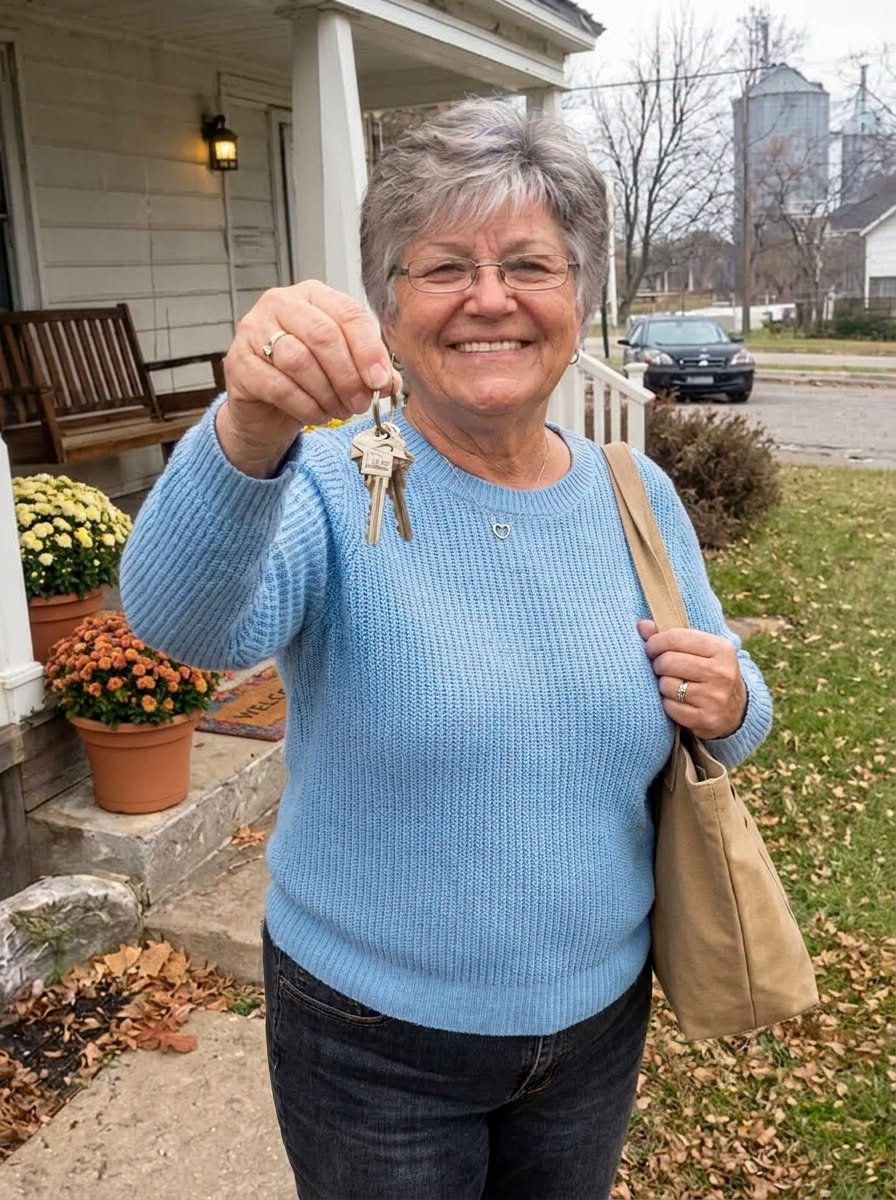
I looked at the keys resting beside my purse.
Then I returned to the numbers.
My medicine was not optional.
Neither was transportation.
I could sometimes delay buying clothes or replacing something around the house.
But I couldn't simply stop taking care of myself because another household needed help paying its bills.
I began listing the expenses I paid regularly.
Some changed from month to month.
Some stayed almost the same.
None disappeared just because I was considering moving downstairs at Michelle's house.
When I finished the list, I sat still for a long time.
It wasn't a complicated calculation.
It was a familiar one.
The kind I had done countless times for other people.
But I noticed how reluctant I was to trust the result.
I kept thinking there must be something I had misunderstood.
Perhaps Todd intended to lower the rent once I started helping with the children.
Perhaps Michelle expected the grocery portion to cover more than I realized.
Perhaps they hadn't really meant four days every single week.
I stopped myself.
Those were not facts.
Those were things I was hoping might be true.
And hope had never balanced an account at the lumberyard.
I picked up the pencil again.
Under the eight hundred dollars, I wrote another heading.
Childcare.
Then I stopped.
I didn't know what number belonged beneath it.
That bothered me more than the rent.
Todd had assigned a definite value to the basement.
But the time he wanted from me had no clear value at all.
Four days.
That was the only firm figure he had given me.
I began thinking about what those days might involve.
An afternoon with the children sounded simple enough.
I had enjoyed afternoons with them before.
I liked hearing about their day.
I liked sitting with Sadie while she drew her pictures.
I liked the way she could ask a question that made me look at something ordinary as though I had never seen it before.
But childcare wasn't always a pleasant afternoon.
Children became tired.
They became hungry.
They needed attention when a person was busy doing something else.
And their parents needed to know somebody responsible was watching them.
I understood that.
I also understood that taking responsibility for children was work.
Loving them didn't make the responsibility disappear.
I looked at my empty column.
Four days could mean sixteen hours.
Or twenty.
Or more.
Michelle had mentioned mornings when her work schedule changed.
She had mentioned afternoons after school.
When I asked about school holidays, she had told me we could work that out later.
Later.
I circled that word on my own paper.
It was the first thing I had written that afternoon that wasn't a number.
I had learned that postponing an important detail rarely made the detail easier.
Usually, it meant the person with fewer choices would have to adjust.
I didn't want to become that person.
Not because I was unwilling to help.
Because I was afraid that once I moved into the basement, saying no would become much harder.
If Michelle needed me on a fifth day, would I feel free to refuse?
If Todd came home late, would I be expected to stay upstairs until he arrived?
If I had an appointment, would I be the one responsible for making another arrangement?
Nobody had answered those questions.
And I had almost agreed to an entire change in my life without knowing.
I felt embarrassed.
Not by Michelle.
Not even by Todd.
By myself.
I had spent my working life insisting that agreements should be clear.
Yet the moment my daughter asked something of me, I had started looking for reasons not to ask difficult questions.
I knew why.
I didn't want to hurt her feelings.
That was the simple truth.
I had been protecting Michelle's feelings for so long that I sometimes forgot mine deserved consideration too.
I put the pencil down.
Then I got up and made myself a cup of tea.
I stood at the counter while the water heated.
My mind returned to Sadie's purple horse.
She had been so proud of that picture.
I could still hear her asking whether I would live underneath the family.
Underneath.
I knew she hadn't meant anything by it.
She was four.
She was describing the basement in the only way she understood.
But I couldn't stop thinking about that word.
Not because a basement was beneath the rest of a house.
Because I was beginning to worry about where I would stand in the household if I accepted the arrangement.
Would I be a family member?
A tenant?
A babysitter?
All three?
And which role would matter when those expectations came into conflict?
I carried my tea to the table.
Todd's paper was still there.
The eight hundred dollars seemed larger every time I looked at it.
I took another sheet from the drawer.
This time, I didn't begin with money.
I wrote down the questions I still needed answered.
Could I have a lock on the bedroom door?
Would I be allowed to come and go without explaining every trip?
What happened if I became sick?
What happened when the children had a school holiday?
Would four childcare days remain four?
Would the monthly rent remain eight hundred dollars?
I read the questions again.
They weren't unreasonable.
They weren't insulting.
They were the questions any person might ask before agreeing to rent a room and provide a regular service.
Yet I could already imagine Todd's reaction.
He would ask why I was making things complicated.
He would remind me that I was family.
He might say they were trying to help me.
I rubbed my forehead.
I didn't want to go through another conversation where every practical question sounded like an accusation.
But I knew avoiding it wouldn't help.
That evening, Michelle called.
I looked at the phone before answering.
I was glad to hear her voice.
I was also nervous.
That combination surprised me.
I shouldn't have been nervous about speaking to my own daughter.
"Hi, Mom."
"Hello, sweetheart."
"Did you get home all right?"
"I did."
She asked whether I had eaten.
I told her I was making something later.
Then there was a little pause.
I knew what was coming.
"Have you thought any more about the basement?"
I looked at the papers spread across my table.
"Yes."
She sounded hopeful.
"Good."
I waited.
Then I said what I needed to say.
"I've been looking at my budget."
She didn't answer immediately.
I continued.
"Eight hundred dollars is a large part of my monthly check."
"I know, Mom."
"I'm not sure you understand how large."
She sighed softly.
"We weren't trying to take advantage of you."
I closed my eyes.
There it was.
The conversation I had hoped to avoid.
"I didn't say you were."
"Then why does it sound like you're upset with us?"
I looked at the paper again.
I wanted to tell her I wasn't upset.
That everything was fine.
That I only needed another day to think.
Those words would have been easy.
They also would have been untrue.
So I chose something smaller.
"I'm worried about what I would have left for myself."
Michelle was quiet.
I heard movement on her end of the call.
Then she spoke.
"You wouldn't have all the expenses you have now."
"Some would change."
"Exactly."
"But others wouldn't."
She said nothing.
I explained that I would still need medicine.
I would still have my car.
I would still need money for personal expenses.
And I would need something set aside for unexpected problems.
I wasn't asking her to pay for those things.
I was explaining why I couldn't ignore them.
Michelle listened.
I couldn't tell whether she agreed.
Finally, she said Todd believed the amount was fair.
I looked at his notebook paper.
"Fair for whom?"
The question came out before I could soften it.
Michelle didn't answer.
I regretted the sharpness immediately.
But I didn't regret asking.
After a moment, I spoke again.
"I'm not trying to argue, honey."
"I know."
"I just need to understand what this arrangement would mean for me."
She told me they had thought having me nearby would be good.
For the children.
For her.
For everybody.
I believed she wanted that.
But I was beginning to see how easily a pleasant idea could become an obligation nobody had properly examined.
I asked whether she and Todd had discussed my questions.
"The ones about the door and the schedule?"
"Yes."
She said they hadn't had a chance to go through everything.
I could hear how tired she sounded.
I didn't press her.
Instead, I told her I wasn't ready to make a decision.
She was disappointed.
I heard it in her voice.
But she didn't argue.
Before we ended the call, she said Sadie had asked about me.
I smiled.
"Tell her I liked her horse."
Michelle gave a little laugh.
"She wants to show you another one."
"I'd like that."
We said goodbye.
I put the phone on the table.
For several minutes, I didn't move.
The call hadn't settled anything.
But it had shown me how much I needed to separate two things I had been treating as one.
My love for my family.
And the decision about where I would live.
Those things were connected.
But they weren't the same.
I could love Michelle without accepting Todd's price.
I could spend time with Sadie without promising four days every week.
I could want to be useful without making myself available whenever somebody needed me.
I looked at my budget again.
The figures had not changed during the telephone call.
One thousand six hundred and forty dollars.
Eight hundred for the basement.
Eight hundred and forty remaining.
No amount of affection could change the subtraction.
The next morning, I returned to the table.
I had slept poorly.
Not because I was frightened of living alone.
I was used to my own company.
I had slept poorly because I kept wondering whether refusing the arrangement would change the way Michelle treated me.
I hated that thought.
I didn't want our relationship to become something measured by money or childcare.
I didn't want every visit to feel like an argument waiting to happen.
I wanted to be her mother.
Not a problem she needed to solve.
And not somebody whose usefulness had to be calculated.
I picked up Todd's paper again.
Then I unfolded it completely.
The circles around the number looked almost childish in the morning light.
I wondered whether he had drawn them while planning the conversation.
Had he sat at that same kitchen table with Michelle?
Had they discussed what amount would seem reasonable?
Had they considered how my Social Security payment would be divided?
I didn't know.
It wasn't fair to pretend I knew what had happened when I wasn't there.
But I knew what they had asked of me.
That was enough to make a decision.
I took my own sheet of paper and wrote one sentence beneath the figures.
I cannot agree to an arrangement I cannot afford.
I read it aloud.
My voice sounded strange in the empty kitchen.
I read it again.
The words didn't make me feel brave.
They made me feel sad.
I had wanted the offer to work.
Part of me had pictured being closer to Sadie.
Hearing the children in the mornings.
Seeing Michelle more often.
Having people around the house instead of spending so many hours alone.
Those were real reasons to consider moving.
I didn't dismiss them.
But I had to weigh them against the life I would be giving up.
My own door.
My own schedule.
My own quiet.
The ability to decide when I wanted company and when I needed rest.
I had earned those ordinary freedoms.
Not all at once.
Not through any grand achievement.
I had earned them through years of going to work, paying bills, and learning to manage what I had.
It seemed foolish to surrender them without understanding what I would receive in return.
I stood and walked to the front door.
My keys were hanging where I always left them.
I took them down.
There were several on the ring.
The car key.
The house key.
A smaller key for something I rarely opened.
I turned the ring in my hand.
I thought about the basement bedroom.
The ordinary doorknob.
Michelle saying she would have to ask Todd whether a lock could be installed.
I hadn't been able to forget that moment.
I didn't need a large house.
I didn't need expensive furniture.
I didn't need somebody waiting on me.
But I needed a door I could close.
A door that belonged to my space.
And I needed to know that my choice to close it would be respected.
I returned the keys to their hook.
Then I sat down and picked up the phone.
I didn't call Michelle immediately.
I looked over my notes first.
I wanted to be calm.
I wanted to be clear.
And I wanted to make sure I wasn't speaking out of hurt alone.
When I finally called, she answered after several rings.
"Mom?"
"Do you have a few minutes?"
"Sure."
I took a breath.
"I've finished looking at my budget."
She was quiet.
I could hear something moving in the background.
I imagined her standing in the kitchen.
Perhaps beside the same table where Todd had placed the offer.
I kept my voice steady.
"I can't pay eight hundred dollars a month and commit to four days of childcare."
For a moment, neither of us spoke.
Then Michelle said something I hadn't expected.
"So you're saying no?"
I looked at the papers in front of me.
There were all my calculations.
All my questions.
All the reasons I had spent so much time thinking.
But I knew none of them changed the answer.
"Yes, sweetheart."
My voice shook a little.
"I'm saying no to that arrangement."
She didn't raise her voice.
She didn't argue.
She simply went quiet.
And that silence hurt more than I had expected.
I wanted to fill it.
To explain everything again.
To remind her I loved the children.
To promise extra visits.
To offer something that would make the disappointment disappear.
Instead, I waited.
I had given my answer.
I needed to let it stand.
After a while, Michelle said she would tell Todd.
I thanked her.
We ended the call without saying much else.
I remained at the kitchen table.
My pencil lay beside the two sheets of paper.
Todd's offer.
My budget.
Two different ways of looking at the same decision.
I folded his paper and placed it in the drawer.
Then I put my own calculations beside it.
I didn't throw either one away.
I wanted to remember how difficult such a simple answer had been.
That afternoon, I went about my ordinary tasks.
I washed a few dishes.
I put away some laundry.
I checked the things I needed from the grocery store.
Nothing about the house had changed.
The furniture was where I had left it.
The refrigerator still made its familiar noise.
My keys still hung beside the door.
But something in me felt different.
I had said no to my daughter.
Not because I didn't love her.
Not because I wanted to punish Todd.
Not because I was too proud to accept help.
I had said no because the arrangement didn't work for me.
That was all.
I wished the answer had been easier.
I wished Michelle had understood it immediately.
But I couldn't make my decision depend on whether everybody was pleased.
Later that evening, I stood at the front door with my keys in my hand.
I remembered Sadie's purple horse.
I remembered Michelle's tired voice.
And I remembered Todd's paper with the double circle around eight hundred dollars.
For several days, I had been asking myself whether I was being selfish.
Now I asked a different question.
If I couldn't protect my own money, time, and privacy, who was going to protect them for me?
I didn't need to answer aloud.
I already knew.
I hung the keys back on their hook.
Then I went into my kitchen and made myself dinner.
STORY TITLE: PART 1 – The Eight Hundred Dollar Basement Offer and the Keys I Chose for Myself
Click here to continue reading: PART 4: After I Refused My Daughter’s Eight Hundred Dollar Basement Offer, I Learned That Saying No Was Easier Than Living With Her Disappointment
My Daughter and Her Husband Offered Me a Basement Room, but the Price on Their Kitchen Table Was Only the Beginning
Part 3 of 10