The hardest part of saying no wasn't the word itself.
It was everything that came afterward.
I had expected to feel relieved when I finished speaking to Michelle.
And for a little while, I did.
I had looked at my income.
I had considered the basement.
I had asked the questions that mattered.
Then I had made a decision.
It should have been simple.
But the next morning, I found myself standing in my kitchen, wondering whether my daughter was angry with me.
I didn't like that feeling.
I had spent enough years worrying about whether Michelle was happy.
When she was little, I worried about whether she had enough.
Enough food.
Enough attention.
Enough time with me.
When she grew older, the worries changed.
But they never completely disappeared.
Now she had her own family.
Her own responsibilities.
Her own kitchen table where she and Todd made decisions.
And somehow, I was still afraid of disappointing her.
I stood beside the counter with my coffee growing cold.
That reminded me of Michelle's cup.
The spoon turning around inside it.
The way she had avoided looking directly at me when Todd explained the childcare arrangement.
I wondered what she had said to him after our telephone call.
I wondered whether he had been surprised.
Or irritated.
Or whether he had simply crossed my name off whatever plans they had already made.
I didn't know.
That was the trouble with being alone after a difficult conversation.
You could imagine all kinds of things.
Most of them weren't helpful.
I took my coffee to the table.
The drawer beside my chair held Todd's notebook paper.
I knew exactly where it was.
I had folded it and placed it underneath my own calculations.
For some reason, I wanted to look at it again.
So I opened the drawer.
There it was.
Eight hundred dollars.
Two circles.
A simple piece of paper that had caused more trouble in my mind than I wanted to admit.
I unfolded it carefully.
I remembered Todd telling me that the amount reflected what family should pay.
He had sounded certain.
As though attaching the word family to the arrangement settled every question.
I had almost allowed myself to believe him.
That bothered me now.
Not because I thought families shouldn't help one another.
I believed they should.
I always had.
But help was supposed to make a difficult situation easier.
I wasn't convinced that moving into the basement would have done that for me.
I would have been paying nearly half my Social Security income.
I would have been responsible for the children four days each week.
And I would have been living in a room where even a lock on the door needed further discussion.
I put Todd's paper beside my own.
The numbers were still the same.
My income hadn't increased overnight.
The rent hadn't become smaller.
And nobody had explained the childcare schedule any more clearly.
Yet I still felt guilty.
I sat with that feeling for a while.
Then I folded both papers and put them away.
I couldn't solve guilt with another calculation.
I had already done the arithmetic.
The rest was something I would have to learn to live with.
That afternoon, I went to the grocery store.
I needed milk, bread, and a few ordinary things.
I took my list from my purse and walked through the aisles.
For years, grocery shopping had been something I did without thinking much about it.
I knew what I liked.
I knew what I could afford.
If something cost too much, I left it on the shelf.
If something was on sale and I needed it, I bought it.
Small decisions.
My decisions.
I was standing near the bread when I remembered Michelle saying that some groceries would be included in the eight hundred dollars.
Some.
I had never asked what that meant.
Would I have been expected to eat whatever the family prepared?
Would I have needed to buy certain things separately?
Would I have had space in their refrigerator?
None of those questions was especially important by itself.
Together, they mattered.
They showed me how many details I had been prepared to leave to chance.
I put a loaf of bread into my cart.
Then I continued shopping.
I wasn't trying to prove anything.
I was simply doing what I had always done.
Taking care of myself.
When I got home, I carried the groceries inside.
I put the milk away.
I placed the bread on the counter.
Then I stood in the kitchen and looked around.
It wasn't a remarkable room.
The table had scratches.
One cabinet door needed a firmer push than the others.
The refrigerator made a little noise whenever it started running.
But I knew every corner.
I didn't need to ask where anything belonged.
I didn't need to explain why I wanted to eat late.
And I didn't need permission to spend a quiet afternoon by myself.
I had taken those freedoms for granted.
Now I noticed them.
That evening, my telephone rang.
I looked at the screen.
Michelle.
I answered quickly.
"Hello, sweetheart."
"Hi, Mom."
Her voice sounded tired.
I asked whether everything was all right.
She told me it was.
Then there was a pause.
I waited.
Finally, she asked whether I had meant what I said about the basement.
I looked toward the drawer beside the table.
"Yes."
She didn't answer immediately.
I could hear the children somewhere in the background.
That familiar noise made me smile.
Then Michelle spoke again.
"Todd thought you might reconsider."
I held the phone a little closer.
"Why?"
"He thinks it's a good arrangement."
"I understand that."
"He says you'd have people around, and we could help each other."
I looked at my kitchen.
I understood the appeal.
Having family nearby sounded comforting.
Especially as a person grew older.
There were days when I would have enjoyed hearing somebody else moving around the house.
There were evenings when I might have liked company at dinner.
I wasn't pretending otherwise.
But I had learned that wanting company wasn't the same as needing to live under somebody else's rules.
"I know you both believe it would work," I told her.
"But it doesn't work for my budget."
Michelle sighed.
"You keep talking about the money."
"Because the money matters."
"It's not only about money."
"I know."
I let the words settle.
Then I added something I had been thinking about since our first conversation.
"It's also about my time."
She became quiet.
I could hear Sadie calling for something.
Michelle answered her briefly.
Then she returned to the telephone.
"Nobody was trying to make you work all the time."
"I didn't say that."
"You make it sound like we'd be using you."
I closed my eyes.
That was the part I had feared.
I could explain a budget.
I could point to a number.
I could show how eight hundred dollars came out of one thousand six hundred and forty.
But explaining why I wanted control over my time was harder.
Especially to my own child.
I didn't want her to think I considered her children a burden.
They weren't.
I loved them.
I loved the way Sadie asked questions.
I loved her drawings.
I loved how easily she could make me laugh.
But I also loved the ability to decide what I would do with a Tuesday afternoon.
I wanted both things.
I didn't see why wanting both should be wrong.
"Michelle," I said, "I like being with the children."
"I know."
"And I want to keep seeing them."
"Then why won't you move in?"
I took a moment before answering.
"Because visiting them and being responsible for them four days every week are different things."
She didn't respond.
I wondered whether she had ever thought about it that way.
Perhaps she hadn't.
Perhaps she saw the arrangement as something that would benefit everyone.
A grandmother nearby.
Children cared for.
An extra person in the household.
Expenses shared.
On paper, it sounded practical.
But the paper had only shown the expenses they wanted me to pay.
It hadn't shown what I would be giving up.
Michelle finally said she had hoped I would be closer.
I felt my throat tighten.
"I'd like to be close to you too."
"Then I don't understand."
I looked at the telephone in my hand.
I wished I could give her an answer that would satisfy us both.
But I couldn't.
So I gave her the truth.
"Being close doesn't have to mean living in the same house."
She was silent.
I didn't rush to fill the silence.
A few seconds later, she said she needed to get the children ready for bed.
I told her I understood.
Before she hung up, I asked her to give Sadie a kiss from me.
She said she would.
Then the call ended.
I sat down slowly.
The house seemed quieter than before.
I had not changed my answer.
But I didn't feel pleased with myself.
I felt sad.
There was no use pretending otherwise.
I wanted Michelle to understand.
I wanted Todd to respect the decision.
I wanted to keep being part of my grandchildren's lives without feeling that every visit would remind somebody of the basement.
Those were simple wishes.
I couldn't make them happen by myself.
The next day, I went through my usual morning.
I made breakfast.
I took my medicine.
I checked the things I needed to do.
Nothing unusual happened.
But I found myself looking at the telephone more often than I normally would.
I wondered whether Michelle might call again.
I wondered whether I should call her.
Then I reminded myself that we had spoken.
I had explained my decision.
Calling again merely to make sure she wasn't upset wouldn't change anything.
It might only turn the same conversation into another argument.
So I left the telephone alone.
Later, I sat at the table and wrote down a few things I wanted to remember.
Not another budget.
I had finished that.
This was different.
I wanted to be clear with myself about what I had refused.
I had not refused my daughter.
I had not refused my grandchildren.
I had not refused to help when I could.
I had refused a particular living arrangement.
Eight hundred dollars each month.
Four days of childcare.
A basement bedroom.
An unclear schedule.
Those were the conditions.
Those were what I had said no to.
Seeing that distinction helped me.
I hadn't understood how much I needed it until then.
For several days, I had been treating my decision as though it were a test of how much I loved Michelle.
But love wasn't what Todd had written on the notebook paper.
He had written a price.
And Michelle had described a schedule.
They had asked me to agree to practical obligations.
I had answered practically.
It wasn't necessary to turn that into a judgment about my feelings.
I wished somebody had explained that to me years earlier.
Perhaps I would have saved myself a great deal of worry.
That afternoon, I found myself thinking about the basement again.
Not the money this time.
The room.
I remembered the bed against the wall.
The dresser Michelle had emptied.
The small window.
The bathroom with its sink and toilet.
And the stairs leading up to the kitchen.
I had stood in that room trying to imagine my belongings there.
My clothes in the drawers.
My medicine on a shelf.
My shoes beside the bed.
I had wondered whether I would get used to hearing footsteps overhead.
Whether the children would come downstairs whenever they wanted.
Whether I could close the door and spend an evening reading without somebody needing me.
Those weren't terrible possibilities.
They were simply questions.
And questions needed answers before a person made a commitment.
I remembered Michelle telling me she would have to ask Todd about changing the bedroom doorknob.
That moment still troubled me.
Not because Todd had necessarily intended to deny me privacy.
I couldn't know that.
But because my privacy had seemed like something that needed to be negotiated.
In my own home, it wasn't.
I stood and walked to the front door.
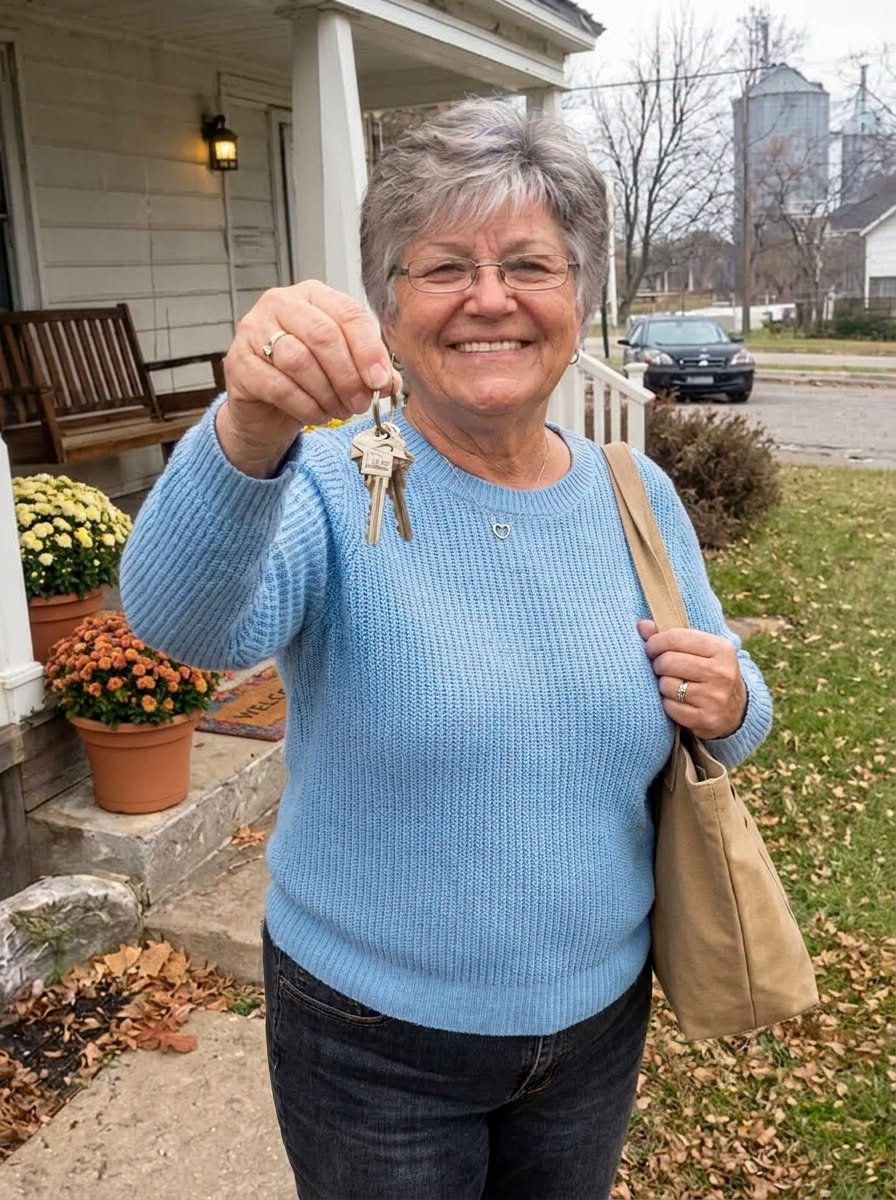
My keys were hanging on their hook.
I took them down.
The house key was worn from years of use.
I held it between my fingers.
A small piece of metal.
Nothing expensive.
Nothing impressive.
But it opened a door that I controlled.
I could leave.
I could return.
I could lock the door at night.
I could choose whether to answer when somebody knocked.
Those things had become so ordinary that I barely thought about them.
Now I understood their value differently.
I wasn't saying I would never move.
I wasn't saying I would always be able to manage everything exactly as I did now.
Life changed.
People aged.
Circumstances changed with them.
There might come a time when I needed more help.
I wasn't too proud to admit that.
But I wasn't at that point simply because Todd and Michelle had a basement available.
And I wasn't required to make my life smaller to make their schedule easier.
I returned the keys to their hook.
Then I went back to the kitchen.
A little later, the telephone rang again.
This time it was a brief call from Michelle.
She sounded more like herself.
She told me Sadie had been asking about the purple horse.
Apparently, she wanted to show me another drawing.
I smiled before Michelle finished speaking.
"Tell her I'd love to see it."
Michelle said she would.
We talked for a few minutes about the children.
Nothing about rent.
Nothing about the basement.
Nothing about Todd's notebook paper.
Just ordinary family conversation.
When the call ended, I felt something I hadn't felt in several days.
Relief.
Not because Michelle had agreed with my decision.
She hadn't said that.
Not because every uncomfortable feeling had disappeared.
It hadn't.
I felt relieved because we had managed to speak without returning to the argument.
We were still mother and daughter.
The basement hadn't erased that.
I hoped it never would.
That evening, I took Todd's paper from the drawer one more time.
I unfolded it and placed it on the table.
Then I set my own budget beside it.
I looked at the two sheets.
His paper told me what I would owe.
Mine told me what I had.
For most of my life, I had been taught to make room for the people I loved.
I still believed in doing that.
But I was beginning to understand something I had overlooked.
Making room for somebody else didn't mean giving them every bit of space I had.
There had to be some room left for me.
I folded Todd's paper.
Then I folded my budget.
I placed them together in the drawer.
I didn't need to look at them again that night.
The decision had been made.
I had explained it.
And I had survived the disappointment that followed.
It wasn't a grand victory.
Nobody applauded.
Nobody told me I had done the right thing.
There was no special moment when everything became easy.
There was only my ordinary kitchen.
My ordinary evening.
And the knowledge that I had made a choice I could live with.
I turned off the kitchen light.
Before going to bed, I checked the front door.
Locked.
I touched the handle once, just to be certain.
Then I looked at the keys hanging beside it.
They were still mine.
And for that evening, that was enough.
Click here to continue reading: PART 5: My Daughter Stopped Mentioning the Basement, but One Ordinary Visit Showed Me How Much Our Relationship Had Changed Since I Said No
My Daughter and Her Husband Offered Me a Basement Room, but the Price on Their Kitchen Table Was Only the Beginning
Part 4 of 10